How Effective Leaders Go Beyond Their Words With Stories That Connect and Motivate
You know that feeling when someone says, “Let me tell you a story,” and you immediately start looking for the escape hatch?
Yeah, me too. And apparently, so does Julie Lancaster.
And as leaders, we’ve been told a thousand times that storytelling is the secret sauce to inspiration, connection, and influence. We nod along, bookmark another article, and think, “I should really work on that.” We tell ourselves we don’t have good stories, or we’re not natural storytellers, or our work is just too practical for that kind of thing.
But while you’re creating PowerPoint decks riddled with bullet points and racing through 27-item agendas in 30-minute meetings, you’re creating what I call the “voice vacuum.”
 You’re talking at people instead of connecting with them. You’re draining their energy instead of inspiring them. And you’re wondering why your teams seem disengaged, why your meetings feel like hostage situations, and why leadership feels so exhausting.
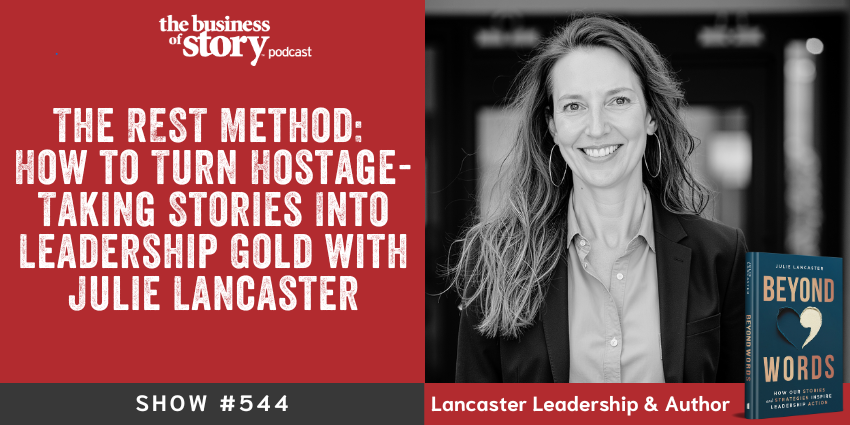
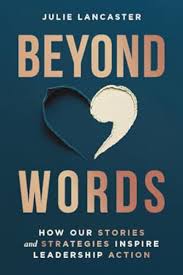
So what if there was a stupidly simple four-step method that could turn any leader—even self-proclaimed storytelling skeptics—into engaging communicators who inspire action, build authentic connections, and actually enjoy the process? That’s exactly what Julie Lancaster delivers in her new book Beyond Words and shares in this powerful conversation.
Meet Julie Lancaster: Peace Corps Veteran Turned Leadership Hope Peddler
Julie Lancaster is the founder of Lancaster Leadership, where she’s been coaching and training leaders for 13 years. Her journey? Let’s just say it’s delightfully non-linear—from teaching rock climbing in Southern California to serving as an agriculture extension agent in the Peace Corps in Africa, to becoming Dean of Education at a college where she taught 38 sections of the psychology of motivation.
Her new book Beyond Words: Inspire and Maximize Performance as a Leader tackles 31 leadership challenges through story and strategy, making powerful storytelling accessible to everyday leaders who think they “don’t have stories” or “hate storytelling.”
And here’s the kicker: Julie grew up absolutely despising storytelling because she was surrounded by long-winded, irrelevant, hostage-taking storytellers. Now she’s teaching leaders how to do the exact opposite.
The Voice Vacuum: When Leaders Talk Too Much and Listen Too Little
Julie shares this brutally honest failure story from her time as Dean of Education. She’d pack 45 agenda items into 30-minute faculty meetings, racing through her points while secretly feeling annoyed when colleagues tried to ask questions or offer input. “Decisions have already been made,” she’d think. “Just get in line, get on board.”
The twist? She was simultaneously winning “Instructor of the Year” awards for her teaching approach in the classroom—where she talked less than her students, posed questions, and created collaborative learning environments.
The disconnect was staggering. In the classroom: engagement, critical thinking, energy. In meetings: drill sergeant mode, anti-community, exhaustion.
This is the voice vacuum so many leaders create: filling the air with their own voices, their own agendas, their own timelines—and wondering why nobody seems engaged.
The REST Method: Four Steps to Stories That Actually Work
Julie’s REST method makes storytelling accessible and effective:
R – Relate: Is this story relevant to your audience? Will it serve them, or are you just stroking your ego?
E – Engage: Stop and check in with your audience. Julie analyzed her Moth storytelling performance and discovered she got 25 audible responses from the audience in a 5-minute story. Not lecture—conversation.
S – Short: Robert Cialdini told Julie over coffee (he ordered a small mint tea, naturally) to keep stories to three minutes and include mystery. As Mark Twain said: “I’m sorry I didn’t have time to write you a shorter letter.”
T – Theme: Have a point. Don’t bury your message in irrelevant details. What’s the moral? What’s the transformation?
Building Your Story Bank: The Homework for Life Practice
“I don’t have any stories.” That’s what Julie thought when her mentor told her to fill her trainings with personal stories. It’s what most leaders think.
The solution? Matthew Dicks “Homework for Life” practice that Julie uses every morning while brushing her teeth. Simple question: What happened yesterday that stands out?
She records it in her phone’s notes app. One moment. One detail. Over time, you build a library of 365 potential stories—real, lived experiences that AI can never duplicate.
Just this morning, Julie captured this: A massage therapist told her about an emergency button under the table. In the moment? Just a weird detail. Looking back? A perfect story about how trying to make people comfortable can sometimes make them less comfortable. Theme: leadership communication gone wrong.
AI: The Storyteller’s Amplifier, Not Replacement
Here’s where it gets interesting. AI doesn’t replace your stories—it amplifies your ability to tell them effectively.
I just added my 30th story to my Story Bank using our StoryCycle Genie. Every story I add teaches the AI my voice, my style, my patterns. Now when I’m writing blogs or articles, it can pull relevant stories and integrate them—sounding like me, not like generic AI content.
Julie uses AI to make her written stories funnier, tighter, more impactful. Then she comes in as chief editor to refine it with her human judgment.
As my son discovered creating his VR game Monkey Tower, people have been using technology to amplify artistry for decades. Photoshop didn’t kill photography—it empowered photographers. AI won’t kill storytelling—it’ll empower storytellers who know how to collaborate with it.
The key? Bring your creator mindset, your leadership mentality, your lived human experiences. AI does the heavy lifting. You do the human magic.
What’s in it for You:
• How to use the REST method (Relate, Engage, Short, Theme) to craft compelling leadership stories in minutes, not hours
• The “Homework for Life” practice that builds your story bank one daily moment at a time—so you never run out of material
• Why vulnerability stories (your failures, not your successes) create the authentic connection that drives team engagement and trust
• The engagement technique that generated 25 audible audience responses in a 5-minute story—and how to replicate it
• How to escape the “voice vacuum” that exhausts you and disengages your team by talking less and connecting more
• Why AI amplifies your storytelling effectiveness when you collaborate with it as a tool, not default to it as a replacement
Links:
- Lancaster Leadership
- Beyond Words book
- Julie Lancaster on LinkedIn
- Julie on Instagram
- Two Free self-paced micro learning courses Use passcode: PODCAST2025 for access.
- Download Julie’s FREE workbook
- Test the strength of your brand story for FREE!
- StoryCycle Genie™
- 21 Ways the StoryCycle Genie™ is Your Agency Wealth Creation Engine
Related Episodes:
• How EI + AI = ROI, Your Return on Intelligence with Dr. Robin Hills
Discover how emotional intelligence, combined with artificial intelligence, creates measurable Return on Intelligence for leaders
• The Five Revolutionary Principles of Vibe Branding with Sean Schroeder
Learn how authentic brand storytelling creates magnetic connections that turn customers into a community
• From Newsroom to Boardroom: AI in Storytelling with Pete Pachal
Explore how journalists and business leaders collaborate with AI to amplify human storytelling without losing authenticity
Transcript:
What Leaders Can Learn About Powerful Storytelling From Julie Lancaster’s New Book, Beyond Words: Stories and Strategies to Inspire Leadership Action
PARK HOWELL: Hi Julie, welcome to the Business of Story.
JULIE LANCASTER: Hi, Park, I’m so happy to be here.
PARK: Yeah, you and I both have the distinct pleasure of living in beautiful, beautiful Northern Arizona. Can you believe the colors on the trees?
JULIE: The Aspens are kind of insane this year, right? Yeah.
PARK: Yeah, yeah, in fact, I was just at coffee with some buddies of mine and we’re down at Muns Park and we have a golf course in these beautiful trees. And he said, Does it seem like they’re brighter this year than last fall?
JULIE: That’s what everyone keeps saying. And then I think I obviously don’t know tree science because it doesn’t have to do with this. Was there more rain? Less rain? Does it have to do with anything? I don’t know.
PARK: Yeah, I don’t know, but it’s great. And I can’t wait to get back out in it. And I’m just delighted you’re here. Heather Pierce, another fellow marketer up here in Northern Arizona, made the introduction about a year ago. And you and I got acquainted in a cute little coffee shop heading up towards Snow Bowl, the big mountain up there.
And you know what? I am just so delighted. This is my fifth year up here living full-time near Flag. And I just, it’s great. And the people are great.
JULIE: Yes?
PARK: And it’s just a delight to have you here.
JULIE: Well, thank you. I am so happy to be here. And you just remind me of the power of connection, right, in that Heather introduced us. Yeah.
Why Leadership Coach Julie Lancaster Used to Hate Storytelling
PARK: Yeah, absolutely. And congratulations on your new book, Beyond Words. You are a leadership coach extraordinaire. What compelled you to write the book? Because writing a book is not easy.
JULIE: Thank you. Thank you.
JULIE: That’s a funny, I love that question. There’s like two answers.
One, I do nothing without a deadline. And so a few years back, I was writing some video content for our videos. We were recording like short mini videos to help our clients with a variety of leadership topics. And as I was writing those, I was like, hold on. This research that I’m doing could also kind of go into a book.
So it started organically that way. That’s one.
And the second is the reason I have this book that is about how to inspire and maximize your ability to tell stories is because I have thought that I’ve always hated storytelling. Did you know that about me? I know.
Well, I grew up around people. For some reason, I was like a magnet for long winded, irrelevant, hostage taking storytellers. And so when someone would open their mouth and say, Hey, Julie, I’d like to tell you a story, I would try and figure out how to like feign my own death. I thought, please, can I get out of here? Like, where’s the escape hatch?
And I still, Park, I still have a little bit of that. I went the other night to the Grand Canyon Youth River Tales, silent auction and fundraising event. And it was going to be stories about people on the river. And the first question that I asked before my husband said, Should I buy tickets? I was like, wait, first, how long are the stories? And he was like, who cares? I was like, well, because if they’re longer than like 10 minutes each, I’m going to want to escape.
So I recognized later, like only later in my life, that if a story is told well, then I love it. So I felt compelled to help people to know how to tell stories if they never told stories at all, because that was me.
Or help them to do it effectively if they are the kind that like kind of alienate themselves and everyone around them because they just like take hostages and tell 70 year old stories that people aren’t actually even interested in. What do you think?
How to Build Your Leadership Story Bank for Emergency Situations
PARK: Yeah, what you’re making me think of is a guest I had on a couple of weeks ago, Femi Oke. And she is this marvelous global journalist, broadcast, audio, broadcast radio journalist for the likes of BBC and Al Jazeera. And she’s got a new company called Moderate the Panel.
And this is a woman who has moderated panels at the United Nations, I mean, major capitals around the world. She has even shushed presidents when moderating a panel because they were overtaking it.
And we were talking about leadership and leadership presentation secrets. It’s a fantastic show. And I loved her line. She says, in case of emergency, break glass for story.
And it was the same thing you’re talking about checking in. Are you still engaged with your audience? Is your audience drifting off? And if you see them start drifting off, you need to have this bank of stories at your disposal.
And before you are making those presentations, maybe like you were doing in that half hour with your colleagues there, you go in your story bank and you pull out two or three potential stories that you may have to use in case of emergency.
From Peace Corps to Leadership Coach: Julie Lancaster’s Journey
PARK: Yeah, I think that works. And before we get into why another leadership storytelling book and what’s in yours that sets it apart, you have a very interesting background. And I think it has something to do with the Peace Corps, as I remember over coffee so many months ago.
JULIE: That’s right. That’s right. Yeah, I have kind of a long and winding path.
I grew up in Pittsburgh, Pennsylvania, went to college in Ohio, went to then go teach rock climbing in Southern California, then went to go do a bunch of volunteer work down in Central America for a few months until I heard back from the Peace Corps.
Which then I went to go do agriculture extension agent work in the Peace Corps in Africa for a couple of years. And then I ran an after-school education program, a school garden, and then got more inside, I would say, right, I worked at a college, I had maybe eight different roles.
One being the Dean of Education, others being things like being a professor. I taught, I think it was 38 sections of the psychology of motivation. And so that’s part of my path.
PARK: You’re trying to keep from telling us a 10 minute story. You have this very, very wild background and really interesting background. How did you find yourself in the leadership coaching world?
JULIE: Yeah, I sometimes wonder that myself. Oh, no, I’m just kidding.
Really, the only leadership teachers that I like to follow are ones who have been leaders themselves. I am not a fan of pontificating about things with which someone has not had experience.
And so I feel like I have been at the leadership game, being in leadership roles, hiring and firing and hopefully motivating and creating trainings and looking at quarterly goals and mapping that in with a budget. And I have made probably every mistake in the book, Park. Like I have tried and succeeded at times and tried and failed.
And now I get to look back and be like, my gosh, can you believe that’s what I did? And so I just kind of fell into the coaching and the training.
I have had education as my—it’s in my lifeblood—teaching and helping others to see the potential in where they can go and what they can be. And so I have a master’s in education, I have taught kids, I’ve taught adults.
And so because just like you mentioned with Heather Pierce, the power of connection, one day, when I was at a ladies night out with some friends, I told them after I had been at this college for like eight years, I was like, I think there’s something bigger out there for me. And I think it has something to do with leadership development, coaching, helping others.
And someone said, well, you need to meet Joanne. And within a month, I was quitting my job. I was subcontracting for Joanne. She was taking me out to the FDA, the Food and Drug Administration, where I was then having the chance to coach and train leaders there, and then it just kind of blossomed.
So I did not have this goal of being like, I want to start a business and this is how it’s going to look. I just kept following the muse or riding the lightning as I kind of like to say with my clients, like follow where the energy is. And now I’m here and it’s 13 years later.
The Medical Lab Leadership Failure That Changed Everything
PARK: Well, I got to ask because these are always one of my favorite stories—take us to a moment in your leadership career before coaching leaders where you had one of the biggest fails, fell flat on your face. What did you learn from it? And how do you coach from that?
JULIE: These are my favorite stories. But honestly, I mean, you know this probably better than most people. These are the stories that are sticky. People are not that interested in like, here’s how I was awesome and awesome again.
PARK: They don’t care about your success. They want to know how you survived.
JULIE: Yes. And I could even start off by saying, a couple of months ago, I found myself in a room of 2,000 people where I was doing a keynote for an hour. And I was like, okay, it’s got to be filled with stories. Because if not, it’s going to be a dreadful hour for these 2,000 people.
And so I told eight stories. And the ones that people came up to talk with me the most about were the failure ones, because they could relate.
All right, so here’s one for me. I was at the time in Flagstaff and I was the Dean of Education. And I was just about to have my monthly faculty meeting. And I only got to have one in the day and one in the night for half an hour each. And I had so much that I wanted to share with my team.
And I don’t know if you’ve ever been in a space like this, but we had to use our space creatively. Like we needed to have a meeting, but we didn’t have a meeting room. And so we used the medical lab.
And this medical lab was the same space where I had done things that were not in my job description. Like I had donated my veins for the phlebotomy students to practice their needle, their blood drawing skills. And I had even, yeah, I know, I know that is maybe like my most brave moment in life to have done that and I survived.
And then also giving cups of my own urine, honestly, so that they could run labs. Yes. And thankfully, though, they never gave me like a surprise pregnancy announcement.
And so we’re in this lab, and everyone starts to file in. It’s the nighttime faculty meeting. And I get on a tear as I almost always do, right? I have about 45 agenda items, and I’m ready to get through them. And we only have a half an hour.
So I barely breathe, right? I have such a pace, and I’m hoping that everybody’s holding on.
But I can honestly still remember these two people that just about every meeting would somehow start to raise their hand because they either had a question or wanted to interject something. Question kind of like, well, Julie, what about if we did it this other way? Or they wanted to interject something like, I’m not sure that’s the right direction.
And I would secretly feel so annoyed. Because I thought, don’t you understand? Decisions have already been made. We are already moving forward. Like, just get in line, get on board. Have you ever felt like that with people?
PARK: Yeah, and I know I think where you’re going here, so go ahead.
JULIE: Yes, yes, yes, yes. And so, right, I can have drive and I can want to move really quickly forward. And I would try and give everybody else the idea that like the anti-permission to interject. And so then we would get through all of this stuff.
But it’s interesting, because now that I’ve grown up a little bit, I’ve been in the leadership realm a little bit more. I’ve read a lot of stuff that apparently is not the right way to try and inspire people or have an engaged team.
But the weirdest thing, Park, about this is that I was on fire in the classroom. I loved teaching and I felt like I was really effective.
What I hadn’t realized is that this transferable skill, I hadn’t even recognized that how I engage my students in the classroom is by talking less than them, posing a question and having people share their input and answers, talking to each other, creating new ideas together. For sure not lecture.
I had even, I’ll humbly brag, right? I’d even won an Instructor of the Year award and I felt really good about my teaching.
And then one day when I woke up and recognized, my gosh, I am a drill sergeant that is creating anti-community in these meetings. I could do a tiny tweak and change everything.
And so that has drastically impacted my leadership. I am now always trying to read the room, figuring out how to talk less because I do like to talk, but that is not the most effective way to get people to engage critical thinking and care.
And I’m now getting better results because I’m letting other people talk instead of just my ego, instead of just me. What do you think about that story? Do you think less of me now?
What is the Voice Vacuum and How Does It Kill Team Engagement
PARK: No, I don’t think less of you. I think more of you because you shared it. And I think a lot of leaders fall into that voice vacuum—they want to hear themselves talk.
And you were a little bit like, and we’ve all been there. We’ve all done it. You’re like to your colleagues there, look, I’ve got this figured out. I’ve already got the story in my brain. Here’s what the narrative is, here’s what we’re going to do. Just be quiet. Come along. Don’t worry about it. Just buy in. We’re all good.
I call that the voice vacuum.
JULIE: The voice vacuum. Exactly. And for some reason, we think that’s effective, but we know it’s not. When we’re the recipients, we sure know it’s not.
PARK: Well, and I think it’s because we’re in a hurry. You told me you only had 30 minutes. You had all of these bullet points that you wanted to get through. You’re obviously a high achiever.
So you want to have action. You don’t have time for conversation. And that’s the biggest mistake any leader makes.
And by the way, I would also recommend don’t go in with 27 things. Go in with one. Go in with one. Get focused.
JULIE: Right, right, right. And now I have also learned because I’m like, yeah, but what my clients will ask is, what if I do have a lot of information to share?
There are so many other ways, because meetings are the most expensive, right? Everybody is being paid to be there. So it’s expensive in terms of money in the bottom line, but it’s also expensive in terms of time and attention.
And so could we record a video ahead of time? An email update? To read an email update is dreadful. So is there another way?
And my favorite is for sure to do a video. And then I keep referencing back, like doing a call back to things that were mentioned in the video. So they also get that yes, you do need to watch the video. But the information sharing piece of the meeting should be minimized.
Why Succession Planning is the Biggest Leadership Challenge Right Now
PARK: Yeah. And the real point of today’s show, I always ask all of my guests, what’s the one thing? So I’m going to eat my own dog food. We’re not going to cover a million things.
The one thing we’re solving today is what you work with so well with leaders—turning managers into leaders. And so often they’re just thrust in this leadership role without a whole ton of training, and you come in with very much of a narrative first, storytelling first approach.
Can you give us a little bit of insight on that? And again, I go back to that question as you give us the insight. Why your book? Why now when there’s hundreds of leadership books on storytelling?
JULIE: That’s good. There’s hundreds—I need to find them and read all of them. Thousands, my gosh.
Okay, so I have some answers for that. The first is I really like to pay attention to what’s trending. Not like on social media. Okay, maybe at times on social media. But what I really mean is with my clients, when they’re walking through the door, we get maybe like 30 requests a quarter. That’s either through email or people calling.
And what I’m finding to be the trend right now is people desperately want help in training up the new leaders because they throw them into the deep end. And they are either sinking or flailing.
So succession planning, succession planning is the thing that people want desperately right now. And what I mean by that is to have people ready before it’s time for them, to have a continuous growth, not just mindset, but trajectory where they have a people strategy and they help people to gain skills, connection, and influence.
Those are the three things: skills, connection, and influence before they’re in their new position.
So when they call up, they’re often—well, okay, they email, they email up more frequently than call up. There’s a little desperation. There’s kind of this like, can you help? This person needs skills. We are overwhelmed. We are siloed. There’s a lot we don’t know about what’s happening in the future. Like, can you help?
And so I see my job and my team’s job within Lancaster Leadership to be hope peddlers. Like, yes, there is hope. And it’s going to take some mindset shift. It’s going to take some change resilience and some change agility. It’s going to take some owning of your power and being willing to make an impact.
And so what we’ve been really leaning into, this is the coolest thing that I’ve seen, is when people are trying to claim their impact or recognize how they can influence, they’re leaning into storytelling. Which in the past, I haven’t seen this done well.
And I might venture to say it’s because I help teach them this really simple method. It’s called the REST method. It’s not so that you can carefully craft every word that you want to share in your story, but you follow four simple things.
And that’s also in the book and I’ll tell you what that’s about. But first, just to show how someone was recently using it. I was at Project Central’s conference, which is the Center for Rural Leadership. And the guy in charge, Scott, what I would notice every time when he would open us back up after lunch or in the morning, or in the evening when people are starting to get tired before we would leave, he would tell a story.
And people would go from distracted, like on their phones trying to answer one and a half emails, settling in to full eye contact, all eyes on him.
And one of the things that was the most interesting is that his stories were not from the professional world, they were from his personal world. Which in my work, we tend to say that personal development is professional development. So it’s all tied together.
But those stories made such an impact because he was telling them obviously intentionally and for a point, not just to entertain.
The REST Method: Four Steps to Accessible Leadership Storytelling
So the method that he used, the REST method, the first R is to relate. First of all, how can I tell a story that the people here want to hear? It might sound simple.
But that’s knowing when we should tell a story and when we shouldn’t tell a story, when we should keep our mouths shut, right? Is it relevant? Is it helpful for them? Or am I just trying to stroke my own ego or fill the air? So first, is it relevant?
Second, to engage. Now this part, I just recently got to tell—I recently have told a couple of stories at the Moth, the storytelling event, and what I noticed is that the engage part was the most interesting when I went back and watched the video after I won. Oh, I did, but thank you. Thank you. It was so fun.
But the engage part is stopping every once in a while to check in with the audience, to check in. Audience is a funny word because right now maybe you’re the audience, right? So me just checking and being like, can you relate to that? And you were like, yeah. And I think I know where you’re going. So I did that.
I just do little check-in things like, can you relate? Or anybody? Saying words like anybody? And people are like, yeah.
So when I listened back to the recording, there were 25 times in a five minute story that people gave an audible response. Either yes, yes, yes, yes. If it’s lecture style, there’s no response typically, right?
And so the engaged part is figuring out how am I going to pause and check in, pause and check in.
How to Keep Leadership Stories Short: The Robert Cialdini Method
That’s the second part. The third is short. This one is probably the one I like the most, right? It connects back to what I was sharing earlier.
Robert Cialdini, he’s one of my favorite leadership authors and gurus. He writes about influence. I got a chance to have coffee at a Starbucks with him. Actually, he ordered a small mint tea. Right? I know it’s the small things.
And when I asked him about, you know, what are the most important lessons in storytelling, he said, one, keep it short, three minutes. And second, include mystery, like lead up to it, like how I just said, the most interesting thing that I found was, and so people hopefully are like, what is going to be the thing? So keep it short.
And it also reminds me of the quote that I’ve seen attributed to many people in history: I’m sorry, I didn’t have time to write you a shorter letter.
Because if we aren’t succinct, it’s going to be too long, too wordy, we’re going to bury what we’re actually trying to convey. We’re going to lose people.
And a fourth is the T—do you want to take a guess? No, I’m just kidding. That’s putting you on the spot too much. It’s a theme. Have a theme, meaning have a point.
So is it about resilience? My story from the medical lab might have 10 different themes. If I’m trying to think through now, it’s like learning from mistakes, knowing how to develop and grow along the way, that hard charging leadership is not always the most effective. So essentially, what’s the point?
Why Beyond Words Tackles 31 Leadership Challenges Through Story
And so back to your question of like, so why this book over the other gazillion out there? One is that it makes it accessible. This REST method, as well as the stories told in the book, make storytelling accessible to the everyday person instead of thinking, I’ve got to be this incredible storyteller.
And the second part, and this part might have been even more of what’s important to the folks that I coach and train, is that it tackles 31 leadership challenges.
And I will tell you, I’m curious, Park, whenever you tell people what you do as a job, if they have like a consistent kind of response. When I tell people what I do as a job, they’re like, I know someone in my office or in my work, in my organization that you should work with. Like people always can easily identify leadership challenges.
So this is a story and a strategy, a story and a strategy, a story and a strategy so that I can peddle that hope and help people to feel more effective and more inspirational. What do you think?
In Case of Emergency Break Glass for Story: The Femi Oke Principle
PARK: Yeah, and it goes back to what Femi Oke said. She’s moderated panels at the United Nations, major capitals around the world. She has even shushed presidents when they were overtaking a panel.
And we were talking about leadership presentation secrets. And I loved her line: in case of emergency, break glass for story.
And it was the same thing you’re talking about—checking in. Are you still engaged with your audience? Is your audience drifting off? And if you see them start drifting off, you need to have this bank of stories at your disposal.
And before you are making those presentations, maybe like you were doing in that half hour with your colleagues there, you go in your story bank and you pull out two or three potential stories that you may have to use in case of emergency.
Just, you know, because every presentation, every leadership meeting can take a dramatic detour that you are not ready for. But you, as the leader, the storytelling leader, need to be ready with various anecdotes to help make your points for you.
Because people will argue with your opinions. They’ll argue with your assertions, but they won’t argue with a true story well told that they can appreciate and which makes your business point for you.
JULIE: You know, that’s so funny that you said that part because as you were just talking, like right now in real time, two stories came to mind. I was like, okay, so if he’s going to pause, I could insert these two stories that are relevant right now and super short.
Which is one—when Joanne, the person who I went to subcontract with, when she said, okay, Julie, here’s all the content. I’ll teach you everything you need to know in terms of the content, but be sure to fill all the trainings that you do with your own stories.
I almost fainted because I thought, what stories? I don’t have stories. What are you talking about? Storytelling is a hard skill for me. I’d have to stop and think, okay, I’m going to tell a story about accountability. Excuse me. What’s a story that I have about accountability? And I’d have to craft it and create it. And then I could put it in my story bank.
Another story that came to mind as you were just talking about how it captures people’s attention and you have to know when to break the glass is when I was observing a radiology professor. And my job at the time was to give feedback to the professors about how they were teaching, what they were doing well and what they could work on.
And it was a hot summer night. And the students, there were 30 of them in there. And one of the very first things I do to assess engagement is see how much eye contact. And there were two out of 30 people who were making eye contact with him.
And I was saying, OK, I’m going to have plenty of feedback to give him. But he must have noticed. In an instant, he noticed. And he switched gears. And he pulled out a story.
And this is quite a while ago now. And I still remember that he told a story about a boy who was skateboarding, broke his arm, looked like his arm was put on backward. And then he asked the class, I’ve got a slide of it right now. Do you want to see the slide? And the class was like, yes.
And I got so engrossed in the story that I started to forget what I was doing there, which was to give him feedback and write down comments. And so then I had to like come to my senses.
And then I looked around the room and I thought, look at that. Now he’s got everybody’s eye contact. That was the power of story and how he shifted the room. And he had to notice when to tell it and pull the trigger to do it.
Why Our Brains Are Story Processors Not Logic Processors
PARK: Yes, story has a gravitational pull to one’s attention that facts, charts, graphs and data does not. Unless you’re putting that into the context of story, you’re creating that voice vacuum I talked about earlier because our brains are not wired—you know, as Jonathan Haidt said, famous American social psychologist, our brains are story processors, not logic processors.
So you hook them with the emotion of a story to get their attention. You make your business point through that story and then you level them up into logic and reason by then presenting the facts that support your case that was articulated in your story.
JULIE: So good. Isn’t it great? And see, wait, just to pause for a moment to have the meta noticing, you’re doing exactly what is highlighted in the book, right? Story and then strategy.
You just shared research based on what we were just talking about. And that makes it more powerful, because there’s the story. And then there’s like, and here’s research actually to back it up. I love that. Thanks for doing that.
PARK: Yeah, you know, people buy with their emotion and with their heart and they justify that purchase with their heads. So you got to have both.
Now, people will say all the time, and real quick, let’s just look at your REST method again. I want to do this just for our listeners.
REST stands for Relate. So make sure that you have a story that your audience can understand. So it’s probably a story told from their point of view.
You want to Engage—you’re reading the room and you’re asking them, does that make sense? Have you had that happen to you or whatever?
You want to keep it Short. You said, you know, three minutes max. I think you could even do it in one minute, believe it or not, with the five primal elements of a short story.
And then finally, have a Theme, have a point, have a moral to the story. What’s the point you were trying to make?
So that all speaks to strategy. You have to first understand who your audience is and what kind of stories they are going to relate to in the context of this meeting you’re having or presentation or whatever.
But then, like you reacted, so many people I’m training say, I don’t have any stories. I don’t know where to find my stories. I don’t know where to get my stories. People don’t care about my stories.
So how do you and your book talk to people about creating a story bank, a library of stories that they can go and use for every occasion?
How to Build Your Story Bank Using the Life Download Exercise
JULIE: Oh my gosh, this is maybe one of my favorite questions because, yeah, turning a vision into action is my jam. It’s one of my favorite things. And for people to recognize that this is a learned skill is powerful.
And so I talk about this in the book, but also to talk about it right now in real time, any of us can do this if we’ve got a group of people together. So here we go.
The first thing that I’ll do—I know when I’m walking into a training room, not only am I there to teach skills, but to also increase connection. Because if people have connection, they’ll be willing to be more vulnerable.
So I’ll ask a really simple question, or so they think. So I ask them to get into small groups, and I say, OK, now everybody share what you did this morning before you arrived here and share in as much exquisite detail as you can.
And at first they’re like, that sounds boring. And within two minutes, they’re like, that’s so fascinating. That’s so different than how I do my life.
I don’t yet use the S word, story, right? I’m just like, you’re just talking. And then I have them get into different groups. And now I raise the stakes a little bit and I ask them to do what in my own notes I call it the two minute dump. But I recognize that’s not a really sexy or professional kind of phrase. So I call it the Life Download.
So everybody now talks about themselves for two minutes. People are scared at first. By the end of their six minutes or eight minutes, whatever size of group they were in, they will consistently say, I now know these people who are strangers or just colleagues better than folks who I’ve known for 20 years.
Just recently, I was with a community college and two of the people, two of the staff at the end said, we both learned, and we didn’t know this about each other before, and we already knew each other, that we’re both foster kids. We’re both grown-up foster kids. And I thought, now they have this connection forever.
Then from there, I get to reveal, right, and say, guess what? You’ve just now shared a million story beginnings from what you did this morning to things that just came out of your mouth. Now start to write.
Just recently, I was in Canada with a group and the theme of the day, the theme that we wanted to be focusing on was resilience. And so then I had a bent towards that. I said, okay, I’m gonna ask everybody to now write a resilience story of your own.
And I’m really glad, Park, that you just clarified that we’re talking about not like storytelling, once upon a time stories, but real lived experiences.
PARK: And it always seems like it comes down to a moment in time. And when I get pushed back and people go, I can’t tell stories, I go, I don’t want you to tell a story. I just want you to tell us about a moment in time when everything changed for you. It could have been for the better, for the worse, whatever. Take us to a moment.
JULIE: That’s right. And it involves a time and a place. And the sooner that people can understand your time and your place, they’re understanding what you’re sharing with them.
And so with this group in this time and this place, in this room in Canada, I said, everyone write a resilience story.
And people almost instantly, I know that they go to self-judgment like, what if I haven’t had a really hard life? Like what? And so I tell them, it could be something that just happened this morning or it could be a big thing. Often it’s smaller things that people wouldn’t necessarily know.
And they write, they pick anything, they write, and then I just ask them to tell it to another little group where they’ve already started bonding with this group and they’re feeling safety. And they share with each other.
And then I get to tell them, now you’ve got a story where you can pull that out at any time. And it’s doing multiple things at once. One, they’re learning how to craft a story. Two, they’re learning how to emotionally connect with other people. And three, they’re learning how to be inspired by other people.
And I will tell you, Park, after everyone shared their stories, it was maybe 50 or so people in the room, I said, OK, rapid fire now. I’d like for us to go around and everybody just share a couple of words about what your story content was, because people are curious, right?
I still remember somebody saying, coming out to my parents. I remember somebody else saying, suicide in my family. Other people saying things like a breakup or making an unpopular decision.
And then we get to be inspired by like, yeah, I can, I’ve got something like that too. But we also recognize that we can give people grace because what we see is sometimes not what we get. Like, my gosh, you’ve got a lot of life you’ve experienced that I don’t even know. And I loved that moment. That was just a few months ago.
The Homework for Life Practice: Building Your Story Bank One Day at a Time
PARK: That’s so cool. And then when people are coming up with these stories and you’re kind of breaking open that glass for them—in case of emergency break glass for story—how do you teach them to start saving and librarying these stories in a story bank so that they can go back and easily access them?
JULIE: That’s a great question. I reference Matthew Dix in my book because I love him so much. That’s probably kind of an intense way to say it, but I love his stories and I love how he teaches about storytelling.
And he has this practice that I do called Homework for Life. And it’s so simple. I’ll tell you even the nitty gritty. I even just did it this morning and I wasn’t even thinking about saying it now. But okay.
So what it is, is you think about yesterday. And I do this while I’m brushing my teeth because I am trapped and I can’t hear anything because I got the electric toothbrush going. And I’m the kind of person who wants to try and also make the bed and also try and do the other things while I’m brushing my teeth, but that often ends in disaster.
So if I’m just standing there, I can do something else at the same time. I can think, what happened yesterday? What was one thing that stands out? And he says, just record that.
So I do it right there on my phone in my notes app. You could do an Excel document, whatever. And then when you go back and look from the last month, the last year, there are all of those, maybe 365, potential stories that you can start to flesh out.
Because, Park, does this happen for you? I’m curious, actually, human to human. When I’m living my life, I’m like, I’m just living my life. I’m not living it for a story. Is that the same with you?
PARK: Yeah, you don’t think about it until you think backwards. Like what happened? Yeah.
JULIE: Exactly. It’s all about thinking backwards. And so sometimes when I have some distance and I look back to the thing—I just got a massage two days ago because it was my birthday. And the morning after the massage, I was like, what stood out from yesterday? I don’t know.
And I was like, oh, it was kind of weird that they told me that if I was having an emergency, there’s a button under the massage table that I could press. And the massage therapist wouldn’t hear it, but someone would quickly come to the door and knock and my massage would then be over.
And I thought, as I looked backwards, I was like, I could totally develop that into a story. Because in the moment, it didn’t seem—it was just what was happening. But looking back, I was like, that was weird and special.
And that could be about the theme—could be about when someone’s trying to make you feel more comfortable, and it makes you less comfortable because then I was just panicked about like, what could I be pressing it for?
How AI Helps Leaders Build and Access Their Story Banks
PARK: Well, that’s a great way to do that. I never thought about that. Just go back and think about a moment yesterday that kind of surprised you or it tweaked your curiosity about something.
You know, mine was since you asked, I was actually preparing for this. I was going back through and reading your book. And because like you, I am in the story business. I have lots and lots and lots and lots of stories. I have not done a very good job of building a story bank so I can easily go and access them.
So what I did with our StoryCycle Genie yesterday is I said, here’s a story. And I pulled a little story I told in a podcast six months ago. I just copied and pasted it from the script in there. I said, add this to my story bank for the Business of Story and make note of Park’s voice profile so it understands and learns the way I speak, the way I write and so forth.
And I added it in there and I thought that was cool. And I added another one. Well, I’m up to 30 stories in my story bank that are now all categorized. But even more importantly, the StoryCycle Genie with every story learns my voice that much better.
So when it’s helping me write blogs and articles and whatever, it’s sounding like me and it’s given me a complete library of all these stories. And to your point, depending on what the theme is—it could be leadership, it could be failure, it could be the and, but, therefore framework in action.
And now I’m using our platform which of course is AI driven and you’ve had access to it. You used it earlier in the year. Now I’ve got this amazing story bank which I had never had before and I’m training our genie how to think and talk and act just like me.
So it will pull these stories to make a point in something it’s writing over here. And it’ll know to go in and say, well, he’s talking about story failure. He’s got nine great story failures. Let’s use this one and plug it in.
JULIE: Oh my gosh. I’m so proud of you. I’m so proud of you. And I want to clarify too, because AI is kind of incredible with voice these days, that you’re talking about something that each of us have within us, this voice.
In that some of us are more formal, some are less formal, some add more humor, some add more gravity. But the weird thing is also AI these days can also do your voice in your voice, which is kind of scary and weird. But I know that you’re talking about the first rather than the latter.
How AI Evolves the Storyteller Without Changing the Story
PARK: Well, you know what I really like about it, and I was just on another gentleman’s podcast earlier today. He asked me about how is storytelling evolving? And I said, it’s not—storytelling has been the same since the beginning of time. It’s the storyteller that is evolving.
And if they are immersed in the proven frameworks, my favorite three, the and, but, therefore, the five primal elements, and the 10 step Story Cycle System, those stand the test of time. I didn’t invent them. They’ve been around forever.
It’s AI and technology that is helping us evolve as storytellers. And one of the interesting things, Julie, I found working with the genie is that you know how it is. You have good days, you have bad days. Sometimes you can write a great story. Other times you just write this lame thing or tell the same thing.
The genie never takes any time off. So you can say, here’s what I’m trying to do. Help me with it. And boom, you’re like, wow, okay, you just did the heavy lifting for me. Let me come in as my chief copy editor and start tweaking it, refining it.
And where people have said that they thought AI would reduce your skill, I’m finding that it does just the exact opposite. It has increased my skill as a writer and an editor by collaborating with it.
JULIE: Absolutely. And to your point of stories stand the test of time, it’s the storyteller that’s evolving. I think stories are even more precious now because in this AI age, which is so valuable, but the thing that it can never duplicate are our human lived experiences.
So if we can figure out how to tell those stories, it’s even more valuable.
And I’m almost embarrassed to say, but not quite embarrassed enough to actually be embarrassed. At times, I’ve written out—I like to write out my whole story. Then I like to speak it and record it. Then I like to put it into bullet points and then put my notes away. That’s my whole process.
But there have been times that I’m into the story, like, can you change the sentence actually to be funny? And then it doesn’t end up like, my gosh, it’s so much funnier than I am. Like it really helps.
Why AI is a Tool for Amplifying Creativity Not Replacing It
PARK: Yeah, I mean, and it’s just assisting you as the storyteller, as the creator, like any other tool. I was talking to our son the other day who just launched his first virtual reality game that he designed literally from a napkin to launched on Meta. And he used AI to help him with the block creations of the visuals. It’s called Monkey Tower. It’s super cool.
And he said that people started pushing back when he told them like at parties and whatever about using AI as a tool to help them create the visuals. And they’re like, there’s no artistry in that.
And I would argue, well, people use Photoshop to make their photos better. You still have to have an eye and the brain of an artist to create something. That tool just makes it easier for you, as does Illustrator.
You’re not painting with brushes and oils and whatever, but you’re using technology and have been for a couple of decades to bring your vision, your creativity to life. So why are people pushing back so hard on AI?
Now, yeah, if you’re defaulting to it and just say, here, do all my work for me, then it’s going to create a bunch of lame crap for you. There’s no doubt about it.
But if you collaborate with it and bring your creator, your leadership mentality to it, it can take you and your work beyond what you ever imagined at half the time and without exhausting you in the process.
From Overwhelmed to Overjoyed: The Ultimate Leadership Goal
JULIE: I feel like you have just hit the nail on the head that I try and work with my leaders about—not exhausting you in the process.
If we could do backwards design and say, what’s our ultimate goal? I think 90% of the people I work with might say, to not get exhausted in the process. So to frame it in the positive, it’s to be inspired, to have things that are more energy giving than energy depleting.
And quite frankly, most people that I work with say either that they want to use their creativity more at work, or they feel good when they get to be creative, whether it’s in how they run a meeting or write a report or craft something that’s visual and artistic, right? So how can we keep pushing the envelope?
And quite frankly, it’s here to stay. AI is here to stay. And I do think I sometimes notice a knee-jerk reaction to the language AI. I’m sure that’s going to change within the next couple of years because like you said, it’s been around for a while, right?
If I call the phone company, that’s AI asking me which number should I press, and it’s not a real human. Photoshop is AI. But now with the whole generative, like ChatGPT, things like that, I feel like people are like, holy mackerel, this is a whole new level that is new for me.
For sure I know and you know and all the listeners know that people fear change, right? So.
PARK: Yeah, well, and it feels like a living entity that’s coming to dominate them. And it’s really just a technology that’s really quite interesting.
And it’s with what you said about that idea about being overwhelmed. And that’s the one thing I found in the development of the StoryCycle Genie—what we are doing is turning the overwhelming prospect of brand narrative development into an overjoyed experience.
JULIE: Stop it. Overwhelmed to Overjoyed? That’s your bumper sticker. I want one. Yeah.
PARK: That’s it right there. That’s it right there. And it’s the whole idea of this is what technology can bring to leadership, to leadership storytelling, to your REST methodology, to help people think about it in a different way and to help them find their stories.
And in my case now, thank you very much for the impetus, is to now help me library these stories in a place I can easily access them and teach the genie how to write like me in the process. Yeah, it’s great fun.
So anyways, where can people learn more about you and find your amazing book?
Where to Learn More About Julie Lancaster and Beyond Words
JULIE: I love it. So to learn—well, this is real. Okay, so if you want to learn more about me, just because you think I’m so cool, I’ll tell you where. But also what I think is even more valuable is if you are a person who believes in having intentional living, and would like support to create that, this is where you go.
You go to LancasterLeadership.com—there’s no D in there—L-A-N-C-A-S-T-E-R Leadership.com. And that’s where you can find coaching programs, training programs, strategic planning programs, do-it-yourself online micro learning courses. There’s something for everybody in terms of learning.
But I truly believe that if we want to be truly inspired, we need support. And apparently, inspired people are twice as engaged in life and at work, which I find to be fascinating. So that’s one place, LancasterLeadership.com, where you can learn more about what I am and what we do.
And then also, if you want to check out this book, you can go to Amazon. You can go to anywhere that you would shop for a book. And find it—Beyond Words, right?
PARK: And you have a freebie for our listeners—two free remote self-paced micro learning courses, a $298 value for free.
JULIE: Yeah, I just thought that would be nice because we could all use a hand up or we could all use something to get us started that’s actually bite size.
So these micro learning courses, if you go to lancasterleadership.learnworlds.com—lancasterleadership.learnworlds.com—and you put in the promo code PODCAST2025. Capital P, but I don’t think it matters, but just in case it does, just one word, PODCAST2025.
It’ll give you two free micro learning courses that you can choose from this bank of 50 of them. And a micro learning course means you don’t have a lot of time and you want something that’s practical. So there’s a video in there, there’s a worksheet in there, and there’s an assessment.
And there are topics just in case, just to get you hungry: accountability and motivation. Another one is advanced time management and prioritization. Another one is buy-in and rolling out change, communication and confidence, creating a culture of trust and high morale, emotional intelligence for leaders, future focus and visioning, and the list goes on.
PARK: Holy moly. Well, that’s great. And we will definitely have the links in the show notes, folks. So if you want to go over there and claim your two free micro training courses, do that at businessofstory.com. Go to the podcast and you’ll see Julie’s show there.
Well, Julie, thank you so much. I have got to say adios because I now have to run into your town Flagstaff for a doctor visit and a car visit. I’m healing both myself and my Subaru.
JULIE: All the tune-ups, all the tune-ups. Well, Park, thank you so much for what you do and for having me here. And I am delighted to be in your storytelling community and for all of these listeners to really lean in to telling short stories that are relevant to people. I want to hear everybody’s stories, and I bet you do too.
PARK: Absolutely. Thanks so much.
JULIE: Thank you.
Frequently Asked Questions
Q: What is the REST method for storytelling and how does it help leaders communicate more effectively?
A: The REST method is a four-step framework created by leadership coach Julie Lancaster to make storytelling accessible for leaders. REST stands for: Relate (ensure your story is relevant to your audience), Engage (pause and check in with your audience throughout), Short (keep stories to three minutes or less), and Theme (have a clear point or moral). This method helps leaders avoid the “voice vacuum” where they dominate conversations without engaging their teams, and instead creates authentic connection through purposeful storytelling.
Q: How can leaders build a story bank when they think they don’t have any stories to tell?
A: Julie Lancaster recommends the “Life Download” exercise where people share what they did that morning in exquisite detail, revealing that everyone has countless story beginnings in their daily experiences. She also teaches Matthew Dix’s “Homework for Life” practice: while brushing your teeth each morning, think about one moment from yesterday that stood out and record it in your phone’s notes app. Over time, you’ll accumulate 365 potential stories annually that you can develop for specific leadership themes like resilience, accountability, or change management.
Q: Why do failure stories resonate more powerfully with audiences than success stories?
A: As Julie Lancaster discovered when keynoting to 2,000 people, audiences relate most to failure stories because they can see themselves in those vulnerable moments. People aren’t interested in “here’s how I was awesome and awesome again” narratives. Instead, they want to know how you survived challenges and what you learned. Failure stories create connection, demonstrate authenticity, and give audiences permission to be imperfect while still pursuing excellence. Julie’s own medical lab leadership failure story illustrates how sharing mistakes builds trust and credibility.
Q: How is AI changing storytelling for business leaders and coaches?
A: AI isn’t changing storytelling itself—the frameworks have remained constant since the beginning of time. Instead, AI is evolving the storyteller by serving as a collaborative tool that handles heavy lifting while leaders maintain creative control. Park Howell uses the StoryCycle Genie to build his story bank, learning his voice with each story added. The AI can then suggest relevant stories for specific contexts, helping leaders access their story library efficiently. The key is collaboration: AI amplifies human creativity and lived experiences that it can never duplicate, making authentic stories even more valuable in the AI age.
Q: What is the “voice vacuum” in leadership and how does storytelling prevent it?
A: The “voice vacuum” occurs when leaders dominate conversations by telling their team what to do without creating space for dialogue or engagement. Park Howell describes it as leaders saying “I’ve got this figured out, here’s the narrative, just be quiet and buy in.” This approach fails because it doesn’t engage critical thinking or build genuine buy-in. Storytelling prevents the voice vacuum by creating gravitational pull on attention, as neuroscientist Jonathan Haidt notes: our brains are story processors, not logic processors. Well-told stories hook audiences emotionally, make business points through narrative, and then level up to logic with supporting facts.
Q: How can leaders transition from being managers to becoming inspirational storytelling leaders?
A: Julie Lancaster identifies succession planning as the critical challenge organizations face: new leaders are thrown into the deep end without training in the three essential areas of skills, connection, and influence. The transition requires recognizing that the same engagement techniques that work in teaching (talking less, posing questions, creating collaborative dialogue) also work in leadership. Leaders must shift from “drill sergeant” mode with 45 agenda items to focused, story-driven communication that creates community rather than compliance. The REST method provides an accessible framework for this transformation, making storytelling a learned skill rather than an innate talent.
 Listen To More Episodes