Master the Primal Art of Business Storytelling
The Business of Story Podcast With Park Howell
 Transform Your Business Through Proven Narrative Mastery
 Transform Your Business Through Proven Narrative Mastery
Every marketing director, business owner, and sales professional understands that the right story can transform how customers respond to their message.
If you master the vital storytelling structures that have driven human engagement for millennia, then you’ll make a deep connection with your audience that moves them to take action.
But you may be frustrated because conventional brand storytelling advice offers generic tips and surface-level techniques instead of the primal storytelling principles that actually create lasting impact.
That’s exactly where The Business of Story podcast transforms your approach to business communication.
Through Park Howell’s proprietary guidance, you gain access to primal storytelling amplified with cutting-edge technology, enabling you to excel through the stories you tell while accelerating your Return on Intelligence through remarkable storytelling mastery.
Your Guide to Storytelling Excellence
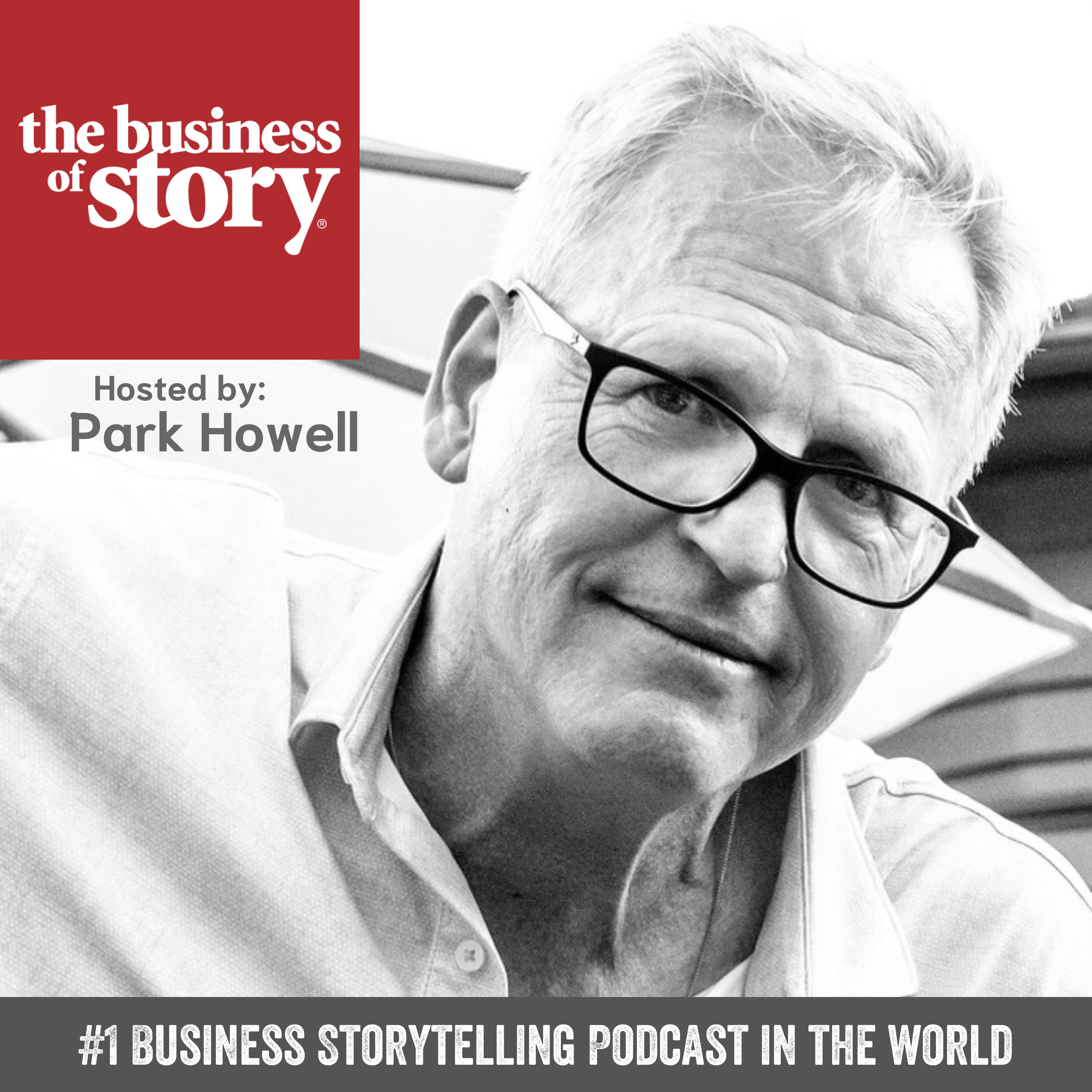
Park Howell brings 40+ years in branding and over two decades of proven expertise in marketing storytelling, combining primal narrative wisdom with modern precision.
As the creator of the revolutionary Story Cycle System™, which has grown brands by 600 percent, propagator of the ABT (And, But, Therefore) narrative framework, and co-creator of the StoryCycle Genie™, Park has pioneered “Vibe Branding”.
Vibe Branding combines emotional intelligence with artificial intelligence, guided by proven storytelling structures, to accelerate ROI: Your Return on Intelligence.
His sacred mission: help you excel through the stories you tell, delivering measurable results through systematic application of primal storytelling principles.
Latest Episodes: Primal Storytelling in Action
Recent Releases:
- 10 Essential Story Elements of Vibe Branding That Make Your Brand Narrative Enthralling
- The Five Essential Elements (the H.E.A.R.T.) of the Perfect Pitch With Ben Wiener
- How to Unlock Brand Alignment to Accelerate Your Business Growth With Brandon Coleman Jr.
- How to Tell Your Startup Lifecycle Story to Sell Investors & Customers on Your Brand With Gregory Shepard
- How to Effectively Position Your B2B Brand With April Dunford
Each episode delivers actionable insights you can implement immediately, combining proven primal storytelling frameworks with contemporary business applications for remarkable results.
Begin Your Storytelling Mastery Journey
Subscribe now and join thousands of professionals who’ve transformed their business communication through primal storytelling principles amplified with today’s technology. Available on Apple Podcasts, Spotify, Google Podcasts, and all major platforms.
Exclusive Subscriber Benefits:
- Access to primal storytelling resource library
- StoryCycle Genie™ early access updates
- Monthly storytelling mastery workshops focused on Return on Intelligence
- Direct connection with the storytelling excellence community
Or subscribe anywhere you get your podcasts.
Subscribe to Top-Rated Storytelling Podcast and Make Your Brand Story Stand Out
iTunes | Spotify | Pandora | Stitcher | Amazon Music | Get the podcast in your inbox every Monday

The Objection Was Never the Problem. You Were Asking the Wrong Questions.
Why Every Sales Conversation — and Every Difficult Conversation in Your Life — Comes Down to One Counterintuitive Discipline
You have spent years refining your pitch. You know your product cold, you’ve drilled your objection responses, and you’ve logged enough closes to know what good looks like.
But the objections keep coming at the wrong time. The closer you get to yes, the harder the room pushes back. The pressure mounts, and everything you trained disappears.
What nobody told you is this: the objections you’re fighting at the end of your conversation are a symptom of what you failed to do at the beginning. You skipped the discovery. You pitched before you listened. And now you’re trying to slay a monster you never bothered to understand.
That’s exactly the invisible monster Tara Shuler has spent 15 years teaching people to see — and destroy — through one counterintuitive skill: speaking entirely in questions.
Meet Tara Shuler: High-Ticket Closer, Sales Trainer, and Author of Questions Close Deals
Tara Shuler is the founder of Convo Control and the author of three books that bridge the gap between high-performance sales and every other high-stakes conversation in your life: Questions Close Deals, Parenting a Parent, and Everything Is Sales.
A competitive Level 9 gymnast by age 14, Tara has spent 15 years closing large-ticket corporate software contracts — pitching trading software to Morgan Stanley and UBS — training corporate sales teams across the country, and coaching high-ticket closers to get out of their own way. After her father died suddenly and she moved her reluctant mother from Pennsylvania to Florida — without a single argument — she realized something most sales trainers never do: the exact skills that close million-dollar deals are the same skills that navigate a grieving parent, a resistant teenager, and every other human being who doesn’t yet know they need to move.
She turned that insight into Convo Control, the Convo Dojo, and the body of work she brings to this conversation.
What’s in it for You
Tune in and you will install:
- Why your sales objections are almost always a symptom of skipping proper discovery — and how fixing the beginning of your conversation eliminates the need to handle anything at the end
- How speaking entirely in questions rewires your brain to take control of any conversation without argument, force, or pitch
- The invisible monster hiding inside every objection — what it actually is, why you can’t fight it until you name it, and how questions bring it into the light
- Why trained salespeople abandon every technique they know under pressure — and the gymnastics muscle memory framework that rebuilds your instincts at the cellular level
- How to practice the question-first method starting tonight at dinner — with your spouse, your kids, your colleagues — without telling them you’re practicing
- The pitch slap: what it is, why even 35-year sales veterans do it constantly, and the one-line pattern interrupt that stops it cold
- Why Tara moved her reluctant mother out of the house she’d built her entire life in — using questions, not logic — and what that story teaches every leader about emotional discovery
Listen and Watch
How to Operationalize Your Brand Story Before Narrative Entropy Kills Your Competitive Edge
Find, Define, and Get Your People Behind Your Brand Story Before AI Decays It
You want your brand story to drive real business results — define it, refine it, get every soul behind it — and you will create a competitive advantage nobody can take from you.
But most brands only reach the false summit. They do the deep work of crystallizing their brand story, get everyone excited, and look up to discover they’re staring at an even bigger mountain: operationalizing that story across every department, every channel, every new hire, every AI tool running at machine speed in public.
The most urgent discipline in your organization right now is the architecture that governs your brand story before narrative entropy quietly unravels everything you’ve built.
That’s exactly what this conversation is about — and why it exists at all.
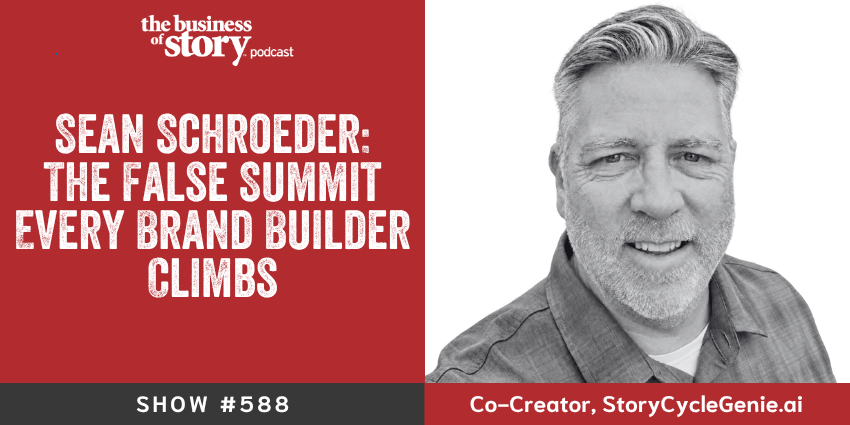
Meet Sean Schroeder: The Architect Who Turned a Brand Story Crisis Into a Platform
Sean Schroeder is the co-creator of the StoryCycle Genie® and the architect of the Cognitive Mesh Architecture that powers it.
Before building the platform that would change how brands operationalize their stories, Sean was the co-founder of Blueriver, a custom software development agency whose clients included Apple, NASA, the U.S. Senate, CSX, and NATO. He was simultaneously building Mura, a SaaS content experience platform. He and his partners sold both companies before COVID.
What he carried out of that experience wasn’t just the exits. It was the hard-won knowledge of what it actually costs to operationalize a brand story inside a real organization — and what it costs when you can’t.
That experience is the origin story of the StoryCycle Genie®. And it’s the most honest account you’ll hear this year of why generic AI makes narrative entropy worse, not better.
What’s in it for You
- Why defining your brand story is the false summit — and what the real Everest actually looks like
- What narrative entropy is, why it accelerates with AI, and the one discipline that stops it
- How the StoryCycle Genie® compresses months of brand story operationalization into weeks
- Why generic AI produces statistically average brand voice — and what governed AI does instead
- What Cognitive Mesh Architecture is and how it captures professional intelligence and decision-making lineage across your organization
- How StoryOps™ governs brand story across HR, DevOps, FinOps, sales, and customer service — not just marketing
- How the Brightsy platform’s MCP server delivers your governed brand story to every team member through the tools they already use
- The origin story of why Park said no to Sean’s idea — and why ChatGPT changed everything
Listen and Watch
The Creators Who Will Thrive in the Age of AI Are the Ones Who Refuse to Let It Think for Them
Why Artful Intelligence — Not Artificial Intelligence — Is the Competitive Advantage No Algorithm Can Copy
You want AI to accelerate your creative output without losing the one thing your audience actually came for: you.
But right now most creators are stuck choosing between two very different mindsets. Fear artificial intelligence as a force of loss — sameness, replacement, theft.
Or embrace it as Artful Intelligence, a force of creative abundance.
The difference between those two mindsets isn’t talent, budget, or access to better tools. It’s whether you encode your irreplaceable expertise into AI before you hit publish — or let it run without you.
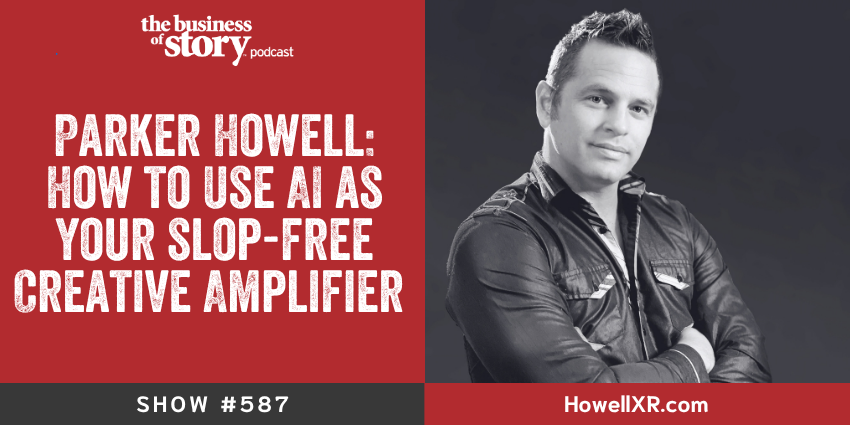
Parker Howell has spent 15 years building that case at the wild intersection of art, technology, and the human experience.
The founder of Howell XR, Parker is a filmmaker, VR game developer, augmented reality builder, fire dancer, competitive jiu-jitsu practitioner, Reiki healer, and hospice volunteer who has never once believed that a single discipline is enough.
That renaissance philosophy — the best ideas live where unrelated fields collide — is exactly what has made him one of the most prolific AI-powered creators working today.
In the last 18 months alone, he has built a full VR game with a two-person team in nine months, won $50,000 in a Meta hackathon in 30 days, built a working AI photo booth in 48 hours for $40, and launched an original card game from concept to print-ready in under 24 hours.
None of it was slop. All of it was Artful Intelligence.
What’s in it for You:
- Why generic AI produces indistinguishable work — and the one shift that makes yours unmistakable
- How Parker and his two-person team built Monkey Tower, a full VR game, in nine months using AI-assisted coding — a project that would have required 10 people and two to three years five years ago
- What vibe coding actually is, why it represents a 100x capability leap beyond AI-assisted coding, and how non-developers can use it to build real software
- How Language IRL, an augmented reality language learning app, won $50,000 in a one-month Meta hackathon — and what that means for any creator willing to experiment
- Why encoding your expert essence into AI makes it a scalable, legacy-building amplifier instead of a generator of sameness
- How to build your own custom tools — a CRM, a soundboard, a chess puzzle engine — in under an hour with conversational AI
- How Jackie Howell built the entire visual deck for SkateBoss, an original card game, overnight using AI and Canva — and had a playable beta prototype in 24 hours
Watch or listen here:
Why Brand Story Governance Is the Only Guardrail Standing Between You and Strategic Collapse
Even the Smartest Brands Make Fatal Mistakes — Here Is How to Avoid Theirs
You know your brand story is your most powerful strategic asset. When governed and operationalized across your enterprise, it protects you from the catastrophic business decisions that silently erode — and ultimately destroy — even the most iconic brands in the world.
But most companies treat their brand story as a marketing artifact rather than a strategic guardrail. When it drifts, fragments, and loses coherence, narrative entropy sets in. And today, AI accelerates that collapse at light speed.
That is exactly why this conversation with Magda Adamska is one you cannot afford to miss. She has spent over two decades studying what separates the brands that endure from the ones that implode — often in spectacular, painfully avoidable ways.
Meet Magda Adamska: The Brand Strategist Behind 250-Plus Case Studies
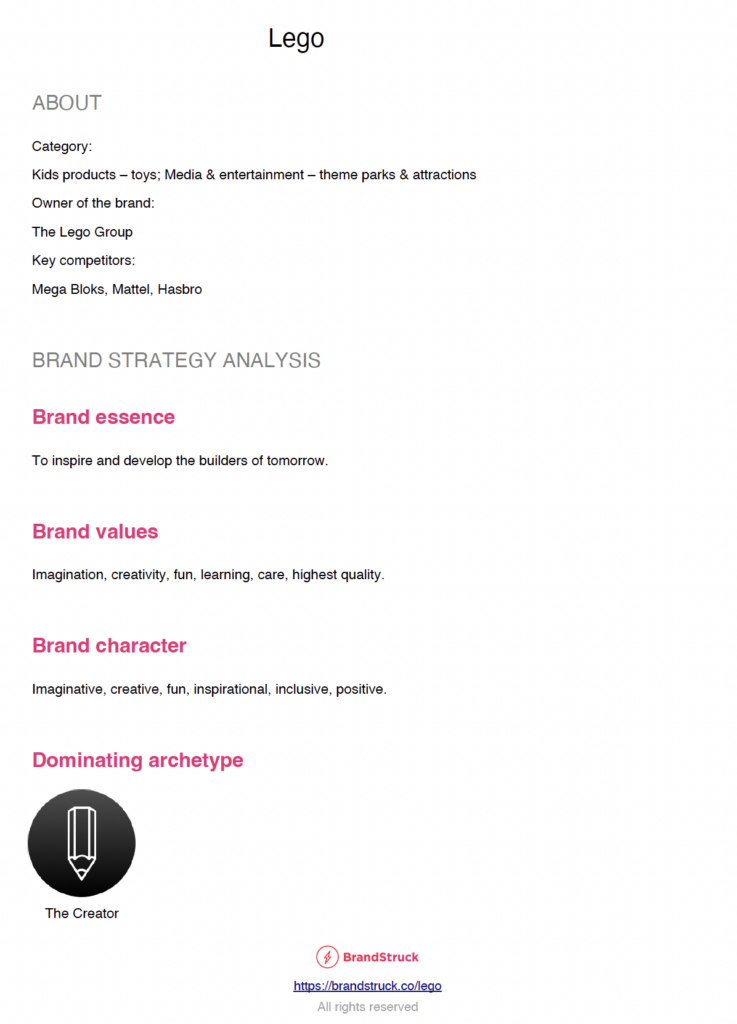 Magda Adamska is the founder of BrandStruck, the world’s only database of brand strategy case studies — 250-plus deep, spanning nearly 50 countries, and regularly updated as brands evolve (and sometimes collapse). A former brand director at MTV and Nickelodeon inside the Viacom portfolio, and an independent brand consultant with over 20 years guiding C-suite executives through brand transformations and portfolio optimizations, Magda has worked with the most recognized names in global business: Nike, Nestlé, Pearson, JP Morgan, Procter & Gamble, and Guinness World Records.
She is also one of the most rigorously objective analysts in the branding world — her Sage-with-a-warrior-streak personality comes through in every insight she shares. She doesn’t editorialize. She studies, synthesizes, and delivers.
What’s in It for You
- The four strategic traps that have destroyed even the most iconic brands — and how to recognize which one is threatening yours right now
- Why MTV had every advantage Spotify needed — and still failed to act before it was too late
- How Nike’s pandemic-era data trap triggered a brand crisis that is still unfolding today
- Why GoPro’s leap into streaming nearly destroyed the company — and what it reveals about the limits of brand extension
- The single most dangerous mistake any strategist can make when building a long-term plan
- Why a governed brand story is not a communications luxury — it is the strategic guardrail that protects every business decision you make
If She Can Stare Down a Cartel Boss in Colombia, She Can Show You How to End Your Brand’s Civil War
The Internal Negotiation Killing Your Brand Story Is the One Nobody Talks About
Every brand leader knows their story matters. You’ve invested in the workshops, the messaging framework, the brand guide that lives on the shared drive — and you believe your team is telling one coherent story out in the world.
But walk into your own organization and ask five people from sales, marketing, and IT to tell the brand story. You’ll hear five different versions. Each team is negotiating from their own silo, speaking their own language, protecting their own turf.
And AI is scraping every contradictory signal they’re sending, amplifying the chaos, and flattening your brand differentiation in the market before you even know it’s happening.
Welcome to the Business of Story. I’m Park Howell.
Attia Qureshi was sent to Colombia by the U.S. State Department to negotiate with farmers controlled by a cartel — and she won. If she can do that, she can absolutely teach you how to get sales, marketing, and IT to stop fighting over whose story wins and start building the only one that matters.
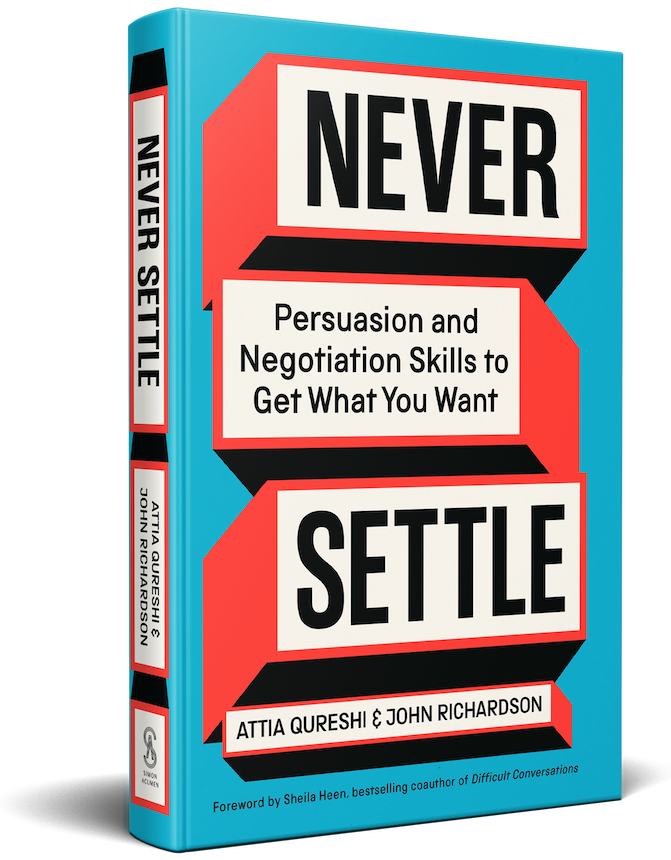
Attia is a negotiation and influence expert, former MIT faculty member, adjunct professor at the University of Michigan, and founder of Attia Qureshi Consulting, where she has spent two decades helping leaders and organizations negotiate better outcomes in every room they walk into. Her work spans Fortune 500 boardrooms, university classrooms, and conflict zones around the world. Her national bestselling book, Never Settle: Persuasion and Negotiation Skills to Get What You Want, earned this from Daniel Pink: “It will train you how to move through the world.”
Today, Attia shows you how relational negotiation is the foundational discipline your StoryOps™ practice has been missing.
What’s in it for You:
- Why your hardest brand storytelling problem is actually a negotiation problem — and what to do about it first
- How to map the interests of every internal stakeholder so you can build genuine cross-departmental buy-in around one sovereign brand narrative
- The reciprocity technique you can use today to repair fractured relationships between sales, marketing, and IT before the next brand meeting blows up
- Why narrative entropy accelerates in the age of AI — and how to use the co-creation of common ground as your StoryOps™ defense
- The three mindset traps that derail your ability to influence your own teams — and how to break out of them
Listen to or Watch on:
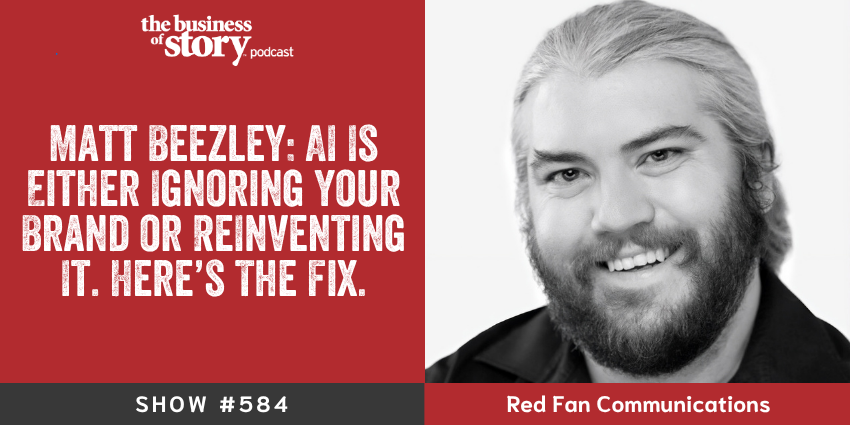
The Invisible Brand Crisis That Is Playing Out in Every AI Search Window Right Now
When Your Brand Story Fragments Across Platforms, AI Assembles the Pieces Into Something You’d Never Approve
You’ve invested in your brand story. The messaging framework. The positioning workshop. The brand guidelines nobody actually reads.
And you know that a clear, consistent story is what separates the companies that get found from the ones that get forgotten.
But right now, across every major platform where your brand exists — your website, your LinkedIn page, your Crunchbase profile, your Google Knowledge Base entry — those descriptions are telling slightly different stories. And AI is interpreting all of them…not always accurately.
When the signals don’t align, AI does one of two things:
- It ignores your brand entirely, which is bad.
- Or it assembles a Frankenstein version of your story from whatever fragments it can find, and serves that invention to buyers at the exact moment they’re making a decision.
Which is, as my guest Matt Beezley puts it, arguably worse.
The most urgent brand discipline of the AI era is not a new content strategy. It is entity coherence: the deliberate, systematic consistency of how your brand is described across every platform AI trains on. And it starts with the same thing it always has: one clear story, told the same way everywhere.
Meet Matt Beezley: The Journalist-Turned-Strategist Who Built the Diagnostic That Proves It
Matt Beezley is Senior Strategist at Red Fan Communications, where he has led brand positioning and messaging work for dozens of B2B companies across fintech, insurtech, sustainable technology, education, and supply chain — helping them find the story that holds through IPOs, acquisitions, post-merger integrations, and critical go-to-market moments when the narrative has to be right the first time.
A Missouri School of Journalism graduate who started his career as a political and sports reporter, Matt spent more than a decade at Red Fan building the firm’s positioning methodology from scratch.
He then created the Brand Authority Index tool that measures the underlying signals every major large language model uses to evaluate and recommend brands to potential buyers.
He lives in the Blue Ridge Mountains outside Asheville, North Carolina, where his non-working hours involve chasing waterfalls, cooking, watching football, reading science fiction, and evangelizing jam bands.
What’s in It for You
- Why AI detects and discounts AI-generated content — and what you should create instead to earn genuine citations
- How the Brand Authority Index measures signal-level brand health rather than query-based rankings, and why that distinction changes everything
- Why over 80% of AI citations come from earned media — not your website — and what that means for your PR strategy right now
- What entity coherence is and why your descriptions on Crunchbase, LinkedIn, Google Knowledge Base, and your own website must tell the same story or AI will tell a worse one
- Why gated content is quietly killing your AI citation rate — and how to find the right balance between lead generation and AI search visibility
- How the prism model works: one core brand message refracted into audience-specific messaging for every stakeholder in a complex B2B buying committee
- How to use a three-question monthly sales feedback loop to start closing your narrative entropy gap immediately
Listen to or Watch on:
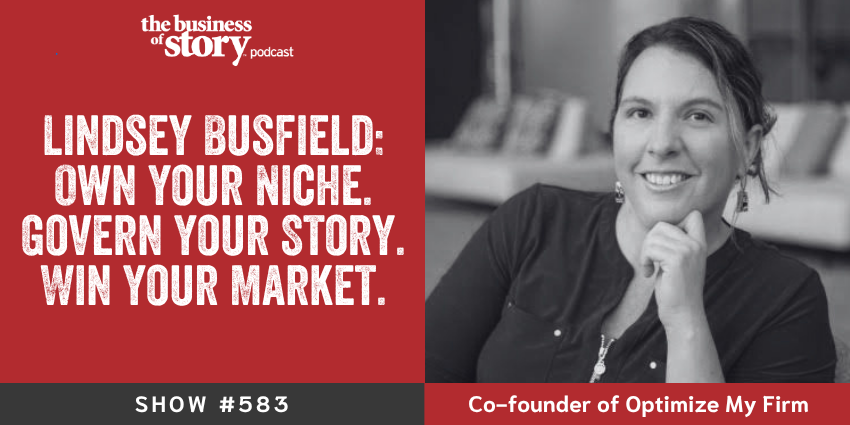
The Category Queen of Legal SEO Reveals How Radical Niche Focus and StoryOps™ Precision Turn Your Brand Into the Only Answer Your Market Finds
Why Casting a Wide Net Is the Surest Way to Disappear in the Age of AI Search
You want marketing that generates real revenue, and you know that telling a clear, consistent, compelling story is how the best brands separate themselves from the noise.
But most businesses dilute themselves trying to serve everyone. They cast wide nets, collect shallow results, and wonder why their marketing dollars disappear without a trace.
They’ve never gone deep enough into a specific niche to become the undeniable signal — and they’ve never defined, operationalized, or governed their brand story with the StoryOps™ precision it takes to become the category king or queen of their market.
Therefore, the most powerful brand strategy available to you right now is not a bigger ad budget or a better content calendar.
It is radical niche focus, a brand story governed with an eagle eye for coherence, and a digital footprint so deliberately built that Google, Perplexity, and every AI search engine serves you up as the only logical answer your ideal client finds.
Lindsey Busfield has already proven it works.
Meet Lindsey Busfield: The Co-Founder Who Built a Category-Defining SEO Agency by Saying No to Almost Everyone
Lindsey Busfield is the co-founder of Optimize My Firm, the SEO and content marketing agency behind some of the nation’s most powerful personal injury law firm websites.
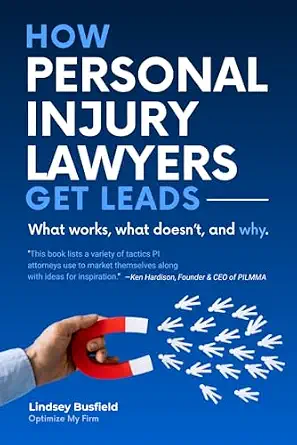 She is also the host of the Personal Injury Marketing Minute podcast and the author of How Personal Injury Lawyers Get Leads: What Works, What Doesn’t, and Why — available now on Amazon, with a free copy available for attorneys at OptimizeMyFirm.com.
Her path to category queen was anything but straight. Philosophy major. Starbucks barista. English teacher. Agricultural compliance auditor for Amish chicken farms. Law firm marketing temp who was handed an SEO project nobody else wanted.
That last accident turned out to be the aha moment where strategy and compliance and project management and English and creativity all collided inside one discipline — and a career was born. Lindsey and her business partner Len now run the most recognized SEO agency in personal injury law, with geographic exclusivity and a no-contract model that has revolutionized how clients and agencies build trust.
What’s in it for You:
- Why going narrower — not broader — is the most powerful brand strategy available to any business owner right now
- How Lindsey’s agency built geographic exclusivity and a no-contract model that eliminates the trust gap plaguing the legal marketing industry
- Why personal injury lawyers are natural storytellers — and what every B2B brand can learn from how they craft a narrative to win cases
- How SEO, AEO, and GEO work together in the age of AI search — and the one content discipline that positions you well across all three
- How owning your niche, governing your brand story through StoryOps™, and expanding your digital footprint with strategic yes decisions makes you the category king of your market
- Why Lindsey’s own website scored a D on Park’s brand narrative assessment — and what that reveals about how different types of businesses need to govern their stories
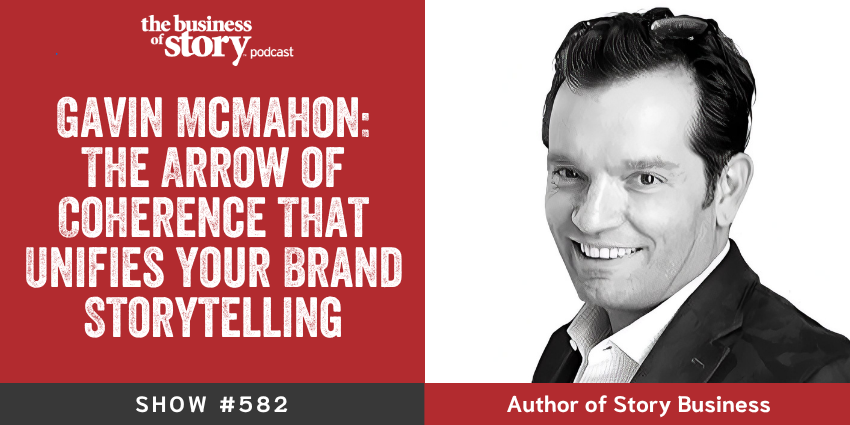
When Every Person in Your Company Points the Same Direction, That’s Not Culture. That’s Story Governance.
What a Recovering Engineer Discovered About the Hidden Force That Holds — or Destroys — Every Brand
You know your brand story matters. You’ve invested in it — the workshops, the messaging framework, the brand guide that lives on the shared drive. And you believe, because you’ve seen it work, that the right narrative can move people, align teams, and grow a business in ways no ad campaign ever could.
But walk into any company with more than fifty people and ask five leaders to tell the brand story. You’ll hear five different versions. Ask the frontline staff. You’ll hear five more. The story you built hasn’t traveled. It’s fragmented. And now with AI producing content at machine speed, every tool in your stack is scaling that fragmentation in real time, with confidence, in public.
Therefore, the most critical operating discipline in your organization is not your content strategy. It’s your narrative governance — the cause-and-effect logic that connects your purpose, your vision, your mission, and your strategy into a single coherent thread that governs every decision, every channel, and every AI output in the enterprise.
Gavin McMahon calls that thread the Arrow of Coherence.
Meet Gavin McMahon: The Engineer Who Discovered the World Is Made of Stories, Not Atoms
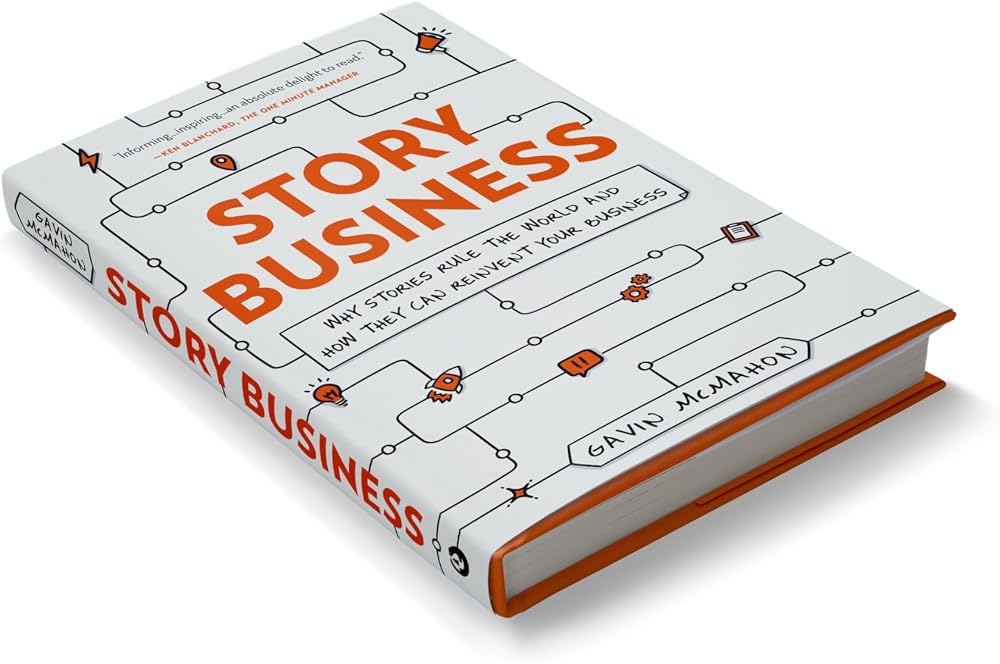
Gavin McMahon is the founder of a 25-year leadership and storytelling consultancy and author of Story Business: Why Stories Rule the World and How They Can Reinvent Your Business.
A recovering mechanical engineer who began his career working on nuclear submarines and manufacturing plants, Gavin transitioned into digital transformation at Gartner in the late 1990s — and failed spectacularly enough to learn something important.
His black-and-white engineering worldview collided with the messy human reality of organizational change, and what came out the other side was a framework for how companies actually create value: through story.
Story Business is the product of 25 years of testing that framework with real companies navigating real change, and it is one of the most practically useful books on organizational storytelling published in years.
What’s in it for You:
- What the Arrow of Coherence is and how to apply it to unify your brand story across every department, channel, and AI tool
- Why most companies suffer from a synonymous mess — purpose, vision, mission, and strategy all tangled together — and the one narrative move that untangles it
- Why brand storytelling is world building, and what that means for governance rather than just marketing
- Why the CEO is your most underutilized brand storyteller — and how to activate that power
- How show Bibles differ from brand guidelines, and why that distinction determines whether your story survives scale
- Why AI amplifies your narrative entropy at warp speed unless a governing Brand Brain is in place first
- The two things Gavin wishes he had known in the 1990s — and why they will change how you lead
- The Synonymous Mess That Is Quietly Destroying Your Brand
Because If No One Is Governing It, AI Is Fragmenting It Faster Than You Can Fix It
The Moment Your Brand Story Stops Being a Marketing Problem and Becomes an Operational Emergency
As a brand marketer, you know how important it is to communicate a clear, cohesive, and compelling story to stand out in the noisy world we all compete in.
But you may be frustrated watching AI fragment your story at machine speed, because no one in your organization is actually governing it.
Marketing is saying one thing. Sales is saying another. HR is in a completely different novel. And every AI tool your team is running without a shared narrative underneath it is amplifying that fragmentation in real time.
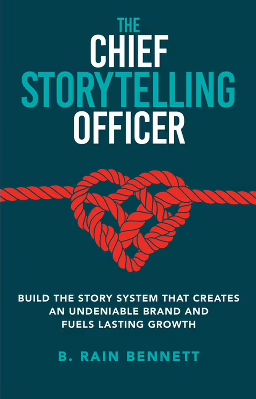
That’s the problem at the center of this conversation with Rain Bennett — award-winning documentary filmmaker, founder of Elamir, and author of The Chief Storytelling Officer. His new book makes the case — compellingly and correctly — that brand story isn’t a communications deliverable you hand to marketing after you’ve built the product. It’s the operating system you build your entire business on. And it belongs to every department in your organization.
Rain brings a perspective most brand strategists don’t have. Twenty years as a documentary filmmaker taught him how to find the powerful story inside any organization — even dense, technical, B2B companies — and make it clear and emotionally compelling for the exact people who need to understand it. That skill, he argues, is now the most urgently needed capability inside every enterprise navigating AI-accelerated narrative drift.
What Is a Chief Storytelling Officer — and Why Your Company Needs One Now
What’s in it for You:
- Why marketing, sales, and operations are telling three different brand stories right now — and the only way to stop it
- How Rain’s Narrative Operating System (NOS) governs story across Vision, Mission, Brand, Product, Marketing, Sales, and Feedback Loops
- Why the Chief Storytelling Officer is an engagement role, not a communications role — and what that distinction means for every function in your business
- How to extract the story your organization is already living before you try to tell the story you want to tell
- Why AI has turned narrative drift from a slow burn into an exponential emergency — and what the CSO does about it
- Why you must build your brand story alongside your product, not after it
Your Agency’s Most Valuable Asset Is the One You Keep Giving Away for Free
Why the Smartest Agency Owners Are Finally Treating Legal as a Growth Strategy
You want your agency to command premium fees, build lasting enterprise value, and stop competing on execution alone. The thinking and strategy you deliver every day is worth far more than the work you produce.
But most agency owners are unknowingly giving their most valuable intellectual property away in spec pitches. In vague client contracts. In freelancer agreements that hand over rights they never intended to transfer. And AI has quietly turned that costly habit into a legal emergency.
If you want to protect what you’ve built, profit from how you think, and walk away from your agency on your terms someday, this conversation with Sharon Toerek, you can’t afford to skip this conversation.
Sharon Toerek is the founder of Legal+Creative, a law firm dedicated exclusively to serving independent marketing agencies across the US, and host of The Innovative Agency podcast.
With a career built on intellectual property, trademark, and copyright law, she has spent over a decade helping agency owners see legal not as a cost center but as a competitive advantage.
Most agency owners think about legal the same way they think about insurance: necessary, boring, and only relevant when something breaks.
Sharon has spent over a decade proving that’s exactly backwards. She works exclusively with independent agencies, helping owners protect their IP, negotiate stronger contracts, and treat legal as a profit lever. This conversation will change how you think about your agency’s most overlooked growth driver.
What’s in it for You
- Why generic AI-generated content may legally belong to no one — not your agency, not your client, not anyone — and what that means for every deliverable you’re producing right now
- How feeding client data into generic AI tools is a hidden data privacy violation waiting to happen, and why most agencies are doing it without realizing it
- The single biggest mistake agencies make during new business pitches — and how to protect your IP before a prospect ever becomes a client
- Why your agency’s underlying methodologies, processes, and frameworks are protectable assets most owners are accidentally giving away in their client service agreements
- The five moves every agency must make now — from internal AI policies to errors and omissions insurance — to govern AI use, protect IP, and build an agency worth far more when it’s time to sell


