
How to Effectively Position Your B2B Brand With April Dunford
As a B2B brand leader, you know that clear, compelling market positioning is everything. If you can land your product in the mind of your prospect with precision, then you stand a fighting chance in even the most crowded markets.
But let’s face it: getting your positioning right is hard—because if you can’t explain what makes you different, then you risk becoming just another option that gets ignored.
 Today, you’ll meet April Dunford, a startup exec turned positioning powerhouse.
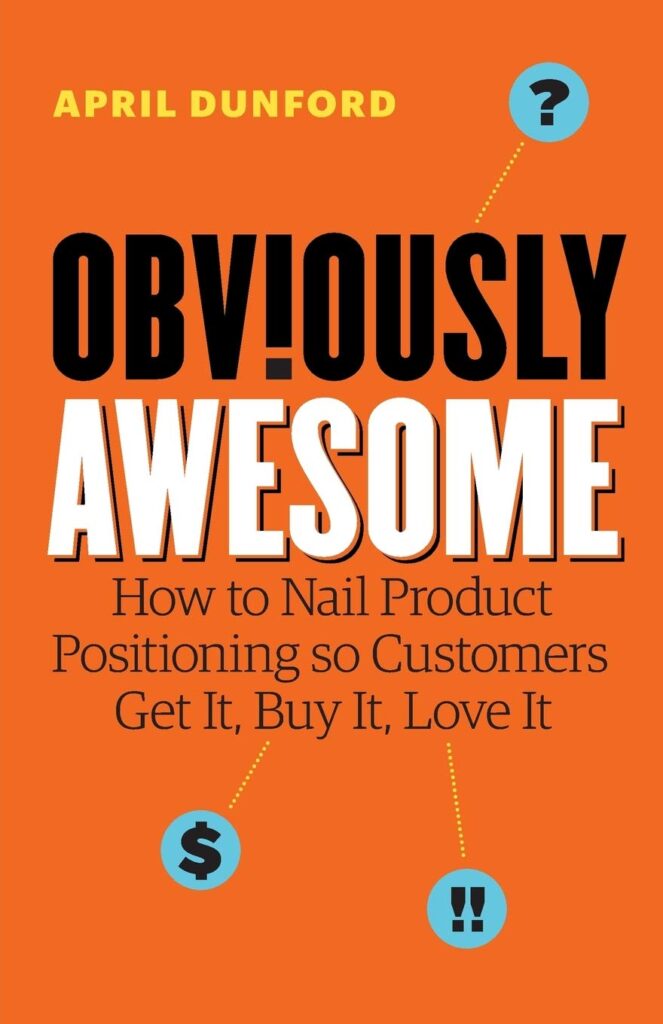
She’s helped over 200 B2B companies sharpen their message, launch winning products, and drive billions in acquisitions. April unpacks the proven frameworks behind her bestsellers Obviously Awesome and Sales Pitch to help you craft positioning that sells.
Whether you’re scaling a growth-stage startup or leading a legacy tech brand, you’ll leave this episode with the tools to own your space in the market—and tell your brand story in a way only you can.
What’s In It For You:
- Customer feedback is crucial for successful product repositioning.
- Repositioning can turn a failing product into a success.
- Understanding the status quo is key to effective positioning.
- Cross-functional collaboration is essential for positioning success.
- Tech founders often struggle to see alternative positioning.
- Positioning needs to address the actual customer pain points.
- Validating communication is crucial for effective storytelling.
- Understanding customer aspirations is key to positioning.
- Positioning challenges differ between startups and established companies.
- Identifying patterns in customer feedback is vital for refining strategies.
Chapters:
- 00:00 Introduction to Brand Alignment
- 02:59 The Importance of Truth in Branding
- 06:08 Identifying Brand Misalignment
- 09:01 Case Study: Santa’s Wonderland Transformation
- 11:56 The Disconnect in Customer Experience
- 15:13 B2B Branding Challenges
- 18:02 Real-World Examples of Brand Misalignment
- 21:00 Listening to the Market for Brand Success
- 23:54 The Role of Pride in Brand Alignment
- 31:29 The Value of Honest Feedback
- 32:47 Unveiling Brand Insights through AI
- 34:13 The Power of Brand Assessment
- 39:25 Emotional Promises and Brand Identity
- 42:34 Democratizing Branding for Small Businesses
- 46:30 The Importance of External Perspectives
- 49:23 Mapping the Journey from As-Is to To-Be
- 51:29 The Depth of Brand Experience
- 58:29 Delivering Value Without Excuses
Links:
- AprilDunford.Com
- April Dunford on LinkedIn
- Obviously Awesome book
- Sales P!tch book
- The StoryCycle Genie™
April Dunford’s Conversation With Park Howell on the Business of Story Podcast
B2B Product Positioning Expert April Dunford Reveals Why You’re Competing Against the Wrong Rivals
Park Howell: Good morning, April. Welcome to the show.
April Dunford: It’s great to be here. Thanks so much for having me.
Park: Well, my good friend Sean Schroeder, who I’ve been working with on our Story Cycle Genie said, boy, you’ve got to track down April and see if she would come in and talk about her expertise in brand positioning. So I’m just delighted that you’re here.
I love superlatives. I mean, I once had a client say, “Park, you’re like the most industrious storyteller I know.” So I said, I’m gonna run with that. And I liked yours — “the world’s leading B2B business positioning expert.”
April: It’s a biggie. But the work I do is actually quite narrowly focused. I only work with tech companies — specifically B2B tech companies. Not consumer. And not even a B2B tech company that doesn’t have a sales team.
So it’s actually quite narrow. In 10 years I’ve worked with 300-odd companies. The box is tiny, but in my tiny box, I rule the tiny box.
Park: Doesn’t that make sense from a brand positioning expert? You’ve niched it down, designed a category, and own it.
April: It would be kind of funny if I didn’t know how to position myself. Then you probably shouldn’t be hiring me.
How April Dunford Became a Product Positioning Expert: The Origin Story
Park: Can you give us a little bit of a backstory? Because I imagine you didn’t wake up as a young lady and say, “I’m going to be a positioning expert.”
April: In university, I studied systems design engineering. I decided I was going to go into tech, but I didn’t even think I’d end up on the marketing side of the house.
When I graduated, I got a job at a startup — and this was a long time ago. Startups weren’t even cool. We didn’t call them startups. We called it a small tech company.
The job was product marketing for a database company. The two requirements? You had to be unafraid of public speaking, and you had to be able to write an SQL query. I could do both.
I got assigned as product marketer for a product that — let’s call it unsuccessful. It never sold well when we launched it.
What we ended up doing was repositioning it. I didn’t know that’s what we were doing. Nobody called it that. But we took a product we were going to end-of-life and thought: maybe we could talk about it in a different way. Maybe we could aim it at a different kind of customer. Maybe we could sell it differently.
And that product took off. Became quite successful. We got acquired by a big database company in California.
After the acquisition, my boss quit. They made me VP of Marketing — which is hysterical because I could barely spell marketing at that point. Then they transferred every struggling product they had over to me and said, “Can you fix these?”
I said, “I don’t even know how we fixed the first one.”
So I embarked on a years-long journey to figure this out. Coffee meetings with smart marketing people. Post-grad marketing courses. A lot of books. And I discovered that what I had done was called positioning. That started my obsession with how you actually get it done — specifically when you’re selling a big-ticket, complicated technical product to very smart people in extraordinarily crowded markets.
The Product Repositioning Case Study: From “Spreadsheet on Steroids” to Embeddable Database
Park: On that first go at it — where you needed to reframe and reposition that product — do you feel like you got lucky, or was it intuition?
April: Definitely not intuition. There was a bit of luck, but mainly how we did it was customer feedback.
Park: What kind of product was it?
April: The original positioning was a spreadsheet on steroids. A hopped-up spreadsheet where you could do database things — write a SQL query, do inner and outer joins on a table.
We’d talked to technical customers and asked, “Would you like a spreadsheet with SQL query capabilities?” Everyone said yes. So we built it. We sold 100 of them at $100 each.
That wouldn’t even pay for one developer. We had five developers on it. Absolute failure.
They gave me the job of calling everyone on the customer list to find out how disappointed they’d be when we shut it off.
Except developers don’t answer the phone. I finally used what I’d call a damsel-in-distress email: “I’m brand new here and they’re going to fire me if you don’t talk to me for five minutes.”
That actually worked.
I talked to almost 100 customers. About 80 of them didn’t even remember they’d bought the product.
Then came call number 21. Very different.
The guy said, “I love you guys. You got me a promotion. This is the best product ever.”
He was using it to solve a field sales problem. His team had laptops and took orders on the road, but the Oracle database back at the office couldn’t sync with those laptops. So they wrote a little app on top of our SQL spreadsheet — take the order in the field, plug in at the office, sync with Oracle.
I put him in the “weird people that like our stuff” box. But then I found four or five more just like him. Field service teams. Ruggedized tablets. Syncing with enterprise databases.
Repositioning Everything: The Go-to-Market Transformation
April: We repositioned it entirely — and this wasn’t just changing the pretty words in the marketing copy.
Now we were selling it as an embeddable database for mobile devices. That changed everything:
- The pricing model — licensing to whole sales teams, not single units off a website
- The sales motion — enterprise sales rep, not website checkout
- The product roadmap — features for syncing, not just query speed
We hired one sales rep. End of Month 1? He’d sold 3,000 units.
Then we hired many more reps. Revenue went up and to the right. Company got acquired.
Park: You’re onto something here.
April: We were not trying to come up with magical creative copy to sell this thing. It was looking at this surprising way customers were getting value and asking: can we position around that?
The 3 Biggest B2B Product Positioning Mistakes
Park: What are two or three of the biggest mistakes people make when they haven’t positioned properly or are first starting to think about positioning?
Positioning Mistake #1: Believing There’s Only One Way to Position Your Product
April: In tech, the biggest mistake is thinking there’s only one way a product could be positioned.
A founder gets an idea from their own pain — they hate their email, so they build better email. They launch it, iterate with customers. Two years later they still think of it as email, but customers are saying, “Isn’t this really more like chat?”
We’re so close to it we can’t see it.
I worked with a company founded by two PhD database people. We’d launched it as a database, but eventually repositioned it as a data warehouse for machine-generated data.
Internally that was hard — it was wrapped up in their identity as people, not just a company. But the moment we made that shift, customers said: “Oh! Now I know what you are. Now I know who to compare you against. Now I understand the value.”
Positioning Mistake #2: Misidentifying Your Real Competition
April: Tech companies almost always misidentify their real competitors.
A typical scenario: a company gives me a long list of competitors — all small companies I’ve never heard of. I ask, “Do these guys beat you in deals?”
“Never. We win every time on ease of use.”
“When you lose, what happens?”
“Oh, we lose to no decision.”
“But the customer still has the problem. How are they solving it?”
“They’re just using a spreadsheet. Or hiring an intern.”
Your real competition is the intern. And ease of use is a death sentence when you’re positioning against an intern. The intern is extremely easy to use. You say, “Hey Joey, get me a coffee, fill out the spreadsheet when you come back.” Very easy.
But the intern can’t do what software does. The intern makes mistakes. The intern quits. The intern doesn’t know the full history of every interaction you’ve ever had with a client.
So your positioning needs to answer the question: why me versus the intern?
Park: Isn’t that interesting. We’re so caught up in our product and our competitors, we don’t take a deep breath, pump the brakes, and look at the actual human dynamic going on.
April: In tech we often have two categories of competitors.
There’s the status quo — the customer has the problem and they’re solving it right now with spreadsheets, junky legacy software, and custom IT code that barely holds it together. It does the job. And changing is effort. So you have to beat that first.
And then there are the shortlist competitors — when a customer decides to change, they’re going to make a short list and go through a real purchase process. You have to beat whoever lands on that list.
But if a competitor looks just like you on their homepage and never shows up in actual deals? They’re a ghost. I don’t have to position against a ghost.
Great positioning starts with two questions:
- What is the status quo I’m replacing?
- Who actually makes the customer’s shortlist in a real deal?
That’s the stake in the ground. That’s what I have to beat to win a deal.
Positioning Mistake #3: Making Positioning a Marketing Department Project
April: This may be controversial. But in tech, you cannot do positioning as a little project in the marketing department. If you do, it will fail.
Here’s what happens. You’ll create your genius positioning, walk over to sales, and say, “Here’s the new story.” Sales looks at that and says, “Yeah, no. Don’t get it. Don’t believe it. I’ll keep pitching it the way I pitch it now.”
You’ll get the same thing from product management. “Disagree. This is not why we win.”
And worst of all? The founder. Who’s talking to investors, customers, board members — from a completely different point of view. You show up with your marketing exercise and the founder says, “No way.”
And then where are you? No place.
Positioning needs to be a cross-functional exercise. You need:
- Sales — especially people who know exactly why you win and lose
- Product management — who knows differentiation at the feature level
- Marketing — who understands the research phase of the buyer’s journey
- The founder or business unit leader — whose conviction determines whether positioning actually gets implemented
If they’re not part of the process, the positioning will never stick.
The Story Cycle Genie™ Analyzes April Dunford’s Brand Live
Park: I used our Story Cycle Genie™ on your brand — just from your website and book pages. Here’s what it said:
“April Dunford positions herself as the world’s leading expert on product positioning for B2B tech companies. With 25+ years of experience as a marketing executive at successful startups, and having worked with 200+ companies, she helps businesses clarify how they’re different and better than alternatives. Her approach focuses on practical, structured methodologies that align teams around positioning that makes products intuitively understood by customers — through workshops, consulting, speaking, and books.”
April: That’s fair. That’s in the copy on my website.
Park: The Genie identified your unique value proposition as: “Practical positioning that makes your unique value obvious.”
April: That’s coming from my copy — and notably the name of my book: Obviously Awesome.
Park: Exactly. The Genie is giving you a reflection of how you’re showing up in the world. It does three things: validates your communication, reveals the gaps, and surfaces fresh ways to talk about your brand you may not have considered.
What Makes a B2B Website Effective — and When the Homepage Isn’t the Point
April: In B2B, you need to understand: what’s the job of the website?
Sometimes the homepage’s job is to clearly communicate value — why choose us over everyone else. But sometimes it’s different.
With product-led growth, the job is to get someone into the free product as fast as possible. Or the website is aimed at end users while the actual sale happens at the C-suite level through a sales rep.
I worked with a company called Postman. They have an extremely popular free API testing tool. Their paid product — the one that generates millions of dollars — has nothing to do with API testing alone. It’s a full platform for developing, testing, and deploying APIs across the entire lifecycle.
If you analyzed their website and said, “This positioning is unclear,” you’d be missing the point entirely. The website is partially tuned to get you into the free tool. The enterprise story lives in the sales conversation.
Most of the people who hit my website have already read my book. They find the book through word of mouth or a conference. They don’t go to my website right away — they read the book. Then months or years later they’re in a jam, they remember me, and they come to the website to decide whether to call me.
So my website’s job is to close the deal for someone who already knows who I am. That’s a very different job than generating awareness.
You cannot evaluate a website without understanding its job.
Park: You work with hundreds of companies. How often do you look at a website and see that it speaks from the brand’s perspective, not the customer’s problem perspective?
April: I try not to judge a website until I understand the whole go-to-market motion.
In the workshops, I assemble a cross-functional team and work through the positioning process. I often come in with an inkling of where positioning is weak or strong. But I am very often surprised — especially at the value step, where information comes from someone in the trenches that I’d never know unless I’d been selling that product every day.
Sales knows the status quo they’re replacing, how they made the shortlist, why they won, why they lost. Product management knows the differentiators at the feature level. Marketing understands how prospects research and evaluate in the discovery phase. The founder has the depth of context on why the product was built in the first place.
I need all of those people in the room — and a process that lets us build positioning based on facts, not opinions.
Customer Discovery in B2B: Win Analysis vs. Loss Analysis
Park: Customers often surprise you, don’t they? You think they’ll use it one way and they’re actually using it another.
April: Normally in tech, your customers aren’t going to tell you that. Customers are experts in pain. They are not experts in solutions.
They won’t come to you and say, “That’s not a robot — that’s an autonomous vehicle for industrial use.” They don’t know what that is. They’re not sitting around thinking about market categories. That’s your job as the vendor.
What customers can tell you is what they were doing before — that’s your status quo. And if you ask them, “If we didn’t exist, what would you do?” you sometimes get a very interesting answer. “I’d buy a warehouse.” “I’d hire an intern.” That’s gold.
But here’s the critical point on early-stage products: focus on win analysis, not loss analysis.
In the early days of a B2B product, you’ll lose 90% of your deals. That’s just what happens. A brand new product winning any deal is a miracle. It is precious.
Focus everything on understanding why you won:
- How did you make the shortlist against established competitors?
- When they evaluated you, why did they pick you?
- What made that customer a great fit?
- Why did they pass on the other guys?
With losses — be careful. Customers will tell you whatever gets you off the phone. “Too risky.” “Budget issues.” “Too expensive.” These reasons are often not truthful. They didn’t buy, so they have zero skin in the game.
How Many Customers Do You Need Before Tightening Your Positioning?
Park: At the top of the show you mentioned you reached out to 100 users of that early product. In your experience, how many customers do you need before you can get good intel on what’s working and what isn’t?
April: Great question. And first — often it’s not users we want to talk to. It’s buyers.
In B2B tech, a typical enterprise software deal isn’t made by a single person. Research shows the buying group is anywhere from five to a dozen people. You have the champion — the person tasked with making the shortlist. The economic buyer — the one writing the check. IT, procurement, end users — everyone has a vote.
Your positioning has to resonate most powerfully for the champion. Because if it doesn’t resonate for them, you never get to talk to anyone else.
On how many customers you need — the answer depends on deal size, deal length, and how uniform your customers are.
If you’re closing $1,000 deals in a month with two sales calls, there’s a lot of variability between customers. You need more examples to see the pattern.
If you’re closing $5 million deals over 18 months, every customer tends to look the same — and you don’t need many.
I’ve worked with companies that had 500 customers and I didn’t think they had enough signal — because every customer looked wildly different. And I worked with a company that had only three customers, $35 million in revenue, a dozen more in the pipeline, and all of them were big call centers using the product for exactly the same use case.
That was enough.
The real question is: can you see the pattern?
If customers all look the same, behave the same, and derive the same value, you can work with relatively few. If everything looks different — different industries, different buyers, different use cases — you need more deals before the patterns emerge.
Finding Your Beachhead Market: Who Has the Hair-on-Fire Problem?
Park: Can you talk about the importance of finding that beachhead market — that segment where you really get traction?
April: Sometimes you have a horizontal product — many types of customers could theoretically benefit. The strategic question is: which segment has the hair-on-fire problem?
I worked on a database that was especially fast on a specific kind of query on large datasets. Any company with a lot of data could benefit. But:
- Machine-generated data, real-time customer service queries: Hair on fire. A customer is on hold right now. They need the answer in milliseconds. These deals closed fast.
- A bank running the same query once a month over a weekend: Same technical benefit. Not urgent. Hard to sell.
We focused our marketing and sales on the hair-on-fire segment. They close fast. They don’t negotiate on price. They renew. They tell their friends.
That’s what an ideal pipeline looks like in the early days.
Find the segment where you spend less to acquire, close faster, renew reliably, and generate word of mouth. That’s your beachhead. You get to everyone else later.
Park: April, this has been an absolute masterclass on positioning. Thank you so much. Where can people learn more about you?
April: It’s aprildunford.com — come in and look at my glorious positioning.
Park: Absolutely. Thank you so much, April. Really appreciate it.
April: Thanks so much for having me.
Frequently Asked Questions: B2B Product Positioning with April Dunford
Q: What is B2B product positioning and why does it matter for tech companies?
A: B2B product positioning is the strategic process of defining how your product is uniquely different and better than all the alternatives a buyer might consider — and communicating that in a way your target customer immediately understands.
Positioning matters because even a technically superior product will fail if customers can’t quickly grasp why it’s the right choice for them. As April Dunford explains, positioning is not just marketing copy — it affects pricing, sales motion, product roadmap, and your entire go-to-market strategy. Get it right and deals close faster, pricing holds, and customers refer others. Get it wrong and you’re competing against ghosts while your real competition — the intern with a spreadsheet — beats you every time.
Q: What are the biggest mistakes B2B tech companies make with product positioning?
A: According to April Dunford, the three most costly B2B positioning mistakes are:
- Assuming there’s only one way to position your product. Founders define their product based on the original problem they solved and can’t see when the market is pulling them somewhere better.
- Misidentifying your real competition. In B2B tech, you often compete not against other software vendors but against the status quo — spreadsheets, manual processes, or a junior employee doing the task by hand. Positioning against ease-of-use when your real competition is an intern is a strategic dead end.
- Making positioning a marketing department project. Positioning only sticks when the founder, sales team, and product management are all part of the process. Marketing-only positioning gets ignored by the people who have to actually execute it.
Q: How do you identify your real competition in B2B markets?
A: To find your true competition, answer two questions:
First: What is the status quo the customer is currently using to solve this problem? This is often spreadsheets, legacy software, manual processes, or a junior employee doing the task by hand.
Second: Who actually lands on the customer’s shortlist in a real purchase process? Not every competitor on your competitive landscape slide shows up in deals. If a competitor never appears on a shortlist, they’re a ghost — you don’t need to position against them.
April Dunford calls these two questions the critical starting point of any positioning exercise. What you have to beat to win a deal is the only competition that matters.
Q: What is win analysis and why is it more valuable than loss analysis for early-stage B2B startups?
A: Win analysis is the deep study of why customers chose you — how you made their shortlist, what differentiated you from alternatives, and what characteristics made them the right fit for your product.
Loss analysis is the study of why you lost — but in early-stage B2B, customers who didn’t buy have no incentive to give honest feedback. They cite convenient reasons (“too expensive,” “too risky”) that rarely reflect the real issue.
For early-stage B2B tech, wins are precious data. April recommends understanding every single yes in depth: what triggered the buyer’s search, how you made their shortlist, why you beat the alternatives, and what segment characteristics made that customer receptive. These wins contain the positioning signal that defines your beachhead market.
Q: What is a beachhead market and why is it essential for B2B product positioning strategy?
A: A beachhead market is the focused customer segment where your product delivers maximum value with minimum friction — the group with the hair-on-fire problem that only you can solve better than any alternative.
Rather than serving all possible customer types from day one, a beachhead strategy means identifying the segment that closes fastest, pays without heavy discounting, renews reliably, and refers others. These customers are the foundation you dominate before expanding to adjacent markets.
Trying to serve everyone at launch dilutes your positioning, slows sales cycles, and makes it nearly impossible for buyers to understand why you’re the right choice for them specifically.
Q: Why can’t marketing own product positioning alone in a B2B tech company?
A: In B2B tech, positioning is a company-wide operating system — not a marketing slogan. When only marketing defines it:
Sales won’t use it. They’ll keep pitching the way they always have because they don’t believe in it.
Product won’t support it. They’ll build based on their own view of the market.
The founder will override it. Publicly, in every investor call and customer meeting.
Effective positioning requires a cross-functional team: sales (who know win and loss patterns in real deals), product management (who know differentiation at the feature level), marketing (who understand the buyer’s research journey), and the founder or business unit leader (whose conviction determines whether positioning actually lands with customers).
Without that alignment, even brilliant positioning dies in the hallway.
Q: How many B2B customers do you need before tightening your product positioning?
A: There is no universal number — the answer depends on pattern recognition, not headcount. Three key factors:
Deal value and cycle length. High-value, long-cycle deals ($5M+ over 18 months) tend to produce uniform customers quickly. Low-value, short-cycle deals produce more variability, so you need more examples before patterns emerge.
Customer uniformity. If your customers all look the same — same buyer profile, same use case, same perceived value — you can work with relatively few. If every customer looks different, go close more deals first.
April Dunford has worked with companies of three customers and known it was enough — $35M in revenue, all big call centers, all using the product identically. And she’s worked with companies of 500 customers where the patterns were still too diffuse to act on.
Q: What questions should you ask B2B customers to uncover better product positioning?
A: The most powerful customer discovery questions in B2B focus on the buyer’s context, not your product’s features. April Dunford recommends:
- What were you doing before you found us? (Reveals the status quo you’re replacing)
- If we didn’t exist, what would you do? (Often surfaces surprising competitive alternatives)
- How did we make your shortlist? (Reveals the trigger that made you relevant)
- Who else was on the shortlist and why did you choose us over them? (Uncovers real differentiation)
- Why not the other guys? (Sometimes you won because a competitor made a mistake — important to know)
Avoid taking loss feedback at face value. Customers who didn’t buy have no incentive to give you the real reason. Focus your discovery energy on customers who said yes.
Q: When is the right time to hire a B2B product positioning consultant?
A: April Dunford recommends waiting until you have enough market traction to see repeatable patterns.
Too early: You have a new product, fewer than 10 closed deals, and customers all look different. Go close more deals first. A consultant can’t build a positioning thesis from insufficient signal.
The right time: You have customers with clear patterns — uniform buyer profiles, repeatable value delivery, visible win and loss dynamics — but your messaging isn’t converting the way the data suggests it should.
The inflection points that typically trigger a repositioning engagement: new competitors emerging in deals, a recent acquisition or product expansion that muddied the message, preparation for IPO, or a strategic move upmarket from SMB to enterprise. At each of these moments, positioning that worked before may no longer be serving you.
Popular Related Episodes You’ll Love:
- #250: How to Grow Your Business With Bewitching Brand Storytelling with Park Howell
- #400: Learn From My 10-Year Journey With the ABTs of Storytelling with Park Howell
- #508: How to Apply Mediocrity Repellant to Your Brand Storytelling with Cameron Day
Your Storytelling Resources:


Connect with me:
Instagram: https://www.instagram.com/parkhowell/
Facebook: https://www.facebook.com/groups/BusinessOfStory
YouTube: https://www.youtube.com/channel/UC0ssjBuBiQjG9PHRgq4Fu6A
Twitter: https://twitter.com/ParkHowell
LinkedIn: https://www.linkedin.com/in/parkhowell/
Website: https://businessofstory.com/abt/
#StoryOn
 Listen To More Episodes