
The Five Essential Elements (the H.E.A.R.T.) of the Perfect Pitch With Ben Wiener
How to Pitch Like Your Life Depends on It
Want to create a winning startup pitch that actually lands funding?
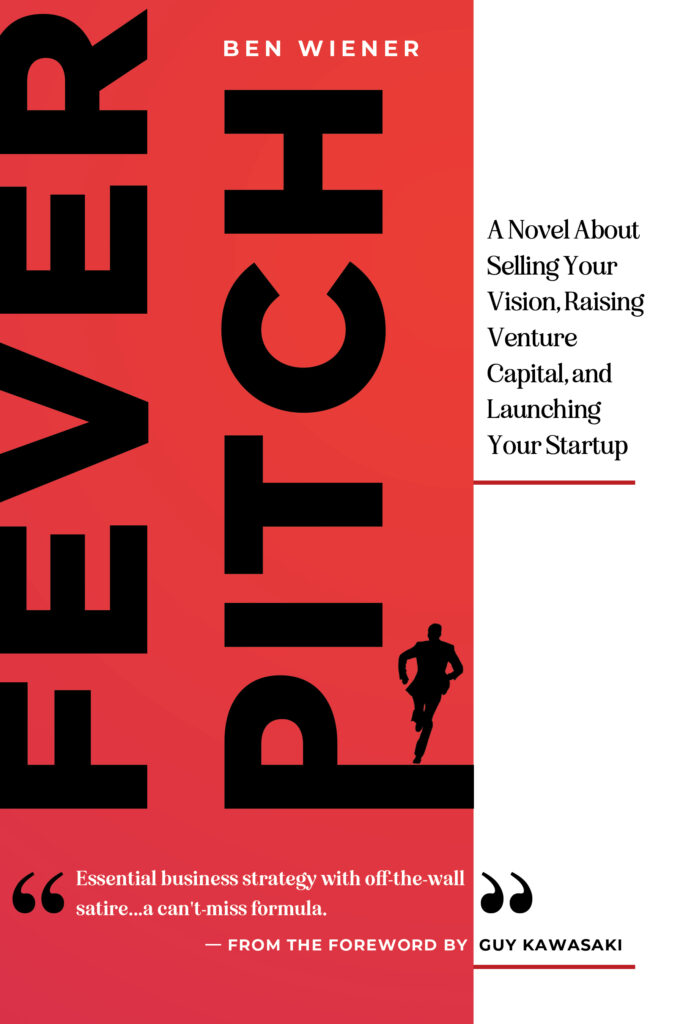
In this episode of the Business of Story, storytelling strategist Park Howell interviews Ben Wiener, managing partner at Jumpspeed Ventures and author of the Amazon #1 bestseller Fever Pitch, a business thriller that brings pitch storytelling to life.
Ben is a venture capitalist, founder, and startup mentor who developed the H.E.A.R.T. Pitch Framework to help entrepreneurs tell stories that inspire action. Learn how to combine emotional resonance, narrative structure, and investor psychology into a simple five-part formula for communicating big ideas.
Whether you’re raising capital, launching a product, or convincing stakeholders, this episode will show you how to structure your pitch like a compelling story and radically improve your odds of success.
Ben is the managing partner of Jumpspeed Ventures, an early-stage venture capital fund focused on category-defining technology startups in Jerusalem.
A former founder himself, Ben turned his hard-won lessons from rejection into the H.E.A.R.T. framework, now taught at institutions such as Harvard and Johns Hopkins.
He’s the author of the business-fiction novel Fever Pitch, which delivers storytelling-driven startup lessons through a suspenseful, music-laced narrative. Ben reads up to 100 books a year, has completed 10 marathons, and believes the best pitches start with why.
What’s In It For You:
- Why 82% of startup pitches fail and how to fix yours with storytelling
- The 5 steps of the H.E.A.R.T. Pitch Framework:
Hypothesis – Start with a belief, not a product
Enormous Stakes – Show what’s at risk if things don’t change
Alternatives – Expose the flaws of the status quo
Radically Different Solution – Make your idea un-ignorable
Team – Prove your unique ability to deliver
- How Fever Pitch uses fiction to teach real-world pitching strategy
- How Ben turned 27 rejections into a top-performing VC fund
- Why the future of pitching is built on timeless storytelling principles
Links:
- Fever Pitch book
- BenWeiner.net
- Ben Weiner on LinkedIn
- Ben on Instagram
- Ben on Facebook
- StoryCycle Genie™
- Flowjam, London-based launch video studio for AI startups, worked
with 25+ YC companies.
Popular Related Episodes You’ll Love:
- How to Tell Your Startup Lifecycle Story to Sell Investors & Customers on Your Brand With Gregory Shepard
- How to Use Brand Storytelling to Ignite Your Startup With Sonny Patel
- How to Make Your Sales Story Land Right the First Time With Melissa Kwan
Ben Wiener’s Conversation With Park Howell on The Business of Story Podcast
The Five Essential Elements of the Perfect Pitch, with Ben Wiener
Park: Good evening, Ben. Welcome to the show.
Ben: Thank you for having me. I’m a big fan of your work and glad to be on the show.
Park: Well, thank you — it’s actually morning here in Arizona, but I know it’s evening there in Jerusalem. I love bringing in story artists from around the world, and I’m really pumped about talking about your new book today.
Ben: Thanks for having me. I can’t think of a better titled podcast to talk about this topic.
Why Ben Wiener Wrote a Business Thriller to Teach Startup Pitching
Park: I love your approach to Fever Pitch — you share your business and startup wisdom through a fictional tale. How much is fact and how much is fiction?
Ben: There’s very little actual events. There’s only one character in the whole book who’s loosely based on somebody I met once, and he’s a very pivotal character. But the rest is completely made up, and it’s designed to be a fable — a teaching tool to teach the fundamental principles of the ideal startup pitch.
Park: I love it. The Go-Giver series of books did the same thing about leadership and business — very effective. So to give our audience a little background on you, I ran your brand Ben Wiener through the StoryCycle Genie. This is how I do my due diligence these days on all my guests.
Here’s what the Genie pulled from your website and content: Ben Wiener positions himself as a multifaceted professional who combines venture capital expertise with intellectual curiosity and athletic discipline. You present yourself as a voracious reader who believes that reading up to 100 books annually has made you a better investor, writer, and person. You’re a 10-time marathoner living in Jerusalem, Israel.
Jumpspeed Ventures positions itself as a highly selective early-stage VC fund focused exclusively on category-defining technology startups within the Jerusalem startup ecosystem. Your investment criteria are clearly articulated around five key elements: Pain, Paucity, Paradigm shift, People, and Passion. How accurate is that?
Ben: I was blown away by that report. I kept questioning you — are you sure this was generated automatically? It was remarkably insightful about how I try to position myself. It even surfaced a couple of things I wouldn’t have expected to show up. Just very goose-bumpy, spooky good.
Park: Spooky, scary, but in all the best ways. It’s great timing to have you here because we are in startup mode too. What will any businessperson — whether they’re actually launching a tech company or just launching a new initiative inside a large enterprise — learn from your book, Fever Pitch?
What Is the H.E.A.R.T. Pitch Framework and How Did It Come to Be?
Ben: The book is one of the outputs of work I’ve done over the last couple of years to figure out if there was an ultimate, optimal way to present new innovative ideas that cause people to take action — like give you money or decide on a new path for your company.
One of the things I produced was a framework for pitching called the H.E.A.R.T. framework for pitching.
And then along the way, I had this idea of a founder who couldn’t pitch a startup to save his life — until he actually needed to pitch his startup to save his actual life. Could I send this fictional person on a journey to discover and teach what I had uncovered in a more fun, entertaining way?
I could have just written the H.E.A.R.T. framework up in a 2,000-word blog post that nobody would have read. Instead I wrote a 270-page fictional novel to teach the same thing. You have to be a little bit crazy to do what I did, but it was just a labor of love.
You don’t have to read the book to get the gospel truth of the framework. You can go to the website and access the playbook and download worksheets. But for those who want to enjoy a good story and learn it — plus a whole lot of other lessons about innovation, startup land, and the founder’s journey — the book is a fun way to explore those principles.
Park: Can you give us the overarching story framework or story narrative in the book?
Ben: I think there are a lot of fictional novels about startups that feel very cartoonish. I have a lot of respect for the founder’s journey — it’s very complicated and tense.
So I wanted to capture a realistic view into this well-meaning founder who’s got a mistaken view of how to present his startup to investors. He’s so passionate and so committed and so convinced that what he has is amazing. It may be — it turns out that it really is — but he’s so caught up in that that he can’t get into the head of the people he’s trying to talk to.
Here’s the reason I wrote the book: the startup pitch is a gating factor for a startup entrepreneur. Over 90% of investors say the pitch deck is an essential part of their analysis. But the shocking statistic is that over 82% of venture capitalists say that the pitch deck on average is poorly organized.
So four out of five times, the pitches they’re receiving are like a song being sung off key. That’s very frustrating and distracting to an investor when this is happening to them three or four times a day or week.
So therefore I embarked on this journey of research to figure out — why is this still a problem in 2022, 2023, 2025? Why are founders just not getting this right? Once I figured out where the disconnect was, I developed this five-part framework to try to upgrade a typical pitch, and embedded that into a crazy story.
I’m not going to spoil the ending, but when he finally discovers the framework in his dark night of the soul — when he’s thrown into jail — the question is, is he going to be able to get out and get to salvation when everyone’s trying to kill him? It’s just a fun way to highlight the tension.
How Ben Wiener Went from 0 for 27 Rejections to a Top-Performing VC Fund
Now, I wasn’t thrown in jail and my life wasn’t falling apart, but I went through that kind of journey as I started my entrepreneurial activities. I was rejected often by investors.
The one that really worked is the one that I manage today — a venture capital fund. When I started the fund 12 years ago, I was broke. I was unemployed. I had no track record as an investor. I had a pretty interesting, very counterintuitive idea for a new venture capital fund in my city that was very provocative and contrarian.
Park: What was your startup idea?
Ben: I thought people would just trust me as a smart guy and give me some money. And I was 0 for 27 pretty quickly with investors and realized — oh shoot, my pitch is not working.
It culminated in a coffee shop where I took out a wealthy individual. He literally stood up in the middle of my pitch, looked down at me from the tip of his nose and said, “Ben, this is the most ridiculous pitch I’ve ever heard. This will never work. We’re not going to invest in you. Nobody’s going to invest in you. Go get a job.” And he walked out.
And you’re sitting there thinking — shoot, this is not working. But thankfully, instead of just being frustrated and angry and upset, I started to think about why I was 0 for 27. I really believed in what I was doing. Something was wrong with my pitch.
So I went back to the drawing board, reconfigured my pitch. Nothing had changed — my thesis hadn’t changed, my abilities hadn’t changed. I just reordered the information and presented it in a new way that matched the way the investors’ brains were working. And then I was able to raise money and get my fund off the ground.
And ironically, that initial fund that nobody wanted to invest in became one of the top decile — top 10% — returning funds in its vintage in the world for 2013. I became a number one bestselling author on Amazon with a book about startup pitching when initially I’d started off 0 for 27 with my stupid pitch.
Park: So Ben, what I’m hearing is that you were broke, you had what others thought was a harebrained idea but you believed in it, and your story was off tune. At some point you must have thought — maybe they’re right, maybe I should go get a job.
Ben: I never thought that. The more I dug into the specific opportunity that I found, the more I saw that it was real. I just wasn’t being able to communicate that clearly to the people I needed to communicate it to. So I never really doubted the opportunity. I just doubted myself. I thought — maybe I’m just not good at explaining this and I need to rethink how I’m explaining it so that people will see what I see. And thankfully that worked.
The Most Common Startup Pitching Mistakes and How to Fix Them
Park: Could you do an A/B test for us — tell us what your first story was roughly, and then where all the cracks and fissures were, and how you fixed it?
Ben: It was very classic. Today, when somebody bumps into you in an elevator, 10 out of 10 times they will ask: “Hey, what do you do? What does your company do?” And so you answer what your company does and how it does it. I say that’s wrong.
And that’s the way I began — “What’s your venture capital fund? My VC fund does this and this and this.” What the investor really wants to know — and I’m drawing on Simon Sinek’s famous TED talk, Start With Why — when somebody asks you what you do, you need to start with why. You don’t answer what you do. You say, “I believe.” There has to be a belief statement in the beginning.
Preferably a little bit provocative or controversial. It’s even cooler when it’s something that you believe you’ve seen in the future, that you’re bringing back to the present that other people don’t yet believe.
The greatest ideas are the non-consensus ideas that turn out to be right. Deep down, an investor is actually yearning for that new thing that you’ve discovered that they don’t know about or don’t fully appreciate. So let’s start with “I believe” or “we believe” — something that shows what’s motivating you to do what you do.
I was meeting with investors and just shooting them with a fire hose of all the important information I wanted to give them. But that’s not really what they’re looking for. They want to start at an earlier point. Your train has already left the station and they’re still back at the station asking — why, why, why do we need this?
So let’s start with why — that’s the H of H.E.A.R.T. — the hypothesis or the start with why. There were other mistakes too — not focusing on how radically different my solution was or why the alternatives were terrible. There are multiple steps you need to set up before you get into what you do.
I always say — like a movie trailer — it would be ridiculous to watch Tom Cruise or James Bond run around for a minute and a half and only then introduce the villain. We want to see the villain early, understand what the stakes are, and then see the hero chase the villain.
How the Save the Cat Framework and Hero’s Journey Inspired the H.E.A.R.T. Pitch
Park: In Fever Pitch you were talking about the Dark Night of the Soul and that sort of thing. Did you follow Blake Snyder’s 15 Beats to Story? Is that what pulled the framework of the overall book together?
Ben: Yeah, Save the Cat is right here on my shelf. This was one of the most important books I read in my journey. Those narrative arcs that Joseph Campbell wrote about — I know you’ve quoted Joseph Campbell on your prior podcast — those arcs were out there for anyone to learn from. I just didn’t think anybody had pulled them into the startup world. And that’s what I did.
I researched mythology and psychology and screenwriting and novel writing. And they all led me to the same first principles — the fundamental building blocks of a story — which is frankly the way we’ve evolved as humans to process new information.
Back around the campfire when we were cavemen, people were telling stories in a certain way. Our brains evolved to expect and to respond to those stories in that structure. And the problem is that 82% of venture capitalists are telling us that the founders they’re meeting are not telling them the story in that structure.
So I’m coming in and saying, all I’m doing is pulling these narrative arcs from other genres like movie writing and book writing and mythology, and I’m pulling them into our world of innovation and business. What does that narrative arc look like in a startup pitch? It’s these five principles — the same kind of beats that Blake Snyder was talking about, that Joseph Campbell was talking about.
Park: And you and I are in lockstep because that’s what I’ve done with business branding, marketing, and sales for the last 20 years. When I went to Robert McKee’s legendary story conference, he said: “We use stories to make meaning out of the madness of being human beings.”
When you are using story as you do with startups, you’re simply guiding people on how to communicate to that limbic brain in the way it wants to receive information. And as legendary Silicon Valley marketer Christopher Lockhead says — “Nobody buys the solution unless they have a frickin’ problem.” That’s essentially what you’re talking about.
How did you use story frameworks like the Hero’s Journey or Blake Snyder’s arc to create your framework?
A Full Breakdown of All Five H.E.A.R.T. Pitch Framework Elements
Ben: I wanted to try to simplify it as much as possible without making it simplistic. So I really tried to boil it down to its component parts. What I came out with was five. And then I realized — wow, they spell out H.E.A.R.T. The first one should have been a W because it’s WHY, but I created H for Hypothesis to make it spell out HEART.
H — Hypothesis: Start with WHY. The first sentence should have the word “believe” in it. If you watch the Simon Sinek TED Talk, he says the word “believe” or “belief” over 33 times. That belief connection is very important.
E — Enormous Stakes: There’s a lot at stake. Our hero is facing a very serious villain. This is human life, big dollars. There’s a lot at stake in what I believe.
A — Alternatives Are Terrible: Before we even introduce our hero, we want to know what the alternatives are. What’s the current state of play and why is it screwed up? The status quo is not acceptable.
R — Radically Different Solution: Only the fourth out of five — only then — our hero comes running in on a white horse. It’s not better. It’s not optimized. It’s a radically new way of addressing the problem, because that’s what it’s going to take to change people’s behavior.
Many venture capitalists have said: if your solution is better but there are solutions that are good enough, it might not be enough for customers to change their behavior.
T — Team Traits: Does this team have the unique credibility and ability to do this crazy thing? Can they design it, build it, and sell it?
I think a lot of pitches I hear — dozens a week — don’t have any of those five things. And what that means is that the person being pitched is retranslating as the pitcher speaks. There’s like a dissonance, a buzzing in their head, because they’re trying to reconnect this into the narrative arc they’re expecting. In that retranslation, a lot of stuff gets dropped.
I think in the graveyard of failed startups, there’s a whole section of startups that had amazing ideas and great teams but just couldn’t tell the story straight and they didn’t get funded. I want to try to give founders an upgrade to their pitch and a better chance of securing the funding they need.
The StoryCycle Genie Pitched Live Using the H.E.A.R.T. Framework
Park: Can I bounce your H.E.A.R.T. framework using our StoryCycle Genie since I just learned about it through you? We are in launch phase. We’re not looking for funding at this point, but we certainly are looking to get people to invest in the Genie.
And here’s what I think Ben is saying — you don’t have to be a startup. You could be a small-to-mid-sized company looking to exponentially grow your revenue. You’ve got to think a bit like a startup and tell your story a little bit differently.
OK, Ben. Here we go.
Hypothesis: I believe that small-to-mid-sized businesses remain that way, primarily because they don’t know how to tell their story. In fact, in America, only 1% of businesses actually do over $10 million in revenue. The other 99% are toiling below that — primarily because they simply don’t know how to tell a clear, concise, and compelling brand story that differentiates them and pulls people in.
Enormous Stakes: Branding is not democratized. Most companies can’t afford the money or take the time to do branding right. A lot of agencies price themselves out, and the people inside these companies are so busy trying to make their business run and grow, they simply don’t have time to build that brand story.
Radically Different Solution: Now there is a radical, revolutionary way to do it — the StoryCycle Genie. It’s built on the Story Cycle System, which I perfected coming out of Hollywood 20 years ago, and it has grown brands by as much as 600%. Now people can use the Genie to craft a brand story strategy in minutes, not months.
Team: There are three of us. I am the lead with the StoryCycle System. Sean Schroeder used the StoryCycle System back in 2017 to rebrand his digital firm Blue River in Sacramento, grew exponentially, and sold both the agency and a large content management SaaS platform. And then Matt Levine, the hardcore developer who built that platform, now has our platform residing on a CMS called Brightsy. So now people can unlock their brand genius with the StoryCycle Genie.
Ben: I thought for a first attempt that was pretty good. I think you only mentioned the AI in the team part and I don’t recall if you mentioned that as part of the radical differentiation.
What the StoryCycle Genie really does is that in the flick of a switch — like in five minutes — it does this comprehensive lifetime audit of everything you’ve ever published and spits out this automated report that would take human beings an enormous amount to replicate. I can’t even imagine how much it would cost to get a team of branding specialists to do what you generated for me.
Park: 50,000 plus.
Ben: In five minutes. And that’s part of the pitch. The alternatives are hiring a branding firm who cost tens of thousands of dollars. We can turn this out in AI that is incredibly accurate in five minutes, and that’s never been able to be done before.
I’m so used to the H.E.A.R.T. framework that I do it on other people just to be annoying. People will pitch me and I’ll say, “Do you mind if I repitch it to you?”
Park: Can you do that for me? Can you repitch what you just heard?
Ben: Hi, I’m Park. I believe that branding is broken for small businesses. It’s completely inaccessible. They don’t have the ability to do anything other than day-to-day run their businesses. It’s just out of the realm of possibility for them to even contemplate some sort of fancy branding exercise.
There’s a lot at stake because the vast majority of small businesses in the United States are way below single-digit millions — and they could be bigger.
The alternatives for branding are terrible. Hiring a branding firm — impossible. It’s just not affordable for a small business. There’s just no way for them to access world-class branding expertise if you’re running a $5 million home goods store in Wichita.
But in comes our hero on the white horse. We have developed this AI-powered, never-been-done-before, deeply sophisticated algorithm that in literally five to ten minutes can spit out a detailed, comprehensive branding report with recommendations for your business — based on the body of content you’ve put out over your lifetime — and give you a world-class professional branding report with the click of a button. Game over. Drop the mic. Where do I sign?
Park: And the one thing I would underscore with that is it doesn’t just give you the report — you can go in and refine everything in there. It’s going to validate what you’re already doing well, reveal gaps and highlight missed opportunities you can fix immediately, and inspire you with fresh ways to tell your story. Once you get that foundation down and locked into the Genie, then you can build every kind of content off of your unique and authoritative story.
Ben: And listen to how each of us did that — we each did that in probably less than two minutes. Anybody listening would have a pretty good sense of the whole story of what this is and who we are. That’s the idea of H.E.A.R.T. — that is the pitch. It’s not just the foundational elements. It is the elevator pitch. And I would argue that if somebody was stuck literally in an elevator with an investor, all they would need to do is hit the HEART elements. And the person listening would have a very solid sense of the whole story and be either interested or not interested in following up. That’s the goal.
How the H.E.A.R.T. Framework Saves the Day — And the Life — of Fever Pitch’s Hero
Park: In Fever Pitch, is it the H.E.A.R.T. framework that saves this guy’s ass?
Ben: Well, I don’t want to give away the ending. There’s a lot of music in the book. I am a crazy Rush fan. Rush is a divisive band. I wanted to highlight how this guy — love him or hate him — is committed to something.
Every chapter of the book is a Rush song title that matched the action. But most importantly, when he’s thrown into jail erroneously, the warden leaves the radio playing. And in his dark night of the soul — locked in jail with the mafia chasing him, his wife having left him, a lot of things going wrong — he hears “Closer to the Heart.” H.E.A.R.T. That’s when the light bulb goes on. He’s scribbled a bunch of things on the jail cell wall and they kind of spell out H.E.A.R.T.
So that was my mischievous way of introducing the framework. But again, he’s locked in jail, there are people chasing him trying to kill him, and it’s not obvious that he’s going to make it. There’s some really good twists even up to the last couple of pages. There’s some trickery involved, which made it just more fun to write.
Why Fever Pitch Hit Number One on Amazon and What Matters More Than Bestseller Status
Park: Ben, do I have this right that Fever Pitch has hit number one on Amazon in multiple categories? And if so, why do you think that is?
Ben: I have a lot of relatives. No, I’m joking. I know how many books sold and it exceeds the number of relatives that I have. The book launch went very well. Within a couple of days, the book was a top number one new release in its categories on Amazon. And then a couple of days later, it hit number one bestseller in its categories. It held that position for a couple of days.
That was an incredible thrill. You can’t hold those things for too long. But it was a thrill to see my book passing some famous books on the bestseller list temporarily.
I’m not looking to be rich and famous. I’m doing well as a venture capitalist. The writing is a fun side project to try to be helpful and give back. I’m donating all proceeds from this book to charity. This is about paying it forward.
And what’s much more important to me than a bestseller is if founders write to me and say, “My gosh, I used the H.E.A.R.T. framework and it helped me raise money from the investor I wanted.” I’ve already gotten some of those. The framework is being taught at Harvard Business School, at Johns Hopkins, at business schools in Israel.
I have one venture capitalist friend who told me that he was being pitched over the phone by a founder and said, “Time out. This pitch is terrible. Can I redo it for you using Ben Wiener’s H.E.A.R.T.?” He said the founder was blown away that the pitch came out even better than anything he had ever tried to do for his own startup.
There is a group at Hopkins that turned it into an AI — they upload pitches and it spits them back as an H.E.A.R.T. pitch. I love them. I don’t love that. That’s not what I intended. I don’t want AI to do the pitch. I want to extract the pitch from the founder. The way that Michelangelo allegedly said — “David was in the marble and all I did was carve away everything that wasn’t David.” That’s what I’m trying to do with founders.
In addition to the book, I’ve published a free playbook on the web at feverpitchbook.com. You can buy the book or go straight into the playbook. At the end, there’s a pitch generator — you answer a bunch of questions and it spits out your H.E.A.R.T. elevator pitch. It’s for anyone to use. Free.
AI as a Tool, Not a Crutch: How to Use the H.E.A.R.T. Framework With Artificial Intelligence
Park: You said Hopkins built an AI that used it and that’s not quite what you intended. However, I think AI can be really effective. I’ve got my ABT framework specific to business in ChatGPT and it does it very well. It’s just a great starting point. So for all of you listening out there — really understand the H.E.A.R.T. framework first and foremost. Then if you’re going to use AI to help you, you’ll be better off because you as a humanoid will really understand the nuances of what makes it work. ChatGPT tends to take more of a glancing blow at it — you’ve got to bring yourself to it.
Ben: Like you said, AI should be used as a tool, but not as a crutch. If you’re starting a startup, I want this information to come out of you first. You’ve got to have it in your head and be able to whip it out in an elevator or at a conference or bumping into somebody at a barbecue. It should be something that is inside the founder — not in their ChatGPT.
Why Jumpspeed Ventures Focuses Exclusively on Jerusalem Startups
Park: In your unique value proposition from the StoryCycle Genie, it says: “Disciplined early-stage VC exclusively for category-defining Jerusalem tech startups.” Now, you obviously have global reach with your book, but is your focus just in Jerusalem?
Ben: Yeah, I kind of accidentally became a VC. I wasn’t intending to be a VC. I was broke and unemployed, actually working on a startup idea. Most of Israel’s tech scene is in Tel Aviv, but almost all the investors are in Tel Aviv too. And there was a period of time in Jerusalem where there were startups but not too many investors. When the ecosystem started up again, my thesis was that nobody was paying attention and there was an opportunity to capture some exciting opportunities at lower valuation.
I didn’t create a venture capital fund because I wanted to be a venture capitalist. I created it because I wanted to solve a specific problem — a lack of early-stage capital in Jerusalem. So because it was accidental and trying to solve a localized problem, I felt I had no competitive advantage to expand outside the city.
There were plenty of other investors in other hubs. There weren’t that many looking at my hub. So I thought I could capture that. And that’s what happened. I was able to do that 12 years ago, thankfully, and it worked out pretty well.
But like you said, I want to have a broader reach outside the ecosystem, helping other founders anywhere. And that’s why I’ve done this work — to put out materials for pitching that can help anybody, anywhere. That’s my ability to have an impact outside of my localized ecosystem.
Park: Well, I love the work you’re doing and Fever Pitch is a fantastic book. Pick it up, folks. It’s not like any business book you have ever read. And I really thank you for being here, Ben. Where can people learn more about you and get all the details they need to build their H.E.A.R.T. framework?
Ben: The best place to find information about what we talked about is at feverpitchbook.com. That’s where you can find information about the book, but you can also go straight into the free playbook and find the pitch generator.
You can find out more about me at my author website at benwiener.net. And you can contact me there if you have questions.
I’m on LinkedIn. That’s my only social media presence. If you do reach out on LinkedIn, just send a note that you heard me on the podcast.
But again, the best places to go are feverpitchbook.com and benwiener.net.
Park: I’ll leave with the purpose statement that the StoryCycle Genie created for you: “Ben Wiener/Jumpspeed Ventures exists to help entrepreneurs build category-defining companies that solve meaningful problems and create lasting impact.”
Is that accurate?
Ben: That was great. Thank you so much.
Park: Thanks, Ben. Have a great day — or evening in your case.
Ben: Thank you so much.
Q: What Is the H.E.A.R.T. Pitch Framework?
A: The H.E.A.R.T. Pitch Framework is a five-part storytelling structure developed by venture capitalist and author Ben Wiener to help entrepreneurs present new ideas in a way that compels investors to take action. The five elements are: H — Hypothesis (start with a belief statement about why the world needs this), E — Enormous Stakes (show what’s at risk if nothing changes), A — Alternatives Are Terrible (expose why current solutions fail), R — Radically Different Solution (introduce your breakthrough idea), and T — Team Traits (prove your team has the unique ability to execute). The framework draws on Joseph Campbell’s Hero’s Journey, Blake Snyder’s Save the Cat beats, and Simon Sinek’s Start With Why.
Q: Why Do 82% of Startup Pitches Fail According to Investors?
A: According to research cited by Ben Wiener, over 82% of venture capitalists say that the average startup pitch deck is poorly organized — meaning the information is presented out of sequence relative to how the human brain processes new ideas. Most founders lead with what their company does (the solution) before establishing the problem, the stakes, or why current alternatives fall short. This narrative mismatch creates friction in the listener’s mind as they struggle to fit the information into a coherent story arc, causing them to miss the actual value of the idea.
Q: Who Is Ben Wiener and What Is Jumpspeed Ventures?
A: Ben Wiener is the Managing Partner of Jumpspeed Ventures, an early-stage venture capital fund focused exclusively on category-defining technology startups in Jerusalem, Israel. He is the author of the Amazon #1 bestselling business thriller Fever Pitch, which teaches his H.E.A.R.T. pitch framework through fiction. He has mentored hundreds of founders, taught entrepreneurship at Harvard Business School and Johns Hopkins University, completed 10 marathons, and reads more than 100 books per year. All proceeds from Fever Pitch are donated to charity.
Q: What Is the Book Fever Pitch About and Who Should Read It?
A: Fever Pitch by Ben Wiener is a business thriller — a fable in the tradition of The Go-Giver — that follows a startup founder whose inability to pitch his company properly leads his entire life to unravel, including a stint in jail with the mafia chasing him. Embedded inside the suspenseful narrative is the H.E.A.R.T. pitch framework, which the protagonist discovers during a pivotal dark night of the soul moment. The book is ideal for entrepreneurs, startup founders, intrapreneurs pitching new internal initiatives, and anyone who needs to communicate a big idea and move people to action.
Q: How Does Storytelling Structure Apply to Investor Pitches?
A: The most powerful investor pitches follow the same narrative structure found in great films, mythology, and novels — a setup that establishes the world, a problem that creates tension, and a resolution that provides relief. Ben Wiener applied Blake Snyder’s Save the Cat story beats, Joseph Campbell’s Hero’s Journey, and Simon Sinek’s Start With Why to create a pitch structure that aligns with how the human brain has evolved to receive and process new information. When a pitch is presented in narrative order — belief statement, stakes, failed alternatives, radically new solution, team — investors can follow the story without cognitive friction.
Q: What Is the ABT Framework and How Does It Relate to Startup Pitching?
A: The ABT (And, But, Therefore) framework is the foundational narrative structure of all great storytelling — the “AND” establishes the current state and shared desire, the “BUT” introduces the conflict or contradiction, and the “THEREFORE” provides the resolution. Host Park Howell uses the ABT as the DNA of brand storytelling, and Ben Wiener’s H.E.A.R.T. framework follows the same dramatic arc: it establishes what we believe (AND), confronts the enormous stakes and terrible alternatives (BUT), and then delivers the radically different solution as the hero of the story (THEREFORE). Both frameworks reflect the same truth: nobody buys a solution unless they first understand they have a problem.
Q: Should Founders Use AI to Write Their Startup Pitch?
A: AI tools like ChatGPT can be useful starting points for structuring a pitch, but both Park Howell and Ben Wiener agree that the H.E.A.R.T. framework — or any pitch framework — should first be deeply understood and internalized by the founder before AI is involved. The pitch must come from inside the founder, not from an algorithm; investors are buying the person, the conviction, and the genuine belief behind the idea. AI should be used as a drafting tool or refinement aid, not as a substitute for the founder’s authentic voice, lived experience, and strategic vision.
Q: How Can Small Businesses Use the H.E.A.R.T. Framework to Grow?
A: The H.E.A.R.T. framework isn’t just for venture-backed startups — it’s for any leader who needs to communicate a new idea and move people to action. On the podcast, Park Howell demonstrates this live by applying HEART to pitch the StoryCycle Genie, a brand storytelling AI platform: he opens with a belief that 99% of U.S. businesses fail to grow past $10 million because they can’t tell a clear brand story, names the enormous stake, exposes why alternatives (expensive agencies, DIY chaos) are terrible, introduces the Genie as the radically different solution, and closes with the team’s credibility. Ben Wiener’s feedback: “Game over. Drop the mic. Where do I sign?”
Q: Where Can You Find Free H.E.A.R.T. Pitch Tools and Resources?
A: Ben Wiener offers a free H.E.A.R.T. Pitch Playbook and interactive pitch generator at feverpitchbook.com, where founders can answer a series of questions and receive a fully structured H.E.A.R.T. elevator pitch. His author website is benwiener.net, and he is reachable on LinkedIn (send a note mentioning the Business of Story podcast so he can identify you). The book Fever Pitch is available on Amazon and all proceeds go to charity.
Q: How Did Ben Wiener’s 27 Investor Rejections Lead to a Top-Performing VC Fund?
A: When Ben Wiener was launching Jumpspeed Ventures 12 years ago, he was broke, unemployed, and had no track record as an investor — and his initial pitch was immediately rejected by 27 investors in a row. The turning point came when one investor publicly humiliated him in a coffee shop, telling him to “go get a job.” Rather than giving up, Ben realized the problem wasn’t his idea — it was the way he was presenting it. He restructured his pitch using the narrative principles that would later become the H.E.A.R.T. framework, successfully raised funding, and built what is now a top decile (top 10%) returning VC fund for its 2013 vintage year.
 Listen To More Episodes