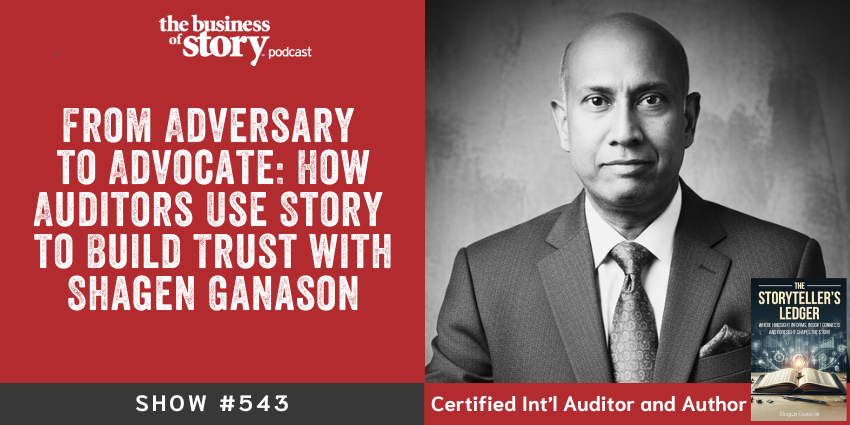
Shagen Ganason Reveals the Five-C Framework That Reveals the Narrative Behind the Numbers
Most auditors walk into the room like prosecutors.
Here’s what you did wrong. Here’s the policy you violated. Here’s what you need to fix.
And they wonder why nobody listens.
I’ve spent 40 years in marketing and storytelling, and I’ll tell you this: the moment you lead with judgment instead of understanding, you’ve lost the room.
Shagen Ganason spent 30 years figuring that out the hard way—across seven countries, countless boardrooms, and organizations spanning every industry you can imagine. He built a global reputation as a meticulous auditor who could spot problems others missed.
But his findings kept hitting the same wall: resistance.
Then a life-changing spinal cord injury forced him into a completely different perspective. Suddenly he couldn’t talk. He had to listen—really listen—to what people don’t say.
That’s when everything shifted.
The emotional narratives behind the numbers. The pressures people were under. The organizational dynamics that created the problems he was finding. The human story underneath the spreadsheets.
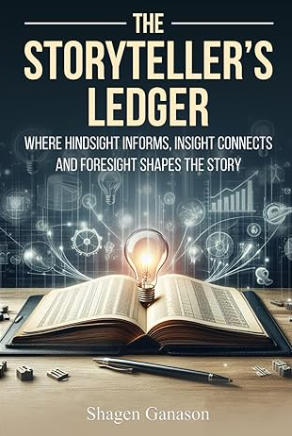 He took everything he learned and wrote The Storyteller’s Ledger: Where Hindsight Informs, Insight Connects and Foresight Shapes the Story, giving auditors and analysts a systematic framework for transforming their findings from adversarial confrontations into collaborative partnerships.
Shagen communicates what I preach: “Numbers are numb without story.”
Think about that first syllable. Numb. That’s exactly how people feel when you hit them with spreadsheets and statistics. Defensive. Resistant. Ready to explain why your findings don’t apply to their unique situation.
But wrap those same findings in a story and everything changes.
What’s in it for You:
- Numbers Are Numb Without Story – Data alone creates resistance and adversarial relationships. When you package your findings in narrative frameworks that create emotional connection, you transform facts into advocacy that inspires real organizational change.
- The Five-C Framework Transforms Audit Delivery – Shagen’s systematic approach to packaging data through story creates collaborative partnerships instead of confrontational meetings, turning auditors from adversaries into trusted advocates for positive change.
- Listening to What People Don’t Say Changes Everything – After his spinal cord injury forced him to truly listen, Shagen discovered that the emotional narratives behind the numbers matter more than the numbers themselves for driving implementation and organizational transformation.
- From Confrontation to Collaboration Through Story – Traditional audit approaches create defensive reactions and resistance. Story-based audit delivery builds trust, creates rapport, and transforms how organizations receive and act on critical findings.
- Advocacy Beats Adversarial Every Time – When auditors position themselves as advocates helping organizations succeed rather than adversaries pointing out failures, they achieve higher implementation rates and become indispensable strategic partners.
The Auditor’s Blind Spot
You can be 100% right and still get 0% implementation.
That’s the brutal truth most auditors discover after years of writing reports nobody acts on.
Shagen lived this for three decades. Rigorous analysis. Comprehensive findings. Meticulous documentation. All technically perfect.
And organizations kept making the same mistakes.
The breakthrough came when he realized: people don’t resist your data because they don’t understand it. They resist because you haven’t connected it to their reality, their challenges, their aspirations.
You’re presenting facts. They’re living stories.
The Five-C Framework: From Facts to Advocacy
Shagen developed a systematic approach for packaging data that creates collaboration instead of confrontation. His Five-C framework gives auditors and analysts a repeatable structure for delivering findings that people actually want to implement.
This isn’t about sugarcoating bad news.
It’s about presenting truth in a way that builds trust and creates partnerships.
When you position yourself as an advocate helping organizations succeed rather than an adversary pointing out failures, something remarkable happens: people start asking for your findings instead of dreading them.
What the Spinal Cord Injury Revealed
Here’s what Shagen learned when he couldn’t talk and had to listen:
The emotional narrative behind the numbers matters more than the numbers themselves.
People aren’t resisting your findings because the data is wrong. They’re resisting because you haven’t acknowledged their story—the pressures they’re under, the constraints they’re working within, the reasons things evolved the way they did.
Once Shagen started listening for what people don’t say, he could package his findings in ways that resonated emotionally while maintaining analytical rigor.
That’s the magic combination: rigorous analysis delivered through emotional connection.
The Storyteller’s Ledger: Your Systematic Guide
Shagen’s book provides the framework for transforming your audit delivery from adversarial to advocacy-based.
It’s not about becoming a better presenter.
It’s about becoming a better partner to the organizations you serve.
Because your findings are only as valuable as their implementation rate. And implementation happens when people trust you, understand you, and believe you’re on their side.
Story creates that trust.
Story builds that rapport.
Story turns your data into advocacy.
Why This Matters Right Now
If you’re presenting data—whether you’re an auditor, analyst, consultant, or business leader—you’re competing for attention in a world drowning in information.
Your technical accuracy isn’t enough anymore.
The auditors and analysts who master story-based delivery become indispensable strategic partners. The ones who keep leading with judgment? They become vendors who can be replaced.
Shagen proved this across seven countries and multiple industries.
The Five-C framework works because it aligns with how humans actually process and act on information. Not how we wish they would. How they actually do.
Your next audit or analysis presentation is an opportunity.
You can walk in like a prosecutor, present your facts, and watch people get defensive.
Or you can walk in like an advocate, share your insights through story, and create collaborative partnerships that drive real organizational change.
The data is the same either way.
The delivery determines everything.
Links:
- Liva Insurance
- The Storyteller’s Ledger book
- Shagen Ganason on LinkedIn
- The StoryCycle Genie™
- Test the strength of your brand story for FREE
Related Episodes You’ll Love
• The Story Engine Founder Reveals His 3-Story Framework for Magnetizing Ideal Clients Kyle Gray shows how experts who are “too smart for their own good” transform scattered insights into systematic business growth through strategic storytelling.
• Why Most Branded Podcasts Fail: The JAR Framework That Fixes Everything Jen Moss demonstrates how systematic frameworks prevent “ramblecasts” and create genuine value exchange, paralleling Shagen’s approach to transforming audit delivery.
• Why Agency Owners Are Burning Out (And How AI Automation Fixes It) Alane Boyd reveals how strategic automation creates seven-year employee tenure versus the industry’s 18-month average, demonstrating how systematic frameworks transform organizational relationships.
About Shagen Ganason
Shagen Ganason is the author of The Storyteller’s Ledger and a global audit expert who has worked across seven countries, transforming how organizations receive and act on critical findings. After a life-changing spinal cord injury taught him to listen to what people don’t say, Shagen pioneered a story-based approach to audit delivery that creates collaborative partnerships instead of adversarial relationships. His Five-C framework helps auditors and analysts package data in ways that build trust, create rapport, and inspire organizational action. Through his work, Shagen demonstrates that the emotional narratives behind the numbers matter more than the numbers themselves for driving real implementation and lasting change.
Transcript:
Welcome and Background
PARK HOWELL: Hello, Shagen, welcome to the show.
SHAGEN GANASON: Thank you, thank you, Park. Thank you for having me.
PARK: And where are you coming to us from?
SHAGEN: I’m currently in Dubai in the UAE.
PARK: Did you pretty much grow up over in the Middle East?
SHAGEN: No, actually my background is a little bit complicated. So I’m born in Malaysia. I’m a New Zealand citizen and this is my seventh country. I’ve been moving around since 19, yeah, since leaving school actually. I worked and lived in seven different countries.
PARK: And have you always been in the auditing world dealing with numbers and trying to communicate data?
SHAGEN: Yes and no. I’ve been in audit most of my life. I’ve also been a CFO, which is also to do with numbers. I’ve worked as a Chief Operating Officer. I’ve worked as a Lean Practitioner. So I’ve done multiple jobs, mostly around the accounting space.
How Storytelling Transforms Auditing
PARK: And how did you get into storytelling? Because your book, The Storytellers Ledger, is one of the best books I’ve read on storytelling in the past decade, I’m guessing. And the reason why I picked it up, was referred to me by a client of mine, a very large credit union, a national credit union here in America. And I am going to be working with their auditors here in a couple of weeks to help them on storytelling, help them communicate these complex messages simply. And they recommended your book.
And so I heard you on a couple of podcasts and I read your book. And honestly, I was kind of expecting to be, oh, this is going to be, you know, maybe numbers and maybe boring and maybe what do they really know about story? And I’m telling you, you blew me away. You blew my mind. It literally, and for all of you listeners out there, you don’t have to be an accountant, a CFO or an auditor to benefit from Shagen’s book. You did such a great job of explaining story and teaching it. So how did you become such a powerful storyteller and story trainer?
SHAGEN: I will say my background is audit. And as you know, most auditors are boring. We are bean counters, we count numbers. And one of the things that we do as auditors is to sell our findings. I mean, issues, we identify issues, we try to sell the solution to our clients. And a lot of people don’t actually understand why they need to do something about it.
And I mean, I’ve been doing this for the last 20, 20 to 30 years, and I found that you need to be able to tell your issues in a way that people understand and also they need to understand why. And I think the framing of your story is very important because you need to get emotional engagement with your audience as opposed to logical information selling to them. So that’s how I started.
And I also went into Toastmasters and Toastmasters teaches you how to express yourself in a way that people appreciate. We’ve got different tracks and Toastmasters. One of them is storytelling. And I particularly enjoy storytelling because they give you two minutes and within the two minutes you are supposed to tell somebody your idea and make sure that people actually understand and they’re interested in it.
And so that got me into thinking, how can we use this method or methodology into what we do for a living in audit? And as you know, auditors pretty much have got numbers and numbers in itself is the logical part of it and you want to be able to connect the logical part of it with the emotional part of it so that people understand. And as human beings, we love stories.
I speak at conferences and one of the things I ask people is, do you remember the audit that you did last year or the last month? And some people put up their hand, not many people would. But if you ask someone, do you remember the story that your father told you or your grandparent told you when you were 10 years old? And pretty much almost everybody put up their hand. And that’s because it’s story. And so that got me into thinking about how do I convey this to the rest of the community? And I started writing this book two years ago, and that’s the product of it.
Numbers Deliver Facts, Stories Deliver Meaning
PARK: You have a line in there. It seems so simple, but I think it’s really quite profound. And you say something to the effect of numbers deliver facts, stories deliver meaning, and the human being is moved by meaning, not facts. And I’ll even support that with Jonathan Haidt, you know, famous American social psychologist who said, our brains are story processors, not logic processors.
SHAGEN: Yeah, if you want somebody to remember something, you tell them in a way that they remember it and they get engaged to it and that’s where story comes in. If you tell them in factual manner, it goes into one ear and comes out of the other, but when you tell them in a story, it sticks in your head.
The Spinal Cord Injury That Shaped a Leadership Philosophy
PARK: Yeah, it’s very, very, very sticky. Share your story about how your world got completely upended with a spinal cord injury, what you went through and how that shaped you as a leader and made you a storytelling leader.
SHAGEN: Yeah, 2011, put it back in a sense. So my professional life, I’m not a risk taker. I’m very risk averse. In my personal life, it’s the exact opposite. I take a lot of risks. And one of the things I love to do is bungee jumping. I used to be a race car driver in my younger days. And I do all sorts of funny stuff. And so one of the things I did was a bit of backpacking in Mongolia in 2011 by myself, my wife was at home.
So seven days into the 21 day trip, I was photographing up in the mountains and accidentally I tripped and I fell down. It was probably about 10 feet from the cliff. And as I fell down, I could literally hear my spinal cord, my backbone crack. And so it was excruciating pain. And I was paralyzed from my waist down.
So they strapped me into a bus, took me to the hospital and left me in a Mongolia hospital. Nobody spoke English, they spoke Russian and I couldn’t speak Russian. So basically couldn’t communicate at all. And eventually the travel insurance took me to Hong Kong where I was hospitalized for about a month until I was able to sit.
One of the things I remembered at that time is that, you know, I almost lost hope around being able to walk. And doctors told me that, you know, learn how to use a wheelchair, learn how to do things, not being able to walk. And I went against all odds and tried to stand up and start walking. And one of the nurses told me that, you know, if you move one inch at a time, eventually you’ll be able to move one yard and then one mile.
And that got me into thinking that if I could actually do bit by bit, then I’ll be able to do the long yard. And so I forced myself and I started walking and it took me literally two years for me to be able to get up and start walking.
And one of the things I remembered was that the inner self, you need to have confidence in yourself and you need to be able to believe in yourself. And one of the things that I lead in my teams and my people is that, I listen to what people don’t tell you and I also listen to what people don’t want to tell you. Sometimes you hear things without actually hearing a word. And when you watch people in the room, you can tell who is listening, who is not, who is wanting to say something, but just don’t know how to say it. And I think that kind of led me into being a leader where you bring people in together and make sure that everyone is on board with you.
From Adversarial Auditor to Trusted Advocate
PARK: So when you are doing an audit and you’re reviewing it and you’ve got your findings and you come back in, a lot of the things that you talk about in the book is being present, of really taking in all of the intel you’re getting from the environment, from the people, from the systems. It’s not just the logic and reason numbers that is driving, there’s something else driving this. There’s an action, there’s a story behind these numbers. Did you feel like you were doing that pre-accident or was this one of the gifts you got from having to go through that ordeal?
SHAGEN: I think it’s a combination of both. One of the things is being able to listen to, like I said, things that are not being told to you. And the other thing is to be able to package it in a way that people understand. And I think the most important part is the why. People need to know why something needs to happen.
And the why part of it is the most crucial part. I think a lot of people tell you the facts that these things are wrong and these things need to happen. But people fail to tell you why action needs to be taken. And when you put the why into the story, then it becomes a personal connection between the storyteller and the story receiver. And that’s where I think the bond builds. And like you said, put everything together in a package is where you get people to buy into your ideas. So we’re all salesmen, auditors included.
PARK: I’m glad to hear you say that because I do get pushed back from people that say I’m a leader. I’m not a salesperson. I say, I hate to tell you, we are all selling all of the time. So, in the audit role, I always kind of pictured that as an adversarial relationship in that, someone’s found out something bad about my department or my company and they’re going to come in and they’re going to tell me what I did wrong. And then they’re going to tell me what I should do. And then they’re going to tell me what’s next versus really an auditor is an advocate. Are they not?
Because yeah, they have to come in and maybe deliver some bad news about the way things aren’t operating right, but they’re doing it to help you see it and then fix it so that you can be more profitable, more successful, more efficient, reduce liability and all that. How does storytelling help change that adversarial role to an advocacy role for the auditor?
SHAGEN: So I think in the past, auditors were adversarial because basically we went and told you facts and told you like, Park, you know, we looked at your business, we looked at the transactions and you failed to do this, you failed to do that and therefore you need to fix something. That becomes very one sided because it’s me telling you what needs to be done.
And I think what we have moved on from that is to be able to be collaborative. So basically when we do audits, we no longer tell you what needs to be done, we bring you along the journey to say that this is what we found and this is why you need to do something. And this is how it impacts your business and this is how it’s going to impact you.
And when we tell it in that manner, then you have got ownership in that issue. It’s not just me telling you, you also want to fix it so that you don’t end up getting into the wrong side of the law. And so bringing people with you is part of the storytelling because when you tell stories, you are immersed in the whole narrative. It’s not just me telling you, it’s not one-sided.
And I think that’s where the storytelling actually helps because it brings the recipient of the story to be able to be part of the story and for them to be able to go on the journey with you. And I think I’ve seen a lot of changes in people when you tell them in a way that they understand why it matters to them, how it is going to help them and how it impacts your business rather than just telling them that you have done this and you have done that wrong.
Overcoming the “Just Give Me the Numbers” Objection
PARK: What do you do when you get pushback on storytelling? Cause I’m sure you do. Cause I still do, from people that are very logic reason driven and they will say to me, Park, that’s just woo woo stuff. Storytelling doesn’t work. And I’m sure you probably hear from auditors saying Shagen, you know, the numbers don’t lie. All I gotta do is just give them the numbers and obviously what we got to do next. How do you overcome that?
SHAGEN: I personally, I think statistics are fantastic, numbers are fantastic, but numbers, if you just present them as facts, you can manipulate the numbers to what you want people to know. You can present statistics in a way that benefits what you want to tell people. But when you convert that into a story, it’s no longer just numbers. It is about a journey that you are trying to get to.
If you look at a story, there’s always a start, the middle and the end and it tells you, you want to bring people along the journey to say that this is what we started with and this is what we found and therefore this is what is going to happen at the end. But if you just present the numbers, it’s just the middle part of it or maybe the beginning part of it, but there is no ending. And when people don’t see the ending, then you don’t feel that you went into a journey with you.
It’s like reading a book and you just read the last page of the book and it tells you what the conclusion is or you read the first part of the book that tells you where the preface is, but you don’t know what else is happening in the middle. And I think that’s where story actually helps.
Story in Action: The Data Breach That Wasn’t Just a Policy Violation
PARK: And so give us an example, if you would, where you’ve used story, where in the past maybe people would have just shown up with the numbers. You have, it could be something, a case study from your book or maybe something you recently experienced just to demonstrate story in action.
SHAGEN: So there’s one story which I explained in the book, which is something that we did in the past. So when we do audits, we identify anomalies. We identify exceptions. So in this particular case, we identified an exception where somebody had super access to a bunch of data. And that person has resigned, has left the organization. And the access rights were not revoked.
So in a traditional sense, we would say that, based on your company policy, when somebody resigns or has left the organization, their access rights should be revoked. And these X number of individuals still have access rights. So it becomes very one sided to say that, hey, according to the policy, you should have done this and you have not done this. And therefore, you have broken the policy.
But if you turn it around in a story way, which is what we did to say that, we found this number of people who still had access. And did you realize that they had access to your system? They actually accessed sensitive information 15 times in the last 12 months. That automatically no longer becomes a compliance issue, but it’s actually a data privacy issue, a data breach issue. So people actually take interest and say that, not following the company policy is one thing, but this person actually having access to the information that I wanted to protect is a different way of looking at it. And automatically, people want to make sure that I’m going to fix it immediately because there is a breach.
So that is one of the examples that I showed. And another example that we did was we did an audit in an airline. So I worked in multiple industries. One of them was an airline. So we went to a hangar, and we wanted to find out why parts were not moving and why the procurement process wasn’t working.
So we could have done a very desktop exercise, look at the procurement function, look at this, do a stock count in the hangar, identify what the issues were and tell people that this is what needs to be done. But what we did was we went in and spoke to the people on the ground. We found out what is wrong with the system, why are they working late, what do they think that these issues were not being followed.
And then when you hear the stories from the people, you understand it is not just what you see on the surface, there’s a lot more things that’s happening behind the scenes. And when you package it up in an audit report to say that these are the things that we’ve found and these are the stories we’re hearing, and that’s a result of that these are the things that’s actually happening in the business that is causing you a part shortage. The whole narrative becomes different. It is no longer about the symptoms, but it’s about the root cause of the actual issue itself. And I think that’s a very powerful way of presenting facts, numbers, whatever you want with the root causes of it.
The Five-C Storytelling Framework Explained
PARK: Yeah, because when you go in and look at the numbers, they’re more of a generalized overview of what’s going on and what it sounds like you’re doing, Shagen, is you’re going in and saying, but here’s the actual effect of it. Here are the people doing this. You’re taking it down to the events that these numbers are reporting and it’s the cause and the effect of these events, these stories that are having the impact on the company. And that’s what the homo sapien brain can understand, numbers are sort of null and void to us unless we have them in the context of a story.
SHAGEN: Yeah, absolutely. Yeah, that’s right. And I think as auditors, we delve into facts, we delve into numbers and all that. We miss the human element to it. If you ask me as an auditor, you can teach someone to do audits. It’s not difficult, but it’s difficult to teach someone to be able to connect with another human being. You’ll find that nine out of 10 auditors, they are introverts, me included. And we find that it’s difficult to engage with people. And if you broke that out and say that you talk to people, listen to people, you find that your audience become a lot more meaningful and you become connected to the business, connected to what you’re trying to sell.
PARK: And they become a lot more interesting too, don’t they? When you’re not just leading with numbers. And I always like to say the first syllable in the word numbers is numb. It’s numb unless we have them in the context of a story. So one thing that I like to share with people too, and you’re really thinking about this is look at the weather report. Because this is a good example of an audit and what your brain does to turn those numbers into a story. You know, the weather report does one of three things. It reports on what happened yesterday, you know, the temperature, the number and the temperature, winds, rain, whatever. It monitors what’s currently happening right now. So you can look on your iPhone and tells you exactly what the temperature is out and what’s coming your way. And then it attempts to predict the future through a number. Tomorrow, it’s gonna be freezing, here’s a number and whatever. And yet our brains automatically turn those into stories, don’t they? Because depending on what we’re doing now and that prediction for tomorrow, we will tell our story of how we have to bundle up or not to prepare for that event. So the numbers are meaningless without us putting them into a narrative that creates the event that makes them make sense to us.
SHAGEN: Yeah, you pretty much took the subtitle out of my book, which is the hindsight, insight and foresight, which you’re talking about the history, the current and the future, right? Yeah, and that’s how our brains, like I said, it’s a journey. And if you brought people with you from the hindsight to the foresight, you find that people will follow you. And if you just do one part of it and say that, you know, it’s 15 degrees Celsius or 84 degrees Fahrenheit or whatever it is, it’s just a number.
But if you tell them that this 15 degrees is going to make you cold, you need to wear sweaters and whatever it is, then people can picture to say that, I need to go out, I need to wear this, and I need to bring this along with me. And it becomes a different narrative.
PARK: I’ve got to drive down to Phoenix tomorrow morning. I’m up here in Northern Arizona and we’re expecting a ton of rain. And I drove up from Phoenix after working with the Better Business Bureau on Saturday and it was pouring out and my windshield wipers, the blades just deteriorated on that way up and they’re flapping all over. So I’ve got to go into Flagstaff this afternoon, get some new windshield wipers because we are going to get inundated again tomorrow.
But again, the data in that, the audit is, you know, it’s going to be 43 degrees Fahrenheit and pouring when you’re driving tomorrow. Okay. That’s the data. That’s the predicted audit on what’s going to happen in my brain immediately goes, well, I got to get into town today and do this, you know, follow this story, follow this journey, go get my windshield wipers replaced. And I know that sounds basic, but isn’t that really what we’re trying to do is boil these complex numbers and messages down to simple interesting human driven stories so that homo sapien that storytelling monkey sitting across from us understands what’s going on and you build rapport while presenting your report.
SHAGEN: Yeah, there are many different ways of telling stories and I know there is the And But Therefore methodology of telling stories. I use a five part to it, you know, in the way that I write reports. There’s a context, tells you, you know, what to expect and put a scene so that you know where you are. And then there is the portion of rising tension, you create some sort of excitement and then there is a conflict right at the top and then you find a resolution and I like to close it off with a conclusion to summarize the whole thing unless it’s a cliffhanger that’s the second part of it otherwise it wraps up and if you follow this pattern you’ll find that people actually follow you in the journey.
It’s just like you read a good book you don’t want to put the book down because you found that there is a conflict and you want to know what the resolution is or even like a movie that you’re watching, it’s the same thing. You watch the first 10 minutes of the movie, you’ll know whether you like it or not, because it either tells you there is going to be a conflict, there is going to be something that’s going to happen, and you know once the conflict happens, you want to know what’s next after that. And you want to build it in that scenario. I mean, that follows advertising, it follows, I mean you’ll be familiar with advertising where you bring people with you, movies, newspapers, articles, they all follow the same concept. And I think that’s the powerful way of presenting something.
PARK: Well, and you have sort of this five Cs framework of context, characters, conflict, climax, and then the call to action, right? Could you give us an example of that in action?
SHAGEN: Yeah, yeah. Yeah, so one of the, again, it’s back to audits, right? So when we do an audit, we identify a context. We tell you that this is what to expect, set the scene. It could be in a procurement environment, it could be a finance situation, it could be an airline or whatever it is, so that people know where you are. And then we identify the tension. The tension basically is whenever there is an anomaly or an exception that we found in an audit, and that’s where the tension comes in. The conflict is either it’s against the policy, it’s against company regulations or against law regulations, whatever it is. And then…
PARK: That conflict is the tension you’re talking about, right? In your five C’s.
SHAGEN: A conflict, the tension, yeah, conflict is the tension that you’re talking about. And then you have the resolution part of it. And the resolution part of it is what are you going to do as a result of whatever that I found? So are you going to take action? Are you going to do something about it? And once you have done something about it, that’s the conclusion comes in at the end to wrap the whole thing up. It becomes a story, it’s not complete unless there is a conclusion.
It’s just like in Toastmasters, they tell you that’s like a sandwich, right? Burger at the top, the meat in the middle and the bread at the bottom. So you want to make sure that the whole thing wraps up together so that you’ve got a complete picture. So similarly in a story, you have got the context, your tension, your conflict, and then you’ve got a resolution and then you’ve got a conclusion at the end.
Finding Characters in Your Data and Reports
PARK: You also talk about characters, and it seems to me that a lot of times when you are getting reports like an audit, whatever, people don’t always take into account the characters at the center of the story. Can you talk a little bit about that, the importance and how do you find these characters in your story?
SHAGEN: Characters are really important because you need to know who are in the picture. I mean, every issue that happens in an audit, there is always a human being behind it. Even if you look at an automated control, the controls are administered by people. And people always got a story behind why they do something, why they did not do something. And bringing those people into the picture is important because then it builds a connection. It is not a dry subject to say that I found X number of issues, but why did the issues happen?
Is it because people didn’t realize them? Because people were not trained in it? Or is it because they had something else, some other priorities that happen? So understanding those characters in a story is important because you are telling the story to another human being, management that you’re talking to. So identifying those characters is very crucial.
We also use characters in data. So even in data, you can build characters to say that this part of the data builds this kind of character and that part of the data builds something else. And we connect all those data points together, you identify that there is actually a character that’s built across from one end of the data to the other end of the data.
How Data Becomes Characters in Your Story
PARK: Can you give us an example of that?
SHAGEN: In terms of characters, yeah. So the airline, the hangar that I talked to you about earlier on, so there are characters involved. The characters are the engineers that we spoke to and they did not do what they were meant to do because they had other priorities. They were trying to hold things together because they didn’t have money. They did not do it because they didn’t want to do it. They did not do it because they knew it was against the policy. They did it because they were trying to save the company.
So identifying those characters in the story, building them into the story itself, into the finding itself becomes very powerful because when management reads it, they know that they’re not the villains. They’re actually trying to help the business to do something. And this is the reason why they did it. So that part of it is where we built in the characters. If that makes sense.
PARK: And then you talked about the data itself can be its own character or characters. Can you give us an example of what that is? What that looks like?
SHAGEN: So as auditors, we work with numbers, as you know. So there are a lot of different points in a data where you accumulate numbers. Again, the anomalies and the exceptions are as a result of people not doing something or people doing something. So the numbers themselves tell you where the numbers come from.
Like, for example, if you’re looking at a payroll process, for example, we can identify ghost employees or if there were ghost employees, those are created by an individual or created by groups of individuals. And if you find that if there are approval processes that need to happen, those will be highlighted by anomalies in your numbers. And again, that can be related back to an individual or a group of people or positions.
So identifying those numbers and where they actually sit in the organization chart creates that character link between data points and a human being. And for everything that you write about, if you connect your data to a human being or you connect an anomaly to a human being or you connect a story to a human being, then you find that the story becomes more real and it becomes very colorful and is very rich. People can understand that, I know Bob, I know John, the reason why he would have done that is because I’ve given him X number of tasks for him to do, or Bob just had, you know, his wife just gave birth and that’s the reason why he could have been stressed. So putting all these characters in your story, it makes sense because people can relate to those kinds of things.
Reading the Room: Developing Emotional Intelligence
PARK: You had said earlier in the show about being able to read the room when you’re doing your due diligence and discovery and you’re interviewing people and some are very forthcoming and then you notice someone else is a little bit reticent and then someone responds to something. So that takes a lot of emotional intelligence to be able to read that room. Any advice for our listeners of how to develop that skill so when you go in, you are trying to take in as much of the environment, the atmosphere and the people’s position in that as possible.
SHAGEN: I look at people depending on what their interests are. So when you go into a room, like an audit committee meeting or a board meeting, you basically look at all the people’s faces. Some people will be very interested in details. Some people are more interested in the high level stuff. And some people will look at you like they have not read the report. And some people would go into real details.
So being able to understand what people want from a report is very important. And the other thing is that some people, like you said, talk a lot, some people don’t. And in order for you to be able to get information, you want people to open up. And there are different techniques of doing it.
So when we do interviews with management, when I find that somebody is not interested in talking, I won’t be asking questions about the audit itself. I look around the room and see what else is on his table or behind him. Sometimes you find there is a picture of somebody with a golf club or somebody, you know, a picture of a family with two children and you turn the attention to something personal and you say, Hey, I see the picture that, you know, you with your two girls, how old are they?
And then you start talking about these things and it loosens people up. And then once you get that emotional connection with a human being, with another person, then they start opening up and being able to be more comfortable with you. Or you see a picture of a ski resort at the back and say, when did you last visit that? Or, you know, who went with you or what did you do in that trip? Instead of talking about work, talk about all sorts of stuff just to open up and warm people up so that you can have the next level of conversation.
PARK: Yeah, you’re just trying to build trust. You’re trying to demonstrate that, you know, you want to understand them, appreciate what they want, empathize with anything they might be going through because you’re there as an advocate, not as an adversary to help them just improve systems and be more, generally just be more successful, both in their career and in their business. And Story enables you to reframe those kinds of reports and audits to make them a very productive thing versus a destructive thing.
SHAGEN: Yeah, yeah. And I think people want to talk to another person rather than talking to an auditor. So basically, if you come across as a person in the room, people are more willing to speak to you. You’ll find things that people don’t tell you because you’re an auditor, but people tell you because you’re another person in there as a colleague or a friend. And that’s the rapport that you want to build. Yeah.
The Three Story Categories: Catalytic, Corrective, and Cautionary
PARK: Yeah, that you’re on their side. You also in the book talk about three categories of stories, depending on, I guess, what you were trying to activate within an organization. You’ve got, I can’t even read my own writing now. You get the catalytic story, you got the corrective story, and you got the continuity story. I think I wrote down here. Is that right?
SHAGEN: Yeah, yeah, that’s right. Yeah.
PARK: Can you go through each one of those and how you use them?
SHAGEN: So the first part of it is catalytic, is basically you want to find a catalyst for a story to move on from one part of the story to the next part. So having some sort of continuity in a story to me is important. And for you to be able to build on a story, you want to find something that builds a connection between you and the person that you’re trying to tell the story to. And that is the first part of it.
The second part of it is to identify where the connection lies, because again, it’s a whole journey, right? You want to find a connection. So you find common interests. You want to find something which is relatable. And so that’s the second part of it.
The third part of this is making sure the story actually lives on. So you tell somebody a story, you tell somebody a finding or report, and it’s not the end of it, because there is always a journey that you can build on more and more to it. So that’s the continuing part of it.
PARK: Yeah, and I know I said continuity is cautionary. You also have a cautionary story in there too, right?
SHAGEN: Well, in an audit context, you want to do that because some of the things that you don’t want to alert people in an alarming sense, but you also want to make sure that you tell someone that, you know, this is what I’m leaving you with. This is what’s potentially going to happen and making sure that people understand what they’re getting themselves into. So that’s, yeah, so that’s the other part of it.
From Fiction to Nonfiction: A Love of Story
PARK: It becomes a cautionary tale. Now, you’ve written two nonfiction books for the auditing world. This one, The Storyteller’s Ledger, being your second one, you’ve also written some fiction as well.
SHAGEN: I have.
PARK: So you definitely have a love of story and have you had it your entire life or is it just something that you have built on?
SHAGEN: Probably writing is something I just started. So the first fiction book that I wrote was Whiskey Tango Foxtrot. So I have a passion for flying. And so I use a simulator, as some of us do. And so I wanted to write a story about how somebody would get into flying around the world in a simulator and started creating fictional stories around what humorous stuff that you get into in different parts of the world.
I’ve traveled to 56 countries. So I’ve been to quite a part of the world. And each part of the world has got something unique about it. And if you go into one part of the world without actually knowing what to expect, then you get into all sorts of troubles and all that. And I try to put it in a humorous sense. So yeah, that was my first attempt at fiction.
Story as a Flight Simulator for the Brain
PARK: Well, you just gave me a great metaphor because story is basically a flight simulator, isn’t it? I mean, when we are just spoon fed data, it has no connection. But when we tell it a story, our brain literally simulates what’s going on as if it is acting in that story too. And in the book here, I’ve got it, page 77. I love this about it. You were talking about the multiple regions of the brain that get lit up simultaneously that creates this flight simulator in your head for the story you’re hearing.
The language center processes the words, the visual cortex imagines the scene and can picture it, the amygdala engages emotionally, the hippocampus connects it to memory so you become unforgettable, and even the motor cortex gets involved when we hear action-based words, meaning we have a visceral reaction to stories we hear. We laugh, we cry, we sweat, goosebumps stand up on our arms because our brain is simulating the story it’s hearing or watching or being a part of.
SHAGEN: That’s how people have been for millennia. When, you know, caveman days, when somebody goes out hunting and comes back and tells his folks that, you know, not to go here, not to go there. And he has to create that sense to say that if e, you’re going to get eaten up by the lion or whatever it is. And you need to create that sense in your head to say that, you know, this is what the reality looks like. So you create the sense so that children don’t go to those kind of places, not because they have seen a lion, but they will know what to expect from a visual perspective.
So I think that’s the stimulating part of human beings. We’ve lived with stories and there are cultures around the world where language is not written. So if you want to pass stories from one generation to another, you have to vocally tell people all these things and you have to create it in a way that people remember it.
So I think that’s where the powerful part of it, and we have not changed in millions of years. Homo sapiens, we have grown up telling stories and we still do tell stories. And that’s why books are still a big part of our lives, being able to read that. And movies are the same thing. The movie industry has evolved from Charlie Chaplin’s silent movie to drama and comedy and all that. The story is still there. You can have a completely silent movie and you can still watch it and still understand what it is without actually hearing a single word. So I think that’s the power of stories.
PARK: Yeah, long before the wheel was invented, long before fire was invented, long before even their most basic rudimentary hunting weapons were invented, story was really the very first technology because that is how we learned and that’s how we grew. And none of the resulting technology would have happened without story.
SHAGEN: Yeah, one of the things that I learned from Toastmasters is that when we do speeches, we used to have gestures and all that. So some of the techniques that we do is that you stand behind a screen, people can see you and you tell a story. Is it as compelling and understandable? And then you stand in front of the crowd and you don’t say a single word and use your gestures and you still convey the same kind of meaning. So stories can be done in different ways. And every part of your body has got a part to play in it, your voice, your tone, your pitch, your body language, the way you look at someone, how you use your fingers, how you use your hands. Every part of it has got a role to play. I think putting all those into one package is very powerful in terms of telling stories.
Leadership Is Narrative
PARK: Yeah, well, we always say that leadership is narrative or narrative is leadership. All the great leaders out there. And even if you’re leading an audit and providing your report, when you put it in narrative and story form, you’re just way more influential. You’re way more persuasive. And actually, I’ve seen a lot of leaders gain way more respect from their peers and their customers and their clients simply because they engage them in powerful anecdotal stories.
SHAGEN: Yeah, you can be a really powerful orator, but if you don’t have a proper structure, people are not going to understand you. You could be not a powerful orator, you could be not a native English speaker like myself, for example, but if you package it in a way people can understand the story, it is just as powerful. And I think that’s where the difference lies.
Three Essential Practices for Becoming a Better Storyteller
PARK: All right, Shagen, tell us if we’ve got a listener out there new to storytelling and they are in the audit numbers world or whomever, what would be the first three things that you would teach them to start practicing and learning about to become a more concise, compelling storyteller?
SHAGEN: The first thing I’ll probably do is don’t look at numbers as what it is. So you need to be able to find the reason behind it, the data behind the numbers or the stories behind the numbers. That’s the first thing.
And secondly is if you want somebody to take action, why does it matter to them? What is it that fixes people’s attention to the data?
And the third thing I’ll tell you is that try to move hearts. And when you move people’s hearts, you shape the decisions that you’re making. So try to find a connection between yourself and somebody else’s minds. And you’ll be able to say that, you can use your heart to connect with another person, but you use your brains to find the logic. And I think using the brains is one part of it, but using the heart to connect with another human being, that’s where the powerful part of storytelling is.
PARK: Well, you play into something I say all the time. We buy with our hearts and we justify our purchases with our heads.
SHAGEN: That’s very true!
The StoryCycle Genie Assessment
PARK: So like I have with all of our guests here, I ran your brand through our StoryCycle Genie unbeknownst to you and just shipped it off to you. You got it last week. You had a chance to look at the brand assessment and then the overall brand narrative strategy. What did you think of what the Genie, the audit it did on your brand story?
SHAGEN: It was fantastic. I didn’t realize you went through an AI tool. I thought you actually did research and it looked like you spent hours doing it. It’s basically spot on. It’s like you have interviewed me and I’ve told you about my background, about the company that I worked for. And it’s as good as that. So it’s a fantastic tool.
PARK: Yeah, it was funny when we were chatting before we started recording here. You said, how long did that take you? You know, I think you thought I spent hours and days researching you and I will tell you it took about six minutes. Yeah, and you felt like it was pretty accurate.
SHAGEN: Fantastic yeah it was yeah it also so like you’re just interviewing me and you asked me questions and I gave you the answers so it is almost like talking to someone.
PARK: Yeah. Well, that’s great. I’m glad. I hope you can use it moving forward. Anyways, Shagen, I really appreciate your time all the way from the Middle East coming our way Dubai. That’s where you’re coming from. And yeah, it’s just really a pleasure having you here. Love the book. I recommended it to lots of people already. The Storyteller’s Ledger. And again, I’ll say you don’t need to be a numbers cruncher CFO to benefit from this. Anybody can benefit from your knowledge. So thank you for sharing your wisdom.
SHAGEN: Thank you.
PARK: Thank you.
FAQs
Frequently Asked Questions About Storytelling for Auditors and Data Professionals
What is The Storyteller’s Ledger by Shagen Ganason about?
The Storyteller’s Ledger is a comprehensive guide on how auditors, CFOs, and data professionals can transform dry audit findings and financial reports into compelling narratives that inspire action. Written by Shagen Ganason, Group Chief Audit Executive with over 30 years of global experience, the book teaches the Five-C framework (Context, Characters, Conflict, Climax, Call-to-Action) and demonstrates how to connect emotional engagement with logical data presentation. The book’s subtitle “Hindsight, Insight, and Foresight” reflects how effective audit storytelling takes stakeholders on a complete journey from past through present to future.
How do you use storytelling in audit reports?
Storytelling in audit reports transforms adversarial relationships into collaborative partnerships by framing findings as a journey rather than a list of failures. Instead of stating “you violated policy X,” effective audit storytelling explains the context, identifies the human characters and their motivations, reveals why the issue matters to the organization, and presents resolution pathways that give stakeholders ownership of solutions. As Shagen Ganason demonstrates, reframing a compliance violation as “former employees accessed your sensitive data 15 times in 12 months” transforms it from a policy issue into a data breach that management immediately wants to fix.
What is the Five-C framework for data storytelling?
The Five-C framework for audit and data storytelling consists of:
- Context – Set the scene so people understand the environment, expectations, and where they are in the situation
- Characters – Identify the human beings behind the data, their motivations, and why they took specific actions
- Conflict – Reveal the tension, anomaly, or exception that creates urgency and demands attention
- Climax – Present the resolution pathway and what actions need to be taken
- Call-to-Action – Conclude with clear next steps and wrap up the complete narrative
This structure mirrors how human brains naturally process information through story rather than isolated facts, making audit findings memorable and actionable.
Why are numbers meaningless without stories?
As Shagen Ganason explains, “numbers deliver facts, stories deliver meaning, and human beings are moved by meaning, not facts.” Our brains are story processors, not logic processors, as confirmed by social psychologist Jonathan Haidt. When data is presented without narrative context, it lacks emotional connection and fails to inspire action. Stories activate multiple brain regions simultaneously – the language center processes words, the visual cortex imagines scenes, the amygdala engages emotions, the hippocampus connects to memory, and even the motor cortex responds to action words. This creates a “flight simulator” effect in the brain that makes information memorable and drives decision-making.
How can introverted auditors and analysts improve their storytelling skills?
Shagen Ganason, a self-described introvert, recommends three foundational practices:
- Find the stories behind the numbers – Look beyond data points to understand the human reasons, motivations, and circumstances that created them
- Focus on the why – Explain why findings matter to your specific audience personally, not just what the problems are or what policies were violated
- Move hearts, not just minds – Use emotional connection to shape decisions, recognizing that people buy with their hearts and justify with their heads
Toastmasters International offers excellent storytelling training, particularly their two-minute storytelling exercises that force clarity and emotional engagement. Nine out of ten auditors are introverts, but storytelling can be learned through systematic frameworks and practice.
What is hindsight, insight, and foresight in audit storytelling?
Hindsight, insight, and foresight is the subtitle framework of The Storyteller’s Ledger that mirrors how weather reports work and how human brains process information:
- Hindsight – What happened previously (historical context, patterns, and background)
- Insight – What’s happening now (current state analysis and present findings)
- Foresight – What will happen next (future implications, predictions, and consequences)
This three-part journey helps audiences understand the complete narrative arc from past through present to future, making data meaningful and actionable rather than just informational. Without all three elements, you’re giving people an incomplete story – like reading only the last page of a book or just the preface without the middle.
How do you identify characters in data and audit findings?
Every audit issue has human beings behind it, even in automated systems. To identify characters in your data:
- Trace anomalies and exceptions back to specific individuals, teams, or organizational positions
- Understand motivations – were shortcuts taken to save the company, meet unrealistic deadlines, or due to lack of training?
- Connect data points across organizational charts to reveal behavioral patterns
- Recognize that even automated controls are administered by people with their own stories and pressures
As Shagen demonstrates with his airline hangar example, engineers weren’t violating procurement policy out of negligence – they were taking risks because they were trying to save the company money. This character insight transforms how management responds to findings, seeing people as helpers rather than villains.
How can auditors build trust instead of creating adversarial relationships?
Modern auditors transform adversarial relationships into advocacy partnerships by:
- Bringing stakeholders along the journey rather than dictating solutions from a position of judgment
- Explaining how findings impact the business AND the individual personally
- Giving stakeholders ownership of issues and solutions through collaborative framing
- Reading the room and adapting presentation style to different audience preferences and communication needs
- Building personal connections before diving into audit findings (notice family photos, golf clubs, travel pictures and ask about them)
- Focusing on collaboration and improvement rather than blame and compliance violations
- Explaining the “why” behind every finding so people understand personal relevance
As Shagen explains, “People want to talk to another person rather than talking to an auditor.” When you come across as a colleague or friend first, people share information they would never tell an auditor.
What are the three categories of audit stories?
The three story categories for organizational communication and audit reporting are:
- Catalytic Stories – Create momentum and connection to move from one part of the narrative to the next, building bridges between you and your audience
- Corrective Stories – Identify common ground and build relatable connections that make change feel achievable rather than threatening
- Cautionary Stories – Alert people to potential consequences and future risks without creating alarm or panic, helping them understand implications
These categories help auditors and data professionals choose the right narrative approach based on their communication objective and desired outcome. The story type should match whether you’re trying to inspire action, correct behavior, or warn about risks.
How does storytelling overcome objections in data-driven fields?
When facing “just give me the numbers” objections from logic-driven professionals, remember that statistics and numbers can be manipulated to support any narrative when presented as isolated facts. The key distinction is that numbers presented without context lack beginning and ending. Stories provide:
- A beginning (context and setup that orients the audience)
- A middle (findings, tension, and the conflict that creates urgency)
- An ending (resolution and clear path forward)
Without the complete journey, audiences can’t process information effectively. As Shagen demonstrates, you can ask people if they remember last month’s audit (few hands go up) versus asking if they remember a story their grandparent told them at age 10 (almost everyone remembers). Stories stick because they engage our evolutionary story-processing brains, while isolated facts are forgotten immediately.
What is the best book on storytelling for auditors and financial professionals?
The Storyteller’s Ledger by Shagen Ganason is widely regarded as the definitive guide for auditors, CFOs, and financial professionals who need to communicate complex data through storytelling. The book provides practical frameworks including the Five-C structure (Context, Characters, Conflict, Climax, Call-to-Action), hindsight-insight-foresight methodology, and real-world case studies from airline operations, data security breaches, and multinational audits across industries like manufacturing, financial services, and government. Importantly, the storytelling principles apply beyond accounting – any professional communicating data, analysis, or technical findings can benefit from Shagen’s systematic frameworks for transforming facts into meaningful narratives.
How did Shagen Ganason’s spinal cord injury influence his storytelling approach?
In 2011, Shagen Ganason fell 10 feet while photographing in the mountains of Mongolia, suffering a spinal cord injury that paralyzed him from the waist down. Stranded in a Mongolian hospital where nobody spoke English, doctors told him to accept wheelchair life. A nurse’s advice – “if you move one inch at a time, eventually you’ll move one yard and then one mile” – became his philosophy for both physical recovery and professional leadership.
The two-year recovery journey taught Shagen to listen to what people don’t say and don’t want to say. He learned that sometimes you hear things without hearing words – by watching who’s listening, who wants to speak but doesn’t know how, and reading the emotional undercurrents in any room. This emotional intelligence transformed his audit approach from confrontational fact-presentation to collaborative journey-building that brings people along rather than dictating solutions.
What role does emotional intelligence play in effective audit communication?
Emotional intelligence is critical for audit effectiveness because it enables auditors to:
- Read the room and identify who’s engaged, who’s checked out, and who wants to contribute but feels hesitant
- Understand what different stakeholders want from reports (some want details, others want high-level summaries)
- Build personal connections before diving into audit findings by noticing environmental cues (family photos, hobbies, interests)
- Recognize that nine out of ten auditors are introverts who default to facts because facts feel safe, but connection requires vulnerability
- Listen to what people don’t say and don’t want to say, hearing the unspoken concerns and motivations
As Shagen teaches, you can teach someone to do audits in six months, but you cannot easily teach someone to connect with another human being. Emotional intelligence transforms auditors from adversaries into advocates by creating the trust necessary for collaborative problem-solving.
How do you make audit reports more collaborative and less confrontational?
Transform confrontational audit reports into collaborative partnerships by:
- Replacing “you failed to do X” with “here’s what we found and why it matters to you and your business”
- Explaining how findings impact the business AND the individual stakeholder personally
- Bringing people along the journey: “this is what we started with, this is what we found, this is what happens next”
- Giving stakeholders ownership by immersing them in the narrative rather than dictating from authority
- Connecting data to human motivations (engineers violated policy to save the company, not out of negligence)
- Framing issues in terms of business impact rather than policy violations (data breach vs. compliance issue)
When you tell stories, recipients become part of the narrative and go on the journey with you, creating shared ownership of both problems and solutions.
Why do people remember childhood stories but forget last month’s audit?
Shagen Ganason uses this demonstration at conferences to prove the power of story: when asked “do you remember the audit you did last month?”, few hands go up. When asked “do you remember the story your grandparent told you when you were 10 years old?”, almost everyone raises their hand.
This happens because stories engage multiple brain regions simultaneously, creating what neuroscientists call a “simulation” effect. The brain doesn’t just process story information – it experiences it. The language center processes words, the visual cortex creates mental images, the amygdala generates emotional responses, the hippocampus encodes memories, and the motor cortex responds to action descriptions. This multi-sensory brain activation makes stories sticky and unforgettable, while isolated facts presented without narrative context go “in one ear and out the other.”
What is the weather report analogy for audit storytelling?
The weather report demonstrates how human brains automatically convert numbers into stories. Weather reports provide three data points:
- Yesterday’s temperature (hindsight)
- Current temperature (insight)
- Tomorrow’s predicted temperature (foresight)
Your brain doesn’t process these as isolated numbers. It instantly creates a narrative: “It rained yesterday and my windshield wipers failed, so today I need to replace them before tomorrow’s predicted storm.” The numbers become meaningful only when connected through a narrative journey that drives action.
This mirrors effective audit communication: presenting historical data (hindsight), current findings (insight), and future implications (foresight) as a connected journey rather than isolated facts. Without the complete narrative arc, stakeholders can’t process the information effectively or understand what actions to take.
 Listen To More Episodes