
Why Seeing Your Money as a Story Instead of Spreadsheets Transforms Anxiety Into Confidence
You’ve probably heard me ask this question before: what’s the first syllable in the word “numbers”?
That’s right. “Numb.”
And that’s exactly how most of us feel about our personal finances. Numb. Anxious. Overwhelmed.
You want financial clarity and confidence to make smart decisions about your future.
When you can actually see where your money will be in 30 days or 30 years, you gain the power to own your financial destiny and achieve the life goals that matter most.
But you feel anxious, even overwhelmed, because financial systems are stacked against you.
Education systems never taught you money management basics, and you’re left cobbling together solutions without the visibility you desperately need to make confident choices.
This is exactly where Jason Leong’s journey transforms everything.
Meet Jason Leong: The Artist-Technologist Who Built a Time Machine for Money
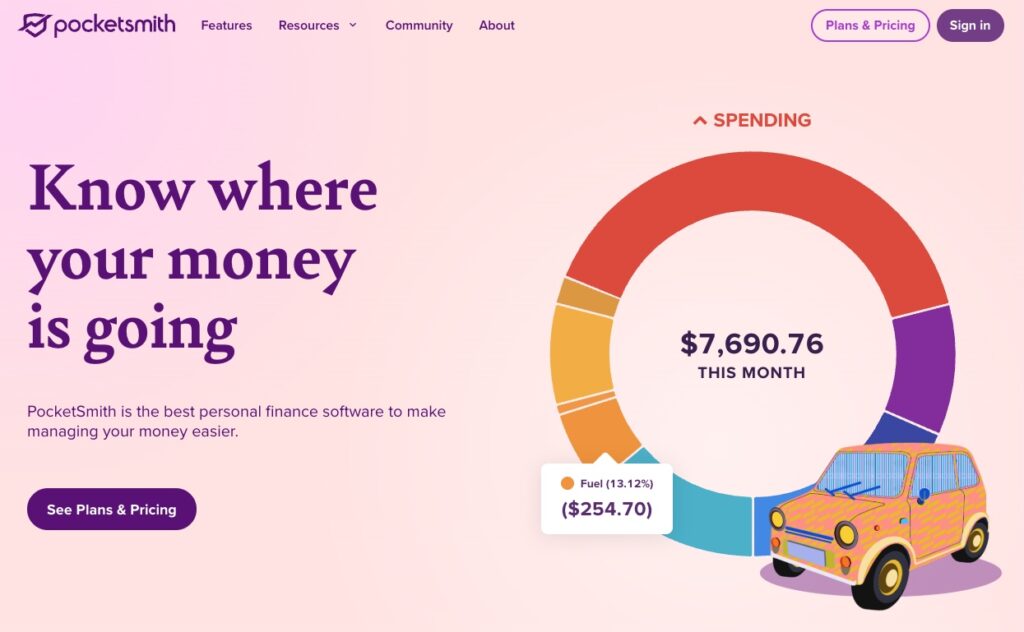
Jason Leong is co-founder and CEO of Pocketsmith, personal finance software serving customers in 190 countries from the company’s headquarters in Dunedin, New Zealand—the deep, deep South, as Jason calls it.
Screenshot
What makes Jason’s approach extraordinary?
He’s not a typical fintech founder obsessed with numbers and algorithms. Jason and his co-founder James, are artists with serious technical chops who spent 17 years building software that transforms financial anxiety into empowered decision-making through something most finance platforms completely miss: storytelling.
He calls PocketSmith “a time machine for your money”—software that lets you pick any day in the future and see exactly how much you’ll have, transforming fiction into achievable fact through 30-year financial forecasting.
The Fairy Godmother: When Financial Empowerment Spreads Through Communities
Jason shares one of his favorite customer stories from a Sydney meeting.
A woman with dyscalculia—effectively dyslexia for numbers—had recently separated from her partner. For years, he’d been the household CFO. She never had to think about money, budgeting, or financial planning.
Suddenly, she was alone and terrified.
When she found Pocketsmith, something remarkable happened. The visual calendar approach, the graphs, the way the platform celebrated diversity instead of prescribing one “right” way to manage money—it all clicked.
For the first time in her life, she could actually understand her finances.
But here’s where the story gets beautiful.
She didn’t just become financially confident herself. She became the fairy godmother for her circle of friends. She talks about money with them. She buys them books. She gets them together and helps them out.
Financial empowerment doesn’t affect just one person.
It has the potential to impact entire communities.
That’s the power of taking the numb out of numbers by placing them in the context of your story.
The Prodigal Son: How Money Understanding Heals Family Relationships
One of Pocketsmith’s earliest users tapped Jason on the shoulder with unexpected feedback.
“Your product has improved my relationship with my dad.”
Jason was stunned. How so?
“He never respected me because I never understood my own personal finances. He never really saw me as a grownup because I didn’t have the skills that he thought I should have had.”
That’s brutal to hear as a founder building financial software.
But this one insight—seeing his finances clearly through Pocketsmith—changed everything. Father and son could suddenly have conversations on a whole different level. It unblocked what Jason beautifully describes as their chi, their energy flow.
Financial clarity opened doors to stories and connections that had been blocked for years.
Maybe the son was telling himself a bigger story than reality. Maybe his dad never thought those things at all. But the storyteller had to first gain confidence through financial visibility before he could sit down with his father.
And that’s the shame piece that Jason identifies.
There’s deep shame around money because education systems worldwide don’t equip people with basic financial literacy. You’re left to your own devices, and depending on your background, you may feel profound shame about not understanding aspects of your finances.
That shame adds massive weight to the anxiety.
Crossing the Road Blind: Life Before Financial Visibility
Before Jason created that first calendar version of Pocketsmith, he described his financial life with a haunting metaphor.
“I felt like I was crossing the road blind. Can you imagine crossing the road blind without seeing cars coming at you, and you don’t know how to anticipate life?”
Mind-blowing.
Most of us live that way financially. We put money concerns in the “too hard” basket. We roll with whatever happens. We avoid looking at the cold, hard truth.
But when you finally get that foresight—when you can see your future financial position clearly—you suddenly realize just how awful the status quo was.
The anxiety you were carrying. The things you were ignoring. The decisions you were making blindly.
Pocketsmith gives you visibility that eliminates that blindness.
From Bill Payer to Household CFO: The Reframe That Changes Everything
Jason introduces a concept that should transform how you think about managing household finances.
You’re not just paying bills.
You’re the household CFO—the unsung hero who keeps track of financial goals, manages budgeting, organizes money, and communicates it all to family members.
Every household has one.
And Pocketsmith serves these household CFOs in 190 countries by providing software that adapts to them rather than forcing them into prescriptive systems.
Jason describes it as the difference between buying off the shelf versus buying Lego.
Some platforms are Microsoft Paint—simple, limited, one-size-fits-all.
Pocketsmith is Adobe Photoshop meets Lego—bells and whistles everywhere, an unapologetically steep learning curve, but incredible power for people with that maker mentality who want to snap things together to build financial systems that match their unique mental model.
You only use 20% of it at any stage of your life.
But that 20% is exactly the data most meaningful to you right now.
The software grows with you as you change, as your values shift, as your earning capacity evolves.
The StoryCycle Genie™ Validation: Finding the Perfect Brand Language
I ran Pocketsmith through the StoryCycle Genie before this conversation.
Jason’s response? It nailed everything.
The Genie identified three hero types: future planners, financial anxiety sufferers, and smart decision makers. Jason’s validation? “100% for all three.”
It revealed brand archetypes: Sage (65%), Magician, and Caregiver. Jason validated them completely, particularly appreciating how independence enables the magic—the freedom to experiment, tinker, make fun decisions without shareholder pressure.
Most powerfully, it captured Pocketsmith’s brand purpose: “Pocketsmith exists to empower people to achieve financial confidence and life goals through unprecedented visibility into their financial future.”
Jason’s response? “Ding ding. Hit the nail on the head.”
That’s classical storytelling wisdom meeting modern technological precision through the StoryCycle Genie™.
What You’ll Master in This Episode
- The mindset shift from viewing money as numbers to seeing it as your personal narrative that transforms anxiety into empowered decision-making.
- Why you’re not just a bill payer but the household CFO deserving tools that adapt to your unique mental model instead of forcing you into prescriptive systems.
- How financial visibility creates ripple effects through entire communities, from fairy godmothers helping friends to prodigal sons healing family relationships.
- The power of seeing your financial future clearly before making major life decisions so you can step into new phases with full presence and confidence.
- Why shame around money keeps you from seeking help and how breaking through that shame unlocks the clarity needed for financial transformation.
- How to own your financial future by recognizing that whether you’re thriving or struggling in 30 years is a direct result of choices you make right now.
- Jason offers Business of Story listeners an exclusive opportunity: 50% off Pocketsmith’s foundation plan for two months at pocketsmith.com/business-of-story-podcast.
Chapters:
- 00:00 Taking the Numb Out of Numbers
- 05:30 The Artist-Technologist Approach to Fintech
- 12:15 The Fairy Godmother Story
- 18:45 The Prodigal Son Transformation
- 24:30 Crossing the Road Blind
- 31:00 The Cold Turkey Financial Trigger
- 37:15 From Bill Payer to Household CFO
- 43:00 Lego vs Microsoft Paint Philosophy
- 48:30 StoryCycle Genie Brand Validation
Links:
- Pocketsmith.com
- Jason Leong on LinkedIn
- Jason in Instagram
- Jason on Facebook
- https://www.pocketsmith.com/business-of-story-podcast/
- Pocketsmith on X
- Craft your vibrant brand story with the StoryCycle Genie™
- What users are saying about the StoryCycle Genie™
Deepen Your Financial Storytelling Mastery: Three Essential Episodes
To amplify your transformation from today’s conversation, these carefully selected past episodes provide complementary classical wisdom:
Episode 522: How EI + AI = ROI, Your Return on Intelligence With Dr. Robin Hills – Discover how emotional intelligence combined with artificial intelligence creates measurable business results, providing the framework for Jason’s human-centered approach to financial tech.
Episode 498: The Story Strategy That Has Grown Brands by 600 Percent – Master the Story Cycle System™ that transforms how you communicate value, directly applicable to how you tell your own financial story and make meaning from numbers.
Episode 515: How to Effectively Position Your B2B Brand With April Dunford – Learn positioning strategy that makes your offering the obvious choice, complementing Jason’s insights on owning what makes Pocketsmith unique in crowded financial software markets.
Each recommendation selected to deepen your mastery through The Business of Story’s archive of classical storytelling wisdom enhanced by modern application.
Transcript:
How to Own Your Financial Future: Transform Money Anxiety Into Confident Decision-Making
Park: Hi, Jason, welcome to the show.
Jason: Hey Park, thanks for having me on.
Park: You are coming to us from way down under in New Zealand. Whereabouts are you in New Zealand?
Jason: We like to call it the deep, deep South. We live in, well, I’m calling in from Dunedin, which is one of the southernmost cities in New Zealand. We’ve got two islands, the North and the South Island. And the South Island is where it’s at. It’s Lord of the Rings country. And Pocketsmith is headquartered down here.
Queenstown Memories and COVID’s Silver Lining
Park: Well, yeah, you’re exactly right. It’s a beautiful country just pre-COVID. That was our last big international trip. Michelle and I went to Auckland. I was doing some work with social media conference out there and storytelling. And then we found our way down to Queenstown and spent about four or five days down there before we then headed north to Melbourne. And I can tell you, Queenstown is one of the most spectacular places I’ve ever been to.
Jason: I’m glad to hear it. It’s a breath of fresh air. It’s funny you should mention COVID too because New Zealand cleared out, we had some pretty strict laws around quarantine and nobody came and went from the country. And it was one of those rare occasions where we could go to Queenstown and just have it just nearly empty. It was hard for businesses, but it was a real experience, a once in a lifetime thing.
Park: Yeah, it was crowded-ish for us and we were there now. It was early, early March, 2019, which would have been your summertime moving into fall, I guess. Ish. And it was not too bad. I mean, we boated on the lake, we went on hikes. I didn’t do the bungee jumping. I just couldn’t muster the courage for that.
Jason: I don’t blame you, I wouldn’t do it myself.
The Entrepreneur’s Courage: Building Pocketsmith
Park: Being an entrepreneur is enough, you know, years in developing Pocketsmith, that takes an awful lot of courage and energy. And probably the last thing you need to do is jump off another cliff in the hope something’s going to catch you.
Jason: It’s exactly, I’d say it’s hair raising, you know, as you can tell, like the years of building a business have just basically claimed my hair.
Park: Give us a very quick description on what Pocketsmith is and what inspired you to create it.
Personal Finance Software for the Household CFO
Jason: Pocketsmith is personal finance software for the household CFO. And that’s the unsung hero of the household. Everyone has one. And this is the person who keeps track of financial goals, budgeting, organizing the money, communicating that to other family members.
And what we do is we provide online software to help people keep track of their finances to plan and to look into the future. And we do this by connecting to nearly every bank in the world, we’re in 190 countries.
Why a Financial Software CEO Is on a Storytelling Podcast
Park: Okay, so my listeners right now are saying, dude, what are you doing? This is the business of story. Why do we have a financial management software guy on the show?
But what intrigued me about your pitch about coming onto the show is how you guys are flipping the script or changing the story for your users, literally thinking about storytelling in their finances and how they use Pocketsmith.
The Genesis: From Calendar Idea to Time Machine for Money
Jason: When we started, and it’s a really good point you’re making, the story has changed for us as well. So we didn’t intend to build the product that we have today.
The genesis of Pocketsmith was really me trying to figure out how much I was going to have in the future. This is, you know, I just, I was working on my first jobs. I had just bought this house. And of course, you know, that changes the game when it comes to how much disposable income you’ve got. My family lives in Malaysia.
And so I thought, okay, well, given this change in my circumstances, when am I going to be able to afford to travel to see my friends and family again? And I just thought, well, it’d be good if I could just have a calendar and if I could pick a day, any day in the future, and it could tell me how much money I would have, I would know that I could afford to do something then. And that was the basic idea.
Park: And that would be totally based on your spending habits right now.
Jason: Yeah, yeah, your incomes and expenses. So the idea was just to get away from spreadsheets, but to have a calendar. Because back then I was using iCal on my Mac and they were scheduling everything in there. I figured if I could schedule my incomes and outgoing bills and just take those numbers and create a daily running balance of my finances, that could work for me. So that was the first version of Pocketsmith.
We wanted to keep it very simple and just let people do a cash forecast on their personal finances. We quickly learned from our users, we built an alpha version in four weeks, we got it out there, and people said, this is cool, but we need more information, we need more to understand how much we’ve been spending in the past. So based on that, we just started to build out the product and what we have today is a result of talking to our customers.
Depression-Era Mittens: How Money Stories Shape Us
Park: And I’m curious how you are changing that story because so many of us, me included, especially when we are young in our careers and growing families and we don’t really have a pot to piss in, we tell ourselves horror stories about money. And mine, I know where mine came from and it was inadvertently from my dad. He was a depression era kid growing up in North Dakota.
And Jason, to give you an idea about how the depression hit him, he said one cold, cold winter is like 20 below zero for Christmas morning. He got one gift and that was the hand knitted mittens by his aunt. And that was the only thing under the tree for him. And he said it was the best Christmas present he ever had.
I advanced forward to me in the second grade and they had just built this beautiful new home. My mother, my 100 year old mother is still living in it up north of Seattle.
Jason: Nicely.
Park: And we were downstairs in the basement. There were seven of us kids. So it was like this large two-story Rambler with a daylight basement in it and bedrooms downstairs. And when we moved in, he did not finish off the basement. In fact, there was no drywall up. We were just sleeping in bedrooms with studs between us.
But I noticed all this extra plumbing down there, like you would put it in the kitchen and other things. And I said, dad, what’s that plumbing for? And he said, well, just in case if something happens with our finances, we could always build this out as a second home down here and rent it out to a family.
And I did not realize the impact that had on me as a kid. But I’m like, my God, is that gonna happen? I mean, are we gonna have total strangers living downstairs? But my father was very pragmatic. He made a great income. He built a really wonderful family in the finances. But man, I gotta tell you, Jason, that was a story I was telling myself for decades.
Like, my God, what could happen tomorrow that I need to prevent today? And I think that actually impacts your earning potential in some ways.
How Financial Hardship Resets Your Values
Jason: That is so true. And I heard on a podcast recently that you wouldn’t really understand what it means to go through financial hardship if you haven’t lived through it. And there is theory, but there is lived experience. And that really shapes how you think about your money. It shapes your values. And it shapes, again, the idea of having a contingency.
And we know that the cost of living is starting to bite everywhere in the world now. And everyone’s going through, probably for the first time, a period of austerity. But this, you know, the old timers will probably go, you know, I’ve been through this before, you know, and I’m going to survive this. But you have a mindset of just being prepared.
I have, you know, my dad also came out of poverty and he had that really shaped how he talked to his family, talked to us about money. And I mean, even then, you know, I was still one generation removed from it.
I didn’t take, basically the thing that really humbled us was we were a bootstrap startup to begin with, right? So we had ideas of building this great tech business. Four years in, we were still not paying ourselves and we were broke. So I’d given up this well-paying job to start something up and it was so much fun, pure creation. Then we realized, you know, hang on, we need to start making some money.
But the process of being poor really taught me a lot about, I think it reset my values around money. I realized that I may have been broke, but I wasn’t unhappy. And I prior to that thought that I needed a lot to be happy with things, you know, that money, money could really supplement your life with options and all of that. But I guess, you know, the experience.
It’s quite poetic. The experience of building a product for personal finances had basically given me the reset I needed to be able to empathize with the people we’re helping. You know, it’s funny to say I’d encourage everyone to go through a time of financial hardship because it really does make you grateful for everything you’ve got.
The Power of Conflict in Every Story
Park: Well, it’s like all stories, right? No conflict, no story. So if you don’t go through financial hardships or any hardships, for that matter, you don’t learn. I mean, because you’re going to learn in the days of struggle.
So as I’ve done with all of our guests, I ran the Pocketsmith through our brand StoryCycle Genie, and I sent you the findings today. What did you initially think of it?
The StoryCycle Genie Nails Pocketsmith’s Core Value
Jason: I thought, yeah, I thought it nailed it. I was trying to figure out what this genie was. Is it a human being or is it a robot or is it an automaton or someone who lives in your basement? But it really nailed a lot of the spots. And granted, I’m not sure if your listeners be seeing this stuff here, but you’ve really identified our core value proposition.
You’ve identified what it is that we’re looking to help people with. What’s different to a lot of personal financial tools out there that help you understand where you’re at right now. We think of ourselves as a sort of a time machine for your money.
So, you know, there’s your historical stuff, there’s what’s happening right now, but most importantly, what’s going to happen in the future. And that’s something that we think helps alleviate people with that anxiety. And I think you really nailed it in that Genie report as well. You know, what is the key thing we’re trying to help people with? It’s just to feel a little bit more comfortable with the decisions you’re gonna make in the future.
And we’ve always thought that if you knew exactly what was gonna happen in the future, you’d make the right call every single time.
Using the Brand Story as the Interview Outline
Park: Well, we will hold on that the brand purpose statement because I’m going to do something for the first time with a guest I’ve never done. And that is I used your brand story that the Genie created and the Intel that you had sent through our guest rap sheet to be on the show that everybody does.
And I asked the Genie, I said, I want you following the Pocketsmith brand story, step-by-step to the story cycle system, and then take the Intel that Jason sent me and I want you to create a step-by-step outline for the show. And that’s what we did and that’s what we’re going to pursue right now.
And it’s gonna give you the opportunity to back up and support the stories that the genie has identified through looking at your website and some other materials. So the very first thing it always asks and looks at is like, who is the central figure in your story? Meaning who is the hero on this journey, what is the individual, the main person.
And it talks about, it gave us three, and I’m just curious if these are right, and then I want to focus on the first one, future planners, financial anxiety sufferers, and smart decision makers.
Three Hero Types: Future Planners, Anxiety Sufferers, Smart Decision Makers
Jason: That’s pretty good. That’s pretty good. I mean, they encapsulate what we call the household CFO and anyone who manages the household finances will have these three key tasks ahead of them. How heavy each one weighs on their shoulders really depends on the stage that their lives are at. So yes, I think it gets 100 % for all three.
Reframing Bill Payer to Household CFO
Park: So now you are reframing their story from being a bill payer to a CFO, right? You said the person who manages the money chores at home is the unsung hero of the household and therefore is truly the CFO of the household. How do you tell that story?
Jason: Hmm. Well, I mean, it’s a very good question. I’m trying to think of the context in which we tell the story. We advocate for our users, so that’s one way we do it. We talk about the lives that we’ve helped, the people we encounter along the way. Now, would that be a good lens to describe this?
The Fairy Godmother Story: Financial Empowerment Spreads
Park: Yeah, well, didn’t you have something like the fairy godmother example? Would that be the lens? I don’t know that story.
Jason: Yes. So this is one of my favorite stories. We were in Sydney last year meeting a bunch of customers. So Australia is one of our biggest markets. And we pulled some users together, people we hadn’t met before. And we said, hey, we’d love to show you some new features, but also just to hear from you. And one of our users was someone with dyscalculia.
And that is a condition I’d not heard of before, but it’s effectively dyslexia for numbers. She had recently separated from a partner, and this is a very common story. When she was with her partner, he took care of everything. He was the household CFO. So she didn’t have to think about money. She didn’t have to think about budgeting. And when they separated, she found herself in a pretty tough situation. She suddenly had to take control of her money.
Now, then she came across Pocketsmith. And one of the things that we do as a company with our product is that we celebrate diversity. We don’t have a prescriptive way for you to manage your money because we know that finances are different. You have a mental map of your money that is unique to you. And this approach really worked for her.
So she looked at the product. She looked at the calendar that I described earlier. You know, here’s a visual way of looking at your money, along with the graphs. And it started to dawn on her that, hey, I can actually understand finances for the first time in my life.
So what Pocketsmith let her do, and I was so humbled by the story, she said it helped her finally see meaning in these numbers and it helped her overcome dyscalculia to be a financial controller, to be that CFO of her household.
But beyond that, it’s inspired her to be the fairy godmother for her circle of friends. And she’s with renewed confidence in her money. She talks about money with her friends, she buys books for them, she gets them together, she helps them out.
So it goes to show that financial empowerment, financial inclusion doesn’t affect just the one person, but it has the potential to impact a community of people. And that’s, yeah, I just, you know, I never would have thought that from like 17 years ago, thinking about this calendar visual approach to money, that it would have a story like that and hopefully many, many more that I don’t even know about.
The Universal Problem: Financial Clarity and Security
Park: And so that’s pretty common then, I guess, in all households is they want this clarity and this financial security, but they don’t have it. They’re frustrated. And because of the lack of clarity, they have this great concern and start telling themselves stories about the pending doom or I’m an idiot because I can’t keep my numbers together or any number of stories.
Do you think that is just primarily a survival thing that we all so depend on income and money to live that if we feel we’re not good at it, we tell ourselves these negative stories out of pure survival?
Why Financial Education Fails Us All
Jason: I do, yes, I think so. I think that, I mean, there’s so many aspects to why finances are difficult. What you say is true, but I think it’s also born of the fact that many education systems worldwide don’t equip kids with the basics for how to navigate the world of finances. They might teach you accounting, but they don’t tell you about how to manage personal debt or to get a mortgage or just to do your basic household finances.
And so there isn’t a structured system for people to think about money. They often are just left to their own devices. And so you’re really fortunate if you had an upbringing where you could speak about finances with your family. You’re fortunate if you’re educated, but if not, then really you find yourself struggling.
What grinds my gears is that I feel that the financial system is really like the odds are stacked against people. When I think about how difficult it is and here’s a, you know, I think about, I think about telling the time, right?
So the fact that we have to exist as a product in order for you to understand how much you’ve spent your money on and where your money is going. It’s a lot like asking for the time and being told to make the clock yourself? And in what universe does that even make sense?
However, our financial systems are so complex. You might be earning money from different sources. You might be banking with different institutions. And then it’s up to you to cobble a solution together to see the meaning in your finances. And it shouldn’t be that difficult. So I think that’s actually financial exclusion in broad daylight. And we need to do a lot better.
The Time Machine Metaphor: Why It Didn’t Stick (Yet)
Park: Well, and you had said earlier about being the time machine for your money, which I think is really good. That’s a very interesting sort of blow up my theater of the mind to picture that. Yet when I went through the Pocketsmith brand story from the Genie, I didn’t see that mentioned in there. Do you not talk about that?
Jason: We don’t, it feels like it’s something we experimented a few years ago, experimented with a few years ago in terms of telling the story of the product. And it says different things to different people. And it doesn’t particularly address the heroes of the story. So, I mean, it’s got a very Apple-esque, very visionary statement.
And perhaps we might come back to that again, but we’re probably not a mature enough brand to have that single statement just penetrate the consciousnesses of the people that we want to help. But it does expand the theater of your mind. It does sort of an intriguing concept, isn’t it?
Park: Yeah.
Brand Building Lessons: When Good Ideas Don’t Resonate
Park: Well, that’s interesting. Let’s just talk about that for a second, especially from brand building, because you have spent 17 years building the Pocketsmith brand, and I’m sure you’ve taken some missteps, as we all have, and you’ve had a lot of successes. So here is something that bubbled out of you without even trying. And it caught my attention. The time machine for your money.
And then when I asked you, you said, well, you’ve tried it, but it didn’t really work. Could you give us a little bit more brand insight as the brand owner, as the brand storyteller, just for those listening in case they’re trying something that they love, but it doesn’t seem to be resonating.
Jason: Yeah. Yeah. I mean, like, this is, you know, I think it happens with most smaller companies. So when we tried this on, we would have been maybe three or four years old. And again, really struggling to find customers at that point. We don’t really know. We didn’t have a marketing team. So this is just, you know, me and my co-founder, James, just poking at, poking at the brand with a stick.
And you know, we wanted we were aspirational. So we were thinking Apple level of like recognition, like, you know, how do we put something out there that gets people to go, wow, this is super cool. Of course, a strap line does not make a brand. And where I mean, I guess the results really showed how I wouldn’t say it was ineffective, but we weren’t putting any muscle behind that messaging either.
So we had it on our website. And probably the mistake that we made was we didn’t get the word out, you know, we didn’t have the money to spend on marketing. We didn’t do any, I guess, any content. We didn’t have the own channels. We just put that out there and hoped that it would gain traction.
What we’ve done over the last five years, six years as a contrast is, you know, now we’re 29 people. We have a distinct culture and we have that many more customers that we can refer to. So our brand journey began within.
From Demographics to Psychographics: Finding Your True Audience
Jason: So we took a look at the values that we embody as a company, what it is that we want to do, and who it is that we feel we, as a consumer facing business, who are we most aligned with in terms of the people who would find our product useful. And from there, we built it out. We started to think about psychographics rather than demographics.
So that’s the other thing that we were mistaken about. We thought, hey, you know, Pocketsmith’s for the 25 to 45 year old crowd. They’re going through life stage changes. Maybe that’s what we need to hammer in, but it’s not entirely true because, you know, the people of all ages, all over the world with similar problems or in fact, a similar perspective on their money.
Today, a household CFO could be 18. They could be, you know, someone who’s been thinking about building a side hustle since they were in grade school and with all of the tools available today and all of the knowledge that we didn’t have when we were kids, they’ve elevated their skills to the point where they’re thinking about building a business for themselves at an early age. So that’s a household CFO.
So going with demographics excludes a lot of people that we could potentially serve. So we really thought about the psychographic profile and then we started to think about how do we actually produce content that would resonate with these people? How do we embark on more conversations with our customers?
So what we had back then was a strapline. What I’d like to do is to come back to it at some point and it sounds like it resonates with you. So that’s a good sign already. But it will work now that we’ve got, I think, a better machine behind our marketing endeavors.
The StoryCycle Genie Gets the Psychographics Right
Park: Yeah, you got to back it up. And you talking about psychographics, and I couldn’t agree with you more. And with the StoryCycle Genie, it not only identified your top three audiences, but also gave you those emotional triggers, the psychographics of it, if you will. We talked a little bit about the future planners. Let’s talk about your second audience, financial anxiety sufferers.
The emotional triggers they came up with were their challenges are managing stress and worry about financial security and future stability. Their fears, what do they fear financial problems they can’t predict or prepare for due to uncertainty? What frustrates them? Constant wondering if current financial choices are right without clear future visibility. And what do they ultimately want? What do they aspire to? Peace of mind that comes from knowing their financial future is secure and predictable.
So does that sound right to you? Does it nail your psychographics?
The Curiosity Factor: Maker Mentality for Money
Jason: Absolutely. The thing that we layer on top of that is that there is a, our ideal customers have an innate sense of curiosity about their money. So the thing about personal finances is that there needs to be a will to step into that realm, to want to work with your finances, to be curious about it, to go, you know what, I’m going to plumb these debts and I may not like what I see, but I’m going to face it and it’s going to be better for me.
That’s not everyone. So this is a distinct psychographic profile that we aim for a sense of curiosity, a sense of like the maker mentality. You know, we think about buying off the shelf versus Lego. And the thing is the product that we’ve put in front of our customers isn’t for everyone. We were thinking about this is Adobe Photoshop relative to MS Paint.
There are so many bells and whistles. And if you know how to make it fly, it’s gonna be great for you. But the learning curve is unapologetically steep. But the people who love Lego, love what they can do with Pocketsmith. They can snap things together to build the things that really suit their mental model. They can see the results that they just wanna see. They can hone in on the facts in their finances that make the most sense to them and not just what’s displayed by default.
So yes, there are the people who are, I mean, everyone seeks peace, everyone seeks lowered anxiety, but there will be a segment of people who are curious about the different ways they can go about achieving that.
Building Your Own Financial Lego System
Park: So you have that maker, that creative mentality of coming in and working on Pocketsmith. And what you’re saying is that I could build it to my own needs and plug and play different pieces of it. Like a Lego system to be able to see the story that is both fact and fiction. Because if you were trying to figure out where you’re going to be in 30 years, that’s fiction. The fact is how you’re operating right now and what you need to do right now in order to make that 30-year-old fiction fact in three decades.
Jason: Very true. And the thing is, we would say that like it’s software that grows with you. So as I’ve been using it over the last 17 years, I too have changed as a person in terms of my values, in terms of my earning capacity, in terms of what I want to track.
But the thing about Pocketsmith is that you might only use 20% of it at any stage of your life, but you’re making sense of the data that is most important to you at this point in time. So we don’t encourage people to track everything. You don’t want to boil the ocean. You want to focus on really what’s meaningful to you. You want to invest the time in it, but it’s going to give you back that time as well.
Iterating Inside the Genie: Getting Smarter with Every Pass
Park: So when we were going through those emotional triggers and you said, well, there’s some others in there too, this curiosity thing and whatever. If you were working inside the genie, you would just iterate inside the genie and tell it that. And with every iteration, it gets smarter about you and about your brand, about what you’re trying to do. And the content gets created faster and it’s always on brand.
 Listen To More Episodes