Unlock the Secrets of Audience-Driven Storytelling for Business Growth
Why Your Message Deserves to Be Heard—And How to Make It Happen
You want your stories to break through the noise and actually move people AND you know that real impact happens when your message lands with the right audience, at the right time, in the right way. BUT too often, your words fall flat because you’re not speaking to the real pain your audience feels—leaving your best ideas and business opportunities unrealized.
Dan Manning, former Air Force pilot, startup storytelling mentor, and creator of the “Before, Change, After, Meaning” framework, joins me on the Business of Story to show you how to make your message heard, not just said.
Meet Dan Manning: From Fighter Pilot to Startup Storytelling Mentor
 Dan Manning brings a unique blend of military discipline, startup grit, and narrative science to the world of business storytelling. After a career in the Air Force—where he learned that survival depends on learning from others’ stories—Dan became a speechwriter and then a mentor to startup founders.
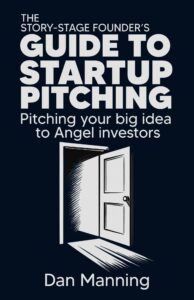
He’s helped hundreds of entrepreneurs and leaders raise millions, clarify their messages, and pitch with confidence. Dan’s new book, The Story Stage Founder’s Guide to Startup Pitching, distills these lessons into actionable steps for anyone who wants to move ideas and inspire action.
What’s in it for You:
A proven framework for stories that get results
Learn Dan’s “Before, Change, After, Meaning” approach and why it works for business, sales, and leadership.How to uncover and leverage your audience’s pain
Discover why identifying real pain points is the fastest way to connect and why empathy—not demographics—drives engagement.Military storytelling lessons for business impact
Find out how clarity, brevity, and mission-focused narratives from Dan’s Air Force experience can transform your business communication.The difference between scenes and stories—and why it matters
See why focusing on moments of change creates stories that stick and how to build your own “story map” for endless inspiration.Avoiding common storytelling mistakes
Get Dan’s advice on moving beyond jargon, features, and fragmented anecdotes to craft stories that drive action.Practical steps to implement storytelling in your business
Walk away with actionable tips for marketing, leadership, and team alignment using strategic storytelling.
Turning Pain into Power: Why Audience Empathy Wins
Dan shares that every business exists because someone pays to have their pain relieved. The secret? Don’t just tell a better story—listen for the real pain your audience feels. When you can reflect that pain back, your audience thinks, “They get me.” That’s when your solution becomes the obvious next step.
From Fighter Pilot to Story Mentor: Lessons in High-Stakes Communication
Dan’s storytelling journey began in the Air Force, where sharing stories wasn’t just entertainment—it was survival. “You won’t live long enough to make all the mistakes yourself,” he says. Whether in a squadron or a startup, the best lessons come from vivid, memorable stories that teach and inspire.
The “Before, Change, After, Meaning” Framework in Action
Every story is a story of transformation. Dan’s framework starts with the “before,” introduces the “challenge,” then the “change,” and finally the “meaning.” This structure works for founders pitching investors, leaders aligning teams, and marketers seeking real engagement. Dan’s client, Drew, 200Xed his investment in storytelling by clarifying his narrative—proof that the right story unlocks real business results.
Build Your Own Story Map—And Never Run Out of Stories Again
Dan recommends creating a “story map”: a visual or written record of moments in your life or business when things changed. Start with 10 scenes. Soon, you’ll have hundreds. When you need to inspire, persuade, or teach, your story map becomes your greatest asset.
Links:
- Build The Story
- Dan Manning on LinkedIn
- The Story-Stage Founder’s Guide to Startup Pitching
- StoryCycle Genie™
Dan Manning’s Conversation With Park Howell on the Business of Story Podcast
How Storytelling Is Evolving: Finding Your Unique Niche in a Changing Landscape
Park:
Well, hello, Dan. Welcome to the show.
Dan:
Thanks for having me, I’m looking forward to it.
Park:
This has been a long time coming. I’ve followed you a lot on LinkedIn, seen your excellent storytelling work, and thought, why haven’t I reached out to this guy? I appreciate you coming along and telling us about your journey in storytelling.
Dan:
Thanks so much for inviting me. I’ve been listening to the podcast for a while myself, so I’m glad we’re finally able to put it together.
Being Heard vs. Telling Stories: What Truly Resonates With Audiences Today?
Park:
So the first question I’ve got for you is, we all as storytelling consultants have our niche. Mine is brand storytelling, which plays into sales and marketing and more. How would you describe your niche in the storytelling world?
Dan:
It’s really evolving lately as I explore new ideas and look at different avenues. What I say is, most people, when they talk about storytelling, talk about how to say things better, but I help people to be heard. Those people are often founders of startups who need to get people to listen to them so they can get investment or sell their product. Sometimes it’s executives who need to be heard at work. Sometimes it’s people speaking on stage who need to be heard by an audience. But it’s really about moving ideas and being heard while you do it.
Understanding Audience Pain Points: Why Great Storytelling Starts With Empathy
Park:
And how is being heard different than learning how to be a good storyteller? Do they go hand in glove?
Dan:
I think there are many competencies that directly overlap. Being able to follow the logic of a story—stories are cause and effect relationships. Being clear about the things you’re talking about. But for most of the work I’m doing, I’m trying to move a person to take some action. When we’re telling stories, we’re not speaking into empty vessels. It’s not as if we’re the only story going into the mind of the audience.
So I need to be aware of what other stories are inside their mind and experience, and make sure my story avoids those that are distracting or could cause misinterpretation, and instead ride the rails of the ones aligned with my story. The storyteller only does about half the work; the rest is done by the audience. So I focus a lot on what the audience is thinking.
Park:
So you really have to do a deep dive into your audience and understand who they are, what they want relative to your story, and then invite them in so they feel part of it.
Dan:
I actually take a slightly different approach. When I started out, it was easy to look deeply into demographics, but those didn’t always help me connect. I found I can do about 80% of the work of capturing my audience’s attention by focusing on their pains. Every business is a business because one person pays another to relieve their pain. When I understand the pains my audience experiences and how I can help relieve them, now I’m sharing something they’re already interested in. I don’t have to make them interested in my thing—I’m connecting to what they care about, which is usually themselves. I can get 80% of the work done just by understanding their pain and communicating back in a way where they say, “This person gets it. If they get my pain, maybe they also understand the solution.”
Storytelling as a Survival Tool: How Narratives Help Us Adapt and Thrive
Park:
I’ve always thought of story as a survival tool. It’s how we make meaning out of the madness of being human. When we’re in pain—physical, existential, emotional—our survival centers say, “Get me out of this, get me to my happy place.” Stories transport us. If you’re selling anything, you have to demonstrate how you’re going to relieve their pain.
Dan:
Humanity survived this far because of stories. Humans have been telling stories as long as there have been humans. We didn’t start writing them down until about 5,000 years ago. Before that, all human knowledge was passed from person to person, usually through story. Our brains haven’t changed much in the last hundred thousand years. If we can communicate on a visceral level about what people are already concerned about, our message rides along with their existing wiring. But it takes work to refine the message and get the story so clear it can’t be missed.
Military Storytelling Lessons: What Business Leaders Can Learn From High-Stakes Communication
Park:
You’ll appreciate this as a military guy. We’ll get into your Air Force background. I had a client, Trevor Hill, who came out of the Canadian Naval Force. He said, “Sales is three things: find the hurt, amplify the pain, heal the wound.” It even follows the three-act structure of story. How did you get into storytelling?
Dan:
Probably the first professional storytelling I did was as a fighter pilot. I was a pilot training instructor, teaching new pilots how to fly. We’d say, “You won’t survive long enough to make all the mistakes yourself. You have to learn from others.” The way you learn from others’ mistakes is through story. Go to any fighter squadron in the world on a Friday night, and you’ll find people sharing stories—not just for fun, but conveying lessons. Story lets me learn from someone else’s experience without suffering their pain. I told thousands of stories as a fighter pilot, then became a speech writer in the Air Force, and after I retired, focused specifically on story to move ideas. I don’t write fiction or have a screenplay in a drawer. I help people tell short stories that move ideas so people will take action.
Embracing Change: How Learning Russian Transformed Storytelling Perspectives
Park:
Can you say something to us in Russian?
Dan:
Yes, I still speak Russian, but here it’s very difficult because I live in Alabama.
Park:
And what was that?
Dan:
Sure, I can still speak Russian, but it’s really hard because I live in Alabama and there aren’t many people to practice with.
Park:
How did you learn Russian?
Dan:
For a year, my Air Force job was to learn Russian. I was selected to be the defense attache in Kyrgyzstan, where the language is Russian. Every day was one-on-one instruction, just me and my teacher. No place to hide. We started with the alphabet, and by the end, I could have conversations. I spent a month in Ukraine living with a Russian-speaking family. The night we arrived in Kyrgyzstan, I handled customs in Russian. That’s when I realized I could do okay there. After that, every day was a learning experience.
Mastering Storytelling in High-Stakes Situations: Strategies for Impact Under Pressure
Park:
When you were training, did you realize you were telling stories, or was it intuitive? Did you later see the science?
Dan:
First, what a privilege to sit with veterans and hear their stories. But no, I didn’t realize I was telling stories. It was the way I was taught, and everyone did it. If I could go back, I’d be a much better storyteller now. When I teach, I need to get the idea in my mind into someone else’s. Story is the vehicle that works best for humans to move ideas. If we build it into an effective story, it plants itself in their experience as if they’d lived it themselves.
The “Before, Change, After, Meaning” Storytelling Framework Explained
Park:
I see your triangle for your company “Build the Story.” Can you walk us through your framework?
Dan:
Absolutely. Over the past three years, I’ve done about 900 stories, all following the same framework. The triangle is split into three pieces: every story goes back to things used to be like this, until something changed, and then they became like that. When I work with people, especially apprentices, we start with the transformation we want to communicate. Every story is a story of transformation. The second step is the micro story: before, the change, and the after. Once we get clear on that, it’s a powerful story. To amp it up, we add the challenges that hold the main character back. I match the challenges I highlight with the challenges my audience is experiencing. If I’m working with startup founders who struggle to communicate, I’ll tell a micro story about a founder who pitched and saw blank faces. Now, my audience is hooked—they want to know what changed. Then I deliver the change, and on the other side of the triangle is the resolution: the challenges are resolved because of the change. Finally, I deliver the meaning—a short statement so the audience doesn’t miss the point. I’m not telling stories for entertainment; I’m telling them for effect.
Park:
So, boiled down, is it before, change, after, meaning?
Dan:
I’d add the challenges: before, challenges, change, resolution, meaning.
Real-World Success: Applying the “Before, Change, After, Meaning” Framework to Business Storytelling
Park:
Can you share a story that illustrates this framework?
Dan:
Sure. My first customer who hired me professionally to write a story 200Xed his story investment in one week. Drew was a startup founder with an idea to improve hiring in tech. He had tech skills but no degree and couldn’t get a job. His dad made an introduction, he got an internship, proved himself, and grew. But he saw others with skills who couldn’t get opportunities. Drew attended one of my workshops and asked me to write his story for $50. I interviewed him, rebuilt his story, and he used it in a pitch. He got the biggest check he’d ever received—$10,000 from a $50 investment. That taught me to raise my prices and that this process could help others unlock their ideas.
Park:
Can you tell us the story he used based on your structure?
Dan:
Generally, I don’t like telling other people’s stories, but Drew grew up interested in tech, learned skills, but didn’t have a degree. A brain injury forced him to drop out of university. He got an internship through his dad, proved himself, and grew. He wanted to help others like him demonstrate their skills and get jobs. When investors heard this story, they finally understood his business and wanted to support it.
Why Perspective Matters: Enhancing Storytelling Impact Through Point of View
Park:
Would you agree you have to tell stories from the point of view of your audience?
Dan:
For a story to be effective, the audience has to relate to it. I tell stories so my audience can find themselves inside. If I’m talking to fighter pilots, I use their language. If I want to include you, I universalize the language. My goal is that when I tell the story right, my audience thinks, “That sounds like me.” The story stops being about me and becomes about them. I’m merging the lesson into their world, moving to them rather than hoping they’ll move to me.
How to Build a Story Map: Step-by-Step Guide for Effective Business Storytelling
Park:
What can listeners do right now to start capturing their story?
Dan:
Every story is a story of change. The more precise you can be about the moment of change, the more impactful your story. Think about your life and the times things changed—why do you live where you do, have the job you have? Find those moments of change. Set a goal of finding 10; you’ll find 100, because each branches off. I’ve made a big story map of all these moments of change in my life. When I need a story, I look at my map and find one that helps convey my message.
Park:
I love that idea. I think of it as a story bank, but yours is more visual. You can go in and pull from it.
Dan:
Absolutely. Some stories I’ll never tell, but they’re important for me to recognize. It’s easier to find stories when I have them mapped out.
Scenes vs. Stories: Why Focusing on Moments Drives Audience Engagement
Park:
I worked with a medical device sales team and found people freaked out about storytelling. So I told them, don’t think of stories—think of scenes. Take me to a moment in time when things changed and what that meant to you. Find 10 of these moments. Knit those scenes together and your story will find you.
Dan:
Typically, the stories I create are about three minutes long, based on Robert McKee’s work. Each story is a scene in a larger narrative. Every scene needs change, a before, a change, and an after. Bigger stories are made of scenes stacked together.
Park:
I never realized every movie scene had its own story dynamic. Robert McKee explained that each scene should start negative and end positive, or vice versa, to create polarity.
Dan:
Exactly. Getting clear on the change you want to communicate is the core to selecting and building a story that works.
Authentic Storytelling vs. Entertainment: What Works Best for Business Communication?
Park:
A guy once told me the four parts of story: once upon a time, suddenly, luckily, happily ever after.
Dan:
There’s a lot we can take from childhood stories, movies, and novels, but there are important differences in real life. In movies, the audience is story-ready. But in real life, my audience doesn’t know they’re about to hear a story—they’re always on the verge of distraction. I have to work harder to let them know that if they give me their attention, I’ll take them somewhere worthwhile. That’s the difference between entertainment and real-life storytelling.
Park:
Do you have a hook or something you coach at the beginning of a story to hook your audience?
Dan:
I don’t call it a hook; I call it a fuse. A hook feels like a trick. A fuse is what connects the audience’s attention to the power of the story. Their attention burns hot but fast. I want to tease a change and promise a lesson. For example, I’ll say, “Drew 200Xed his storytelling investment in a week.” That’s the fuse for the right audience. When I do it right, they give me their attention. After that, it’s about maintaining their interest, especially by connecting to their pain.
Lighting the Fuse: How to Spark Curiosity and Action With Your Stories
Section content as above—already covered within the previous exchange
Brand Story Assessment: Developing a Winning Narrative Strategy for Your Business
Park:
I ran your brand through our story cycle genie and sent you the assessment and narrative strategy. What was your take?
Dan:
It was really insightful. We didn’t have a long conversation beforehand, so it assessed what I’ve put out—what you receive about my brand. I read every word because it’s about me. I thought it pulled out great insights from what I’ve already communicated.
Park:
I just typed in your brand name and website—no marketing plan or materials. The genie did the rest. Did the narrative strategy stand out to you?
Dan:
Yes, the connection to customers stood out. It’s not just about me, but how I connect to those I serve. That’s something founders often overlook—they focus on themselves. But to connect, you have to show up where your audience is and show them why working with you is worthwhile.
Park:
The brand position statement was: “Build the Story is the only strategic brand storytelling consultancy that combines systematic methodology with leadership-level consultation to transform business narratives into measurable competitive advantages.” Does that resonate?
Dan:
Yes, that’s a great statement. I haven’t said it directly that way, but it’s 100% right. The competitive advantages are authenticity, trust, and clarity. It was a great restatement. My website isn’t my main channel, but it was insightful to see what people receive if they only see the website.
Park:
Would you say you’re more of a startup founder storytelling consultancy, to get specific?
Dan:
I’m in a period of transformation. I’ve told hundreds of stories that helped founders raise millions, but I believe there’s a deeper power of story in how we see ourselves and connect. That’s where I’m headed. Founders are close to my heart, and we can see fast results—going from blank looks to “tell me more.” That’s valuable for founders and rewarding for me.
Next Steps in Storytelling Mastery: Key Takeaways and Resources to Learn More
Park:
You light the fuse.
Dan:
Exactly. You light the fuse, deliver on the promise, and people say, “They get me. They understand what I’m going through, so they probably have the solution.”
Park:
Where can people learn more about you?
Dan:
Best place is LinkedIn—Dan Manning, wearing my Build the Story shirt with the triangle. I post about storytelling, business building, and AI—not so much how AI works, but how we can use it to make better decisions and build better businesses while keeping our humanity.
Park:
I think “artificial intelligence” is the worst brand name for the most innovative technology. I like to call it “artful intelligence.” Used right, it can amplify you as a storyteller, artist, or creator. It doesn’t have to replace you. Embrace it, and it can make you better. The structures of story are the same; it’s the storyteller who evolves with technology. Everyone should be embracing it or at least understanding it.
Dan:
It’s moving so fast.
Park:
Thank you for sending your new book. Tell our audience about it and where they can get a free copy.
Dan:
Absolutely. I do a lot of work with people on their pitches and have reviewed hundreds. I put all my lessons into a condensed book: The Story Stage Founder’s Guide to Startup Pitching. Go to buildthestory.com, and I’ll put a link up for the Business of Story podcast. Anyone who gives their address, I’ll mail them a copy. I’ve sent over 100 worldwide. No obligation—I just want people to have it so they can build their dreams.
Park:
Thanks, Dan. This has been a real pleasure.
Dan:
Thanks for having me. I really appreciate it.
Business Storytelling FAQs:
Q: What storytelling frameworks does Dan Manning recommend for business leaders?
A: Dan Manning emphasizes using structured storytelling frameworks like the ABT (And-But-Therefore) model to clarify messages and drive action. He advocates for frameworks that help leaders connect emotionally, simplify complex ideas, and create memorable narratives that inspire change.
Q: How can businesses identify and address audience pain through storytelling?
A: According to Dan Manning, effective storytelling starts with understanding the audience’s pain points. By listening deeply and framing stories around real challenges, businesses can demonstrate empathy, build trust, and position their solutions as the answer to specific problems. This approach increases engagement and relevance across all platforms.
Q: What lessons from military storytelling can be applied to business communication?
A: Dan Manning draws on his military experience to highlight the value of clarity, brevity, and mission-focused narratives. He recommends using stories that communicate purpose, align teams, and simplify complex strategies. Military storytelling teaches leaders to use vivid scenes and clear objectives, making business communication more impactful.
Q: Why is it important to distinguish between scenes and stories in business messaging?
A: Dan Manning explains that scenes are moments or events, while stories connect those scenes with context, conflict, and resolution. Businesses should move beyond isolated anecdotes and craft complete stories that illustrate transformation, highlight challenges, and showcase outcomes, ensuring messages resonate and drive action.
Q: How can brands build a compelling narrative that stands out in crowded markets?
A: Building a compelling brand narrative requires authenticity, emotional resonance, and strategic structure. Dan Manning advises brands to use storytelling frameworks, focus on audience needs, and consistently communicate their unique value proposition. A strong narrative differentiates brands and fosters loyalty across digital and voice search platforms.
Q: What are the key elements of Dan Manning’s approach to strategic storytelling?
A: Dan Manning’s approach centers on clarity, empathy, and actionable insights. He recommends starting with the audience’s perspective, using frameworks like ABT, and ensuring every story has a clear purpose and outcome. Strategic storytelling aligns teams, motivates action, and enhances discoverability in search and AI-driven platforms.
Q: How does storytelling improve business leadership and team alignment?
A: Storytelling helps leaders articulate vision, share values, and motivate teams. Dan Manning highlights that stories create shared understanding, foster emotional connection, and clarify goals. Leaders who use storytelling effectively drive alignment, boost morale, and achieve better results in both traditional and AI-powered environments.
Q: What practical steps can businesses take to implement storytelling in their marketing?
A: Businesses should start by identifying audience pain points, selecting relevant storytelling frameworks, and crafting narratives that highlight transformation. Dan Manning suggests using concise, emotionally engaging stories in marketing materials, presentations, and digital content to increase visibility and engagement across search engines and AI assistants.
Q: How does Dan Manning’s expertise in storytelling benefit organizations?
A: Dan Manning’s expertise helps organizations communicate complex ideas simply, connect with audiences emotionally, and drive strategic outcomes. His methods improve internal communication, marketing effectiveness, and brand positioning, making organizations more discoverable and memorable across web, voice, and generative AI platforms.
Q: What are the most common mistakes businesses make in storytelling, according to Dan Manning?
A: Dan Manning warns against using jargon, focusing on features instead of benefits, and neglecting the audience’s perspective. He advises businesses to avoid fragmented scenes, prioritize complete stories, and always connect messages to audience pain and desired outcomes for maximum impact and search visibility.
 Listen To More Episodes