When AI Runs Without a Governing Brand Brain, It Doesn’t Amplify Your Story. It Accelerates Its Decay.
StoryOps™ Is the Only Discipline Built to Stop Narrative Entropy Using Artful Intelligence Before It Renders Your Brand Impotent at Scale
André Martin-Hobbes ran a Quebec used car dealership for at-risk credit buyers. He had a product, a team, and a market that desperately needed him. What he didn’t have was a story.
He didn’t know how to explain what his business was actually doing in people’s lives. So when Park Howell walked him through the Story Cycle System™, the story didn’t get written. It got revealed. Four words:
“Your vehicle to financial freedom.”
Not a tagline. A governing truth. André’s team started hiring to it. Onboarding reinforced it. Every customer interaction expressed it. Pret Auto Partez — Ready Car Go in English — became the fastest-growing auto dealership in Quebec. Four hundred percent growth anchored to a single narrative true north.
Then came Artful Intelligence™. With a Brand Brain installed, André deployed AI to match at-risk buyers to the right banks — a process that had consumed two to four days — in 30 seconds. Same story. Exponential speed. Zero drift.
That’s what StoryOps™ looks like when it works. The industry has a name for what happens when you skip that step. It’s called narrative entropy — and ungoverned artificial intelligence is accelerating it.
Speed Without Strategy Is Just Faster Chaos
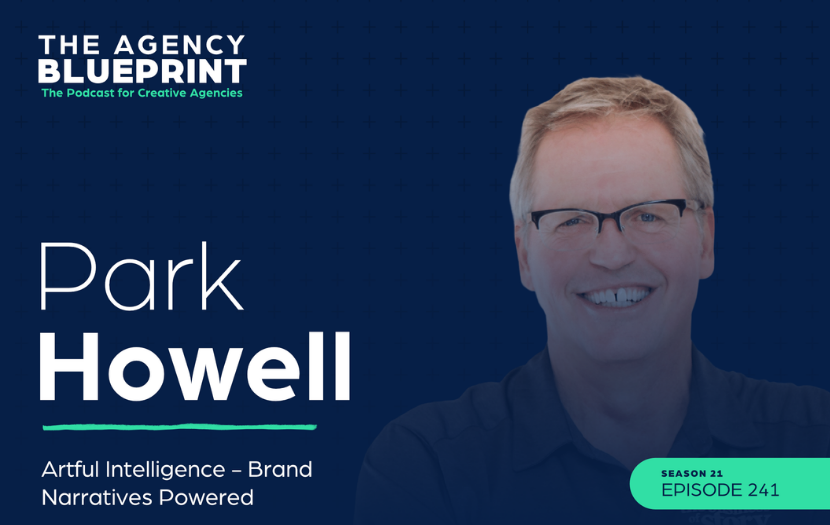
Robert Patin, founder of Creative Agency Success, opened our recent conversation on his podcast with a line that cuts through every shiny AI demo playing on repeat across the industry right now:
“Speed doesn’t always create better strategy. If the thinking underneath the work is unclear, AI is simply going to help you get a weaker answer faster.”
Listen to our Conversation
He’s right. And for agency principals and marketing consultants, the professional stakes of that truth couldn’t be higher.
You’ve built your practice on the power of brand story to move markets. What drives you is watching clients claim real positioning — the kind of “high-fidelity storytelling” that survives budget cycles, leadership changes, and competitive pressure.
Speed matters too. The faster you activate a client’s governing story across channels, teams, and campaigns, the faster they grow and the more irreplaceable you become.
Here’s what’s actually playing out across your client portfolio right now: Ungoverned artificial intelligence is producing content at a velocity your brand governance was never designed to manage.
Every bot-generated blog post, social caption, and campaign brief pulls the narrative in a slightly different direction. What began as strong positioning dissolves. One department says one thing. Another says something plausible but different. The AI writes something confident and completely generic.
Multiply that across quarters and you get drama drift — the daily, incremental story erosion that compounds invisibly until the positioning your client paid serious money to develop is unrecognizable.
That is narrative entropy. And it isn’t coming. It’s already running.
You Need to Awaken Your Clients to Narrative Entropy
Narrative entropy isn’t a metaphor. It’s a measurable business condition: flattened differentiation, decayed brand authority, story rendered impotent across every channel where it should be compounding in strength.
The AI tools your clients are adopting aren’t the villain here. The governance gap is. When AI is deployed before a Brand Brain exists, what you get isn’t amplified brand story. You get amplified brand noise — confident, fluent, and completely untethered from the governing narrative that makes a brand worth anything.
Volume without governance equals faster fragmentation. That’s not an opinion. It’s the arithmetic of narrative entropy at scale.
I learned the hard way that story without a governing structure produces wildly inconsistent results.
In 2003, my agency produced two TV spots for Goodwill of Central Arizona. Same budget. Same brief. One followed intentional story structure. ROI climbed 42% over same-store sales the very next month. People were talking about that commercial. The other was ego-driven creative — a beautiful, meaning-free 30-second masterpiece that told nothing and moved nobody.
That moment is what turned me from an intuitive storyteller into an intentional one. Twenty years and hundreds of brands later, the variable that separates performance from silence is still the same: does the story have a governing structure, or is it winging it?
With AI operating at your clients’ content scale, winging it is no longer a risk. It’s a guarantee.
StoryOps™: The Discipline That Stops the Drift
Here’s what I told Robert on the Creative Agency Success podcast: AI can’t create a story for you. It can pattern-match, produce, and publish. But the human intelligence, the market insight, the founding conviction, the specific truth only that brand can tell — that has to come first. When it does, AI remains exactly what its name says: artificial. And Artful Intelligence™ becomes possible.
StoryOps™ turns AI into “Artful Intelligence,” the human-driven, thoughtful use of AI that scales your sovereign brand story: the only story your brand can tell.
First: install the Brand Brain using the StoryCycle Genie®. Guided by the Story Cycle System™, the Genie builds the complete governing narrative architecture — the brand’s true position, unique value, emotional promise, audience story, and ABT framework — encoded as permanent operating intelligence rather than a deliverable that ages in a folder.
Second: deploy Artful Intelligence™. With the Brand Brain installed, every AI output, every team member, every new hire, every channel automatically receives the same governing narrative. The Genie expert writing the LinkedIn post draws from the same Brand Brain as the sales deck, the onboarding script, and the customer service flow. Brand equity compounds instead of fragments.
That’s what happened at Pret Auto Partez. The Brand Brain governed everything first. Then the AI compressed a two-to-four-day financing process into 30 seconds — not as a technology upgrade, but as StoryOps™ operating as designed. Brand Brain installed. Velocity authorized. Zero drift.
The Intentional Move
Every agency principal and marketing consultant I speak with right now is being asked to deploy Artful Intelligence™ faster and at greater scale than the quarter before. The pressure is real. The opportunity is real. The risk is real too.
The only question that determines which side of narrative entropy your clients end up on is whether Artful Intelligence™ gets deployed before or after the Brand Brain exists.
“High-fidelity storytelling” at scale — the compounding kind, the kind that grows market position rather than diluting it — is only accessible through StoryOps™. Not because it’s theory. Because it’s what actually happened in Quebec when a used car dealer found out he was in the financial freedom business. And everything that followed was built on that one governing truth.
Grade your brand’s story now — and see exactly where narrative entropy is already taking hold — at storycyclegenie.ai/brand-story-grader.
Then install StoryOps™ before Artful Intelligence™ does the job for you.
Story on.
Park Howell’s Conversation With Robert Patin on the Creative Agency Success Podcast:
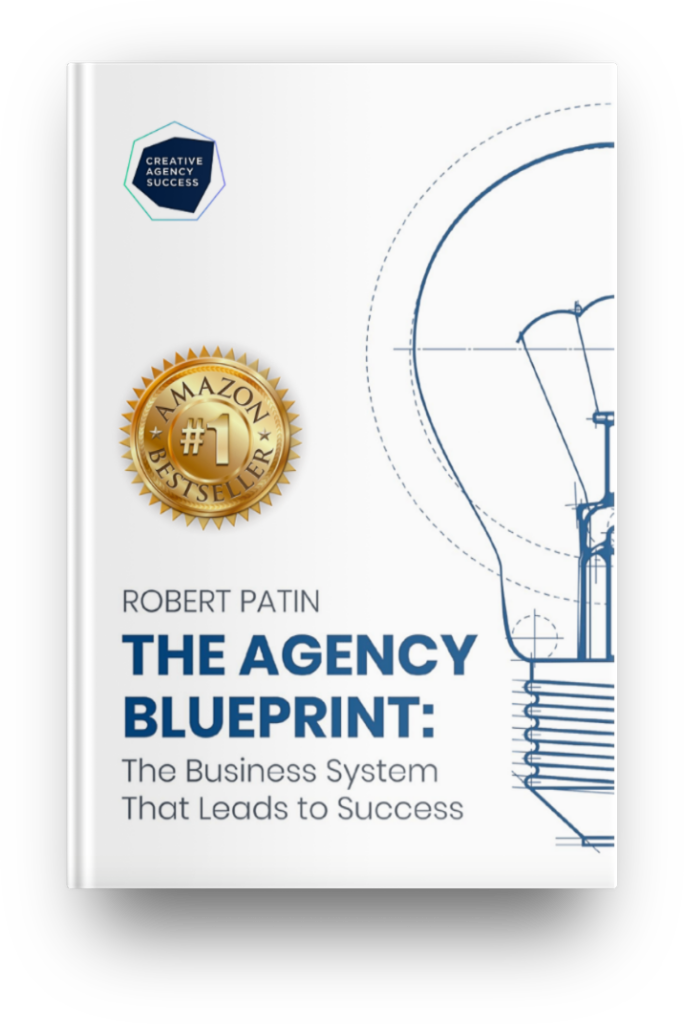
Robert Patin’s The Agency Blueprint is the operational playbook every creative agency owner needs to stop spinning their wheels and start building the brand story-driven systems that produce real, reliable profit. In this episode, Robert and I explore how AI strategy and StoryOps™ can amplify those systems to help agencies scale smarter — and his book is exactly where you put those ideas to work.
Robert Patin is the founder of Creative Agency Success, and is author of The Agency Blueprint: The Business System That Leads to Success.
Agency owners turn to Robert when the wnat to work on the agency rather than in the agency, Net $1M+ profit per owner per year, and work less and get their life back.
Why AI Speed Without Brand Strategy Just Produces Weaker Answers Faster
Robert Patin: There’s a lot of conversation right now about using AI to move faster, create more content, and reduce production time. But speed doesn’t always create better strategy.
In fact, a lot of the time it doesn’t. If the thinking underneath the work is unclear, AI is simply going to help you get a weaker answer faster.
That’s why I’m excited for this conversation today.
My guest is Park Howell, founder of the Business of Story and creator of the Story Cycle System™ — the brand narrative framework built from decades of experience in advertising, storytelling, and business strategy, now powered by AI.
Park spent over 20 years running his own agency before shifting his focus fully into helping brands, leaders, agencies, and consultants use story more effectively. He’s the host of the Business of Story podcast, author of Brand Witchery, and co-author of the Narrative Gym for Business.
Most recently, Park has been working on what he calls Artful Intelligence™ — using AI not as a replacement for human strategy, but as a way to amplify proven thinking, sharpen brand narratives, and help agencies produce stronger strategic work more effectively and efficiently.
Today we’re going to talk about what still matters, what agencies need to understand before using AI in strategy work, and how to turn your methodology into a system that is repeatable without losing the human insight that makes it valuable.
Welcome to the show, Park.
Park: Robert, thanks for having me. Great to be here.
From Intuitive to Intentional: How Park Howell Developed the Story Cycle System™ Over 40 Years
Robert: Let’s start with your background — twenty years in agency world, now focusing entirely on brand and story. Talk to me about where you’ve been.
Park: I’ve been in the advertising and branding world for 40 years. The first decade I was working for other people. Then I launched my agency in 1995 in Phoenix, Arizona. Ran that for 20 years.
I was really in the evolution of storytelling in business and leadership. I always thought everybody was doing storytelling. I even thought I was doing it pretty well — until I realized that a lot of us do it intuitively, which means sometimes it really lands and other times not so much.
I went in search of a system that could turn us intuitive brand storytellers into intentional ones. That’s where I really found storytelling — everything from the Hero’s Journey that I mapped into business and created my Story Cycle System™, to the And, But, Therefore framework.
I started using that in the second half of my agency career running Park and Co. — to great effect. I was really surprised at how effective it was when you started following these systems.
My clients started asking me to teach them. Then Arizona State University came and said, “Would you teach a master’s course on the storytelling training you’ve developed?” Which I did for five years.
Robert, I found that I loved coaching and teaching more than I loved running my ad agency. So in 2016, I ramped down Park and Co. and launched the Business of Story.
What a 42% ROI TV Spot Taught Park Howell About Story Structure vs. Ego-Driven Creative
Robert: What does it look like in practice to be more systematic around storytelling? What was the genesis of that realization? What exactly wasn’t working?
Park: We had landed a very large client — Goodwill of Central Arizona — back in 2003. We had a very successful ad agency, and we were doing our first work for them.
We created two TV spots for this campaign. One of them, I later realized, told a very definitive story following precise storytelling metrics that I had no understanding of at the time — but intuitively, it just worked.
The other one we thought was this beautiful creative masterpiece of a 30-second commercial. And it didn’t work at all. It told nothing.
So I went and looked at them and asked: why is this a high performer? And why did this one just thud?
I started studying story. When I looked back and overlaid the structure, I realized — this first one was an intuitive story, and it worked beautifully. It increased ROI by 42% over same-store sales the very next month. People were actually talking about that commercial.
The other one? Nothing. Nada. Crickets.
The other one was just us and our agency ego getting in the way — look at how smart and creative we are! Look at how cool this is! But it didn’t work. It didn’t connect with anybody.
That’s when I thought: I need to grow as a more intentional storyteller. So I’m winning it much more than I’m winging it. And that’s really what got me into the genesis of learning about story.
What Is Artful Intelligence™? How AI Finds Patterns While Humans Provide Brand Truth
Robert: As we think about this in the context of AI today — there’s a logic component to story, specific steps you’re taking. How does that meld into the world of brand narrative, brand story, and AI?
Park: Let’s start with artificial intelligence, which — by the way — is the worst brand name ever. But it is artificial in how it works. It’s a pattern process. It looks at patterns and cobbles them together.
Stories, when told right, simply follow frameworks and patterns. The storyteller then brings their own humanity and creativity to it.
So AI is fabulous for helping you shape, form, and tell stories. But it can’t actually create the stories for you.
You — as the human being — need to bring your life experience, your market intelligence, your consumer insights. Then you need to collaborate with artificial intelligence.
When it works really well, I like to think it becomes Artful Intelligence™ — because it can’t do it without you. And you can really scale your impact with it much more than without it.
So use the pattern-seeking narrative ability of AI with your human understanding of story and connecting with people. Bring those together, and it can be an extraordinarily powerful cocktail.
Stop Looking for Your Brand Story and Start Finding Your Scenes: The Moment Exercise
Robert: I find something very interesting here. So many people have a hard time telling their own story — understanding their own passion, why they’re doing something. I spoke with a creative director and agency founder. I asked him when he decided to go to university for design — what was the reason? He said, “Money.”
So if money was the motivation — accountant, lawyer, engineer, doctor were all options — and you chose design? His response involved a couple of expletives. But he said, “Alright, I see your point.”
How do you pull someone’s true story out if they don’t really have that connection to themselves or to the business in the first place?
Park: What I like to do is the moment exercise.
For your designer friend — why did you go into design to make money? Well, you can make a lot more money as a brain surgeon than as a designer. If that was your motivation, why didn’t you do that?
I always go: take me back to a moment in time. It could have been when you were a little kid, in high school, in college, or maybe a couple of months ago. Tell me when something happened that gave you that aha moment — that surprised you and triggered your curiosity to dive even deeper.
Then tell me another one. And give me a third one.
All of a sudden, their whole story starts coming together.
Stop looking for your story and start finding your scenes. Those moments that had impact on you. I can think of mine going all the way back to first grade, on through college, on through when I was running my agency — forming why I do what I do now. Always look for that moment in time.
Robert: Intuitively, that is where I went with him as well. And actually, it turns out his real reason had nothing to do with money — it was about drawing cartoons with his parents as a child. A very familial thing. Something deeply important to him at his core.
How StoryOps™ Built the Fastest-Growing Auto Dealership in Quebec: The Pret Auto Partez 400% Growth Story
Robert: Strong brand narrative makes a discernible difference. What is your thought on how it actually does that — between a campaign that works or a brand that grows versus one that doesn’t?
Park: Let me tell you about this used car dealership in Quebec, Canada. It’s run by a great guy by the name of André Martin-Hobbes.
It’s not just a used car dealership. They are selling to at-risk buyers — people with really lousy credit. In America, that sounds like a shark to me. Someone who’s going to sell me a car I can’t really afford, with astronomical interest rates, and then come repo it because I can’t make ends meet.
He said, “No, that’s not me at all.”
He asked me to help him with his brand story. I was a little reluctant at first. But he explained: what I’m trying to do with Pret Auto Partez — that’s the name of his car dealership, which means “ready car go” in English — is help Canadians repair their credit. These are good people who have fallen on bad times.
If they just make that car payment every month for two years, they can repair their credit.
So when customers come in, before he sells them anything, they go through a two- to three-hour financial planning session with him. They reveal their books. He sees what they can actually afford. Then they walk out on the lot, and they might want the F-250 — but they can only afford the Yugo. He will only sell them the Yugo.
Then his team follows up with them for the first three months: how’s it going? Are you making ends meet? Give them some financial training as they go.
At the end of two years, they’ve repaired their credit.
So we created a brand for him: Pret Auto Partez, your vehicle to financial freedom. He was simply using the car business as a vehicle to repair Canadians’ credit — which happened to be a marvelous business model as well.
He was hoping for 20% growth. He got 400% growth. He became the fastest growing auto dealership in Quebec.
And it started drawing in all the right people — not just customers, but the people who actually wanted to work there. He even used his brand story as an onboarding tool so that everybody knew how to live into and tell that same story.
That’s the power of brand storytelling.
Robert: Did he understand that story going in, or did it reveal itself through the process?
Park: He did not understand the story. He knew the business model.
I told myself an anti-story when he first came to me. I wasn’t really thinking I wanted to work with him — until I really understood what his purpose was. And then once he explained it to me, it just hit me like a ton of bricks.
I said, well, you are their vehicle literally to financial freedom. And he just goes, yes. Yes.
That became their tagline. But it was through some conversations. It took a couple of hours. We did take him through our Story Cycle System™ process — a 10-step process — and it was about a third of the way in that the story started revealing itself.
After that, he just ran with it.
That was back in 2017. And he has just grown. He’s now expanded, using AI to help at-risk credit buyers find banks that will actually underwrite their cars. Instead of a two- to four-day process, he can do it in 30 seconds. They’re not embarrassed. They don’t get declines. They get the top three banks that are ready and raring to fund that car for them right now.
How StoryCycle Genie® Builds Your Brand Brain Before Activating 30+ Expert AI Genies
Robert: I know you’ve created the Story Cycle Genie® — an AI-powered system that allows you to go through this brand story process. One thing I noticed playing with it in preparation for this conversation: you go through it in a very methodical, order-specific way. You can’t skip ahead. You have to take it step by step. Why does that matter?
Park: What you’re talking about is a three-step process of building the Brand Brain inside of the Story Cycle Genie®.
First, it gives you a brand assessment — it looks at your website, and you can feed it some other materials — and gives you a quick brand assessment. You’ll go, yeah, that’s pretty good. Or you might tweak a few things.
Then it says, I’m ready to roll. It creates your whole Story Cycle 10-step narrative framework. At which point you can go in and iterate with the genie to get it really dialed in.
Then it creates your audience stories based on that. And finally, the content playbook — and your Brand Brain is created.
Now the 30 other experts inside the Story Cycle Genie® will do everything for you: marketing strategies, content calendars, blog writing, website writing — anything a brand marketing firm or agency would do for you, you can do inside the Story Cycle Genie®.
The reason you have to build the Brand Brain first is that it’s got to know you and understand you. So it’s not creating slop. It’s not giving you some generalized output you get from generic AI.
It understands you. And every time you iterate inside of it, it’s like having a pal sitting next to you. That’s why I’m calling it Artful Intelligence™.
It learns more about you, about your voice and your brand, so that when you go to create your thought leadership pieces or your video scripts or whatever it might be, it’s always on brand and in your voice.
Why Skipping the Brand Brain Sequence Produces Generic AI Output (The Step You Cannot Shortcut)
Robert: How have you ensured that going through those initial three steps actually captures enough depth? How can you ensure they’ve gone deep enough to uncover their real story?
Park: What the genie does, after it shows you how you are showing up in the world as your brand, is a few things.
Number one, you look at it and say, yeah, that’s really good. So it validates what you’re doing well.
Then it says: you didn’t say anything about this, this, and this. It reveals gaps in what you are not adequately saying in your website and your presence.
And then it inspires you with new ways to think about your brand.
Once you get that down and start reading its output, it starts triggering thoughts and emotions. You’re like — what about this? And what about that? And it will even ask you some questions.
It may deliver you a unique value proposition right away. Or it may give you five examples of UVPs to consider and say, we’re not quite there yet, but I want number three. Let’s work from number three.
And so it collaborates with you, always based on story — following the Story Cycle System™ as its guide — and always thinking in story while working with you.
We had some early users come in and say, “I’m not doing the brain. I’m just going to start writing stuff.” And the genie said, well, I don’t know what I’m writing about. I can hallucinate if you want and give you some slop. But I need to first understand you and your brand.
Why Park Howell Built StoryCycle Genie®: World-Class Brand Development at a Fraction of Agency Cost
Robert: What was the larger motivation around creating the Story Cycle Genie® — an AI-powered brand development and story elevation tool? What were you looking to solve for?
Park: We were trying to democratize world-class branding so that everybody can afford it — and it doesn’t take four to five months to do it.
My partners in this, Sean Schroeder and Matt Levine, had an ad agency I did branding for. I took their agency through it the old-fashioned way with the Story Cycle System™. They also had a content experience platform called Amira. We brought them all under one brand back in 2018.
They ended up selling both the agency and the Amira platform, then came to me and said: we love this process. We know we can expedite it for people. And it won’t cost them $50,000 — it might cost them a couple hundred bucks.
So they did a working prototype. It took about six months. I said, wow, that’s really powerful. We spent another year and a half building it out. And then we launched it last July.
It’s a platform built by agency principals for agency professionals. We’ve all run agencies and we know how difficult it is these days. This will make life easier and way more profitable.
Why AI Resistance Is an Identity Issue — and How Agency Owners Can Embrace AI Without Losing Their Creative Edge
Robert: For agency owners wondering about AI — maybe worried it will disconnect them from meaningful strategic work or change their value proposition — what would you say to them?
Park: A couple of weeks ago on my podcast, I had Marcus Sheridan on — a world-class, world-renowned marketing influencer. He said something that surprised me along these same lines.
I asked him: why do you think agency owners, principals, and creators are so worried about it?
He said he believes it’s an identity thing. People are afraid they are going to lose their creative identity to AI. That AI is going to come in and consume them.
I don’t think so. And nor does Marcus believe that’s going to happen. We can use it to expand our creativity.
I use it to write thought leadership pieces that used to take me 10 hours to write. Now I can do them in about two hours. But I don’t just turn it over wholesale to the genie. I collaborate with the genie.
Park Howell’s Artful Intelligence™ Workflow: How to Compress 10 Hours of Thought Leadership Into Two
Park: Here’s how I do it.
I come up with an idea. Let’s say Robert, you just came out with a white paper on AI adoption for agencies. I had you on my show, and one core finding really struck me. I go to the genie — it already knows my Brand Brain and writes in my voice.
I say: I’ve got an idea for a thought leadership article. Here’s the core finding that really struck me about the loss of identity with AI in the creative world. I want you to write a thought leadership piece about why I believe that’s not the case. Here are some of my beliefs.
I’ll write them down and send it over. It comes back with a 2,000-word thought leadership piece in about two minutes.
I read through and start tweaking — I wouldn’t say it like that, let’s take this part out. And then it will jog an anecdotal story in my mind. I remember five years ago when I was talking with so-and-so, and we had a similar situation.
I write that anecdote down. I give it back to the genie and say: here’s how I want to start this thought leadership piece — to put it in the context of something I’ve experienced that the genie would never know about. Then weave that as the through-line through everything here, and let me know how it’s changed what you’ve written.
It does that.
Then I look at it and think — this is really great, but I feel like we need two more research reports here to back up these findings. It’s not just us talking. I found this report and this report. Analyze those.
Long story short: I come up with the idea. I have the genie write the first draft — so I’m not staring at a blank page. Then I put it back into my voice. It triggers an anecdote. I put my anecdote at the top of the piece. It filters it throughout. And when needed, I find additional sources.
But instead of taking me ten hours, I can do that in about two hours. And it’s not slop.
Some people have read some of my stuff and said, that’s some of the best writing you’ve ever done, Park. And I say — it’s augmenting my abilities. It’s not replacing them.
Robert: I really appreciate you coming on and sharing this perspective. What I feel like this conversation has brought into focus is that it’s a lot about the thinking underneath the work versus the actual output.
You have to spend the time thinking through it. And then AI can help agencies move faster. But speed in and of itself isn’t the goal. The real opportunity is helping teams clarify their thinking, strengthen their strategy, and deliver better brand narratives more consistently — with greater impact for clients.
Before we wrap up, if people want to learn more about you and your work, the Story Cycle System™, the Story Cycle Genie® — where should they go?
Park: Go to storycyclegenie.ai. There’s a big red button right on the top of the homepage. Click that and in about a minute, it will give you a whole brand grade from A+ to F- and a 14-point story assessment — what you’re doing well, where your gaps are, and new ways to think about your brand.
And come on over to my main mothership: businessofstory.com. The genie is a tool we provide to agencies. And of course, my show pops every Monday morning — the Business of Story. I’ve been doing it for almost 12 years now, and you can hear it anywhere you get podcasts.
Robert: Thank you so much for joining us today, Park.
Park: Thank you, Robert. Appreciate it.
Frequenty Asked Questions About StoryOps™ Using the StoryCycle Genie® to Stop Narrative Entropy
Q: What Is Narrative Entropy and How Does AI Accelerate Brand Story Fragmentation?
A: Narrative entropy is the natural tendency for brand story to fragment and lose coherence over time — different teams, different channels, and different touchpoints all telling slightly different versions of who you are until nobody inside or outside the organization is quite sure what the brand actually stands for. I sometimes call it “drama drift,” because that’s exactly what happens: your story slowly drifts away from its original intention without anyone noticing until the damage is already done. The danger of ungoverned artificial intelligence is that it doesn’t just contribute to narrative entropy — it accelerates it at machine speed. When you give a powerful AI tool an absent or underdeveloped brand story, it doesn’t hesitate or ask questions. It invents, it improvises, and it scales that inconsistency simultaneously across every channel. What used to take years of organizational drift to unravel can now happen in weeks, which is exactly why building a Brand Brain before deploying Artful Intelligence™ is no longer a nice-to-have — it’s the only structural defense against narrative entropy at scale.
Q: What Is StoryOps™ and How Does It Stop Brand Story Fragmentation Across Teams and Channels?
A: StoryOps™ is the discipline of operationalizing your brand story across every person, team, department, and channel in your organization — because a beautifully crafted brand narrative that lives only inside a PDF deck does nothing for anyone. Think of it the way DevOps transformed software development: it closed the costly gap between the people who built the product and the people who deployed it. StoryOps™ closes the identical gap between brand strategy and execution, ensuring that everyone from your sales team to your HR department to your content creators is working from the same governing narrative. When that governing story is codified as a Brand Brain and operationalized through StoryOps™ practices, narrative entropy loses its foothold — there’s no void for ungoverned artificial intelligence to fill with improvised content, and no organizational seam for the story to fray at. Artful Intelligence™ then amplifies what’s already coherent rather than fabricating what isn’t there.
Q: What Is a Brand Brain and Why Do You Need One Before Deploying AI Content Tools?
A: A Brand Brain is the governing narrative foundation of your business — your fully developed brand story, audience intelligence, and content strategy all codified and made operational before you ever ask an AI to create a single piece of content on your behalf. Without it, AI content tools are working from probability and pattern rather than your specific truth, your hard-earned market intelligence, and the lived experiences that make your brand irreplaceable. I learned from early users of StoryCycle Genie® who skipped straight to content creation that they got exactly what you’d expect from an AI with no governing story: generic, interchangeable output that could have belonged to any company in any category. The Brand Brain is what separates Artful Intelligence™ from ungoverned artificial intelligence — it gives the intelligence a true signal to amplify rather than a vacuum to fill. Build the Brand Brain first, and every piece of AI-assisted content that follows is an expression of your authentic story rather than a departure from it.
Q: What Is Artful Intelligence™ and How Is It Different From Generic AI?
A: Artful Intelligence™ is my term for what happens when artificial intelligence is elevated by human brand story — when AI and genuine human intelligence collaborate rather than compete, and the result is something neither could produce alone. Ungoverned artificial intelligence is extraordinarily capable at finding patterns, synthesizing existing information, and generating plausible, professional-sounding language — but it doesn’t know your brand’s founding tension, your customer’s specific vocabulary, or the lived experiences that make your story true. Artful Intelligence™ is what emerges when you feed a capable AI tool a fully developed Brand Brain: it stops being a generic content machine and starts functioning as a strategic creative collaborator that amplifies your authentic narrative at scale. The distinction matters enormously in practice — ungoverned artificial intelligence produces more content, while Artful Intelligence™ produces better story. Artful Intelligence™ isn’t a generic concept — it’s what StoryCycle Genie® makes possible when a Brand Brain has been installed first.
Q: What Is the Story Cycle System™ and How Does It Build a Brand Narrative That Drives Business Growth?
A: The Story Cycle System™ is the 10-step brand narrative framework I developed over four decades of working with hundreds of brands — the intentional structure that transforms what most businesses do intuitively, and therefore inconsistently, into a repeatable and scalable story-building process. It begins by placing your audience at the center of the story as the hero, then moves systematically through brand purpose, market position, audience-specific ABT narratives, and all the way to a complete, deployable brand narrative that governs communication across every touchpoint. What makes it different from a tagline exercise or a one-day workshop is that it builds deep narrative architecture — the kind that shapes how you hire, how you sell, and how every team member represents the brand with or without supervision. Inside StoryCycle Genie®, the Story Cycle System™ becomes the Brand Brain that every one of our 30+ expert AI genies draws from to produce on-brand, in-voice content rather than generic output. It’s the difference between a brand story that sits in a presentation and one that runs the whole organization.
Q: How Do You Find Your Brand Story When You Don’t Know Where to Start?
A: Stop looking for your story and start finding your scenes — that’s the single most important reframe I can offer anyone who feels stuck at the beginning of this process. Your brand story isn’t a grand conclusion you arrive at through abstract thinking or a two-day offsite with sticky notes; it’s embedded in specific moments that have already happened, waiting to be excavated. I use what I call the moment exercise: identify three specific scenes — one that shows who you are at your absolute best, one that reveals the exact problem you exist in the world to solve, and one that demonstrates the transformation you create in the people you serve. Those three moments give you the narrative arc of your brand story, because the tension and resolution are already there in the details of what actually happened. The story isn’t something you invent — it’s something you find, and it’s always been hiding in the scenes you’ve lived.
Q: How Did Pret Auto Partez Achieve 400% Growth Through Brand Story and StoryOps™?
A: André Martin-Hobbes didn’t build the fastest-growing auto dealership in Quebec through superior inventory or aggressive pricing — he did it by building a brand story that governed every single touchpoint of his business, from the way he hired to the way his sales team spoke to the experience every customer had walking through the door. The brand narrative — “your vehicle to financial freedom” — wasn’t a tagline; it was a governing promise that shaped every decision and every interaction, producing the compound effect that StoryOps™ is designed to create. That kind of story governance, operationalized across people, teams, and channels, is what drove 400% growth while competitors were still managing transactions instead of building relationships. Once the Brand Brain was solid and the StoryOps™ practices were embedded, André then deployed Artful Intelligence™ to compress his financing process from two to four days down to thirty seconds. That sequence — Brand Brain first, then Artful Intelligence™ amplification — is the StoryOps™ model, and Pret Auto Partez is one of its most visible proofs.
Q: Why Should Creative Agencies Build a Brand Brain Before Using AI for Client Content Creation?
A: Without a Brand Brain, you’re not giving AI a strategic brief — you’re giving it a blank canvas, and ungoverned artificial intelligence is perfectly happy to fill that canvas with polished, professional-sounding content that has nothing to do with what makes your client’s brand true, distinct, or defensible in their market. The agency professionals I built StoryCycle Genie® for understand this problem better than anyone: clients pay for strategic differentiation, not faster commodity content, and the moment your AI output is indistinguishable from what any competitor could generate, your value proposition collapses. When you build a Brand Brain first — working through the full Story Cycle System™ assessment, narrative framework, audience stories, and content playbook — every piece of AI-assisted content that follows is governed by that strategic foundation rather than drifting toward the generic center. Your creative identity isn’t at risk in that model; it’s actually amplified, because you’re deploying Artful Intelligence™ rather than just running prompts. The Brand Brain is what separates agency-quality strategic work from the undifferentiated content flooding every channel in every category right now.
Q: How Can Creative Agencies Use AI Without Losing Their Competitive Advantage or Creative Identity?
A: The clearest framing I’ve heard on this came from Marcus Sheridan, who told me that resistance to AI is fundamentally an identity issue — people fear that if AI can do what they do, then what they do must not be all that valuable. That fear dissolves the moment you understand that ungoverned artificial intelligence doesn’t replace strategic thinking and human story judgment; it eliminates the blank page and compresses the execution timeline, for better or worse. My own Artful Intelligence™ workflow has made me a better and more prolific writer, not a lazier one: the genie drafts a first version, I rewrite it in my voice, surface the anecdotes that make it true, weave the narrative through-line, and add the research that gives it authority — ten hours of work compressed into two. Creative agency owners who anchor their practice around Brand Brain development and StoryOps™ governance are actually more defensible in an AI world, not less, because they’re offering strategic narrative intelligence that no ungoverned artificial intelligence can manufacture from scratch. The agencies that will struggle are the ones offering execution without strategy — and that vulnerability predated AI.
Q: What Is the Difference Between Intuitive and Intentional Brand Storytelling?
A: Intuitive brand storytelling is what most businesses do by default — they tell stories when inspiration strikes, lead with what feels authentic in the moment, and trust that the cumulative effect will build something coherent over time. It can produce brilliant results when the conditions are right, like the first TV spot I made for Goodwill of Central Arizona that delivered 42% ROI over same-store sales purely because the story structure happened to be sound. But intuitive storytelling is not repeatable, not scalable, and not teachable — it falls apart the moment you bring in new people, enter new channels, or hand any part of the execution to an AI tool with nothing to govern it. Intentional brand storytelling means having a developed narrative framework — a Story Cycle System™ built into an operational Brand Brain — so that every communication decision from every person on every channel is governed by the same underlying story architecture. The shift from intuitive to intentional is the shift from winging it to winning it, and it’s the foundational discipline that makes StoryOps™ possible and Artful Intelligence™ actually artful.