Why Your Brain Keeps Sabotaging the Story You’ve Been Rehearsing
The Gap Between What You Know and What You Deliver Under Pressure Is Always a Psychology Problem First
You’ve trained the skills. You’ve rehearsed the pitch. You know the product cold, you’ve done the roleplays, and your track record proves you can close.
But when the moment gets biggest — the board presentation, the high-stakes close, the conversation that could change everything — your mind betrays you. Not because you weren’t prepared. Because nobody trained the psychology behind the performance.
That’s the invisible ceiling Collin Henderson has spent his career helping high achievers break through. And in this conversation, he delivers the framework, the neuroscience, and the hard-earned personal proof that sales psychology beats sales strategy every single time.
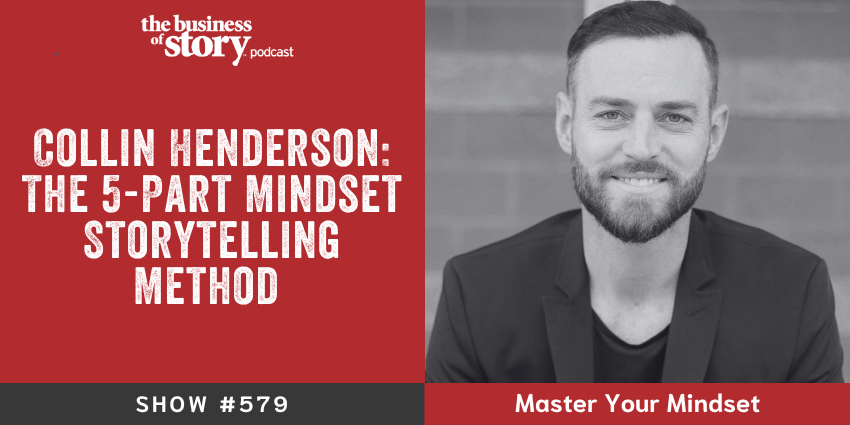
Meet Collin Henderson: Performance Coach to Elite Athletes and Fortune 500 Teams
Collin Henderson is a seven-time author, host of the Master Your Mindset podcast, and a performance coach whose clients include number one NBA draft picks, Heisman football finalists, and top-producing sales teams at Nike, Amazon, Salesforce, Zillow, and Alaska Airlines.
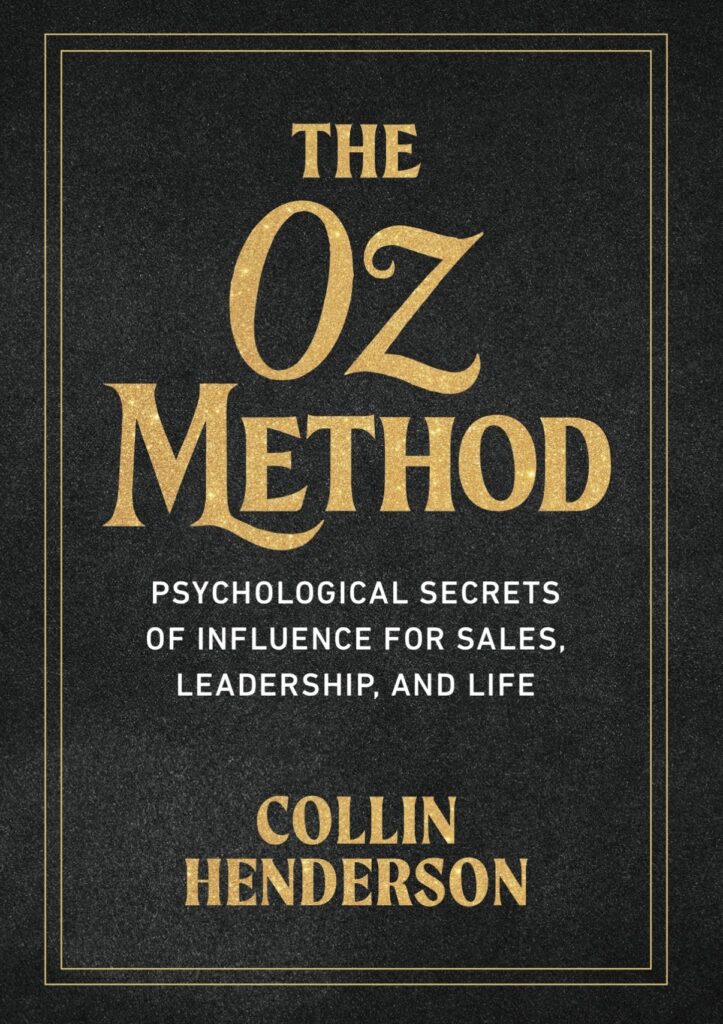
His new book, The Oz Method: Psychological Secrets of Influence for Sales, Leadership, and Life (IdeaPress, 2026), delivers a parable-driven performance framework inspired by L. Frank Baum’s classic. It’s built for anyone whose psychological readiness isn’t keeping pace with their technical skill.
What’s in it for You
Tune in to this conversation and you’ll discover:
- Why the brain is hardwired to respond to problems before solutions — and how to use that truth in every conversation you lead
- Collin’s five-part story framework: Set the Scene, Establish the Challenge, The Growth Journey, Face Your Fear, and Resolution — and exactly how to apply it in sales, leadership, and communication
- Why identity is the hidden ceiling on your performance, and what it means to rewire the beliefs driving your behavior
- How “trauma, drama, daddy and mama” shapes the way high achievers freeze under pressure — and how to finally break the pattern
- The one question Collin calls his most powerful influence tool, and why it creates collaboration instead of resistance
- Why boring will put you out of business faster than any competitor ever could
Why Just Practicing Doesn’t Guarantee You’ll Have Success
Collin opens this episode with a story that will stop you cold. Early in his pharmaceutical sales career, he walked into a high-volume physician’s office with his manager watching. He knew the indication. He knew the messaging. He’d done the roleplays.
The moment got too big. The pressure overtook his capability to speak.
He calls it the walk of shame back to the car. I call it the most important story in this episode, because it names the exact problem no sales training program is solving. You can have all the skills and still have your body and your inner dialogue sabotage you the moment the stakes are highest.
That’s not a preparation problem. It’s an identity problem.
The Oz Method: A Five-Part Story Framework for Influence and Performance
Collin spent years studying what the best stories ever written have in common — from the Bible to Joseph Campbell’s Hero’s Journey to Pixar to the research of Kindra Hall. What emerged was a five-part pattern that shows up in every narrative that moves people to act.
Step one: Set the Scene. Make your audience feel seen. Give them the relatable details. Paint the picture. Because a huge miss in communication is jumping to solutions before the listener feels understood.
Step two: Establish the Challenge. The brain pays more attention to problems than solutions. This is not a pessimism hack. It’s neuroscience. If there’s no threat, there’s no emotional reason to pay attention.
Step three: The Growth Journey. This is where mentorship enters the story — the skills, the tools, the insights tailored to the specific problem.
Step four: Face Your Fear. Every great story tests the protagonist again at higher stakes. Luke Skywalker had to use the Force. Your customer has to make the call.
Step five: Resolution. Triumph, transformation, or a lesson paid for in full.
When Collin ran a pilot version of this framework with three HubSpot sales teams, they became number one and number two in the nation out of fifty teams for depth of discovery. Your depth of discovery, Collin says, mirrors your deal size. In nature, height mirrors depth. The same law applies to conversations.
Sales Psychology Beats Sales Strategy
The single most important idea in this episode is also the simplest. You never outperform your self-image.
Your pitch can be perfect. Your deck can be flawless. But if your identity — the conditioned set of beliefs driving your behavior — is still wired to failure, to shame, to the sixth-grade classroom where reading out loud in front of the honors class made you stutter, the results will follow that wiring, not your preparation.
Collin calls the mindset definition he teaches “a conditioned set of beliefs that drive behavior.” And he traces it directly to what he names with disarming honesty: trauma, drama, daddy and mama. The adult personality is a window into the childhood. Change the identity, and the behaviors follow.
The number one driver of behavior is not strategy. It’s who you believe you are.
More From Collin Henderson
- Collin Henderson on LinkedIn
- TheCollinHenderson.com
- Collin on Instagram
- Collin on Facebook
- Master Your Mindset podcast
- StoryCycle Genie®
Related Episodes From the Business of Story
- The Five Essential Elements of the Perfect Pitch With Ben Wiener — How the H.E.A.R.T. framework turns any pitch into a story that earns attention and investment.
- Your Best Ideas Are Not Going to Come From a Chatbot With Sara Connell — The neuroscience of creative performance and how to train your brain to access breakthrough thinking on demand.
- How Effective Leaders Go Beyond Their Words With Stories With Julie Lancaster — The REST method for leading with presence, conviction, and the kind of communication that moves people to act.
Collin Henderson Conversation With Park Howell on The Business of Story Podcast
The 5-Part Mindset Storytelling Method, With Collin Henderson
From Division I Athlete to Sales Floor Crisis: Why High Performers Still Break Down
Park: Hello, Collin, welcome to the show.
Collin: Park, I am so excited to talk to a fellow Coug who loves storytelling, loves marketing, loves business. We also like to serve others. So this is gonna be great.
Park: I can’t believe it. Folks, before I hit the record button, Collin and I were chatting and it turns out we started connecting the dots. He grew up not too far down the road from me, north in Puyallup. I was just north of Seattle in the Bothell-Woodinville area, but we both ended up going to WSU.
He reminded me that he was a receiver at WSU in the early 2000s under Mike Price. I’m a huge Coug fan and I remember Collin Henderson playing in all those games. I just never put two and two together until right now. So it’s a delight to have you here.
Collin: Well, it’s an honor. And let’s not miss that Coug baseball made it to a regional this year — postseason play, first time since 2010.
Park: Isn’t that nice. In the Bobo Brayton days they used to go all the time. They lost a little of that legacy and now it’s nice to see them get it back. So enough about Cougs. Let’s talk about you.
You have a really interesting backstory leading up to what you’re doing with mindset training today and your new book coming out called The Oz Method. You’ve got this five-part storytelling framework that I am eager to learn about. Before we get to that, why don’t you let our listeners in on your backstory?
Collin: Yeah, I love that question. You gotta start with the origin story.
From Puyallup, went to Washington State University, student athlete, did graduate school, started in fundraising at the Gray W Club. My role was to get former student athletes to pay dues to be members and stay involved. So I had some sales experience there.
Then I realized I just didn’t need to be around sports all the time. I thought I wanted to be a director of athletics — shout out to Jim Sturk who was our AD there, was a great mentor — but I had some family members in the pharmaceutical sales industry. So I was curious about that. I worked at GSK Pharmaceuticals for about five or six years, then got into device sales, managed five states, was a national sales trainer.
And I kind of had some issues with what I would say is confidence and self-belief. Stress, anxiety. A lot of people in the workforce and in life feel self-doubt and stress and I just never really could figure out how to manage that.
The irony is that we had two different sports psychologists at WSU who talked to the football team and I never correlated that I needed that. I knew I was stressed, but I didn’t know to have a coach or a system or framework. And I carried a lot of those same fears into sales.
I tell people I’m a recovering perfectionist. A people-pleaser who gets self-worth tied to performance. Think about running your ad agencies, Park — you have the highs on the wins and the lows on the losses, and you attach your value to the world, your sense of being lovable, being worthy, to a result.
My blood pressure hit the high one-fifties, high one-forties. I’m in my early thirties. I just had a rough patch, wasn’t in the right role at work. I would go escape and watch movies to numb myself half the time during lunch.
But when I changed companies, I uncovered something in real time. When the student is ready, the teacher appears.
My sales trainer was teaching me about sales psychology, about mindset, about mental skills, about neuroplasticity, about how neurons that fire together wire together, how thoughts become things. He just gave me all these books and resources. Business books are great, but I found that the mental books were going to be huge for me.
I finally had some resources and a path. I saw instant results. I started setting sales records, but I was also healthier and happier.
I started writing blog posts about things I was already working through, started writing books. I’ve now written eight books and my newest one is The Oz Method. I’ve just been very curious about performance — how the brain works, how to navigate stress and fear, how to create confidence and courage, how to create systems you can duplicate, how to navigate pressure. So my life’s work has been about that.
In 2019 I was coaching and speaking for a few years and decided to go all in.
The “Walk of Shame”: What Happens When Psychology Overrides Preparation
Park: So the stress you were experiencing is kind of surprising to me — and it shouldn’t be. Here you are, a Division I receiver, in the starting lineup, playing against the big dogs — USC, UCLA, University of Washington, truly the dogs. And yet that confidence you must have had did not carry over to dealing with sales and speaking one on one. Do I have that right?
Collin: True. And I think you uncover these things as you get older and look at patterns through therapy, coaching, and doing some deep work.
I look at the word mindset. The mindset definition I teach is a conditioned set of beliefs that drive behavior.
A lot of times that conditioning is shaped by what I call trauma, drama, daddy and mama.
Park: Trauma, drama, daddy, and mama.
Collin: So your adult personality makeup is a window into your childhood.
I had high-performing parents. My dad was a clinical psychologist, PhD. He set every passing sales record at Washington University, was a professional racquetball player for over ten years, traveled the country, was in Newsweek endorsing rackets, is in the USA Washington Softball Hall of Fame. Just a top performer. Very competitive.
So I just naturally associated: when I do well, it feels different than when I don’t. I got unintentionally conditioned to believe worth equals performance. Success equals worthiness. Failure equals the opposite.
I switched schools in sixth grade when this started becoming more prevalent. I was in an honors program and I got asked to read out loud in a new classroom. Smart kids, an honors class. And in that moment I started connecting performance to worth. I started stuttering. That warm blanket of shame really stuck with me.
There’s a powerful book called The Body Keeps the Score. Said differently — the issues are in the tissues. My nervous system subconsciously associated that moment with fear and how my body responded. What you don’t use, you lose. I developed a slight stutter in junior high and high school, even into young adulthood, even at Washington State.
I really avoided public speaking. I really struggled with it. So that confidence was directly tied to results. I was good one on one, but I wanted to speak in public. I wanted to be good in arenas like sales. But I didn’t fully heal that part of me.
Everything started to change when I went to speech therapy when I was 27 years old. Just to clear up the stuttering — or really just to navigate the fear of what other people think.
When you do something well, you don’t think about it. You may have heard of the yips in sports. Like someone can’t throw the ball back to the pitcher.
Park: I suffer them all the time on the golf course. Yes, I’ve heard of that.
Collin: In golf, you can do something before but there’s a mental block stopping you. A traumatic event. And a lot of times fear thinks it’s helping you. Anxiety thinks it’s helping you. But a lot of times it’s holding you back.
I asked for help. What does the warrior and the coward have in common? They both feel fear. The coward runs away. The warrior runs into battle. So I asked for help. I started Toastmasters. I showed up and gave speeches every week.
Anything I teach about mental skills, mindset, sales, and communication — I’ve had to go through it the hard way. I’m not a natural at this.
Park: Well, you sound pretty natural right now. You’ve done a lot of good work.
Tell us about the story you titled The Walk of Shame that you sent me, because I think everybody can relate to this freezing up you experienced when you were working with a doctor.
Collin: That warm blanket of shame. Yeah.
Here’s a question in leadership: how do people experience you?
I was working with one of my sales managers early in my career. We had a new indication in pharmaceutical sales. We did the training, we did the roleplays. It was my first call. My manager drove into town. We were seeing this high-volume physician.
The moment got too big. I put all this pressure and expectation on myself. And even though I could do it in practice — I rehearsed, I knew the indication, I knew the messaging — the moment got too big where the pressure overtook my capability of speaking.
My manager was watching. The physician was a hyper-prescriber. And it goes back to your golf analogy, Park. You had a great time on the driving range, but your tee shot with people you want to impress? Your brain overrides what your body can naturally do. And that’s where just practicing doesn’t guarantee you’ll have success.
Park: So you got through that.
Collin: I survived it, but I’ve had different moments of failure where speaking or stress just broke things down. And that’s where I’ve learned different mental skills to navigate it.
I’d love to share those moments where I failed miserably — because it wasn’t that I wasn’t prepared, it wasn’t that I didn’t care — my body and my inner dialogue sabotaged me.
Park: Yeah. There is one moment I really want to ask you about: the moment when things changed. When you said, look, I’ve overcome a lot of this, or I can deal with it a lot better — and now it’s my turn to go out and teach others. Can you take us to that moment of transition?
Collin: That walk of shame back to the car — I was so embarrassed. I was like, I need to find a different way.
Toastmasters helped. Speech therapy helped. But the real shift was when I put myself in the right environment, one conducive to my strengths. Put yourself in scenarios that align with your curiosity, your passion, your skill set, your experience.
My last stop in pharmaceuticals was oncology, where you rarely see physicians. You might get one meaningful interaction a week, maybe one every two weeks. Real depth was hard to come by.
When I got into device sales, I was actively speaking to six to eight physicians every single day. They wanted what we were talking about. The reps went way up.
But everything changed when I met my mentor, Frankie Pretzel, who taught me that sales psychology beats sales strategy. Read books on the power of your thoughts. How to visualize. The power of self-talk. That’s when everything changed.
What Is Mindset, Really? How a Conditioned Set of Beliefs Drives Every Behavior
Park: You’ve now written your seventh book. What were your first six books on? And what did you learn in writing them?
Collin: I had two years of deep study — reading five books a month, watching TED Talks, listening to podcasts, organizing and synthesizing the high-performance habits of neuroscience and brain science and applying them to myself.
I started a blog called Project Rise in February of 2016. That’s how it all started.
This was before AI. I wrote every single word. It was two to three hours of almost like a diary — things I struggled with, things that helped me. And then the books that followed were really tools for being the best version of you around mindset, around leadership, around culture.
The book before The Oz Method is called Quiet Mind — mental and emotional skills to find poise, calm, confidence, grit, and resilience. How to form habits.
But I really want to transition to The Oz Method because the number one driver of behavior is identity.
The reason I had stuttering or fear was that my self-worth — my identity — was tied to failure. Think about your golf game. If you only see yourself as a horrible driver, your behaviors follow your thoughts. Energy flows where your focus goes.
If you tell yourself, “I’m not a morning person,” “I always forget names,” “I have a sweet tooth” — your behaviors follow that story. So it was about rewiring that identity.
I am present. I am worthy. I have enough intelligence. I have enough experience. I can communicate well. I am a good storyteller.
The books I’ve written before The Oz Method were around that foundation. But the Oz Method is the capstone of everything.
What Is the Oz Method? A Parable-Based Framework for Sales Psychology and Influence
Park: Why do you call it The Oz Method?
Collin: The Oz Method is a parable framework inspired by the L. Frank Baum novel written in 1900, later the first Technicolor movie in the 1930s.
It came from an experience I had as a national sales trainer working with a sales professional in Kansas who was about to be put on a performance improvement plan.
I found he was only talking about himself and his product. So Kansas represents the black-and-white, old, boring ways that aren’t effective. The tornado that took Kansas out of Kansas into Oz — that’s the shift. The Oz Method is the new world. Put yourself in the world of the client.
When I worked with him over several days, I just started using this Oz metaphor as a framework.
The Scarecrow wanted a brain. So I had to change his mindset — how he sees himself. Research by Dr. Valerie Young shows people follow confidence over competence. So skills of belief, of confidence, of leadership and influence. But the other form of the brain is learning — skills of curiosity, asking questions, context before content, connect before correct.
The Tin Man wanted heart. And I know you do this well, Park — the research shows the number one powerful tool of influence, of behavior change, is storytelling. Giving the listener a sequence: here’s the setting, the backstory, the characters, the challenge, the growth, the plot twist, the resolution. A sequence of character-driven story.
The last character is the Lion, who wanted courage. In public speaking, leadership, coaching, and selling — courage is the cornerstone. Handling no. Handling failure. Finding your voice. Being authentic. Executive presence.
The yellow brick road represents your habits, your system.
And in ten to eleven months, Scott went from almost being fired to Presence Club — sixth in the country. I said to myself, I’ve got something here. Let me package this and start using this framework to teach people how to take the ick out of influence and the scary out of selling.
Park: So you were able to turn him from his sales being all about him and his product to being all about the customer — which I profess all the time. I’ve got really two rules of storytelling you can’t break.
Rule number one: your story is not about you, it’s always about your audience. Place them at the center.
Rule number two: your story is not about what you make, but what you make happen for that audience. Get those two right and everything else starts falling into place.
Collin: Yes, I love that. Donald Miller’s StoryBrand says the same thing — you’re the guide on the side, they’re the hero of the story.
To simplify from those Oz characters into a framework I use for public speaking, leadership, and sales — it’s connect with curiosity, clarify with story, collaborate on a needs-based solution.
And I think another thing the modern speaker needs today: boring will put you out of business. Oz represents vibrant color. A different experience. It’s collaborative.
No one is going to listen to you just because you have a Zoom appointment. No one is going to buy in just because you have a name tag or a title.
The number one commodity today is attention. Time is currency. And people now are wizards. They have Google. They have Claude. They have ChatGPT. The modern buyer wants fewer interactions, and trust is at an all-time low. So what I teach people is bring in some props, involve the customer, make it fun, make it engaging, break patterns, make it different.
Park: Yeah, it’s performance art.
Collin: The word I teach is edutainment.
Park: You gotta entertain them to keep them interested. Get them laughing if it’s appropriate. Get them feeling something — appreciation for them, setting that context — and then level it up to logic and reason. Here’s why we’ve got the ideal product to help you get what you want on your journey.
Collin: Yeah. And I really want to teach anyone who cares about influencing and persuading for good — quote from Mary Poppins: well begun is half done.
Think about Mad Libs. You have a story at the bottom, but you write down nouns and adjectives and adverbs to fill it in. That’s what the discovery phase is all about — uncovering where they’ve been, where they are currently, where they want to go, what their challenges are, who the team players are, what’s been working, what hasn’t, what frustrates them.
Then you take those key words, points, goals, and challenges and weave them into a narrative crafted from other clients just like them. What makes you different from the competition? How are you aligned with them? What’s your value proposition? But it’s really tailored to what you uncovered with that client.
The 5-Part Mindset Storytelling Framework That Rewires How Buyers Think, Feel, and Decide
Park: Take us to your five-part story structure and how it plays into the Oz Method.
Collin: Any successful human needs to be an observer of patterns. If you can recognize patterns — in nature, in your industry, in relationships — you’ll find that success leaves clues.
In my journey of uncovering the art and science of behavior change, which is what influence is to me, I wanted to look at what do the best stories ever written have in common. Parables from the Bible, romantic comedies, sitcoms, movies, novels, fiction, nonfiction. And I looked at what other thought leaders are teaching — Joseph Campbell’s Hero’s Journey, Kindra Hall’s three-part framework from Stories That Stick, StoryBrand. I looked at everything.
And I concluded that every story has five parts.
Step one: Set the Scene. Who are the characters? What are the stakes? What’s the environment? Is there a backstory?
Every great scene-setting has two things. Number one — it’s relatable. The listener sees themselves in the narrative. Number two — give me details. Paint a picture. What are the colors? The sounds? The emotions? Where did they come from?
But one of the most pivotal things in any great story is that within the first fifteen percent of the narrative, there’s a challenge, a loss, a threat.
Why Your Brain Registers Problems Before Solutions — and What That Means for Selling
Collin: What I’ve uncovered in neuroscience and brain science is that the brain is more attuned to problems than solutions.
Why, Park, does every Disney movie have a loss or a death of a key parental character? I’m still recovering in therapy from The Land Before Time when Littlefoot lost his mom. Or the film Up — when the old man lost his wife. They hit me every time.
Park: Think about it. Our whole limbic system is our survival system and it gets to call the first shots on everything. It’s constantly checking: am I safe? Is something threatening me here? Someone unexpected walks in the room and it fires immediately. That’s the amygdala doing its job. Without conflict you have no story. Without conflict you have no transformation.
Collin: There’s no emotional hook. There’s no growth journey. There’s no change. There’s no emotional reason to pay attention.
The brain pays attention to threats over solutions. A huge miss that communicators, speakers, sellers, and leaders make is they don’t set the scene where the audience feels seen. There’s a lack of empathy and connection. Then they jump straight to solutions — and you have no chance.
When I look at dimensions of influence, the first dimension is you talk about yourself. The second is you know the marketplace. But the third dimension — three-dimensional communication — is you are speaking with words and insights that align with the listener. If you go in just talking about yourself, out of tune with what the other person is experiencing, you’re not going to get the sale or change the behavior.
So setting the scene is aligning the listener. They’re the protagonist. They feel seen. They feel understood. You’ve uncovered and revealed details they can gel with.
Step two: Challenge. There has to be a threat, whether they’re aware of it or not. And then my favorite influence question — one I’ve uncovered that is so simple but invites collaboration and deeper examining.
Once you’ve got that challenge clear, the question you can ask to transition to collaboration is: What are you doing for that?
Using your golf analogy, Park — your swing’s not working. What have you been doing for that? That allows me as the coach, communicator, or seller to learn about what they’ve currently been doing. It’s what I call targeted coaching. We are zeroing in on something important to you, valuable to you. And we’re making you the centerpiece of the story.
Step three: The Growth Journey. I love Moana. Moana was a wayfinder and the heart of Tefiti was lost. Maui was the demigod teaching her how to navigate wind and sea. Luke Skywalker — there’s a Death Star, planets are being blown up, he’s learning from Obi-Wan Kenobi. Katniss Everdeen had a mentor taking her through the Hunger Games.
There’s some type of here’s your problem, what are you doing for that, let’s learn insights and skills and tactics tailored to your problem.
Step four: Face Your Fear. There’s always another dip. There’s always another challenge to test the growth of the protagonist. A plot twist. “I see dead people.” When Harry met Sally, they had sex and it got weird. This is the protagonist having to go back to that original challenge at higher stakes.
Luke Skywalker in the X-Wing heard the voice of Obi-Wan: “Let go, Luke.” He moved the targeting device and used the Force to make the shot.
Step five: Resolution. There’s either a solution, a triumph, or a tragedy we can learn from. One of my favorite stories is Where the Red Fern Grows — Little Ann and Old Dan, one dies and the other dies of heartbreak. That’s the companionship story. There’s a learning done in that process.
Identity Is the #1 Driver of Behavior: The Sales Psychology Truth Most Reps Never Learn
Park: Where did you pull these five parts from?
Collin: Just studying all the different works — from the Greeks to Joseph Campbell to the other resources I reference. That’s part of my joy.
I’ve done just under three hundred podcast episodes. I’ve written eight books. I’ve written hundreds of blog posts. I want to look at all the information. And I’ve found this to be true in art: amateurs add, experts remove.
I don’t want to be a cover band. I want to make my own music. I want to find the harmonies and the chords that make the most sense and teach it in a way that works for me.
I’m a Tony Robbins-certified speaker. I’m a John C. Maxwell-certified coach. But I’d rather research what all the different thought leaders are saying and condense it into a way that makes sense to me that I can teach.
Park: What will people take away from The Oz Method?
Collin: The biggest feedback I’ve received — I did a pilot program with HubSpot. That’s a CRM similar to Salesforce. We took three of their sales teams out of fifty and put them through the Oz Method — depth of discovery, connection, curiosity, the power of storytelling.
In several months, they were number one and number two in the nation out of fifty teams in depth of discovery, depth of curiosity. Don’t assume. Believe that you have a good story. Believe you’re capable. Weave in a story that connects the dots, that positions you as a collaborator. We’re on the same team.
People don’t like to be sold, but they love to buy.
Your depth of discovery will mirror your deal size. I call this the growth inverse. In nature, height mirrors depth. Your conversations, your empathy, your depth of understanding, truth, vulnerability — that depth will mirror your growth. Your growth mirrors your depth.
So what you’re gonna get from The Oz Method is tools to go deep. Better understand yourself. Better believe in yourself.
In the performance world, psychologists call this expectancy theory. You get what you expect.
Take that pressure away and be curious. Connect before correct. Weave in storytelling systems that have been around for thousands of years. Find better systems to tell your story — short story, origin story, why story. Look at the patterns of story, how to tell your story, and then how to have the courage to tell it.
The Discovery Question That Unlocks Every Sales Conversation: “What Are You Doing for That?”
Park: Are you ready to learn a new three-word story structure? I call it the And But Therefore. I learned it from my good friend Dr. Randy Olson — Harvard PhD evolutionary biologist who gives up tenure, goes to USC film school, produces documentaries on climate change, and spent the body of his work teaching scientists and academics how to take complex messages and make them simple.
These three words — And, But, Therefore — represent Act One, Act Two, Act Three. Setup, Problem, Resolution.
I sent you earlier today the brand narrative assessment and story strategy for your brand. Let me read you the ABT statement — the absolute narrative structure of setup, problem, resolution — for your number one audience: sales leaders and revenue teams.
The And statement — the agreement, the scene-setting from your audience’s point of view: As a sales leader driving revenue performance, you want a team that executes with confidence and composure in every high-stakes moment. And if your people bring the psychological readiness of elite athletes to every pipeline review, board presentation, and critical close, then the results you know they are capable of will become the results they actually deliver.
Does that get you nodding?
Collin: You phrased two words together — psychological readiness — that I think connected to what sales leaders are looking for. A great question I like to ask is: give me the traits of your top producers. And it’s always things like belief, resilience, confidence, poise, drive. And it’s like, well, what are you doing to train that? They’re not. So you’re weaving together the audience who looks like this and is looking for this. Yes.
Park: And we call that the statement of agreement — all you’re trying to do is get your audience to nod and say, yeah, you’ve done your homework, you understand who I am and what I want.
Now, plot twist. You throw in the conflict. The word but — the number one trigger word in the English language. But you feel frustrated and stuck — two emotions right away — because despite the training, the certifications, the best-in-class tools, and the talent you’ve fought hard to build, performance still collapses exactly when it matters most.
Which leads to the Therefore — the resolution, the Act Three, the close. Therefore, your team can access and master the mental performance methodology that separates elite athletes from everyone else, building the psychological foundation for consistent confidence, composure under fire, and execution precision in the moments where revenue is won or lost.
Now we introduce your brand through The Oz Method — Collin Henderson’s performance psychology framework specifically engineered for the demands of the revenue professional.
That is the three-act structure of And But Therefore. It speaks to that pattern-seeking, problem-solving, decision-making limbic buying brain — the amygdala, the hippocampus where decisions are made — and then levels it up to the executive functioning brain: how do we do that? That’s when you introduce the Oz.
Collin: I’m not arguing with that at all.
Edutainment Over Information Dump: Why Boring Will Put You Out of Business
Park: From what the StoryCycle Genie® saw in analyzing your brand — and I ran it this morning, I apologize I usually send this several days in advance — I gave it your website and your new book, and in about ten minutes it developed the whole assessment and your overall narrative strategy.
How does And But Therefore help define the foundational story for your number one audience of sales leaders and revenue teams?
Collin: There’s a yes here. Eighty percent plus of leaders who have responded to my work have some sort of sports affinity or background. And that’s my background. I’ve played in a Rose Bowl, I’ve played in the Horseshoe in front of 100,000 people.
But what we’ve also found in the corporate workplace is that there’s a push for more diversity and inclusion of different perspectives. Sometimes I fight leading with the sports experience because it can alienate some populations who want more inclusion. So the psychological readiness piece is where I want to focus.
Park: My argument from a branding perspective: own it. Don’t try to sound like everyone else. Very few speakers and mindset coaches in your realm can speak to your experience on the highest level playing fields. If it alienates some people, maybe that’s okay. Maybe you don’t have to be for everyone.
Collin: Well, the other thing is — I have four daughters and I did ballet as a kid. I did choir for seven years. I connected more to the arts than to sports. I was just a good athlete. I’m a writer at heart. So I love both worlds.
Park: The art of sport brought together.
Collin: Maybe. But yeah — I really appreciate the And But Therefore. The setup, problem, resolution. It makes things simple. And I like things in threes.
Park: I was looking at your unique value proposition that the Genie came up with. Do you have a UVP you typically use?
Collin: Yeah — there are very few people in this industry who can teach mental skills, the psychology of peak performance, with sales experience and the ability to teach persuasion. I’ve lived high-level pressure sports mindset. I’m very well-researched in it. And I’ve had lots of sales experience. Very few people can blend mindset teaching with sales excellence.
Park: The UVP the Genie came up with: sales psychology beats sales strategy. Perform with peace. Which is interesting — especially given the arts and sports connection.
Collin: I saw that. The opening story in The Oz Method is actually around this. Our national sales VP said to me — I’m paraphrasing — “I should have gotten my master’s in psychology.” And he said, sales psychology beats sales strategy. I’ve kind of adopted that.
You can bring a motivational speaker or a sales coach, but if the rep doesn’t believe — if they don’t have tools to navigate uncertainty, imposter thoughts, failure, how to quickly recover — their psychological readiness isn’t there. It doesn’t matter how good their pitch is.
You never outperform your self-image.
Park: Yeah. No, it totally makes sense. And as I go through the different narrative touch points of your brand, it’s worth mentioning that people ask me, is the Story Cycle System just a knockoff of StoryBrand? The irony is I had been doing the Story Cycle System eight years before StoryBrand even showed up, using it within my agency.
Their brilliance came in saying, let’s industrialize this and make it available to anyone. Theirs is more of a marketing tool versus a deep dive story that helps you find your brand story and the elements you then use to communicate across all your content. That’s the difference — and it guides the StoryCycle Genie®, the only narrative-native platform we’re aware of, driven by what I call Artful Intelligence. We use AI to help you get there, but it only works in collaboration with you, the human storyteller.
Collin: Well, I would say the organizations I’ve worked with — Nike, Amazon, Zillow, Salesforce, Novartis, J&J, Alaska Airlines — very few of them are getting storytelling training. Very few have persuasive storytelling for leadership, for sales. Very few have been exposed to anything.
So if they’re using Donald Miller, I say that’s phenomenal. I’m not going to argue. Just infuse some personal development — what are the patterns of great stories, how do you customize the story for your value proposition, what’s unique about your offering, how do you build social proof stories, how do you position the buyer as the customer in the story?
Use something. But I’ve found very few are doing it. And what’s interesting — in December on LinkedIn, one of the top job description desires in the corporate workplace for 2025 and 2026 is storytellers. So if you’re listening today, you probably see the value in the Business of Story. But what are you doing to evolve your skills?
Park: Yeah. One last story element from the Genie, then we’ll do a big wrap. It comes down to the purpose statement — your brand purpose statement, which I call the moral of the story. Why does all this matter beyond making money?
It reads: Colin Henderson exists to free high achievers — athletes, sales leaders, executives, and entrepreneurs — from the invisible psychological ceiling that has been the hidden tax on everything they have ever accomplished, so they can finally experience what peak performance was always supposed to feel like. Not just results. But results with peace.
Collin: Yeah. Perform with peace. A hundred percent. I have a mission statement, values, and purpose statement for my organization Master Mindset. My mission is to transform lives and normalize mindset training. Values are gratitude, giving, and growing. But my purpose statement is: transfer my pain into your power through tools to be the best version of you.
Power or peace — it’s interesting. The word peace came up multiple times. Very, very similar.
Park: And again, it’s pulling from your website. From here, you’d simply interact with the StoryCycle Genie® and tell it everything you just told me. You would collaborate with it to really fine-tune and refine your brand story. I have never seen a brand story that is perfect in its first writing. The Genie helps you get more of that refinement down — to carve out your niche in the world, speak your truth, and become that single source of truth you can use with your team to create all your on-brand content.
It’s kind of my last hurrah in storytelling. I’ve been doing this a long time. I chuckle when people say storytelling is now a hot term. I’ve been doing this for 25 years. As one co-creator said, “Park, you’re old — it’s just getting re-popularized.” But it is powerful. I love teaching it. And I’ve really enjoyed having a fellow Cougar on the show.
Collin, where can people learn more about you and get your book?
Collin: The Oz Method publishes July twenty-first, available wherever books are found — Barnes & Noble, Amazon. You may catch it in an airport. But go to Amazon and search Oz Method, Collin Henderson. There is a book from the nineties called The Oz Principle — completely different book.
I’m on LinkedIn and Instagram at Collin Henderson — two L’s — and my website is thecolinhenderson.com. We have some resources there — an Oz assessment, a free storytelling chapter summary. We love to serve.
Park: Awesome. Thank you so much for being here today. I really enjoyed the conversation.
Collin: Thank you. Go Cougs.
Park: You know it. Go Cougs.
Frequently Asked Questions
Q: What is the difference between sales psychology and sales strategy — and which one matters more?
A: Sales psychology addresses the upstream root cause of performance — identity, self-image, and conditioned beliefs. Sales strategy addresses tactics. Collin Henderson’s central thesis, backed by his own career and his Oz Method framework, is that strategy without psychological alignment fails under pressure. You can have the perfect pitch, the right product knowledge, and the ideal close sequence, and still collapse in the moment that matters most because your psychology overrides everything. As Collin puts it: you never outperform your self-image.
Q: What is the Oz Method and how does it help with sales and leadership?
A: The Oz Method is a parable-based performance psychology framework developed by Collin Henderson and inspired by L. Frank Baum’s The Wizard of Oz. It uses the characters of the Scarecrow (mindset and confidence — a brain), the Tin Man (empathy and storytelling — a heart), and the Lion (courage and authentic communication) as archetypes for the three core skills of influence. The Oz Method is the subject of Collin’s book of the same name, published by IdeaPress in 2026, and has been piloted with sales teams at companies including HubSpot.
Q: What are the 5 parts of the mindset storytelling method?
A: The five-part framework Collin Henderson teaches follows this sequence: (1) Set the Scene — establish who the characters are, what the stakes are, and create relatable, specific context; (2) Establish the Challenge — name the problem or threat, because the brain is wired to pay attention to problems before solutions; (3) The Growth Journey — introduce the mentor, the tools, the skills tailored to that specific problem; (4) Face Your Fear — the protagonist encounters a higher-stakes version of the original challenge and must act; (5) Resolution — the triumph, transformation, or lesson. This structure mirrors every story that has ever moved people to act, from the Bible to Pixar.
Q: How does childhood experience affect sales performance as an adult?
A: Collin Henderson’s concept of “trauma, drama, daddy and mama” describes how early emotional experiences become hardwired belief systems that operate below conscious awareness. Your adult personality is a window into your childhood. For Collin, the experience of stuttering in sixth grade while reading aloud in an honors classroom created a conditioned association between performance and worth — one that followed him all the way into pharmaceutical sales and showed up as a literal freeze in a high-stakes call with his manager watching. The body keeps the score, and the issues are in the tissues. Until those patterns are identified and rewired, no amount of sales training addresses the actual source of the problem.
Q: Why do salespeople freeze under pressure even when they’re fully prepared?
A: The freeze response under pressure is a psychology problem, not a preparation problem. Preparation lives in the conscious mind. Identity and self-image operate at the level of conditioned belief — the nervous system’s learned associations between high-stakes moments and threat or shame. When the moment gets big enough, the conditioned self overrides the prepared self. Collin’s “walk of shame” story makes this viscerally clear: he knew the indication, he knew the messaging, he had done all the roleplays. But with his manager watching and a hyper-prescriber in the room, the pressure overtook his capability to speak. Just practicing doesn’t guarantee you’ll have success.
Q: What is the ABT storytelling framework and how does it work in sales?
A: The And But Therefore (ABT) framework, developed by scientist and filmmaker Randy Olson and applied to business by Park Howell, is a three-act narrative structure that mirrors the brain’s natural problem-solution processing loop. And establishes agreement and stakes. But introduces the conflict that creates emotional tension. Therefore delivers the resolution and call to action. In a sales context, the And statement gets your prospect nodding — you understand who they are and what they want. The But introduces the specific problem that’s stopping them. The Therefore introduces your solution as the natural consequence. It speaks directly to the limbic brain — the amygdala, the hippocampus — where decisions are actually made, before logic ever enters the room.
Q: What is the best discovery question to ask in a sales conversation?
A: Collin Henderson’s most powerful discovery question is simply: “What are you doing for that?” Once you’ve established the challenge the prospect is facing, this question invites them to reveal what they’ve already tried, what’s working, what isn’t, and where the real gap lives. It’s non-threatening, curiosity-driven, and makes the prospect the centerpiece of the conversation rather than the product. Collin calls it targeted coaching — zeroing in on something valuable to them, not pitching at them. It transforms a sales call into a collaborative problem-solving conversation, which is exactly where trust and deal size both grow.
Q: How does storytelling actually improve sales results — is there real proof?
A: Yes. In a pilot program Collin Henderson ran with three HubSpot sales teams — pulled from a pool of fifty teams nationally — the teams trained on the Oz Method’s depth-of-discovery and story-based influence approach ranked number one and number two in the country within several months. The metric that moved most dramatically was depth of discovery — the depth and quality of understanding each rep developed about their prospect before ever presenting a solution. Collin calls this the growth inverse: in nature, height mirrors depth. The depth of your conversations, your empathy, and your curiosity directly mirrors the size of the deals you close.
 Listen To More Episodes