The Companies Winning the War for Talent Aren’t Telling Better Stories — They’re Telling Truer Ones
What Happens When You Stop Packaging Your Culture and Start Revealing It
You’re a talent leader, an HR director, a CEO trying to build a team that can carry your organization forward. And you know that the right people — not the right technology, not the right product — are the only competitive advantage you have left.
But you’re frustrated because your career site looks like everyone else’s.
Your employer brand sounds like everyone else’s. And many of the candidates who do apply don’t last, because what you promised and what they experienced didn’t match.
That’s not a messaging problem. That’s a truth problem.
And it’s exactly what Bryan Adams has spent 20 years solving.
Meet Bryan Adams: The Employer Brand Strategist Behind Nike, Apple, and HappyDance
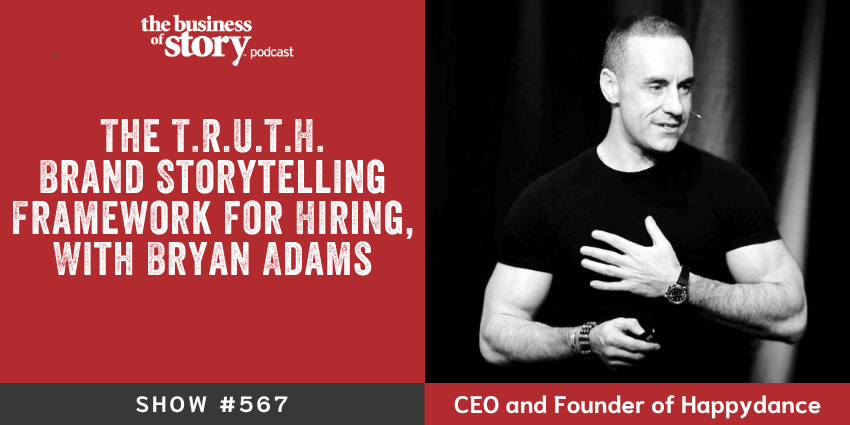
Bryan Adams is the CEO and founder of HappyDance, a platform helping global companies align leadership, culture, and talent strategy.
Before building HappyDance, he founded Ph.Creative, one of the world’s most awarded employer brand consultancies, advising leadership teams at organizations including Nike and Apple.
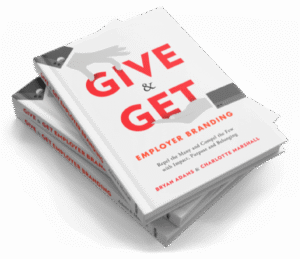
He’s the bestselling author of Give & Get Employer Branding and the upcoming book Sell the Truth.
His TEDx talk, Culture Eats Competition for Breakfast, has been viewed more than 1.4 million times, and its central argument is the through-line from everything he’s built: belief, not strategy alone, drives performance inside organizations.
That’s not a motivational claim. It’s a practitioner’s observation from two decades inside the world’s most complex talent challenges.
His upcoming book, Sell the Truth, is the capstone — everything Bryan has learned about why sanitized stories fail and honest ones convert, codified into a framework any leader can use.
What’s in it for You
- Why people are the only competitive advantage left in a world where technology is a commodity
- Bryan’s core intellectual contribution: “The truth that matters isn’t the one you’re most comfortable telling. It’s the one your audience most needs to hear.”
- The TRUTH Framework — a five-step storytelling system (Trigger, Reveal, Unlock, Tension, Harvest) designed for culture and talent
- Why being nice is quietly holding your organization back — and the distinction that transformed VF Corporation globally
- How HappyDance drives career site conversions up to 12% vs. an industry standard of 3–5%
- What the StoryCycle Genie® revealed about HappyDance’s brand — and what Bryan said he might have to steal
The Truth Is the Strategy
Most employer brand work starts in the wrong place. It starts with aspiration — what leadership wishes were true — rather than what’s actually true.
Bryan’s framework is built on a different premise: find the true story of where you are now, where you want to go, and what it’s going to take to get there. Answer those three questions honestly, and you have everything you need to build an employer brand that resonates internally, attracts the right people externally, and sets realistic expectations from day one.
Here’s the insight that makes this immediately actionable for every storyteller in this audience: ABT requires truth in the BUT. The tension only works if it’s real. You can have perfect ABT architecture — a beautifully constructed And, But, Therefore — and still fail if the BUT is sanitized. Bryan’s TRUTH Framework is the quality control layer that makes ABT actually work.
The VF Corporation story is the clearest illustration. When Bryan went in to work with the organization behind the North Face, Vans, and Timberland, he discovered something unexpected: everyone was too nice. Not a conspiracy. Just a culture where niceness had become a barrier to candor, feedback, and growth.
The insight that unlocked everything: sometimes being nice isn’t kind, because you’re not giving the gift of honesty.
That one distinction — introduced as a cultural pillar through storytelling across the entire global organization — was transformational. Not just for culture, but for performance.
The TRUTH Framework in Action
Bryan’s TRUTH Framework is a five-step storytelling structure designed specifically for employer brand and culture storytelling. It works like this:
Trigger: An inciting incident that grabs attention (“Within the first two days, I thought I’d made a terrible mistake.”)
Reveal: Where the truth surfaces (“This job is harder than I expected. I don’t have all the skills yet.”)
Unlock: The insight behind the truth (“My manager told me: nobody has all the skills. This is an environment where we’ll coach you through it.”)
Tension: What’s at stake (“I had an uphill battle. I had to learn fast, make allies, and earn my place.”)
Harvest: The positive impact (“Six months in, I don’t recognize the person who walked through that door. I’m being considered for promotion. I love it here.”)
That story, placed on a vacant role page for the same team, answers the biggest objection candidates have before they ever apply.
Artful Intelligence Meets Employer Brand
When Park ran HappyDance through the StoryCycle Genie®, the results were what Bryan called “spooky accurate.” The Genie identified all three primary audiences correctly, surfaced the four emotional triggers for each, and generated a unique value proposition that stopped Bryan cold: “Transform your career site into a candidate experience that makes top talent choose you.”
Twenty years in the branding game. He said he might have to steal it.
That’s not artificial intelligence. That’s artful intelligence — your expertise and market intuition, reflected back to you with clarity and precision.
Links
- HappyDance: happydance.love
- Best-selling employer brand and talent acquisition books | Happydance
- Give & Get Employer Branding: Give & Get Employer Branding: Repel the Many and Compel the Few with Impact, Purpose and Belonging eBook : Adams, Bryan, Marshall, Charlotte: Amazon.co.uk: Kindle StoreBryan’s TEDx Talk: Culture Eats Competition for Breakfast | Bryan Adams | TEDxRandburgPre-order Sell the Truth: Be notified when Sell The Truth by Bryan Adams is available | Happydance
- StoryCycle Genie®: storycyclegenie.ai
- Free Brand Story Grader: storycyclegenie.ai/brand-story-grader
Deepen Your Storytelling Mastery: Three Essential Episodes
To amplify your transformation from today’s conversation, these carefully selected past episodes provide complementary wisdom from the Business of Story archive:
How to Effectively Position Your B2B Brand, with April Dunford — April’s positioning framework is the perfect companion to Bryan’s truth-finding process: both start with what’s genuinely true about your organization before building outward.
The Machines Can Code. They Can Calculate. But They Cannot Connect., with Joe Lazauskas — Joe’s research on why human storytelling becomes more valuable as AI scales is the philosophical foundation beneath everything Bryan and Park discuss in this episode.
How to Unlock Brand Alignment to Accelerate Your Business Growth, with Brandon Coleman Jr. — Brand alignment from the inside out is exactly what Bryan’s TRUTH Framework is designed to create — this episode deepens that practice.
Bryan Adams’ Conversation With Park Howell on The Business of Story Podcast
From San Diego to Spain: How Bryan Adams Built a Global Employer Branding Career
Park: My old mate, Bryan Adams. Great to have you back on the Business of Story.
Bryan: It’s great to see you again, Park. It’s just like two old friends catching up. Love it.
Park: We met back in like 2016. You had just written a book and came on my show early on. Then we did a co-show where one recording ended up on both of our shows. You had me out to Liverpool — one of the greatest trips I ever had — to hang out with you and your team. We did some story training there and in London.
Then you had me back on the show a couple of years ago with your second book. You came over and became a resident of San Diego for several years running your advertising world and your internal communications world. And now you’re coming to me from Spain, although you’re living back in the UK. Did ice run you out of our beautiful country?
Bryan: More or less. We’ll just skip over the ice bit. I left to go back to the UK because of the superior weather. No — definitely wasn’t that either.
Park: I know we were trying to get together at Hotel Del when you were in San Diego. I was speaking at Social Media Marketing World a couple of years ago and I apologize — I spoke and didn’t expect to be held afterwards for about another hour answering questions. There you were drinking all by yourself on the deck of the Hotel Del. I owe you a drink for that.
Bryan: You do, and I’ll hold you to it. Having a drink on the sundeck of the Del as the sun’s going down is not the worst place to be, so it was fine.
Park: And by yourself, so you don’t have to deal with any annoying questions from me. I get that.
Bryan: You said that, not me. It’s always a pleasure to see you, Park, it really is.
Park: You’re the uber entrepreneur. You always have something churning in the storytelling world. I’m very eager to hear what you’re up to now.
What Is Employer Branding? Bryan Adams Explains — and Why Nike Gets It Right
Bryan: A few years ago, I was running an employee brand agency called PH Creative and we built a bit of technology to serve our customers. It was so good that every time we gave it to a customer, they literally did a happy dance because they couldn’t believe it did what it was supposed to do.
We actually split that division out of the consultancy and called it HappyDance. It was such a roaring success that we got rid of the consultancy just to focus on HappyDance. So we build enterprise-level career websites now for global brands like Uber, HubSpot, and SAP — so they can showcase their employer brand and attract the best talent.
I’m still in the world of employer brand. I’m still up to my neck in what I love most in the world, which is storytelling. But now we’re selling a SaaS product, which I’m very proud of.
Park: For those of us not completely versed on employee branding — what is that exactly? Give us an example.
Bryan: Put simply, it’s the other side of the coin of branding. A lot of people are familiar with a brand slogan like “Just Do It” at Nike. My last global employer brand as a consultant was actually Nike’s employer brand.
We went in and essentially came up with a brand slogan aimed at a talent audience — to attract people to come and work for Nike and build a reputation for the company as an employer so they can attract the world’s best talent from competitors like Adidas, Uber, or Tesla.
Park: What was their employee brand? Everybody knows “Just Do It.” How did you play off that for their employer brand?
Bryan: It’s very different. The employer brand slogan was “What Moves You Moves the World” — because it was all built around the insight that people joined Nike for the prestige of the swoosh. No surprise there. But they stayed because of the deep connection to the purpose of the organization once experienced on the inside.
The whole company is run like a sports team — and that is true. I saw it with my own eyes. Every position counts. Across the globe, whether you’re in retail or corporate, whether you’re in Mexico or APAC or America, everybody found their own motivation to drive their career forward through what they did making a real difference.
That was probably my most loved brand. I remember watching Back to the Future and seeing Marty McFly’s Bruins enter the frame — the first scene you just see these two Nikes walking. I thought, wow, those are cool. That was my first introduction to loving that brand. To end a 20-year consulting career by touching that brand was amazing.
Building an Employer Brand Strategy: What Every Company Must Prioritize First
Park: Somebody thinking about employee branding in their company — what do they have to think about? What are the things they consider to develop a really powerful brand?
Bryan: Typically what you’re trying to do with an employer brand — or branding in general — is create differentiation, a point of difference. You’re looking to make yourself more relevant than your competitors. In employer brand, those are talent competitors. And then you want to be the most memorable.
But if you’re trying to distill it down to the basic essence — and this is the inspiration for my next book — what’s the unique truth inside this organization that people need to know? The thing that people feel on the inside: how do we put our finger on that and articulate it to the outside talent community, setting their expectations and motivating them to lean in and want to know more?
If you can do that, you can build an authentic communication strategy built on the truth, which usually differentiates companies right out of the gate.
Then you can start to look at the common characteristics, traits, and capabilities across a global organization — or a small team in a startup. Same applies. What are the pillars of your brand strategy and how does that come across to coherently galvanize and crystallize the culture you want to build?
If you can build a very simple strategic structure around the truths inside your organization, everything hangs off that. People should be able to use your cultural employer brand framework to make decisions in Singapore that are similar to decisions in California — because everybody’s pointed toward the same set of values, capabilities, and strategic themes.
Park: Finding that truth is very difficult for people because they’re navel gazing. You can’t read the label from inside the jar. They need someone like you to come in — like a psychologist — to help reveal those truths, find out what are true truths versus aspirational truths, which are very different. Is that what your book is about?
How VF Corporation Found Its Authentic Employer Brand Truth: The Real Difference Between Being Nice and Being Kind
Bryan: You’re right. The biggest challenge most organizations have is actually finding that truth. The aspirational truth is a bit of an oxymoron — if it’s aspirational, usually it’s not true.
Twenty years in consulting, working with some of the world’s largest organizations, the one thing that hasn’t changed is: find the truth and learn to sell it. It’s not spin, it’s not packaging, but you’ve got to be able to sell it — which means leveraging it positively.
Typically, leadership will have a view they believe to be true. Your employees will have a view they believe to be true. So will your customers. Then you’ve got this reality versus aspiration. What’s the truth around the destination?
What it comes down to is: what is the true story of where you are now, where you want to go, and what it’s going to take to get there? If you answer those questions in that order, you’ve got all the true ingredients to put something together that resonates internally, attracts people externally for the right reasons, and connects aspiration to reality.
Park: Can you give us an example of a company you’ve done that with?
Bryan: One that springs to mind is VF Corporation — the organization responsible for brands like The North Face, Vans, Supreme, and Timberland.
One thing that was holding them back worldwide: people were too nice. I thought it was a conspiracy. Everyone was just so lovely. But when I scratched below the surface and looked into some of the challenges and aspirations, being nice was holding them back.
What it was stopping people from doing was giving candid feedback — honest, constructive criticism. It was getting in the way of collaboration and helping people get better.
It was around the time Kim Scott wrote Radical Candor. So we introduced a pillar to their employer brand around the idea of the difference between being nice and being kind. On a global scale, we gave people permission to lean in with the truth when they see an opportunity to add value — even if it meant somebody’s feelings might be hurt.
We taught the organization it was okay to give it and okay to think differently about receiving it. When that crystallized and changed from just a strategy in a PDF to being explained with storytelling across the organization, it was transformational.
The difference between being nice and being kind — sometimes being nice isn’t kind because you’re not giving the gift of honesty. That was fantastic. And that company controls more than 1% of the world’s cotton, so I like to think it had a big difference on a lot of people’s lives.
Measuring Employer Brand Impact: The ROI Metrics That Earn HR a Seat at the Executive Table
Park: How do you actually measure that kind of impact? With our ABT, for instance, we can measure it when we do an A/B test on a LinkedIn campaign — someone does it like they normally do in March, then April they see a 400% increase because they’ve used the ABT. How do you measure the impact you guys have?
Bryan: I’m not in the world of consultancy anymore, so it’s much easier for me to apply stories to a careers website and measure the conversion of qualified candidates watching the storytelling of an employer brand through the words and stories of employees.
What we start to measure through to successful hire is how many applicants were actually qualified — not just to do the role, but when assessed, how likely are they to thrive within the specific culture?
Going back to the VF example, that’s a bit more of a long strategic timeline. Those employer brand strategies impact a global organization fairly slowly at first when embedded. Then they go deeper into performance review, into the productivity of an organization. Slowly you’ll start to see that a simple tweak in an employer brand strategy can actually move the share price — because if everybody feels more comfortable, they’re able to be more productive.
The key is embedding it into things that matter that are already there in an organization — like performance review, targets, and team stories of what difference it’s made to people’s careers.
Inside HappyDance: How AI-Powered Personalization Transforms Career Website Conversions
Park: Let’s talk about HappyDance. I’ve got one person in particular in mind — Jen Russo, if you’re listening, driving into Century, I’m thinking of you right now because of how much hiring you all do and the challenges of it. If you were speaking to a large American infrastructure company, how would they use HappyDance to attract and retain the best talent?
Bryan: HappyDance is a platform that allows you to build a highly configurable website built around your brand. It’s not template-based. You really do get to show off the culture, employee experience, and your employer brand in all its glory.
We add personalization — we identify somebody coming to your career website and tailor the stories, the environment, the job listings, and all the things they might be looking for, specific to them. We give our customers the ability to have real, genuine employee stories at scale to answer the questions on the candidate’s mind, and make it seamless and easy for the right candidates to apply.
Typical career website conversions in the industry might be 3 to 5%. We see conversions of up to 12% because of the level of detail. Our origin story is employer brand consultancy, so we know what it takes to really showcase an employer brand at scale.
Our typical employee count for customers is around 38,000. We have a mid-market product available to companies of any size, but typically we deal with global brands.
Park: You obviously have AI built into it. Someone comes in searching for a job — the AI sees them coming and can do a profile and show them particular openings. Is it that tailored?
Bryan: It really is that tailored. If you give us your CV upfront, we can filter down the fire hose of all the vacant roles and say, look, we think you should consider just these six roles because you’re ideally matched.
One thing we’ve added that I’m really proud of — if people are interested, look at National Grid’s career website. We’ve introduced conversational navigation, which means just like you talk to ChatGPT or Claude, you’re more conversational in your tone. Rather than using three or four search words, the conversational navigation means we get real insight into what candidates actually care about.
So rather than a page structure, we can have a free-flowing dynamic experience and bring in stories, articles, and answers to their question to really hone in on what the candidate cares about. Straight away, they can see whether this is an organization for them. The candidates that go forward from that type of experience are already much higher qualified.
Park: And you’re capturing all that intel from what people are saying. So next quarter, when you launch three new jobs, maybe you pull from that learning. Does HappyDance even suggest how to story against those new jobs depending on what it learned?
Bryan: You know it. Because the conversational experience is captured, we have real-time insight into what the content schedule and content strategy for that organization should be — not only for social media, LinkedIn, and Instagram, but also if there’s any content and stories that are missing or light on the website. We get real-time insight and then we can go looking for them and fill the gaps.
The continual learning mechanism is really powerful. If you’ve got the resources to go and get those employee stories quickly, it really does accelerate the relevance and engagement of the site.
Park: You’ve taken everything you’ve learned out of the branding world, running a traditional agency and then employee branding, and created a SaaS product — taking your brilliant IP, applying AI to it, and creating a whole new generation of products and capability for companies looking to recruit and retain the best talent.
We ran HappyDance through our StoryCycle Genie®. I’d love to hear two things: what did you find of the findings, and did you feel they were accurate?
StoryCycle Genie® Rates HappyDance: Employer Brand Audience Accuracy and Emotional Triggers Assessed
Bryan: Absolutely. Let’s do it.
Park: We fed it the HappyDance website and in about a minute or two it gave us the initial brand assessment. It named three primary audiences. Were these accurate? Number one: Enterprise HR Directors and VP Talent Acquisition. Number two: Employer Brand and Recruitment Marketing Professionals. Number three: Mid-Market HR and Talent Teams.
Bryan: Absolutely spot-on with spooky accuracy, Park.
Park: Then let’s look at your number one audience and talk through the four emotional triggers. Challenges first — read that and tell us how you guys respond to it.
Bryan: The challenge is “filling thousands of roles annually while protecting culture, controlling cost per hire, and demonstrating measurable talent ROI for the C-suite.” That couldn’t be more spot-on.
We’re in a world now where most large organizations are putting higher priority on not just filling the roles, but demonstrating they filled them with the best possible people, benchmarking against talent competitors. There’s definitely pressure being applied from the C-suite.
Park: How do you help them overcome that challenge?
Bryan: Because of our background — a unique origin story of deep employer brand expertise — we haven’t built the product to just be feature-by-feature competitive. We’ve built what we know our customers want and need to completely fulfill the requirements to showcase employer brand in all its glory. And of course, it integrates with all the other enterprise-level HR tech stack it needs to.
Park: The next category of emotional triggers: fears. Read that and how do you respond?
Bryan: “Losing top talent to competitors who tell better stories, being held accountable for a career site that quietly repels the best candidates.”
That’s really interesting because repelling volumes of candidates that aren’t right for your organization is actually something organizations really want. But their biggest fear is having the best talent in the world come to their career site willing to apply — and just leaving out of inane frustration or friction that isn’t by design.
If a site doesn’t load well, or there aren’t inspiring, relevant stories of how a career could grow or how they make a difference — that’s playing right into the biggest fears of talent leaders.
Park: HappyDance walks that fine line — repelling prospects you don’t want while not repelling those you do want to keep around.
Bryan: Exactly. My last book, Give and Get Employer Branding, was about two-way value exchange — being brave enough to repel the many in order to compel the few that are really well matched to your organization.
Park: You know how I repel potential customers? I put them through my rigid and frigid test. If someone shows up and says, “Park, we really want to use your stuff, but we’ve got a lot of people who aren’t really into story and we’re going to have a hard time winning people over” — that’s rigid. And the frigid test: those are people you can tell it’s all about them. A little annoying, a little obnoxious. People you don’t want to work with.
Bryan: I love that. I use the three F’s — fame, fortune, and fun. You’ve got to be fun to work with, so nobody frigid or rigid. Then we only need two out of three: you can either make us famous or make us a fortune. Two out of three of the three F’s.
Park: I love that. Okay, category three: frustrations.
Bryan: “Self-serve platforms that require the team to become web developers and content strategists on top of everything else. Career sites that generate traffic but lose candidates in the experience.”
There’s one competitor — every ounce of my body wants to name them, but I won’t. We get a lot of business from them because they cause so much frustration. Difficult to log into, rigid, doesn’t allow you to do what you want, very template-based, has a tendency to break, takes weeks and weeks for somebody to get back to you.
HappyDance is very stable. It works every time. It’s very flexible. You can change every aspect of the site in real time, very quickly and easily. And we create new features by listening to our customers and giving them what they ask for, not what we think they want.
Park: And the final one — their aspirations.
Bryan: This is my favorite. “A career site they’re proud to share, one that performs as a genuine talent attraction engine and positions them as a strategic contributor to competitive advantage.”
The reason this is my favorite: I believe employer brand and people in business are the only competitive advantage left with AI and technology now being a commodity. People are the only competitive advantage left.
Success for us is when the website goes live. If you look at Uber Jobs — that’s probably one of the biggest global brands we’ve ever done. We put that website live, it was shared internally, and everybody was just passionately proud to see the brand showcased in such a fantastic way. That emotional response really meant something to us.
If you look at Canva, Salesforce, Johnson & Johnson, Verizon, General Motors — every single one of my customers there would tell you they’re proud to send people to their career site to apply for a job.
Park: That is awesome. Not a surprise, Bryan, because I’ve seen your work over the years and it’s always been excellent. Where did the Genie reveal gaps? Did it share some things you hadn’t thought about?
Bryan: The unique value proposition — “Transform your career site into a candidate experience that makes top talent choose you.” I had to read that a couple of times because I’m like, damn it, Park, that’s really simple. I really like that.
I was super excited to read it and also a little bit wounded because I’ve been in this branding game 20 years and I thought, actually, I might have to steal that.
The brand personality — the organization traits: concierge, practitioner, and purposeful. That made me reflect. “Purposeful reflects the organization’s conviction that everyone deserves a job they love” — that’s a moral stake in the ground, not a tagline. I was glad to see that because that’s something really important to me.
And the emotional promise: joy. That spoke to me because HappyDance — that name was actually born out of the emotional response of our first couple of customers. They couldn’t articulate how they felt. They just did a little dance.
Park: The way you would use this, Bryan, is you as a customer of the StoryCycle Genie® would run your own brand story. It first gives you that assessment — takes about two minutes. It says, here’s how you’re showing up. You want to get that to about 90% accurate.
If some things are missing on your website that the Genie didn’t pick up, or the wording was a little confusing, the Genie is going to say, “I don’t get this — what are you trying to say here?” It gives you a rating, a score from zero to five of how well you’re doing in different areas. You go in and say, “No, this isn’t right. I need to tweak this.” You just tell it. It doesn’t ask you a bunch of questions. It’s a little bit like mirror, mirror on the wall — how is my brand showing up for all?
Then you look at it and say, “Okay, this is 90% accurate. Go.” You push a button, it goes through the Story Cycle process guided by my 10-step Story Cycle System with the And, But, Therefore narrative framework at the heart of it. In about five minutes, it creates that complete narrative strategy.
Bryan: Isn’t it funny how our worlds are so overlapped. We’ve really stayed with story in common for so many years, but we’ve both ended up going full circle — being able to put your finger on the truth is your point of difference. And it doesn’t surprise me, but you’ve really got something here, Park. As a brand consultant of 20 years, I can tell you it’s eerily accurate and I can see how it could be really powerful for a lot of people.
Bryan Adams’ TRUTH Framework: A Five-Letter Storytelling System for Authentic Employer Branding
Park: Let’s talk about your framework — the TRUTH framework — because that was something new in your materials that I haven’t seen you use in the past.
Bryan: You know me, Park. You’ve studied so many different story experts over the years and so many different frameworks. I wanted to contribute something specifically to my little niche world — employer branding — and actually now, business leadership, because I think employer brand really does need to sit with business leaders.
A good CEO should be focused on being a talent magnet and a storyteller. That’s primarily what a CEO is.
The TRUTH story framework is essentially — and this is standing on the shoulders of giants, not reinventing the wheel — what I noticed was there wasn’t one framework that was a tailored suit, a really good fit for exactly what was needed in the employer brand space.
It’s a five-step framework. T-R-U-T-H. Not surprisingly, it spells TRUTH.
You will recognize that it’s pretty much ABT, bracketed with a startling Trigger designed to get attention in this world where everyone’s fighting for attention. And then Harvest is the H, which makes absolutely clear what the end result was — the change, what changed for the better.
In the middle: Trigger is the inciting incident designed to get attention. Then Reveal — where the truth is brought to the attention of the audience. Right next to Reveal is Unlock — we know the truth, so what’s the insight behind it? Usually that’s where the penny drops or it becomes relevant to an audience.
After Unlock, we have Tension — what’s at stake here? If we don’t move forward, what’s the consequence of inaction?
And then Harvest — making it perfectly clear the positive impact of the journey.
For me, that encapsulates 20 years of observation working with global organizations. Talent needs to be able to say, “I can see my contribution will matter.” So it’s not just having an aspirational purpose like “start with why” — there needs to be some value in: okay, why me? What’s it going to take to get there? What does my contribution mean?
That’s it in a nutshell — a five-stage story structure designed for culture and talent.
The TRUTH Framework in Action: How to Craft a Career Progression Story That Attracts Top Talent
Park: Can you give us an example of that in action?
Bryan: I’ll give you a talent progression story — because it’s not enough for the organization to talk about what it’s like to work there. What you want to do is find an employee who has that lived experience and get them to tell the story.
In this case, I’ll give you five questions designed to elicit the story rather than tell it yourself. Applied to career progression:
Trigger might be: “Within the first two days of the role, I thought I’d made a terrible mistake and nearly quit.”
Reveal might be: “This job sounded easier than it is. This is really tough and I haven’t quite got the skills to thrive.”
Unlock: “I spoke to my manager. They settled my nerves and said, ‘Nobody’s got all the skills to thrive, but this is an environment where we will support you, coach you, and lead you through what’s required to be a great contributor.'”
Tension: “So now I had an uphill battle to climb. I had to learn new skills on the job, make fast friends, and embrace all the resources and the culture to accelerate my own career. The power is in my hands, but I’ve got to make it happen.”
Harvest: “Six months on, I don’t recognize myself who walked through the door in the first couple of days. I’ve embraced all the support of people around me and the resources available. I’ve learned new skills and now I’m being considered for promotion. And I’ve got to say — I love it here.”
Now imagine having that story on a vacant role in the same team as that employee. If the biggest objection for taking that role is people not sure whether they have what it takes to thrive — what a great story to overcome that objection and get great talent to apply.
Park: Or somebody you’ve got great talent in there that you really believe in and they are second-guessing themselves or have imposter syndrome — and then you say, “Let me tell you Cindy’s story.” You’ve got that library there and say, “You’re not alone. We’ve all been through this.”
Bryan: Exactly. In the story library, it’s literally questions to ask at each point. When people answer those five questions, you can stitch it together and you know it’s a coherent, proper story with all of the things you need to edit together.
How to Pre-Order Bryan Adams’ New Book “Sell the Truth” — Required Reading for Every Talent Leader
Park: Final bit here — your book coming out in September. Tell us about it.
Bryan: It’s called Sell the Truth. It’ll be available in all good bookstores and on Amazon. If people want to register for notification and early access, they can go to www.happydance.love/sellthetruth and put their details into a little form. You’ll get instant access to some early resources and that will guarantee notification when the book drops in September.
Park: Awesome. And we’ll have that link in our show notes. Bryan, it’s been a pleasure, man. It’s always good to see you. We’ve got to catch up in person here soon.
Bryan: We have to do that. For now it’s still uno until we can meet again in person.
Park: I will never forget when we were pulling into the venue in London — actually, we were backing out — and the guy driving the big van hits the bike rider. And then he went into immediate “save my ass” mode, looking at you like, “back me up, back me up.” He was looking at me and I said, “Hey man, I’m just a foreigner. I’m going to be out of here in two days.” Did you ever back him up or whatever came of that poor guy?
Bryan: I was trying to be as vague as possible. I was like, “Hey, don’t bring me into this.”
Park: Just another great story. Bryan, thanks so much. Can’t wait to see you again soon and good luck with HappyDance.
Bryan: Always a pleasure. Thanks for having me on again, Park. Great to see you.
Frequently Asked Questions About Employer Branding
Q: What Is Employer Branding and Why Does It Matter for Attracting Top Talent?
A: Employer branding is the other side of the coin from consumer branding. While a consumer brand like Nike uses “Just Do It” to attract customers, an employer brand uses a different message — like Nike’s “What Moves You Moves the World” — to attract the world’s best talent. It defines how a company is perceived as a place to work, differentiates it from talent competitors, and sets expectations for candidates before they ever apply. Done well, employer branding builds a reputation that draws in people who are genuinely aligned with the organization’s culture, purpose, and direction — reducing cost per hire, improving quality of hire, and strengthening retention.
Q: What Is HappyDance, and How Does Bryan Adams’ Career Website Platform Help Companies Win the War for Talent?
A: HappyDance is an enterprise-level SaaS platform that builds highly configurable, brand-specific career websites for global organizations. Founded by employer branding expert Bryan Adams, it grew out of his agency PH Creative and is now used by brands like Uber, HubSpot, SAP, Canva, Salesforce, Johnson & Johnson, Verizon, and General Motors. HappyDance uses AI-powered personalization to tailor the candidate experience — showing relevant stories, job listings, and content based on who’s visiting. It also features conversational navigation, similar to ChatGPT, that helps candidates find roles they’re genuinely suited for. The result: conversion rates of up to 12%, compared to an industry standard of 3–5%.
Q: What Is the TRUTH Storytelling Framework for Employer Branding?
A: The TRUTH framework is Bryan Adams’ five-step storytelling structure designed specifically for employer branding and organizational culture. Each letter stands for a stage: Trigger (a startling inciting incident that grabs attention), Reveal (where the truth is surfaced for the audience), Unlock (the insight behind the truth — where the penny drops), Tension (what’s at stake if nothing changes), and Harvest (the positive outcome and transformation). The framework builds on the ABT (And, But, Therefore) narrative structure while adding a compelling opening hook and a clear resolution. It’s designed to help organizations tell authentic employee stories that attract candidates, build culture, and demonstrate that individual contribution truly matters.
Q: How Do You Find the Authentic Truth Inside Your Organization for Employer Branding?
A: Finding the authentic truth requires answering three questions in sequence: Where are you now? Where do you want to go? And what will it take to get there? The challenge is that leadership, employees, and customers often have different views of what’s true — and aspirational truths (things you wish were true) are not the same as actual truths. Bryan Adams’ approach involves deep listening across all levels of an organization to surface the real story, not the polished one. The goal is to find the truth that resonates internally, attracts the right talent externally, and connects aspiration to reality in a way that’s credible, differentiated, and genuinely motivating.
Q: What Is the Difference Between Being Nice and Being Kind in Workplace Culture?
A: This distinction was at the heart of Bryan Adams’ work with VF Corporation (The North Face, Vans, Supreme, Timberland). The organization was full of genuinely lovely people — but that niceness was holding them back. Being nice meant avoiding difficult conversations, withholding honest feedback, and prioritizing comfort over candor. Being kind, by contrast, means giving someone the gift of honesty — even when it’s uncomfortable — because you care about their growth and the organization’s success. Inspired by Kim Scott’s Radical Candor, Bryan helped VF Corporation embed this distinction into their global employer brand, giving people across the organization permission to lean in with constructive truth. The result was a cultural shift that improved collaboration, performance, and organizational capability worldwide.
Q: How Do You Measure Employer Brand ROI? The Metrics HR Directors and Talent Leaders Need Now
A: Measuring employer brand ROI works on two timelines. In the short term, HappyDance measures career website conversion rates (qualified applicants as a percentage of visitors), quality of hire (how likely candidates are to thrive in the specific culture), and time-to-fill. In the longer term, employer brand strategy embeds into performance review systems, productivity metrics, and team-level storytelling — and can ultimately influence share price, because a more engaged, candid, and capable workforce is a more productive one. The key is connecting employer brand metrics to things that already matter in the organization: retention rates, internal mobility, employee engagement scores, and the stories people tell about working there.
Q: How Does AI Personalization on Career Websites Improve Candidate Conversion Rates?
A: HappyDance uses AI to identify who is visiting a career website and tailor the experience in real time — surfacing relevant employee stories, job listings, and content specific to that candidate’s background and interests. If a candidate uploads their CV, HappyDance can filter thousands of open roles down to the six most relevant matches. Its conversational navigation feature allows candidates to describe what they’re looking for in natural language — the way they’d talk to ChatGPT — rather than using keyword searches. This creates a more relevant, friction-free experience that increases the likelihood that the right candidates apply, while naturally filtering out those who aren’t a good fit. The result: conversion rates up to 12%, versus an industry standard of 3–5%.
Q: What Is the “Give and Get” Employer Branding Philosophy and Why Does It Matter?
A: Give and Get is the title of Bryan Adams’ second book and the philosophy behind his approach to employer branding. The core idea is two-way value exchange: a company gives candidates an honest, transparent view of what it’s really like to work there — including the challenges — and in return, it gets candidates who join for the right reasons and are genuinely equipped to thrive. This means being brave enough to repel the many in order to compel the few who are truly well-matched. It’s the opposite of aspirational employer branding that oversells the culture and attracts people who leave disappointed. Give and Get employer branding builds trust, reduces turnover, and improves quality of hire by setting honest expectations from the first touchpoint.
Q: How Can the StoryCycle Genie® Strengthen Your Employer Brand Strategy?
A: The StoryCycle Genie® analyzes your brand’s digital presence and produces a comprehensive brand narrative assessment in minutes — identifying your primary audiences, their emotional triggers (challenges, fears, frustrations, and aspirations), your unique value proposition, brand personality traits, and emotional promise. When Bryan Adams ran HappyDance through the Genie, it identified his three primary audiences with “spooky accuracy” and surfaced a UVP — “Transform your career site into a candidate experience that makes top talent choose you” — that Bryan called genuinely surprising and immediately useful. The Genie then builds a complete brand narrative strategy using Park Howell’s 10-step Story Cycle System and ABT framework, giving employer brand leaders a strategic foundation they can refine, iterate, and build on.
Q: What Is Bryan Adams’ Book “Sell the Truth” About — and Where Can You Pre-Order It?
A: Sell the Truth is Bryan Adams’ upcoming book, releasing in September 2025, focused on the power of authentic storytelling in employer branding and business leadership. Building on his TRUTH framework, the book argues that the most effective communication strategy — for attracting talent, building culture, and leading organizations — is simply finding your authentic truth and learning to sell it. Not spin, not packaging, but honest, compelling storytelling that connects where you are now to where you want to go. To register for early access and be notified when the book drops, visit www.happydance.love/sellthetruth.
 Listen To More Episodes