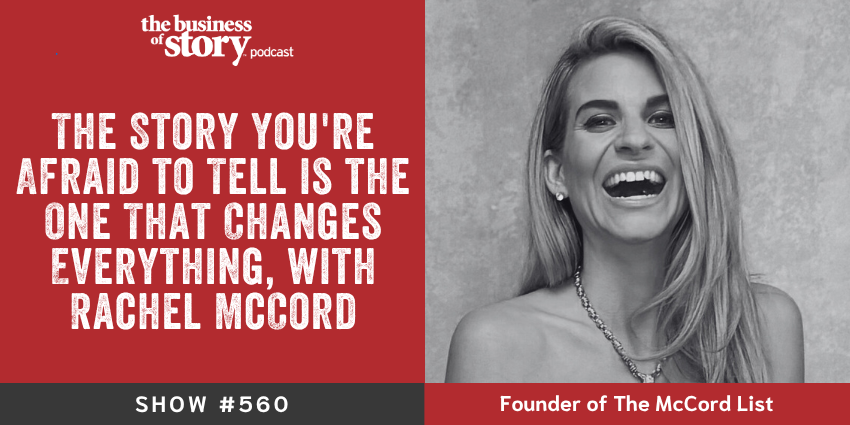
How a Broken Heart Created a Hollywood Media Empire
When the Story You’re Hiding Is the One the World Needs Most
You’ve built something real. You show up, you produce, you perform — and somewhere beneath the calendar and the content and the carefully curated brand, there’s a story you haven’t told yet.
Not because it isn’t powerful.
Because it’s the one that still hurts.
Rachel McCord knows that feeling better than almost anyone. She grew up in multiple trailer parks in Georgia, moved 33 times before she was 16, and started working 13-hour days at a pizzeria at age 13 — not because her family needed the money, but because she was battling depression and didn’t want to go home.
By her mid-twenties, she had sold her first company, moved to Hollywood, launched The McCord List media network, and was producing content that landed her on the jumbotron in Times Square and on stages with Michelle Obama, Tyra Banks, and Dr. Phil.
And she was still broken.
“I was walking through life with a limp,” she told me on the Business of Story. “On the outside, I looked like I was at the top of my game. But I was struggling to connect the dots between how I felt and what I was living.”
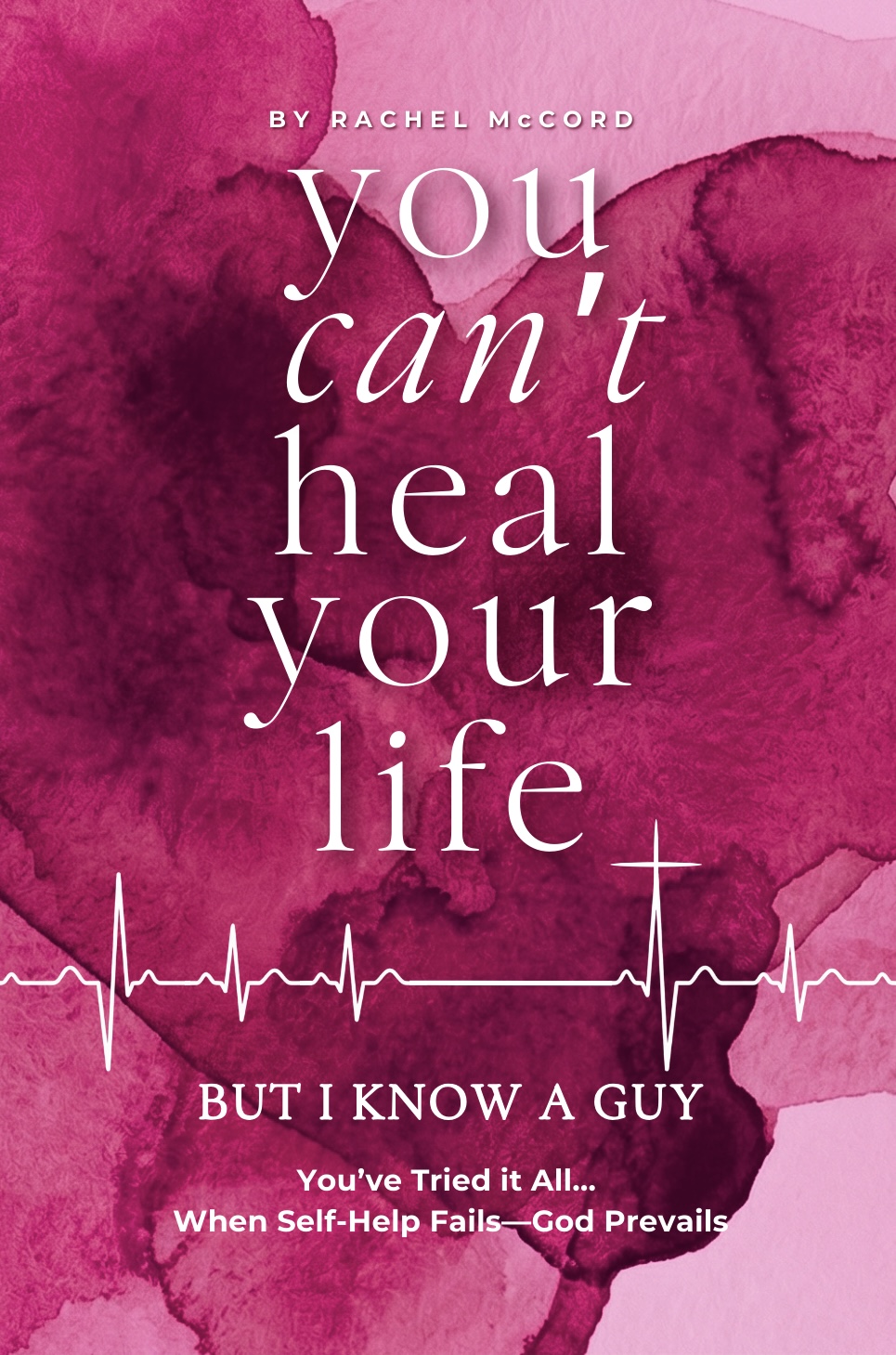
That’s the story Rachel finally tells in her new book, You Can’t Heal Your Life, But I Know a Guy. And it’s the story every entrepreneur who has ever faked a smile on a hard day needs to hear.
Meet Rachel McCord: Hollywood Media Mogul, Open Heart Surgery Survivor, Author
Rachel McCord is the founder of The McCord List, a Hollywood media network that produces McCordless Today — a daily talk show airing on network
television and streaming on Roku, Apple TV, Samsung, and Amazon. She produces 19 shows, co-founded Viral Brand (a creator marketing company that has launched campaigns for Twilight, Harry Potter, Toy Story, and more), and has built a network of over one million vetted creators.
She is also a survivor of severe childhood trauma, PTSD, suicidal depression, and open heart surgery at 32 — a procedure one in five patients don’t survive.
Her book is not a self-help book. It’s what happens after self-help fails.
What’s in It for You
By listening to this conversation, you’ll discover:
- Why the story you’re most afraid to tell is often the one with the most power to heal others
- What EMDR therapy is and how it helped Rachel recover suppressed childhood memories in a single session
- How a business trip to Jerusalem became the spiritual turning point that changed everything
- Why self-help alone — no matter how many books you read — cannot do what faith can
- The three-part framework from Rachel’s book: Get Real, Starve Fear Feed Faith, Do What You’re Here For
- How the StoryCycle Genie brand assessment revealed both the heartbeat and the gaps in The McCord List’s brand story
The Jumbotron Doesn’t Heal What’s Broken Inside
Rachel’s path from Georgia trailer parks to Hollywood media empire is the kind of story that sounds like a movie — because it is.
She worked her way from a pizzeria to managing the location at 16, to running the education division for Magic, the world’s largest fashion trade show. She bootstrapped The McCord List by calling paparazzi herself and studying which events got press coverage and which didn’t. She built her influencer network before influencer marketing had a name.
But underneath all of it, she was carrying something heavy.
Prior to age 12, she had almost no memory of her childhood. Not because nothing happened — because too much did. Her body had protected her by burying it.
It wasn’t until a chance encounter with an EMDR therapist that those memories began to surface. In a single session, years of suppressed experiences played back like a movie. The missing jigsaw puzzle piece, as Rachel calls it, finally clicked into place.
“I walked out of that session not heavy and burdened by what had happened,” she said. “I walked out free.”
When Your Literal Heart Breaks
In 2024, Rachel underwent open heart surgery to repair a severe mitral valve prolapse — a congenital condition that had been quietly flooding her heart with blood for years. She had been passing out for eight years. Doctors had missed it repeatedly.
The two weeks before surgery changed her life.
“I kissed my son’s face at three years old while he was sleeping and went to a hospital,” she said. “That’s an impossible journey. And I don’t wish it on anybody.”
But it was also the moment that cracked the book open. In 30 days, she wrote 60,000 words.
The framework she built from that experience is deceptively simple: Get real and honest about your life. Starve fear, feed faith. Do what you’re here for.
“Self-help is very helpful,” Rachel told me. “But it is not healful.”
The Brand Story You’re Not Telling
When I ran The McCord List through the StoryCycle Genie before our conversation, it captured the heartbeat of Rachel’s brand immediately — the empowerment, the community, the mission to help people find their voice and their purpose.
What it missed was the full scope of what Rachel’s team actually does: producing shows for other entrepreneurs, helping authors and coaches and business owners step into media with confidence and strategy.
Rachel’s response was immediate. She called her team that morning.
“If you don’t tell someone your story, someone else will,” she said. “It’s very important that right out of the gate, it’s very clear what we do.”
That’s the lesson the Genie revealed — not just for Rachel, but for every entrepreneur who has let their brand drift from their actual mission.
Your story is your most powerful asset. But only if you’re telling it.
Links
- The McCord List
- You Can’t Heal Your Life, But I Know a Guy by Rachel McCord
- Free social media analysis from Viral Brand
- Rachel McCord on Instagram
- Free StoryCycle Genie brand assessment
- Craft your vibrant brand story with the StoryCycle Genie™
Deepen Your Communication Mastery: Three Essential Episodes
To amplify your transformation from today’s conversation, these carefully selected past episodes provide complementary wisdom:
Why Tone Is the Secret to Brand Resonance with Charly Tate — Charly Tate reveals how the emotional undercurrent of your brand voice — not just your words — is what creates the authentic connection Rachel McCord’s story embodies so powerfully.
Why Building Your Audience Now Is the Only Moat Against AI with Joe Pulizzi — Joe Pulizzi’s urgent case for building a human audience directly complements Rachel’s approach to community-first media building at The McCord List.
How to Choose — and Deliver — the Story That Gets Your Best Audience to Act with Lee Schneider — Lee Schneider’s framework for finding your most compelling story is the perfect next step for entrepreneurs inspired by Rachel’s courage to finally tell the story they’ve been hiding.
Rachel McCord’s Conversation With Park Howell on The Business of Story Podcast
From Trailer Parks in Georgia to Hollywood Media Mogul: Rachel McCord’s Origin Story
Park: Hello, Rachel, welcome to the show.
Rachel: Hi, thank you so much for having me. I’m super pumped to be here.
Park: So the McCord List, what is that?
Rachel: Well, I mean, you are the king of it. You’ve got your genie telling you, but I’m gonna give a little sneak peek.
So I started the McCord List after selling my first company at 24 years old. I had been in the event space, opened a few venues, really helped companies scale and open more locations. And I had done all the things that quote unquote made sense in my business.
But when I moved to Hollywood and my sister and a lot of my family being in the entertainment industry, I just started having this aching for more. I wanted to be a voice of love and light in the world.
So we started the McCord List in 2013, which is so crazy — it’s been so long now. The vision was: how can I help make an impact in the world? How can I be a message of inspiration? How can I bring love and light into the influential community that I had access to?
The people I knew very well in Hollywood circles — you’re kind of always going to events and you can live a pretty superficial, shallow life if you’re not careful. That’s what I was really feeling, and a lot of my friends were experiencing it too.
So we got really intentional about building community. And then from there, I turned it into a media network. Now I produce 19 other shows and I produce my own talk show as well. We have it on network television. We have a platform on Roku, Apple TV, Samsung, and Amazon.
Park: And for our listeners, what does that mean?
Rachel: So the same way that you might watch on Netflix, we have our version of Netflix — it’s called McCordless TV. The same places that you go to watch your streaming, if you’re downloading a new app or updating your app, you can actually watch all of our inspirational content with all of our show hosts and conversations with people on McCordless Today, which is my talk show that airs daily on networks at 11am Pacific Standard Time. That’s the traditional route.
And then we just stream it and syndicate it everywhere we can. We took the Oprah model — create the best show you can and put it everywhere.
I think with your point about storytelling, us being able to sit down with people, hear their stories, help them really bring it to life in media — I get the coolest messages. I feel like every day I film, I walk to my car to go home and I’m like, oh my goodness, how is this my life? I feel so grateful.
Park: And today we’re going to really explore that idea around, as you say, don’t ever waste a heartbeat. You’re here on this planet for a reason. You have a story to tell, certainly, but even more than that, you have an impact to make — and you need that story told properly in order to make that impact.
So let’s talk a little bit about your backstory. Did you really grow up in a trailer park in Georgia?
How Working at a Pizzeria at 13 Launched Rachel McCord’s Journey to Media Empire Builder
Rachel: I really did. Multiple trailer parks, actually — my husband likes to point that out for whatever reason.
I remember the time I was first introducing him to my sister. I was pretty much solid on never telling him where I had grown up because I was, unfortunately, ashamed of it. I felt like I was kind of less than, to be honest. There’s almost like a stereotype in your mind of what it means to grow up in a place like that.
Now I’m like, I’m so grateful. I love where I grew up. I love that I went through a lot of adversity, trauma, and drama and all the things, because it’s made me who I am today.
But I definitely struggled with self-worth. I remember someone coming over to my house one time and just turning up her nose — it was like a specific vibe. And I remember being a kid and it was almost like that imprinted in my heart: I wasn’t enough. I didn’t fit in because I didn’t have the country club membership, I didn’t have the big house.
I had moved 33 times by the time I was 16 years old. So I lived in many, many houses, and a lot of them were mobile.
Park: And how did you find yourself then in New York on the big jumbotron in Times Square, and then sharing the stage with the likes of Michelle Obama, Tyra Banks, Dr. Phil? What was that journey?
Rachel: Wow. Well, it was a long, wild, winding journey.
I think the best way to describe it for people who are in the middle of a journey similar to mine is that I was always anchored into what my husband would call the quit speech. It was so hard, to be honest, trying to level yourself up.
I think the biggest challenge, if you go on the journey of trying to move from where you are to where you want to be — whether that’s a journey of success in the stereotypical societal standards, an emotional journey, or a spiritual journey — you have to be committed to shedding layers. And the reality is, that’s a difficult process.
So when I look at it from a storytelling perspective, everybody wants to have that jumbotron moment in Times Square if you’re in media, right? It’s the epitome of someone stamping and saying, she’s good enough. She’s got it going on.
But I think that journey actually always starts within first, because it’s so easy to feel unworthy when you’ve come from a background and a story within your own heart that says you’re not good enough. You don’t have what it takes. You’re trailer trash. All these lies and these belief systems become the glasses and lenses that we live our lives out of.
For me, it was very expensive — I spent hundreds of thousands of dollars on therapy. I read over a thousand self-help books. I worked my butt off.
I remember getting my first job when I was 13 years old. My boss couldn’t afford me to work the whole day, but I was struggling with a lot of depression. So genuinely, I didn’t want to go home. I’d say, it’s cool, I’ll clock out, do my homework and schoolwork — I was homeschooled — and then let me just work until you close. So I would work 13, 14-hour days every day.
After doing that for many years, at 16 I was managing the place. By 18, they offered me my own location because we had already opened a second location while I was with them. It was in the restaurant industry — literally started in a little pizzeria that turned into this multi-restaurant Italian restaurant franchise.
I started building all of the standard operating procedures and all the guides and the training docs because I was training everyone — I was the only employee that lasted. People don’t stay in restaurant jobs. They come when they’re on holiday break in college. And so for two weeks, I’m busting my butt to train someone and then they’re gone.
I remember just always kind of doing the things that made sense efficiently. It made sense to shift and to be more organized.
Park: What was the job?
Rachel: So I was hired at the largest PEO — professional employer organization — in the world, called ADP. I’m sure you’ve seen ADP, the little red logo on some paycheck somewhere.
So yeah, I was on this campus and there were 2,500 people there. From a girl who had kind of grinded her way from a pizzeria, it was just weird. And I was very overwhelmed. I was having panic attacks, actually, to be honest with you.
Those were the seasons of my life where I was shedding skin, having to learn how to find comfort in very uncomfortable places, because our brains don’t really want to stretch that far.
You typically have the same thoughts today as you did yesterday — about 14,000 of the same thoughts. So there’s such an energy suck and energy burn from your brain when you’re learning to be something more.
I feel that for most people, if you’re stuck in a place and you’re trying to get to the next spot, you’re going to face three main things pretty much always out of the gate. One is imposter syndrome — where you feel, oh my goodness, I do not belong. Who let me in? I’m not that girl or guy.
Childhood Trauma, PTSD, and Suppressed Memories: The Hidden Battle Behind Rachel McCord’s Success
Park: Do you still suffer from imposter syndrome with all the success that you’ve had?
Rachel: Of course. I find myself feeling that all the time. But I think what really changed the game was a very pivotal spiritual encounter in 2018 that shifted my whole landscape.
Park: Can you tell us about that?
Rachel: Yeah. So I had struggled a lot with the unknown of my story. And what I mean by that is, sometimes if you encounter severe trauma — PTSD-level trauma — you can block things out that are just too much in your mind. Your body almost says, you’re not strong enough for what this story will really do to you.
So it’s a black hole almost in your mind. For me, prior to the age of 12 or 13, I couldn’t remember the majority of my childhood. It was all a very big, just black blob. I had a couple of specific memories, but that was it.
And it was a really unbelievable series of events — I call them many miracles — that got me in a room with someone for a totally different reason, where I found out that she actually was a therapist who does EMDR.
So imagine you and I are sitting here to do a meeting like this, and suddenly it’s like, wait a minute, there’s something going on. The only reason I even knew it was going on is because I literally, in my head two days before, heard myself say: your sister remembers this happening to you guys.
So backstory: my sister had been facing a lot of memories that I didn’t know about, because we weren’t talking at the time. I’m the youngest of three girls, and my sister’s an actress. There’s always drama with the McCord sisters, unfortunately — we have ups and downs.
So I wasn’t talking to her at the time, but my oldest sister had called me and said she was struggling. And as soon as my sister said that, I literally in my head heard, she remembers this happening to you guys. And it shook me.
Park: And you’re talking about child abuse here, going through some really horrible stuff. I’m sorry about that.
Rachel: Yes. Thank you. But it was wild because I found out my sister had been doing EMDR. And then two days later, I’m basically in this room for one reason and it turns into something totally different.
What Is EMDR Therapy? How Rachel McCord Used It to Recover Suppressed Childhood Memories
Park: And that is what EMDR?
Rachel: I’ve got it here — EMDR: eye movement desensitization and reprocessing. It’s basically a therapy style that activates both sides of your brain. You can activate it through tapping, rapid eye movement, or they have these little buzzers you use. It basically helps you, by tapping both sides of your body or activating both sides of your body, to keep your emotional body from stopping you.
So here I am in this room for one reason, and it turns into something totally different. I literally had an out-of-body experience — that’s the best way I can describe it.
My memories started coming back to me in a very delicate, beautiful way. I had a total God encounter, to be honest with you. In the same moment that I was remembering all of these memories, I had these fragmented pictures from my childhood that I didn’t know the whole surrounding situation of — they started to play out like a movie in my mind.
I remembered everything. I could remember what car we drove, which I know for some people is probably totally normal. For me, I had no idea. If you’d asked me two days before, I would have never known.
So it was almost like this delicate way of reminding me of what happened, which became this missing jigsaw puzzle piece for a girl who had clawed at her healing for so long.
And I think what was a blessing for me was that by 2018, I had started my second company five years before. I was really grinding. I was running the education for the largest fashion trade show in the world, called Magic — these huge events with a million square feet of fashion and beauty brands that pop up in Vegas and New York and all over.
So from a business perspective on the outside, I looked like I was at the top of my game. But here I was walking through life with a limp, because I was struggling to connect the dots between how I felt and what I was living.
And suddenly I’m in this room and this puzzle piece connects everything. It makes sense why I was struggling with so many different things. And that’s where I think what you’re doing is so beautiful in your world, because storytelling really is so important. The story we tell ourselves — it’s all data.
I had lived in fear for so long, but once I had the answers, it actually fueled me and empowered me and gave me the ability to actually move past it. And I walked out of that session not heavy and burdened by what had happened.
Rachel McCord’s Spiritual Encounter in Jerusalem and the Moment That Redefined Her Purpose
Rachel: And that’s why I could connect it to the spiritual encounter — these visions I started having, and then just this unbelievable experience.
And by the way, this is not an ayahuasca trip where I’m floaty like eating Froot Loops. I was literally just in a very sterile environment, totally not prepared for this. And I really felt like God had made me a new creation that day. And I felt free.
Park: So mid-20s, when did you feel like you got the freedom of this? Were you a big Christian, God-believer leading up to that, or was it just kind of an epiphany that hit you?
Rachel: That’s a great question. So I grew up in a home that would have been called Christian, but one of the most abusive people in my life was a pastor. So I had this bizarre connection where I knew that God was real, but I had never seen God be real to me. I had not known him truly.
I always was like, yeah, I know you’re really powerful and I know you made the heavens and the earth, but you can hang out over there. I’m doing things. I’m in my life. I don’t want to be living a certain way.
I was just kind of doing my life, then moved to Hollywood at 19 and started just doing all the things. And then, exactly two months before this encounter, I was invited by the country of Israel to come out and bring awareness to their exports.
What you might not know is that Israel, because it’s so small, actually has most of its economy based on what it can export to the world. So they need influential creators to talk about what they have — their beauty products and things like that.
Because I had built not only my own brand in the creator space, but also a network that we now have built to over a million vetted creators who we collaborate with on big campaigns, I was invited out.
And it was so cool. I never even thought of going. But that was honestly the beginning of everything changing, because I was on this very normal business trip — but they take you to Jerusalem, because wherever your faith is, you can find a space for yourself.
So they’re walking us through and our tour guide was Jewish, but they knew I was Christian. So they’re kind of walking us through and saying, and this is this, and this is that.
And it was so wild, because someone was filming me as I was in this church — the holy church where you can see where they buried Jesus and where he was crucified. And the tour guide literally says, and so we’ll just come on up here. I start walking and he goes, this is the journey that Jesus took when he was about to go get crucified.
You can literally hear my voice go quiet. My whole demeanor changed. I was like, wait, this is it.
And I actually think that was the beginning of everything changing, because at the end of that walkthrough — after seeing the cross, getting moved and rocked, feeling things I couldn’t describe — at the end of it, there’s the marble where they wrapped his body after he died.
And I remember just laying my chest on it and begging God to heal my heart. Because here I was living these two lives — this successful life where people are taking notice of my accolades, I’m building a huge following, I’m building a huge community. And at the same time, my heart was so broken.
I was extremely suicidal. I was majorly depressed. I was fighting PTSD. I had checked myself into treatment my first year of marriage to my husband. Newlywed mode, you know. I was in a completely different space and I was so good at faking a smile.
But the moment they said, this is where he walked — it was like, oh my gosh. I was there, but I wasn’t there. I wasn’t prepared. And suddenly I was fully there and it was like my whole body was present. My heart was present.
Park: And that was two months before the EMDR session. So you had that experience in Jerusalem and then came back and still kind of a mess, it sounds like. And you still had to figure out what was happening inside of you.
Rachel: Definitely.
What Is The McCord List? Inside Rachel McCord’s Media Network and McCordless TV
Park: So all right, let me pump the brakes here a second, because you have really an amazing story. So you grew up in Georgia, several different trailer parks. You experienced some abuse growing up. And of course that’s going to shut a lot of people down.
You’re working as a 13-year-old. You launch your own brand, your own company at 16. When did you feel like you got the big break — from little Rachel out of Georgia to now this whole world of Israel and New York and Hollywood starting to open up to you? Can you take us to a moment when that big break happened and everything pivoted in your life?
Rachel: Yes, what a great question. So it was interesting because I was living in Hollywood and when I first moved there, my sister was at the top of her game from an actress perspective. She had done Nip Tuck and had built a little bit of a following, but then she was the lead in 90210 for five years. So she was like Naomi Clark — everybody knew her. She was on every bus and elevator and all the things from a marketing perspective.
So I went into Hollywood being swarmed by paparazzi. They were stalking our house. I remember one event where there were like 100 who swarmed our car. I got so freaked out. I tried to help my sister get out of it, but she was totally fine — she was chilling, doing photos. And I was like, all right, well you’re on your own, ’cause I gotta get out of here.
So I had been in that environment as the plus one. My joke is like, I’m celebrity adjacent. My sister’s a celebrity, whatever.
It was really weird when people started to recognize me. People started to invite me to things. I remember literally being at the Grove in Los Angeles — this really cool outdoor mall — and I saw a paparazzi person snapping photos. I kind of looked around like, who’s here? And then it was just me. And that was really weird. That was literally like, oh my gosh.
Park: And had you been on TV? How did they know about you other than you were celebrity adjacent to your sister?
Rachel: Well, it was wild because when we started the McCord List in 2013, I wrote a book about breaking into entertainment and social media without it breaking you. And I gave the actual tips that I did as I was building this career.
We were bootstrapping it, to be honest. I would call the paparazzi and book myself. I talk about it embarrassingly, but it’s true. I always looked at it like, I’m building a brand and this is marketing. I need to market myself as the product and build the community around myself.
Because if I have a community of influential people, I’m not relying on the fact that at the time I had 50,000 followers. I’m actually building a community. So I would host an event and invite 50 people who would have 10 million followers each. We were creating really big splashes in the environment.
And we were a little ahead of the curve when it comes to influencer events, because my husband had pioneered the influencer marketing space back in 2004. He had launched every movie from Twilight and Harry Potter to Chronicles of Narnia and Toy Story. So he was very involved in activating influential people on behalf of brands. But he started before social media was a thing — he did it with blogs.
Then MySpace came and he was like, whoa, this is huge. You can tap into people’s communities. So he just knew what was up early on. He really led the strategy on the McCord List early on, and then I was the work boots. I just kind of tugged away at it.
I had my head down in the work so much that every time something would work, we would book this specific photographer and that would get into press. It was almost like a game for me because I was working 17-hour days. I was like, okay, I got to get cute, go to five different events. And then, oh, that event got in press. The other ones didn’t. Why did that event get in press? Who photographed that? Why did they tag it a certain way?
So I started really studying the mechanics of the business of entertainment. And that’s really what fuels my work now when I produce other people’s shows, because I don’t want people to just have a show as a vanity. I want them to build a business in entertainment if they’re passionate about media and communications.
I love spreadsheets and looking at data and analyzing what is working. Because metrics don’t lie. If I ask my team, how’s everything going? Everyone’s gonna say, it’s great. But if I say, hey, how many posts on social media did we do this week on behalf of our shows? How many show hosts launched their shows this week? Things like that — you start to get really specific.
Open Heart Surgery at 32: How Mitral Valve Prolapse Became Rachel McCord’s Defining Turning Point
Park: Okay, and you have tremendous energy and inertia moving forward. And I would be remiss if I didn’t say — open heart surgery? What happened there?
Rachel: So for eight years, I was passing out. We almost diverted an airplane one time because I had an episode. We had doctors rushing through the aisle to help me. I couldn’t walk up a flight of stairs by the end of it without stopping to rest. This was going on up until I had the surgery in 2024.
Park: And how old were you?
Rachel: So I was 32. Early 30s.
Park: Gosh, just a year and a half ago then, roughly.
Rachel: Mm-hmm, yep. So I was banging on the door of my cardiologist and I kept getting echoes and two minutes of an EKG that looked normal, but I had a severe heart murmur. And that was what clued us into the fact that I was dealing with mitral valve prolapse — but I had a very severe, exercise-induced version.
A lot of people have mitral valve prolapse, which basically just means your heart valve is like little saloon doors that are supposed to open and fully close. Mine did not fully close. So they’d kind of flap around.
In the process of that happening, when my blood would get the oxygen it needed and go to the rest of my body — specifically my most vital organ, my brain — it would actually fall back and flood my atrium. I would experience shortness of breath and really weird fatigue and lightheadedness. Sometimes my blood pressure would go so low that I couldn’t even keep my eyes open.
Park: And was this something that crept up on you?
Rachel: So it’s a congenital condition — it’s basically a defect with your heart. Your heart is literally broken. It has a break.
However, a lot of people have this and it doesn’t manifest this way. There are theories around the severe trauma that I went through — maybe the stress of that, maybe the years and years of daily toxic stress that I pretty much lived in could have been contributing.
But then I was also diagnosed with POTS — a condition where if you stand up, your blood flow will kind of rush to your feet and you can black out. So unfortunately, they’re almost like little besties. They like to help one another with all their symptoms.
I went to many doctor’s offices and they would just be scratching their heads. I had one cardiologist — a new one my friend recommended — who really took what I said seriously. He said, you might need heart surgery. Let’s do an internal scope and really look at your heart from another angle.
He put the scope on my heart, pulled his head back, raised his eyebrows, and said, okay, that is not mild. He’s like, that’s moderate at best. Let’s look at this from another angle.
Sure enough, when he went in to do what they call a TEE, he could see my heart from the inside because it goes down your throat. Looking at my heart from that angle, he could see that the reason they weren’t seeing all of the regurgitation — basically that blood falling back — is because it was actually going around like a half moon and jetting all the way around my heart.
So when my blood pressure would rise, like when I would exercise or when I was giving birth to my son, I was passing out because it would flood my atrium and I couldn’t breathe. It was just a whole situation. I was marching toward heart failure and didn’t realize it.
I was kind of trapped going into the surgery because I didn’t want to do it, of course. Who wants to undergo open heart surgery? It’s not like, you know what I really want to do on a Tuesday? So I was really nervous.
And all of a sudden it was like, wait a minute, I’ve got the tools. Because I’ve spent these wild years since 2018 having crazy, unbelievable, undeniable God encounters and experiences. What happened for me that August in 2018 in that EMDR session really just birthed what became my daily life now. I feel like I experience God all the time and I live like that. That’s like my dream.
So when I was going through the heart surgery, I came to the most unbelievable peace — genuinely, the peace that passes understanding. Because I was in this place where I knew there was a chance I wouldn’t survive this surgery, but I was totally at peace with where I was going.
You’re in the middle of really weird seasons, like being in your early 30s and having doctors ask you for your advanced directives — what do you want to do in the case of this, do you have a will — all these things that maybe you don’t usually have to think about until you’re wiser in life. I really had to think about it pretty quick.
I think the two weeks before the surgery changed my life forever because I really felt like my time could be coming to a close. My son was three years old and I really started talking to people I trusted — hey, look out for my boys, my husband and my son, if this is it for me. And it really rocked me.
And I think that’s what I wanted to write from in the book. I felt like it poured out of me. In 30 days, I wrote 60,000 words, which is insane.
I was in this space where I was like, I’ve got to meet the people in that moment that I was in when I was standing in Cedars-Sinai and got the word that I failed my stress test and we were advancing toward surgery. Because kissing my son’s face at three years old while he’s sleeping and going to a hospital is an impossible journey. And I don’t wish it on anybody.
But the truth is, a lot of us have that. A lot of us have these storms and these fires and these broken hearts that aren’t necessarily opened by a knife or for me a robot. But they could be broken from the difficulties in this life. And when we try to bring that in this life and we don’t stand on solid ground, it will really crush us. And I don’t want that for anybody.
Get Real, Starve Fear Feed Faith, Do What You’re Here For: The Three-Part Framework from Rachel McCord’s Book
Park: And so, yeah, just amazing. And that was really what spawned your new book, You Can’t Heal Your Life, But I Know a Guy. We have covered a lot of ground. Would you just very quickly recap those steps again for our listeners of what they’re going to get from your book and what they can be thinking about right now in their own life and their own story?
Rachel: Great question. So number one, what to think about right now — I would say digest this conversation. Did something pop out to you? Write it down. Maybe there are three things that spoke to your heart and your spirit. Don’t let them push by. Life is very busy and can be very distracting. But if you take even five minutes just to feel and process, you might actually really come to a new feeling within your heart that gives you peace.
And on that note, the three parts are: to get real and honest about your life, to starve fear and feed faith, and to do what you’re here for.
Park: Starve fear and feed faith. I love that. That’s great.
Now, as we do with all of our guests, I put your brand through the StoryCycle Genie unbeknownst to you, sent it over to you a couple days ago. It gave you a brand assessment, and then it actually created the brand narrative strategy.
Because I don’t know your brand intimately, I just said, okay, I think from what I can tell from her website and what the assessment says, I think you’re pretty darn accurate here, Genie. So let’s go ahead and create the narrative strategy for Rachel as you are currently showing up in the world. What did you think of what you received?
How the StoryCycle Genie Brand Assessment Uncovered The McCord List’s Authentic Narrative Power
Rachel: I loved it. I think my favorite part was the fact that it graded everything from A up to 10 points on all the different sections. That was really helpful. It was also very enlightening because when you build a brand, sometimes you’re so in the middle of it that you lose the objective perspective.
And I loved that I got to be the student in that environment and read this whole summary that you guys had done, which was incredible and totally captured me. It gave me some food for thought on what to add to my website, what to potentially remove as things have evolved over the years. So it was very enlightening and I’m super grateful.
Park: So where did it validate you? What were you already feeling like you’re doing well, and you’re like, yep, nailed it?
Rachel: I think my favorite part was that it really got the heartbeat of the brand. Since we started the McCord List, I really wanted to make sure it was very clear that we aren’t just helping create these really cool experiences. We aren’t just creating cool content. We aren’t just doing fun things in media. We’re actually about truly empowering others. And I love that the Genie caught that, because for me, that’s the most important thing.
Park: All right, then gaps — it reveals gaps in your story. What were some of the gaps, or maybe one big gap you saw?
Rachel: I thought the biggest gap was that it wasn’t capturing that we now produce other people’s shows for them. It was more focused on the fundamentals of the McCord List, which made me think I wonder if I need to put in some more SEO data on the back end with our metadata to really tell the story better.
Because you know, it’s like if you don’t tell someone your story, someone else will. So it’s very important that right out of the gate, it’s very clear what we do. I had my team on a call this morning talking about what we need to do with our website to just be more informative. So it gave me a lot to do and I’m excited about it.
Park: And was there any part in it that inspired you with a new way to think about telling your story?
Rachel: Yes. What I loved the most was the fact that it existed. And what I mean by that is, sometimes you get so buried in your brand and your message or your own website, and you’re seeing it from the perspective that you already know what you do. It’s almost like client-speak — you’re speaking in a language that’s specifically for you and your people.
When you actually pivot around, you start really thinking, what am I being seen as? How am I being interpreted into the world?
That’s probably my favorite thing about it — it actually empowers people to know. We do a similar thing when we’re doing a show accelerator and launching a new show. I spend an hour with each of my show hosts and just really bake out: what is your message? What’s your business model? What do you do? How do you make money at this? How do we fit all this together?
And then we give them a brand summary — a brand positioning doc, basically. And so I really loved how this was doing it probably a lot easier than I’ve been doing it. I was like, wait, I need to know this Genie.
Park: Rachel, you can become a user and put all of your people through it. It’s a perfect use for that. Because then, if they’ve got a website up or they’ve got some written documents or they’ve written a book or whatever, you just feed it to the Genie. The Genie doesn’t ask you a bunch of questions that you’re not sure the answers are. It reveals how you are currently showing up.
Think of it like this, Rachel — it’s mirror, mirror on the wall. How is my brand showing up for all?
And then you got to decide if you’ve got too many warts in that reflection and where you’re going to fix it. And yes, you could absolutely use it for your customers. Once you’ve built the brand brain inside the Genie, then you can create all of your strategy, your influencer campaigns, and all of your content through the Genie. And it’s always going to be on brand because you worked with it, collaborated with it. So it gets to know you better than you know yourself in some cases.
Rachel: That is incredible. I love it. Yeah, we’re gonna need to talk about that, okay?
Viral Brand and Social Media Analysis: How Rachel McCord Helps Entrepreneurs Amplify Their Story
Park: Well, good. I’m really glad you liked it. Would love to see you put it in play there so you could be helping your clients have even a bigger impact in the world. And finally, you’ve got a giveaway for our listeners.
Rachel: I do. So much like your incredible Genie, I feel like audits and analysis are so helpful for us learning our brands.
So one of our companies is called Viral Brand — it’s the company I mentioned earlier with my husband where he’s launched all the movies and TV shows you love. Go check it out. We actually had three of the top number one shows on Amazon a month ago. So that was pretty cool.
So we built this big audience of a million vetted creators who we connect with brands. And part of that is that we do a social media analysis for all of our new clients. We basically look at how are you showing up in social media? Who are your most notable followers?
It’s how I found out Paris Hilton followed me on social media, actually. So it’s a really cool tool. It’s a multi-page report that we can put together just from your social media handle on Instagram. It’s really helpful because if you see one buzzword like soccer and you’re like, oh my goodness, that’s because I posted a picture of my kid playing soccer — you have to decide, is that part of your brand or do we need to remove some to be more nail on head?
Anybody who wants that, all you need to do is reach out to my team. You can just go to themccordlist.com and reach out to our team. We will actually do that for you. Just give us your Instagram handle and that’s all we need — just your username — and we’ll present it for you so that you can do some learnings and add it to your Genie situation.
Park: That is awesome. And thank you so much for offering that up to our listeners.
I don’t know if you know or not, we also have a freebie on the Genie. You can send any of your customers there. Just have them go and do the free brand assessment. All they do is put in their name, their email address, and their URL. That’s all there is to it. And it’s going to give them a 14-point assessment and a grade from A-plus to F-minus on how well they’re doing it. And it’ll do it in about one minute, Rachel.
Rachel: Let’s go. That’s amazing. You’re gonna make my job so easy, dude. I’m gonna produce 40 shows now.
Park: Well, there you go. It only took us two years to build the Genie, but precisely to help people like you do everything way faster, but always being on brand. So it’s cool.
But anyways, Rachel, thank you so much for being here. I just absolutely enjoyed your show, your story. Your energy is marvelous. And I can see why you are a big success at what you do in helping others tell their story through the McCord List.
Rachel: Thank you so much for having me on your show. I’m so honored. Bye, guys.
FAQs From the Interview
Q: How Did Rachel McCord Overcome Childhood Trauma to Build a Media Empire?
A: Rachel McCord grew up in poverty in Georgia trailer parks and began working at a pizzeria at age 13, carrying undiagnosed PTSD and suppressed memories of childhood trauma well into her adult life. Through a combination of a transformative spiritual experience in Jerusalem, EMDR therapy, and the discipline of her three-part personal framework, she converted that pain into purpose. Today she leads The McCord List media network and McCordless TV, proving that an entrepreneur’s most difficult chapters can become the foundation of their most compelling brand story.
Q: What Is The McCord List Media Network?
A: The McCord List is a media network founded by Rachel McCord that spotlights celebrities, lifestyle brands, and cultural tastemakers through digital content, editorial coverage, and video programming. The network operates alongside McCordless TV, Rachel’s streaming platform designed to extend brand stories beyond traditional social media reach. The McCord List has grown into a recognized authority in Hollywood media, built on Rachel’s two decades of relationship-driven journalism and brand storytelling.
Q: What Is EMDR Therapy and How Does It Help People Heal from Trauma?
A: EMDR (Eye Movement Desensitization and Reprocessing) is an evidence-based psychotherapy technique developed to treat post-traumatic stress disorder. It uses bilateral sensory stimulation — most commonly guided eye movements — to help the brain reprocess traumatic memories so they lose their emotional charge. For Rachel McCord, EMDR was the therapeutic breakthrough that allowed her to recover long-suppressed childhood memories and finally begin healing the root causes of her PTSD rather than simply managing its symptoms.
Q: How Can Entrepreneurs Heal from PTSD While Building a Successful Business?
A: Healing from PTSD as an entrepreneur requires acknowledging that unresolved trauma doesn’t stay in the past — it surfaces in decision-making, leadership style, relationships, and risk tolerance. Evidence-based therapies like EMDR, combined with spiritual practices, community support, and purpose-driven work, create a powerful framework for recovery. Rachel McCord’s journey demonstrates that seeking help isn’t a weakness but a strategic investment: healing the inner story is what ultimately enables entrepreneurs to tell — and live — a more authentic and powerful outer one.
Q: What Is Mitral Valve Prolapse and How Did Open Heart Surgery Change Rachel McCord’s Life?
A: Mitral valve prolapse (MVP) is a heart condition in which the mitral valve doesn’t close properly, sometimes requiring surgical repair when the leakage becomes severe. Rachel McCord faced open heart surgery at just 32 years old to repair her mitral valve — a physically and emotionally harrowing experience that forced her to confront her own mortality. Rather than breaking her, the ordeal deepened her conviction that she was still alive for a reason, accelerating her commitment to fulfilling the purpose she felt called toward.
Q: What Does It Mean to “Starve Fear and Feed Faith” — and How Can You Apply It?
A: “Starve Fear, Feed Faith” is the second principle in Rachel McCord’s three-part book framework, rooted in the idea that fear and faith cannot thrive simultaneously — whichever one you nourish grows stronger. Practically, it means redirecting time, attention, and energy away from worst-case thinking and toward intentional belief in your mission, values, and capabilities. For entrepreneurs, this principle operates as both a mindset practice and a daily discipline: every action taken from faith rather than fear builds momentum, while every fear-driven choice shrinks possibility.
Q: What Is McCordless TV and What Kind of Content Does It Feature?
A: McCordless TV is Rachel McCord’s digital streaming platform designed to deliver celebrity interviews, lifestyle content, and brand storytelling in an accessible, streaming-friendly format. The platform extends The McCord List’s editorial voice into long-form and episodic video, giving brands and personalities a stage beyond traditional social media algorithms. McCordless TV reflects Rachel’s belief that authentic, story-driven video content is the most powerful vehicle for building both personal brands and loyal audience communities.
Q: How Does Storytelling Help Entrepreneurs Find Their Authentic Voice and Build a Stronger Brand?
A: Storytelling gives entrepreneurs a framework for translating personal experience — including failure, trauma, and transformation — into a brand narrative that audiences can emotionally connect with and remember. When founders stop hiding their origin stories and start sharing the And, But, Therefore arc of their journey — the desire, the obstacle, and the resolution — they move from selling products to building trust and community. Rachel McCord’s own story, from a Georgia trailer park to Hollywood media empire, illustrates that the most powerful brand asset an entrepreneur owns is not their product, but the authentic story behind why they built it.
 Listen To More Episodes