How to Accomplish More Business Growth By Doing Less
You want to make 2026 your breakthrough year for scaling your company, and you know that real success requires getting smarter, not just grinding harder.
But you’re exhausted because you’re running on the hustle culture treadmill at a relentless pace, which is actually sabotaging the growth and freedom you’re chasing.
That’s exactly where Michael Walsh’s discovery changes everything. After 30+ years helping $2M-$20M companies scale, he’s proven that working less—not more—creates both revenue growth and personal freedom through a people-first approach that treats your business like an intelligent ecosystem instead of a machine.
Meet Michael Walsh: The Business Growth Consultant Who Proved Working Less Generates More
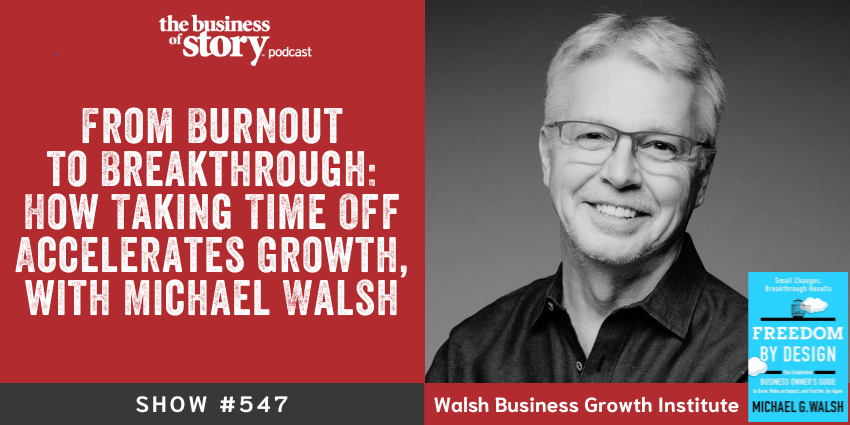
Michael Walsh is founder of Walsh Business Growth Institute and author of Freedom by Design: The Established Business Owner’s Guide to Grow, Make an Impact, and Find the Joy Again.
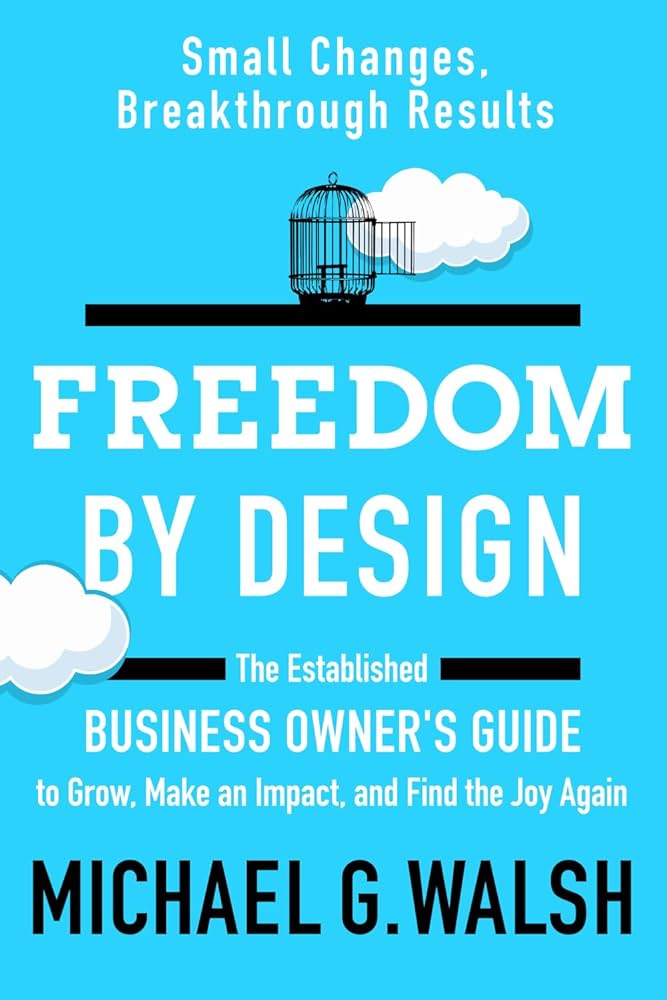 With over 30 years helping established businesses scale from $2 million to $20 million, Michael has developed a people-first philosophy that challenges everything conventional business wisdom teaches about growth.
Prior to founding his consultancy, Michael spent years trapped in the same hustle culture he now helps clients escape. Three years without a vacation. Grinding relentlessly. Believing that growth required personal sacrifice. Then his wife forced him to take time off, and he made a discovery that changed everything: the week he took off generated $10,000 in new revenue.
Today, he’s renowned for myth-busting methodologies that liberate business owners from operational dependency. His book is available at WalshBusinessGrowth.com in print, PDF, or MP4 audio format—free to Business of Story listeners.
What’s in it for You:
Why the systems that worked at $1M revenue completely fail at $5M and $10M, and how Michael’s relationship complexity math (100 people = 4,950 relationships) explains why “systematize everything” advice actually sabotages service business growth
The $10,000 vacation discovery that proved taking the last week of every month off increased income instead of decreasing it, revealing why hustle culture is the biggest impediment to scaling established businesses
The Survive, Thrive, Connect, Adapt framework for understanding human behavior structures that support people to be at their best, transforming your team from a perceived threat into your greatest competitive advantage
Why your people are your #1 brand story customer, not your external customers, and how training influencers (even the janitor or cafeteria worker) instead of just leaders creates authentic brand ambassadors who actually believe your message
The social contract between employers and employees that reveals professional growth takes pressure off demanding top dollar, and how two-minute weekly conversations replace twice-yearly performance theater
How AI is eliminating junior-level jobs and creating an expertise development crisis, plus why the shift from Information Age to Age of Creativity requires businesses to become intelligent ecosystems instead of well-oiled machines
The Hidden Math That Explains Why Your Systems Keep Breaking
Here’s what 30 years of scaling service businesses taught Michael: Your systems get stripped as you grow.
The business you run at $1 million uses completely different systems than the one at $5 million. That $5 million business uses different systems than the $10 million version. You’re essentially running four different businesses as you scale from $1M to $2M to $5M to $10M to $20M.
The only constants? Your product or service (maybe). Your values. Your key people.
People are the better investment.
Not because systems don’t matter—they do. But because systems are temporary scaffolding. People are the foundation.
And here’s the math nobody talks about: When you have 4 people, you’re managing 6 one-on-one relationships. Scale to 100 people, and you’re suddenly navigating 4,950 potential relationship pathways.
This exponential complexity is why scaling gets hard. Not inadequate project management software. Not insufficient automation. The sheer cognitive and emotional load of managing thousands of interpersonal dynamics.
Most business advice completely ignores this reality.
The $10,000 Week That Changed Everything
Michael started his consulting business in 1995. By 1996, he’d gone three years without a vacation—two years with his previous company, plus one year building his own firm.
He figured growth required working harder and longer. Time off was a reward you earned. Since he still wanted more, clearly he hadn’t earned it yet.
His wife finally insisted: “You’re exhausted. You have to go.”
Reluctantly, he went to Mexico with a four-inch binder of customer satisfaction surveys. His plan? A one-person conference.
For the first three days, he slept sixteen hours straight. Get up, eat, sleep another eight to ten hours. Finally, by Monday, he started his “conference”—reading surveys by the pool, swimming every 45 minutes.
He came back energized and sold four customer satisfaction surveys at $2,500 each. An extra $10,000 from a week off.
He thought: This taking time off thing is actually good.
So he tested it. Eight weeks off in the next fifteen months. Income kept growing.
Then he started taking the last week of every month off. Reorganized his work to get it done in three weeks instead of four. Income continued growing.
Anybody can take time off and make less. We call that part-time. But taking time off and making more? That’s growth.
From Machine to Ecosystem: Why Traditional Management Dogma Fails
Just about everybody adopts what Michael calls “traditional management dogma”: I’m the boss, you’re the employee, you should do what I say.
That approach was designed for manufacturing plants where everyone on the assembly line must follow the same script. Otherwise you have a lumpy assembly line.
But in service-based businesses? You need different ideas from different people to come to the table. Your biggest asset is your people—but only if they feel the freedom to bring their best.
The problem? Too many people treat businesses like well-oiled machines instead of intelligent ecosystems.
Machines need systems and processes to function consistently. Ecosystems need healthy relationships and adaptive capacity to thrive.
Machines break down when you remove parts. Ecosystems become more resilient through diversity and connection.
Machines require constant management and control. Ecosystems self-organize when conditions support growth.
The people-first philosophy doesn’t abandon systems—it recognizes that in service businesses, your people ARE the system.
The Survive, Thrive, Connect, Adapt Framework in Action
Michael’s framework for understanding human behavior provides a practical roadmap for building people-first organizations:
Survive: We’re emotion-first, logic-second. That’s not a flaw—it’s a feature. Fear is an incredible life strategy. If survival is threatened, we go there first. Address basic security and stability needs so people can focus on growth.
Thrive: We have an innate desire to thrive. We don’t need all survival needs sorted before we can thrive—otherwise, why would a five-year-old ever share a toy? Create conditions for individual excellence and contribution.
Connect: We have both the ability and the need to connect with each other because inherently we know that together we’re stronger. Build authentic relationships and community. The 4,950 relationships in a 100-person company become assets, not liabilities.
Adapt: We have the ability to adapt to changing environments. Even if we don’t like the environment, we know how to adapt. Develop organizational capacity to evolve with changing conditions.
Real example: Michael worked with a woman running a Canadian province for a client. Aberrant behavior. Creating messes. Missing deliverables. Root cause? She felt threatened by her boss and didn’t know how to interact.
Solution: Help her test her assumptions (“Is this a paper tiger or a real tiger?”), encourage her to express appreciation. Her boss relaxed. She relaxed. Performance improved.
No new system required. Just human understanding.
The Social Contract Your Business Actually Runs On
Michael breaks down what employers and employees actually want—and it’s not what traditional management suggests.
Employers want:
- Individual results
- Teamwork results that exceed individual capacity
- Evolving corporate culture where people have each other’s backs
- Progress toward overall purpose
Employees want:
- Fair pay
- Professional training and growth
- Meaningful work
- Meaningful relationships
The key insight? Professional growth takes pressure off demanding top dollar. When you align career development with on-the-job work—two minutes weekly instead of twice-yearly performance theater—everything changes.
People grow faster. They accomplish what they want. You get happier people without doubling your effort.
Your People Are Your #1 Brand Story Customer
Here’s where most businesses get brand storytelling backwards: They focus on external customers first.
Michael argues your people are the #1 customer for your brand story. They’re the ones actually communicating with customers.
If your people don’t believe your brand story, if they think it’s smoke and mirrors, they won’t get behind it. And they’re your most powerful voice in the market when they can tell your story clearly, consistently, and authentically.
Park shared a healthcare example: He trained twenty-five influencers for a large healthcare enterprise—not the executives, but the people who actually wielded power through trust. Some spoke broken English. But they had everyone’s ear.
Train the influencers. Not necessarily the leaders, unless they’re influencers.
Because businesses aren’t machines. They’re intelligent ecosystems.
The Age of Creativity: What AI Means for Your Business
Michael sees AI as marking the completion of the Information Age. Information is now ubiquitous. Everyone has access to everything.
What’s next? The Age of Creativity: How do we creatively use information to support each other and advance what we deem important?
This raises a critical challenge: AI is taking junior-level jobs, which means we’re losing the traditional pathway for developing expertise. How do you become a senior expert if there’s no junior role to start in?
Michael’s optimistic: “We’ll find a way. We always do as humans.”
But the underlying principle remains: People, not systems, are your competitive advantage.
The businesses that thrive won’t be the ones with the best systems—they’ll be the ones with the most intelligent, adaptive, creative ecosystems.
Make 2026 Your Breakthrough Year
Michael Walsh’s contrarian approach challenges everything you’ve been taught about scaling. Working less can generate more revenue. Relationship complexity matters more than operational efficiency. Your people are a better investment than your systems.
The question isn’t whether to invest in people or systems. It’s recognizing that as your systems inevitably change with each growth stage, your people are the only constant that carries your values, your brand story, and your competitive advantage forward.
Start with two minutes weekly focused on aligning each team member’s career growth with their daily work. Train your influencers, not just your leaders. Recognize that you’re managing an intelligent ecosystem, not operating a machine.
Because the math is clear: At one hundred people, you’re managing 4,950 relationships. No CRM can do that for you.
Ready to design your freedom? Get Michael Walsh’s book “Freedom by Design: The Established Business Owner’s Guide to Grow, Make an Impact, and Find the Joy Again” in print, PDF, or MP4 format at WalshBusinessGrowth.com.
Links:
- Freedom by Design: The Established Business Owner’s Guide to Grow, Make and Impact and Find the Joy Again
- Michael Walsh on LinkedIn
- WalshBusinessGrowth.com
- Freedom by Design book
- Craft your vibrant brand story with the StoryCycle Genie™
- What users are saying about the StoryCycle Genie™
Related Episodes You’ll Love:
• The Storyteller’s Ledger: How Auditors Use Story to Turn Data Into Drama – Shagen Ganason reveals techniques for making numbers meaningful through narrative context
• Why AI Makes Your Agency More Valuable, Not Cheaper – Drew McLellan shares research on what clients really expect from AI adoption and how agencies should respond
• How AI Changes Your Customers: The Marketing Guide to Humanity’s Next Chapter – Mark Schaefer synthesizes research from 300 global futurists on how AI reshapes customer behavior by 2035
Michael Walsh’s Conversation With Park Howell
Park: Hello Michael, welcome to the show.
Michael: Well, thanks for having me here.
Park: And I understand you’re coming to us from beautiful British Columbia, Vancouver, British Columbia.
Michael: Absolutely. Now it’s not quite as warm out here today as it is in Arizona, but it’s certainly a lot warmer than it was where I was earlier this week in Nashville where it was 23 degrees Fahrenheit, which is not, that wasn’t a lot of fun.
Park: Whew, that always surprises me when I hear Nashville getting that cold. I just, to me for some reason, it seems like that should be the warm, humid South.
Michael: Well, you know, as it turns out, this coming Thursday, they’re looking forward to 75 degrees weather. So it’s like, I think they’re just trying to figure it out. I don’t know.
Park: Well, I’m glad to have you on the show and you know, I come from the branding world. So when I have a guest on and like yourself, I always kind of come at it from a brand perspective. So my first question for you is you are obviously a business growth expert, right? And there are probably only about three million of you in the world because we all live in a very commoditized world and lots and lots and lots of people exclaim, you know, proclaim, claim to be a growth expert. So I know you were really good at what you do. What is the one thing that defines your brand in the business growth building world?
Why People-First Business Growth Outperforms Systems-Driven Approaches
Michael: How to tap the power of your people as you grow. So we are a people first organization as opposed to a systems and structures first organization.
Park: And what does that mean exactly?
Michael: Well, here’s the thing. A lot of people say, listen, people come and people go, your systems are there to stay. You should focus on your systems, except as you grow, that’s just not true. If you think of your business at a million, your same business at five million and your same business at 10 million, the question that I look at is what do they share? Well, you may have the same product or service. Even that may have morphed over the course of that type of growth. You usually have the same value set and you’ve got a few of the same key people. That’s about it. Everything else changes.
The systems at a million, there’s no way they work at five and there’s absolutely no way they work at 10. You’re gonna strip all your systems and structures anyway. So while people focus on those, there’s this illusion people have that that’s somehow I get comfort. Well, if I’m not gonna grow, that may be true. But the truth is that, you know, the reason that they get nervous about people is that as you grow your numbers, it gets harder and harder to handle.
And so they go, at least I’ll go to the systems. I understand them. And the truth is that’s a fallacy too, because you’re going to blow up your systems as you go through it all. So you might as well go figure out the one thing you have in common, which is your people. If you think about it, you have four different businesses from a million to two to five to 10, let alone go to a 20. You’re constantly having different businesses. But then again, if I have a three-year-old or a 13-year-old or a 23-year-old, you know, as that child grows, I pretty much have three different people I’m dealing with. You know, they share the same DNA.
But the fact of the matter is, that at 13, I’m working through life with somebody who’s experiencing, you know, all the things that it takes when you run through those, you know, that period of life in, you know, in that when they’re going from a child to a teenager. At three years old, I’m trying to make sure that the right things go in their mouth, like their vegetables, and the wrong things stay out of their mouth, like the sand from the sandbox. I mean, very different people. Okay. So it’s the same.
It’s the same with the business. People will grow and they’ll change, but at least I can use the relationship to build my relationship with my son or daughter. And there’s actually things you can do to actually maintain and grow those relationships with your people. Whereas the structures, you’re going to need very different structures anyway. So there is no, just because I used one million has nothing to do with what I use say at eight million.
So I actually have a better shot at my people than I do at my structures. So we focus on how do you tap the power of your people to be the X factor and allow you to actually grow and gain freedom and all that kind of stuff that everybody thinks is utopian because they’re busy focusing on structures, not people.
Michael Walsh’s “Freedom by Design”: A New Model for Success
Park: Can you, Michael, take us to a specific moment when you realized that conventional scaling advice was fundamentally wrong? What did you see that others had missed?
Michael: Well, I’ll share one experience I had myself and that was when I started my business. I’ve been at this for just over 30 years, this business. So, you know, started in 1995 and by 1996, if you look at the role that I had with a company before that, for the two years before, plus one year in my own business, I’d gone three years without a vacation.
And I figured, well, if I want to grow it, I have to work harder. If I work harder, you know, I treated time off as a reward that I get when I earned it. And since I still want more, then it’s like, clearly haven’t earned it yet. And it was interesting because my wife finally talked me into, she said, you got to go, you know, you got to go away. Now, she wasn’t in a position to be able to go with me, but she said, you have to go. And I’m like, well, we originally talking about going to Mexico together and you want me to go to Mexico on my own? Like this, just feels weird. And she’s like, you’re exhausted. You have to do something. And I’m like, and then I came up with the idea that it, well, it just didn’t feel right. Okay. So what I did was I said, well, you know, people go to have conferences and there was no conferences for small business consultants at the time. OK, this was this was mid 90s and I’m like, or at least I wasn’t aware of any. And so I thought, well, I’ll have my own one person conference.
So I ended up taking a four inch binder on customer satisfaction surveys and I brought it down with me. And for the first two or three days, all I did was sleep. I was literally conked for 16 hours. Get up, go have a meal and then go back to sleep for another eight or 10. Finally, by about like I went on one of these Friday to Friday, you know, sun wing, whatever vacation they were. And by about Monday, I thought I better get my act together and start doing my conference. So I’m sitting there by the pool reading this customer satisfaction surveys, but every 45 minutes I get in the pool, swim around, come back out, and I keep reading some more. And what I found was I was regaining my energy, notwithstanding the fact that I was busy putting this thing as a chain around my neck. I left that week off, was so energized that I turned around and sold four of those customer satisfaction surveys to clients. In addition to the regular stuff that I was doing, they were 2,500 bucks a piece. And so I got an extra $10,000 from a week off.
I thought, this taking time off is a good thing. I kind of like this thing. And so in the next 15 months, I ended up taking eight weeks off, sometimes with my wife, sometimes with my wife and our daughter, and sometimes on my own. And then after that, decided, school teachers get 12 weeks a year off. Now, if I took 12 weeks off, okay, I’d have a problem. Like if I took them off in a row, you know, they take nine weeks at summer break and then they’ve got a week at spring break and then two weeks at Christmas. If I took nine weeks, I wouldn’t have clients to come back to, but I could take a week off at any time. I just proved that to be true over the previous little time. So I started taking the last week of the month off. And so just by reorganizing how I did my work, I could get it done in three weeks instead of four. And everything, my income kept growing. I mean, anybody can take time off and make less. We call that part-time. That wasn’t very interesting. But if I could take time off and make more, this is really cool. And I thought, so this is what growth is like. I like this growth thing. And so that one thing led to another. This is back in the mid to late 90s. It was a fascinating discovery for me. And it’s continued to grow. There’s a whole myriad of little things. But that’s one example of what I saw.
Survive, Thrive, Connect, Adapt: The Framework for Human-Centered Leadership
Park: Yeah. Were you very much of a systems guy before that? You had your systems in place and you’re grinding it out and you’re just, you know, until your wife woke you up and said, hey man, it’s been three years, you’re burned out, get the hell out of here, go figure yourself out. And then you had this, aha, this epiphany. And you came back and started working for you. So was that that fundamentally changed your own perception and direction on running a business?
Michael: Well, what I found was while I believed in systems, I wouldn’t have called myself a systems guy. I’m not that linear. Okay. So there are others who are way better at those things than I am. I knew and understood the importance of systems, but at the same time, it was like, you know, I kind of listened to what’s going on and go there as far as that’s concerned. So, what I found was I was fascinated by the people and, and so systems are important because you’re going to constantly outstrip your structures as you grow. But, but the other side of it is, is it’s like, people were always fascinating to me.
And what I found was that if I could understand more about human behavior, because there’s physical structures in business, but there’s also structures to human behavior. And if you could learn a few of the structures to human behavior, you could understand people a little bit better. And as a result, what I found was I could really support people. Just by interpreting what’s going on instead of misreading at the level of the surface I could say well underneath it listen this person is scared because this and this happened well They were mean well, and they were threatened take away the threat and the wonderful person comes back. You know so they did hey, that’s true if they’re not threatened. They’re these people are great. Well, then don’t set them up so that they feel threatened. I mean, you know, so I was looking as I’ve always looked as much to the structures and systems behind human behavior as I have the physical structures and you have to do both in business. So we actually in our company, we play with both.
Park: Well, and congratulations on your new book, Freedom by Design, The Established Business Owner’s Guide to Grow, Make an Impact, and Find the Joy Again, which I got to say that subhead after you’ve just shared your story with me sounds a little bit like what you went through.
Michael: Exactly what I went through. And I gotta tell you, it’s exactly what just about everybody goes through. I mean, if you take a look, the reason that we get nervous when companies grow, okay, when our company grows, if I had to take a look, I got a little chart in the book. I basically, if you’ve got four people, if I got a two by two group, four people, the number of one-on-one relationships there is six. So me with person A, me with person B, me with person C, person A with person C, person A with person B, and person B with person C. That adds up to six. If I go from a two by two grid to a three by three grid, nine people, it goes from six to 36. At 25 people, it’s 300. 50 people is like 1,225. And if I go to build a 100 person company, I’ve got 4,950 one-on-one relationships. And you wonder why they came up with the term hurting cats. It’s like, is there any question why the seating plan in the wedding is so horrible? Because I can’t put Mrs. McGillicuddy next to Jerry. He’ll talk her ear off and we’ll hear about it for months. I mean, you know, these things do happen, right?
But it’s just there’s so many one-on-one relationships. And let’s not kid ourselves, in a 50-person company, you know, I said there’s 1,225 one-on-one relationships there. Everybody knows everybody in a 50-person company unless they’re in physically different locations. If in the same location, everybody knows everybody. Now you’ve got different levels of relationships. But, you know, try to manage 1,200 relationships. It’s crazy, you know, whereas and so that’s why when people when you outstrip your structures, people try to put new structures in to try to get people to do what you want them to do. We’re not wired that way. Nobody wants to be controlled.
So instead of even trying that, you know, I use what I call the the grade three teacher system. OK, by great, you know, any teacher grade three or above, right, even below actually, once they’re with the school for four or five years, finally figure out that the only way to control kids is to stop trying to control kids. You give them structures and systems and games and all the other stuff to support them to be at their best rather than trying to corral or constrain them in some way to get behavior from them because they’ll just try to squirt out because nobody likes to be controlled. So by actually focusing on what really supports them to be at their best, they’re all happy. And next thing you know, they’re actually doing better than you even expected them to do, which is how it works in business. You know, when we’re given the tools to actually do great job, we’re not there to do a crappy job. We want to do a good job. But at same time, you give me structures to make it easier for me to do a great job. I’m happy to do it. And your life gets easier. That’s how it works.
Social Contract in Business: Unlocking Team Trust and Engagement
Park: So what is it exactly that you do with your business? And I believe you’ve got a framework or two you work from when behavioral work and relationships and so forth. How do you serve your customers?
Michael: Basically, in supporting their growth, we look at three things. First is, you know, the overall strategy. The second part is what are the physical structures that are needed as a business grows? Because people that stripping their structures really does cause pain. And the third part is what are the human behavioral structures that support people to be at their best? And by actually combining the physical structures with the human structures, we’re in a situation where we really design a business that allows business owners to tap the X factor in their companies, which is in any service based business, that’s your people. Especially in expertise driven businesses.
Park: So my total interest in, of course, the storytelling world is structures are great and all that kind of stuff you got to have. But let’s really focus on that human behavior structures. What are you talking about and how do you define those?
Michael: Well, first of all, I want to understand what drives, so I’ll give you an example of one structure of behavior. You’ve got your past, your present, and your future. Your past is your past. It belongs in the history book. And people say, well, that tells you who you are. Well, no, it gives you experience to learn. You’ve learned some stuff. But we tend to spend most of our time watching into the future, not sitting there looking at our past. When people are stuck, sure, they’ll keep looking at their past. But we always look to our future. And your perceived future shapes your present.
If I see a brighter future, okay, I’m happier in the present. If I see a dim or stuck future, I’m not too good in the present. You know, we’ve all seen people that we think have a bad attitude, and I’ve seen people tell people, tell others to change their attitude. In fact, most parents, as a parent, I’ve fallen into this trap too, tell my kid to change his attitude or change her attitude, depending on which kid I’m talking to. Except, that’s not gonna help. Here’s what I find. Go find out what the future is that they see and see what’s actually driving their state in the present. If I see that they’re afraid about this dimmer stuck future, then we actually play, well, does it have to be that way? Because the future is not pre-written, to help them actually figure out what are some other possibilities or what might you do to actually not have it go that way, to go this way instead.
If people have a perception of a brighter future, and then by the way, they don’t have to know what it is, they just have to know that they have options for it, all of a sudden they’re much happier in the present. That’s why leadership, everybody talks about leadership being about inspiration. Well, really what they’re doing is rallying people to some brighter future. So that’s an example of a structured behavior.
Now, if I combine that with the four, I got four basic elements that we play with with understanding behavior. One is the biological need to survive. We all need to survive, right? And people act like, well, we’re, you know, people are, are, logical. We’re not emotional. We’re logical. We have some emotion, but you know, typically we’re logical. Well, that’s just inaccurate. We’re actually emotion first, logic second. And that’s not a flaw of being human, that’s a feature. Okay, and the reason that we’re emotional is because logic is just too slow. If there’s a bus coming at me and I sit down looking, starting looking at the pros and the cons, too late. Whereas if I see the bus and I go, eek, and I start running, hey, I’m around to live another day. Fear is an incredible life strategy.
Now we’re not always in survival. So that’s why sometimes fear gets overused or whatever. But we have the biological need to survive. We also have an innate desire to thrive and the two work hand in hand. But I got to tell you, if survival comes up, if we feel threatened, we’ll go to survival first. But if that’s not threatened, we’ll actually thrive. I don’t need to have all my survival needs sorted out before I can thrive. Otherwise, why would a five-year-old ever share a toy? Right?
The third and fourth one are we have both the ability and the need to connect with each other because inherently we know that together we’re stronger. And we also have the ability to adapt to a changing environment. Even if we don’t like the environment, we know how to adapt to it. And of course, you know, we’ve all had to go through that over the last five years with COVID and the threats that that entailed. So, you know, if I look at survive, thrive, connect and adapt and I just understand the consequences of those, I can start to see those in the behaviors of my people and I go, you know what, they’re just threatened by something. Okay, well, what’s the threat? How do we help them take out the threat? How do we set it up so that they’ve got each other’s backs and then as a result, they just want to thrive? Things like that.
Real-World Lessons: How People-First Strategies Save Jobs and Boost Morale
Park: Yeah. So can you tell us about a time then where this whole idea of survive, thrive, connect and adapt really came into play? And maybe it’s a large company, small company or whatever, where we can see the actual practical use. Cause I hear you and I totally agree with you, but now let’s show that in action.
Michael: Okay, I’m dealing with one situation right now where there’s a woman who runs one of the provinces here in Canada for one of our companies or one of the companies we’re supporting and her behavior is totally aberrant. She’s actually she’s actually creating messes. She’s creating problems. She’s not getting her deliverables done as far as that’s concerned. The truth is she feels threatened because she doesn’t get along with her boss and she doesn’t know how to get along with her boss. And as a result, what she does is she actually misbehaves to try to deflect attention away from the fact that she’s really struggling to interact with her boss. All these behaviors that she’s showing, they’re really based in the threat that she’s worried that she doesn’t know how to deal with her boss.
Why Self-Told Employee Stories Shape Organizational Success
Park: So instead of just throwing her under the bus and saying, she’s just a crabby, cranky individual that’s no good at what she does, you take a deeper dive into what story is actually playing out. What story is she actually telling herself so that you can change that poor behavior?
Michael: Yeah, and we can’t tell her the opposite because she won’t believe it. So what we do is we take where she’s thinking right now and bring it two degrees over and then two degrees over again and say, well, tell you what, does this happen when you ask this? Well, no. Does it happen when you ask this? Well, no. Well, tell you what, why don’t we try just one more? Hey, it didn’t happen then either. Maybe it doesn’t have to be that way.
When was the last time you expressed, appreciate for something that the boss did that you actually did appreciate. Well, there’s lots of things I appreciate, but I’m afraid to say that because he’ll use it against me. Well, have you tried it? Well, no, but I know he’d use it against me. Well, what if you tried it? Okay, I’ll try it. And next thing you know, the boss is all of a sudden the boss is relaxing around her and he’s actually working with her better and things are starting to go in that direction. But it’s really the interaction between two people and she’s relaxing and now she’s actually starting to do her job better.
Park: So it really comes down to the stories we tell ourselves. She was telling herself a complete fiction about her boss and then spinning that all up into catastrophic thinking and doing and it showed up in really very poor behavior that could have cost her her job.
Michael: Correct, but the thing is that for her, she didn’t think of the story as fiction. For her, it was real. And the problem is I can’t tell the difference between a paper tiger and a real tiger sometimes. If I can’t tell the difference, real tigers really do bite and it’s not good. Paper tigers, you punch through them and next thing you know, there was nothing there at all. So part of it was giving her the room to be able to notice that this in fact was one of those paper tigers, not a real one. And then, in fact, the behavior she was expressing actually generated a real tiger if she wasn’t careful.
Park: So what could listeners do in that same situation? You obviously are very experienced in kind of culling out what story is going on in your head and how to redirect that. What can managers and leaders do in their own companies to kind of, you know, deal with that?
Michael: Well, the first thing I’d say is, entrepreneurs are pretty savvy. Okay. And if we see a problem, if you see a problem, you can solve that problem. If you can’t see a problem, but you know it exists again, you can garner the resources to solve the problem. The ones that you have difficulty with that we all have difficulty, the ones we can’t see and we have no idea that they exist even when we’re in the grips of them. And that’s true with human behavior as well. So the key is test the edges.
Well, what is true? What can I believe? What’s an inch away from what I already believe that might be true? And then you just start taking baby steps towards that. Because if people can take baby steps towards that, they’re in a situation where they can actually discover that it’s not always the way that they fear. So while fear is a powerful motivator, it also sends us off in wonky signals if we believe things just based in our head without testing it.
Park: Mm-hmm. So, does it just come down to having conversations and asking the right questions? Do people need to be trained up to really understand how to get to the root of the story or the fiction that’s going on between someone’s ears?
Michael: Well, being trained up is always helpful. I mean, I’m never going to say no to training. Training is really powerful. And sometimes it’s just learning to ask themselves a question to sort of test to see what’s true for them. And it’s like, or just talk to a friend and just bounce the idea off. You know, half the time I find if I’ve got an idea and I bounce it off, you know, a friend or a colleague and I go, okay, don’t worry. I heard myself. Yeah, that that makes no sense. You know, you don’t even need the other person to point it out. They’re like, Yeah, you’re finally getting a clue. Okay, good for you. I mean, you know, we all do that if we say it out loud. But when it’s circling in our brain, it really gets to be problematic. You know.
Park: Yeah. Yeah. Well, I mean, it, it kicks into that survival mode, doesn’t it? And then we, we have a tendency of just blowing everything way out of proportion. And then you realize, actually, this is not this big of a, big of a deal. And if I just do this little thing over here, I can probably rectify it. But you can’t come to that realization when you are in the midst of the mind storm going on when you’re making stuff up.
Michael: No question. And the easiest way out is just getting a conversation with somebody. Like if I think that somebody’s upset, I have a question. Are you upset with me right now? Person might look at you and go, yes, okay, so what’s going on? Or they might say, no, why do you ask? Well, you’re furrowing your brow and yeah, I’m just concentrating on it. It has nothing to do with me. Okay, you know.
It’s fascinating. You want a real live example, we had a guy that was operating as a sales manager in a company and he had his whole sales team. He was having some troubles with his wife. He and his wife were not getting along and they were having difficulties and he was about to miss yet another event that their daughter was having at school. And his wife just blasted him for it. So he walks into the sales meeting on a Monday morning, having just gotten blasted for not being able to attend that thing on Monday afternoon, when he said he was going to clear his schedule to attend it. And he was really circumspect and he was quiet and everybody’s in the meeting. Nobody would say a word, but everybody’s wondering what’s going on. And it’s like, do we do something wrong? You know, there’s a problem here. And two of his top people started looking for a job because they thought, you know what, we must be failing. We must be doing this. And it’s like, okay.
These things happen all the time, misunderstandings that people, again, everybody spins them into whatever they spin them into, you know. And finally, somebody said, so what are we doing wrong? And he’s like, you’re not doing anything wrong. Then why are you so mad at us? I’m not mad at you. Have you looked at your face lately? And this was a new kid. I had to laugh. You know, love new people because they just don’t know any better, and said that, and he was just sort of taken back. Okay, and this was this was on Wednesday that somebody finally made this call and he had no idea that people were actually looking and he said no, no, he’s I’m having some difficulties. I haven’t been managing my time as well as I need to and I got to make sure that I’m meeting my home commitments as well as I’m meeting my work commitments and truth is that I’ve been a little bit preoccupied with that and everybody’s like, okay. And so everybody settled right down after that. And it was only about two months later I heard from one of the salespeople, that’s exactly what had happened. I’m like, my gosh, you know, it’s crazy.
Common Growth Consultant Mistakes—and How to Avoid Them
Park: So what do you think, again, we’re going to go back to the work that you do where most growth business consultants get it wrong. What are you seeing or doing that’s so different that it’s just going over the heads of most of them in the industry?
Michael: Just about everybody adopts what I call traditional management dogma, which is I’m the boss, you’re the employee, you should do what I say. That’s what most people think about management. And people don’t understand, in a service-based environment, it just doesn’t work that way. It’s just not the way it is anymore. I mean, if you’re delivering products, you need everybody on that assembly line to follow the same script because otherwise you have a lumpy assembly line. But when you’re in a service-based business, you need the different ideas of all the different people to come to the table. So your biggest asset really is your people, but only if they feel the freedom to bring their best.
And so too many times people, you know, there’s all these organizations out there that are based in systems. Systems are structures that support. They’re not the actual engine of any business. And the problem is too many people treat a business like it’s some well-oiled machine rather than an intelligent ecosystem. An ecosystem operates very differently than a machine. And so some actions at one end have an impact on the other. So the key is if I can actually realize that this is an ecosystem, not a machine, and I treat people like they’re important and they have to win too, not just the owners and the clients, you know, but each of the people at the company gets to win as well, I just have a different approach.
And so the approach that I see most often is that people say, you know, rely on the systems because people come and people go, but systems are here to stay. And I’m like, no, they’re not, you’re not going to use those systems in four more million. Like you’re really not, you know?
Is Your Brand Story Your Most Powerful Business System?
Park: Yeah. It’s so interesting because just in this conversation, it made me think of a few times in my life when I am working with clients and we are redoing their brand and refreshing the brand and whatever. And I’ve heard it so often, especially with the larger enterprises. Once we got kind of the semblance of this brand story, I would say, let’s teach it to your people first. And they would look at me like, well, why? Don’t is this about our customers? I go, well, it’s about every stakeholder that comes in connection with the brand. And if your people don’t believe it, if they think it’s just a bunch of smoke and mirrors, they think it’s BS. Well, they’re not going to get behind it. And they, by the way, are your number one most powerful voice in the market when your people can go out and tell your story clearly, consistently and really believe in it. Well, you don’t have a better ambassador than that. But I can’t tell you, Michael, probably nine out of 10 times I would get pushback on that. And the leadership I’d be working with that says, oh, they’ll come along. It’ll be fine. Let’s really focus on our customers. And I said, I think your number one customer right now are your people.
Michael: I completely agree with that. And the reason I completely agree with that is it’s your people that are gonna be the ones communicating with your customers. It’s not just the top bosses that communicate with the customers. The people, yeah, but our marketing does. Well, okay, but let’s say the marketing works and then they talk to someone. Like, hello, there’s a time when they’re gonna talk to one of your people in your company. And if the people in your company don’t believe what you’re about, then you’re not really about that. You’re about what they really believe.
Like what people don’t understand is if you take a look, if you look at the standards in any company, find the lowest common denominator in a company that’s been there at least three months or longer. That is your standard. It’s not the highest, it’s the lowest. What will you accept? And so if you’ve got people that don’t believe in what you’re about, you know what? You have a problem. Because your customers will, they’ll pick up what people believe, not what your marketing says.
Fixing the Marketing and Sales Misalignment: People-First Solutions
Park: Yeah. And how many people, you companies you’ve worked with, and this always blew my mind too, when I was a youngster in this business, when we would be working with enterprises and they’d tell me, marketing and sales don’t really talk together. In fact, they don’t really even like each other. You know, like what? They both have a function in driving sales. Said, yeah, well, marketing is always out there pushing these ads that really aren’t completely accurate or it’s not really what we do. And then sales gets pissed off over here and say, I can’t use any of that crap you built for me. I’m just going to go out and tell it my way. Then you go into the rank and file. The people in customer service are now dealing with all these problems coming in and they don’t have a good solid brand story foundation that they believe in that they can work from. And then HR is saying something else out there while recruiting and retaining employees to get them to do something. And then the rank and file goes, well, that’s not really the way it works in here. The story I’m seeing is this, this, this and this.
And so from my world in the brand storytelling world, there is nothing more more important than getting your people on board first and getting them to help co-create that story because they are the deliverers of it. The brand story is the system, basically, but you’ve got to get the people to buy into that story. It’s got to be accurate. It’s got to be real. It’s got to be authentic.
Co-Creation in Hiring: Building Smarter, Stronger Teams
Michael: Except it’s also a big risk. At least that’s what the top leaders think. And they think, well, so hang on, I got to get them on board with the story and they have to co-create it. Well, which is it? Am I going to get them on board with the story or do they get to co-create it? Because if they co-create it, I’m like shaking my head and thinking, oh my gosh, this is going to be horrible, you know, and all that. Whereas the truth is if they don’t co-create it, if they don’t feel like they’ve had actual input into who you are and what you’re about, then guess what? It doesn’t work.
Now that’s why hiring is literally half the game in all aspects of any service-based business. Or your product service blend. Any business that has a bunch of people, hiring the right people is literally half the battle. Because if I get people that are aligned from a values perspective and that actually are competent at what they do, you know what? They will align because we’ve got the alignment there. And your brand wants to reflect who you are and what you stand for and nothing does that more powerfully than your values.
Now I’m not the kind of person that says go espouse your values and beat your chest about these are our values, aren’t we good? My attitude is I don’t even advertise the values outside our walls. What we do is we actually use them to vet to make sure we get the right people in our walls. And if I put them on my website, what happens is that everybody reads the values and they will vow to everybody that’s important that those are their values because they really want that job. We don’t know if they’re their values or if we’ve just given them the script, you know? So it’s fascinating to see what happens, but if people take the right time and they actually vet and make sure they get people that are aligned with what’s important to them, then you’re in a situation where it really can work for everybody. And then the second half has a chance.
Park: Yeah. And that co-creation thing with their brand story, a lot of times the pushback I’ll get is, what are you talking about bringing a hundred people in here for a brainstorming session? I go, no, no, you are going to start the formation of your brand story with your core team. Could be the chief marketing officer, sales is involved, personnel and whatever, CEO. And then you’re going to get the foundation for that brand story. Then you’re going to invite in the next level of managers that you are going to present to them and saying, this is what we’re thinking about. And this is why go through your thinking and your reasoning as to why you’ve arrived at that and get their input. What’s real? What’s not? What like? So now they are co-creating with you. Then once you get that, thank you very much. You bring it in, coalesce it, and then you bring in the bigger group. And so they are co-creating it, but they’re not writing it. They’re not actually developing it, but they do indeed have a say in it because really that brand story is just a system that you are talking about that you use to tell the world. But if you don’t have your people bought into it, their behaviors will blow that brand out.
Michael: Totally agree and the other side of it is there are people who carry influence throughout the organization. So I can go from the leadership and then I can bring in my managers then I can go to the wider masses or I can just say who are the people that actually have an influence on others and I just pick hand pick from all aspects because then I’ve got everybody represented. That’s another way we’ve done it in the past and as a result what you get is you actually get what I’ll call feedback from the street where they actually do the work with the customer and they’re like, yeah, it’s not gonna work. And you’re like, well, why isn’t it gonna work? Because you’re telling them this, this and that. That’s what they walk in expecting. And then when I come up with this over here, it doesn’t fly because they don’t align. And you’re like, you’re right. I guess we shouldn’t be telling them one thing and then doing something different. How do we, how do we either shift what we’re doing, or tell them something that’s closer to what they can actually expect, in which case everybody’s happy who comes because they said, you said I could expect this and sure enough, that’s what I got.
Park: Yeah, it’s so funny you say that. I was working with a very large healthcare enterprise and we did their rebrand and we got to the point that everybody’s on board and said, yeah, this is really great. And then they wanted to go into a story training and train their people. They wanted, they said, we can’t do it all. We can’t have everyone in here, but we want to give you 25 people to train up on this storytelling and how to do it. And then they are going to bring in their teams. And so they gave me a list of 25 names. And I said, so who are these people? Well, these are all of our leaders and our managers. And they’re the ones that are leading all these teams. And I said, actually, I don’t want this list. I want the list of the biggest influencers in here. It could be a janitor. It could be someone in the cafeteria. It could be a leader. I want a list of the 25 people who have everybody’s ear in this organization. Those are the ones I want to train.
And they kind of took their breath away and they go, you know, I see where you’re going with this. And we did do that. And some of those that we trained were Hispanics that spoke in very broken English. And yet they wield all of this power because people trusted them. And so we train them up to but those were the people that leadership had not looked to. They thought, well, they can’t possibly communicate this story. And I go, yes, they can. And they got people’s ears. We want the influencers. We don’t necessarily want the leaders unless they’re an influencer.
Michael: Absolutely. Well, because the influencers are the people that will sponsor any change initiative, whether it’s rebranding or what have you, you know, so absolutely.
Park: Hello Michael, welcome to the show.
Michael: Well, thanks for having me here.
Park: And I understand you’re coming to us from beautiful British Columbia, Vancouver, British Columbia.
Michael: Absolutely. Now it’s not quite as warm out here today as it is in Arizona, but it’s certainly a lot warmer than it was where I was earlier this week in Nashville where it was 23 degrees Fahrenheit, which is not, that wasn’t a lot of fun.
Park: Whew, that always surprises me when I hear Nashville getting that cold. I just, to me for some reason, it seems like that should be the warm, humid South.
Michael: Well, you know, as it turns out, this coming Thursday, they’re looking forward to 75 degrees weather. So it’s like, I think they’re just trying to figure it out. I don’t know.
Park: Well, I’m glad to have you on the show and you know, I come from the branding world. So when I have a guest on and like yourself, I always kind of come at it from a brand perspective. So my first question for you is you are obviously a business growth expert, right? And there are probably only about three million of you in the world because we all live in a very commoditized world and lots and lots and lots of people exclaim, you know, proclaim, claim to be a growth expert. So I know you were really good at what you do. What is the one thing that defines your brand in the business growth building world?
Why People-First Business Growth Outperforms Systems-Driven Approaches
Michael: How to tap the power of your people as you grow. So we are a people first organization as opposed to a systems and structures first organization.
Park: And what does that mean exactly?
Michael: Well, here’s the thing. A lot of people say, listen, people come and people go, your systems are there to stay. You should focus on your systems, except as you grow, that’s just not true. If you think of your business at a million, your same business at five million and your same business at 10 million, the question that I look at is what do they share? Well, you may have the same product or service. Even that may have morphed over the course of that type of growth. You usually have the same value set and you’ve got a few of the same key people. That’s about it. Everything else changes.
The systems at a million, there’s no way they work at five and there’s absolutely no way they work at 10. You’re gonna strip all your systems and structures anyway. So while people focus on those, there’s this illusion people have that that’s somehow I get comfort. Well, if I’m not gonna grow, that may be true. But the truth is that, you know, the reason that they get nervous about people is that as you grow your numbers, it gets harder and harder to handle.
And so they go, at least I’ll go to the systems. I understand them. And the truth is that’s a fallacy too, because you’re going to blow up your systems as you go through it all. So you might as well go figure out the one thing you have in common, which is your people. If you think about it, you have four different businesses from a million to two to five to 10, let alone go to a 20. You’re constantly having different businesses. But then again, if I have a three-year-old or a 13-year-old or a 23-year-old, you know, as that child grows, I pretty much have three different people I’m dealing with. You know, they share the same DNA.
But the fact of the matter is, that at 13, I’m working through life with somebody who’s experiencing, you know, all the things that it takes when you run through those, you know, that period of life in, you know, in that when they’re going from a child to a teenager. At three years old, I’m trying to make sure that the right things go in their mouth, like their vegetables, and the wrong things stay out of their mouth, like the sand from the sandbox. I mean, very different people. Okay. So it’s the same.
It’s the same with the business. People will grow and they’ll change, but at least I can use the relationship to build my relationship with my son or daughter. And there’s actually things you can do to actually maintain and grow those relationships with your people. Whereas the structures, you’re going to need very different structures anyway. So there is no, just because I used one million has nothing to do with what I use say at eight million.
So I actually have a better shot at my people than I do at my structures. So we focus on how do you tap the power of your people to be the X factor and allow you to actually grow and gain freedom and all that kind of stuff that everybody thinks is utopian because they’re busy focusing on structures, not people.
Michael Walsh’s “Freedom by Design”: A New Model for Success
Park: Can you, Michael, take us to a specific moment when you realized that conventional scaling advice was fundamentally wrong? What did you see that others had missed?
Michael: Well, I’ll share one experience I had myself and that was when I started my business. I’ve been at this for just over 30 years, this business. So, you know, started in 1995 and by 1996, if you look at the role that I had with a company before that, for the two years before, plus one year in my own business, I’d gone three years without a vacation.
And I figured, well, if I want to grow it, I have to work harder. If I work harder, you know, I treated time off as a reward that I get when I earned it. And since I still want more, then it’s like, clearly haven’t earned it yet. And it was interesting because my wife finally talked me into, she said, you got to go, you know, you got to go away. Now, she wasn’t in a position to be able to go with me, but she said, you have to go. And I’m like, well, we originally talking about going to Mexico together and you want me to go to Mexico on my own? Like this, just feels weird. And she’s like, you’re exhausted. You have to do something. And I’m like, and then I came up with the idea that it, well, it just didn’t feel right. Okay. So what I did was I said, well, you know, people go to have conferences and there was no conferences for small business consultants at the time. OK, this was this was mid 90s and I’m like, or at least I wasn’t aware of any. And so I thought, well, I’ll have my own one person conference.
So I ended up taking a four inch binder on customer satisfaction surveys and I brought it down with me. And for the first two or three days, all I did was sleep. I was literally conked for 16 hours. Get up, go have a meal and then go back to sleep for another eight or 10. Finally, by about like I went on one of these Friday to Friday, you know, sun wing, whatever vacation they were. And by about Monday, I thought I better get my act together and start doing my conference. So I’m sitting there by the pool reading this customer satisfaction surveys, but every 45 minutes I get in the pool, swim around, come back out, and I keep reading some more. And what I found was I was regaining my energy, notwithstanding the fact that I was busy putting this thing as a chain around my neck. I left that week off, was so energized that I turned around and sold four of those customer satisfaction surveys to clients. In addition to the regular stuff that I was doing, they were 2,500 bucks a piece. And so I got an extra $10,000 from a week off.
I thought, this taking time off is a good thing. I kind of like this thing. And so in the next 15 months, I ended up taking eight weeks off, sometimes with my wife, sometimes with my wife and our daughter, and sometimes on my own. And then after that, decided, school teachers get 12 weeks a year off. Now, if I took 12 weeks off, okay, I’d have a problem. Like if I took them off in a row, you know, they take nine weeks at summer break and then they’ve got a week at spring break and then two weeks at Christmas. If I took nine weeks, I wouldn’t have clients to come back to, but I could take a week off at any time. I just proved that to be true over the previous little time. So I started taking the last week of the month off. And so just by reorganizing how I did my work, I could get it done in three weeks instead of four. And everything, my income kept growing. I mean, anybody can take time off and make less. We call that part-time. That wasn’t very interesting. But if I could take time off and make more, this is really cool. And I thought, so this is what growth is like. I like this growth thing. And so that one thing led to another. This is back in the mid to late 90s. It was a fascinating discovery for me. And it’s continued to grow. There’s a whole myriad of little things. But that’s one example of what I saw.
Survive, Thrive, Connect, Adapt: The Framework for Human-Centered Leadership
Park: Yeah. Were you very much of a systems guy before that? You had your systems in place and you’re grinding it out and you’re just, you know, until your wife woke you up and said, hey man, it’s been three years, you’re burned out, get the hell out of here, go figure yourself out. And then you had this, aha, this epiphany. And you came back and started working for you. So was that that fundamentally changed your own perception and direction on running a business?
Michael: Well, what I found was while I believed in systems, I wouldn’t have called myself a systems guy. I’m not that linear. Okay. So there are others who are way better at those things than I am. I knew and understood the importance of systems, but at the same time, it was like, you know, I kind of listened to what’s going on and go there as far as that’s concerned. So, what I found was I was fascinated by the people and, and so systems are important because you’re going to constantly outstrip your structures as you grow. But, but the other side of it is, is it’s like, people were always fascinating to me.
And what I found was that if I could understand more about human behavior, because there’s physical structures in business, but there’s also structures to human behavior. And if you could learn a few of the structures to human behavior, you could understand people a little bit better. And as a result, what I found was I could really support people. Just by interpreting what’s going on instead of misreading at the level of the surface I could say well underneath it listen this person is scared because this and this happened well They were mean well, and they were threatened take away the threat and the wonderful person comes back. You know so they did hey, that’s true if they’re not threatened. They’re these people are great. Well, then don’t set them up so that they feel threatened. I mean, you know, so I was looking as I’ve always looked as much to the structures and systems behind human behavior as I have the physical structures and you have to do both in business. So we actually in our company, we play with both.
Park: Well, and congratulations on your new book, Freedom by Design, The Established Business Owner’s Guide to Grow, Make an Impact, and Find the Joy Again, which I got to say that subhead after you’ve just shared your story with me sounds a little bit like what you went through.
Michael: Exactly what I went through. And I gotta tell you, it’s exactly what just about everybody goes through. I mean, if you take a look, the reason that we get nervous when companies grow, okay, when our company grows, if I had to take a look, I got a little chart in the book. I basically, if you’ve got four people, if I got a two by two group, four people, the number of one-on-one relationships there is six. So me with person A, me with person B, me with person C, person A with person C, person A with person B, and person B with person C. That adds up to six. If I go from a two by two grid to a three by three grid, nine people, it goes from six to 36. At 25 people, it’s 300. 50 people is like 1,225. And if I go to build a 100 person company, I’ve got 4,950 one-on-one relationships. And you wonder why they came up with the term hurting cats. It’s like, is there any question why the seating plan in the wedding is so horrible? Because I can’t put Mrs. McGillicuddy next to Jerry. He’ll talk her ear off and we’ll hear about it for months. I mean, you know, these things do happen, right?
But it’s just there’s so many one-on-one relationships. And let’s not kid ourselves, in a 50-person company, you know, I said there’s 1,225 one-on-one relationships there. Everybody knows everybody in a 50-person company unless they’re in physically different locations. If in the same location, everybody knows everybody. Now you’ve got different levels of relationships. But, you know, try to manage 1,200 relationships. It’s crazy, you know, whereas and so that’s why when people when you outstrip your structures, people try to put new structures in to try to get people to do what you want them to do. We’re not wired that way. Nobody wants to be controlled.
So instead of even trying that, you know, I use what I call the the grade three teacher system. OK, by great, you know, any teacher grade three or above, right, even below actually, once they’re with the school for four or five years, finally figure out that the only way to control kids is to stop trying to control kids. You give them structures and systems and games and all the other stuff to support them to be at their best rather than trying to corral or constrain them in some way to get behavior from them because they’ll just try to squirt out because nobody likes to be controlled. So by actually focusing on what really supports them to be at their best, they’re all happy. And next thing you know, they’re actually doing better than you even expected them to do, which is how it works in business. You know, when we’re given the tools to actually do great job, we’re not there to do a crappy job. We want to do a good job. But at same time, you give me structures to make it easier for me to do a great job. I’m happy to do it. And your life gets easier. That’s how it works.
Social Contract in Business: Unlocking Team Trust and Engagement
Park: So what is it exactly that you do with your business? And I believe you’ve got a framework or two you work from when behavioral work and relationships and so forth. How do you serve your customers?
Michael: Basically, in supporting their growth, we look at three things. First is, you know, the overall strategy. The second part is what are the physical structures that are needed as a business grows? Because people that stripping their structures really does cause pain. And the third part is what are the human behavioral structures that support people to be at their best? And by actually combining the physical structures with the human structures, we’re in a situation where we really design a business that allows business owners to tap the X factor in their companies, which is in any service based business, that’s your people. Especially in expertise driven businesses.
Park: So my total interest in, of course, the storytelling world is structures are great and all that kind of stuff you got to have. But let’s really focus on that human behavior structures. What are you talking about and how do you define those?
Michael: Well, first of all, I want to understand what drives, so I’ll give you an example of one structure of behavior. You’ve got your past, your present, and your future. Your past is your past. It belongs in the history book. And people say, well, that tells you who you are. Well, no, it gives you experience to learn. You’ve learned some stuff. But we tend to spend most of our time watching into the future, not sitting there looking at our past. When people are stuck, sure, they’ll keep looking at their past. But we always look to our future. And your perceived future shapes your present.
If I see a brighter future, okay, I’m happier in the present. If I see a dim or stuck future, I’m not too good in the present. You know, we’ve all seen people that we think have a bad attitude, and I’ve seen people tell people, tell others to change their attitude. In fact, most parents, as a parent, I’ve fallen into this trap too, tell my kid to change his attitude or change her attitude, depending on which kid I’m talking to. Except, that’s not gonna help. Here’s what I find. Go find out what the future is that they see and see what’s actually driving their state in the present. If I see that they’re afraid about this dimmer stuck future, then we actually play, well, does it have to be that way? Because the future is not pre-written, to help them actually figure out what are some other possibilities or what might you do to actually not have it go that way, to go this way instead.
If people have a perception of a brighter future, and then by the way, they don’t have to know what it is, they just have to know that they have options for it, all of a sudden they’re much happier in the present. That’s why leadership, everybody talks about leadership being about inspiration. Well, really what they’re doing is rallying people to some brighter future. So that’s an example of a structured behavior.
Now, if I combine that with the four, I got four basic elements that we play with with understanding behavior. One is the biological need to survive. We all need to survive, right? And people act like, well, we’re, you know, people are, are, logical. We’re not emotional. We’re logical. We have some emotion, but you know, typically we’re logical. Well, that’s just inaccurate. We’re actually emotion first, logic second. And that’s not a flaw of being human, that’s a feature. Okay, and the reason that we’re emotional is because logic is just too slow. If there’s a bus coming at me and I sit down looking, starting looking at the pros and the cons, too late. Whereas if I see the bus and I go, eek, and I start running, hey, I’m around to live another day. Fear is an incredible life strategy.
Now we’re not always in survival. So that’s why sometimes fear gets overused or whatever. But we have the biological need to survive. We also have an innate desire to thrive and the two work hand in hand. But I got to tell you, if survival comes up, if we feel threatened, we’ll go to survival first. But if that’s not threatened, we’ll actually thrive. I don’t need to have all my survival needs sorted out before I can thrive. Otherwise, why would a five-year-old ever share a toy? Right?
The third and fourth one are we have both the ability and the need to connect with each other because inherently we know that together we’re stronger. And we also have the ability to adapt to a changing environment. Even if we don’t like the environment, we know how to adapt to it. And of course, you know, we’ve all had to go through that over the last five years with COVID and the threats that that entailed. So, you know, if I look at survive, thrive, connect and adapt and I just understand the consequences of those, I can start to see those in the behaviors of my people and I go, you know what, they’re just threatened by something. Okay, well, what’s the threat? How do we help them take out the threat? How do we set it up so that they’ve got each other’s backs and then as a result, they just want to thrive? Things like that.
Real-World Lessons: How People-First Strategies Save Jobs and Boost Morale
Park: Yeah. So can you tell us about a time then where this whole idea of survive, thrive, connect and adapt really came into play? And maybe it’s a large company, small company or whatever, where we can see the actual practical use. Cause I hear you and I totally agree with you, but now let’s show that in action.
Michael: Okay, I’m dealing with one situation right now where there’s a woman who runs one of the provinces here in Canada for one of our companies or one of the companies we’re supporting and her behavior is totally aberrant. She’s actually she’s actually creating messes. She’s creating problems. She’s not getting her deliverables done as far as that’s concerned. The truth is she feels threatened because she doesn’t get along with her boss and she doesn’t know how to get along with her boss. And as a result, what she does is she actually misbehaves to try to deflect attention away from the fact that she’s really struggling to interact with her boss. All these behaviors that she’s showing, they’re really based in the threat that she’s worried that she doesn’t know how to deal with her boss.
Why Self-Told Employee Stories Shape Organizational Success
Park: So instead of just throwing her under the bus and saying, she’s just a crabby, cranky individual that’s no good at what she does, you take a deeper dive into what story is actually playing out. What story is she actually telling herself so that you can change that poor behavior?
Michael: Yeah, and we can’t tell her the opposite because she won’t believe it. So what we do is we take where she’s thinking right now and bring it two degrees over and then two degrees over again and say, well, tell you what, does this happen when you ask this? Well, no. Does it happen when you ask this? Well, no. Well, tell you what, why don’t we try just one more? Hey, it didn’t happen then either. Maybe it doesn’t have to be that way.
When was the last time you expressed, appreciate for something that the boss did that you actually did appreciate. Well, there’s lots of things I appreciate, but I’m afraid to say that because he’ll use it against me. Well, have you tried it? Well, no, but I know he’d use it against me. Well, what if you tried it? Okay, I’ll try it. And next thing you know, the boss is all of a sudden the boss is relaxing around her and he’s actually working with her better and things are starting to go in that direction. But it’s really the interaction between two people and she’s relaxing and now she’s actually starting to do her job better.
Park: So it really comes down to the stories we tell ourselves. She was telling herself a complete fiction about her boss and then spinning that all up into catastrophic thinking and doing and it showed up in really very poor behavior that could have cost her her job.
Michael: Correct, but the thing is that for her, she didn’t think of the story as fiction. For her, it was real. And the problem is I can’t tell the difference between a paper tiger and a real tiger sometimes. If I can’t tell the difference, real tigers really do bite and it’s not good. Paper tigers, you punch through them and next thing you know, there was nothing there at all. So part of it was giving her the room to be able to notice that this in fact was one of those paper tigers, not a real one. And then, in fact, the behavior she was expressing actually generated a real tiger if she wasn’t careful.
Park: So what could listeners do in that same situation? You obviously are very experienced in kind of culling out what story is going on in your head and how to redirect that. What can managers and leaders do in their own companies to kind of, you know, deal with that?
Michael: Well, the first thing I’d say is, entrepreneurs are pretty savvy. Okay. And if we see a problem, if you see a problem, you can solve that problem. If you can’t see a problem, but you know it exists again, you can garner the resources to solve the problem. The ones that you have difficulty with that we all have difficulty, the ones we can’t see and we have no idea that they exist even when we’re in the grips of them. And that’s true with human behavior as well. So the key is test the edges.
Well, what is true? What can I believe? What’s an inch away from what I already believe that might be true? And then you just start taking baby steps towards that. Because if people can take baby steps towards that, they’re in a situation where they can actually discover that it’s not always the way that they fear. So while fear is a powerful motivator, it also sends us off in wonky signals if we believe things just based in our head without testing it.
Park: Mm-hmm. So, does it just come down to having conversations and asking the right questions? Do people need to be trained up to really understand how to get to the root of the story or the fiction that’s going on between someone’s ears?
Michael: Well, being trained up is always helpful. I mean, I’m never going to say no to training. Training is really powerful. And sometimes it’s just learning to ask themselves a question to sort of test to see what’s true for them. And it’s like, or just talk to a friend and just bounce the idea off. You know, half the time I find if I’ve got an idea and I bounce it off, you know, a friend or a colleague and I go, okay, don’t worry. I heard myself. Yeah, that that makes no sense. You know, you don’t even need the other person to point it out. They’re like, Yeah, you’re finally getting a clue. Okay, good for you. I mean, you know, we all do that if we say it out loud. But when it’s circling in our brain, it really gets to be problematic. You know.
Park: Yeah. Yeah. Well, I mean, it, it kicks into that survival mode, doesn’t it? And then we, we have a tendency of just blowing everything way out of proportion. And then you realize, actually, this is not this big of a, big of a deal. And if I just do this little thing over here, I can probably rectify it. But you can’t come to that realization when you are in the midst of the mind storm going on when you’re making stuff up.
Michael: No question. And the easiest way out is just getting a conversation with somebody. Like if I think that somebody’s upset, I have a question. Are you upset with me right now? Person might look at you and go, yes, okay, so what’s going on? Or they might say, no, why do you ask? Well, you’re furrowing your brow and yeah, I’m just concentrating on it. It has nothing to do with me. Okay, you know.
It’s fascinating. You want a real live example, we had a guy that was operating as a sales manager in a company and he had his whole sales team. He was having some troubles with his wife. He and his wife were not getting along and they were having difficulties and he was about to miss yet another event that their daughter was having at school. And his wife just blasted him for it. So he walks into the sales meeting on a Monday morning, having just gotten blasted for not being able to attend that thing on Monday afternoon, when he said he was going to clear his schedule to attend it. And he was really circumspect and he was quiet and everybody’s in the meeting. Nobody would say a word, but everybody’s wondering what’s going on. And it’s like, do we do something wrong? You know, there’s a problem here. And two of his top people started looking for a job because they thought, you know what, we must be failing. We must be doing this. And it’s like, okay.
These things happen all the time, misunderstandings that people, again, everybody spins them into whatever they spin them into, you know. And finally, somebody said, so what are we doing wrong? And he’s like, you’re not doing anything wrong. Then why are you so mad at us? I’m not mad at you. Have you looked at your face lately? And this was a new kid. I had to laugh. You know, love new people because they just don’t know any better, and said that, and he was just sort of taken back. Okay, and this was this was on Wednesday that somebody finally made this call and he had no idea that people were actually looking and he said no, no, he’s I’m having some difficulties. I haven’t been managing my time as well as I need to and I got to make sure that I’m meeting my home commitments as well as I’m meeting my work commitments and truth is that I’ve been a little bit preoccupied with that and everybody’s like, okay. And so everybody settled right down after that. And it was only about two months later I heard from one of the salespeople, that’s exactly what had happened. I’m like, my gosh, you know, it’s crazy.
Common Growth Consultant Mistakes—and How to Avoid Them
Park: So what do you think, again, we’re going to go back to the work that you do where most growth business consultants get it wrong. What are you seeing or doing that’s so different that it’s just going over the heads of most of them in the industry?
Michael: Just about everybody adopts what I call traditional management dogma, which is I’m the boss, you’re the employee, you should do what I say. That’s what most people think about management. And people don’t understand, in a service-based environment, it just doesn’t work that way. It’s just not the way it is anymore. I mean, if you’re delivering products, you need everybody on that assembly line to follow the same script because otherwise you have a lumpy assembly line. But when you’re in a service-based business, you need the different ideas of all the different people to come to the table. So your biggest asset really is your people, but only if they feel the freedom to bring their best.
And so too many times people, you know, there’s all these organizations out there that are based in systems. Systems are structures that support. They’re not the actual engine of any business. And the problem is too many people treat a business like it’s some well-oiled machine rather than an intelligent ecosystem. An ecosystem operates very differently than a machine. And so some actions at one end have an impact on the other. So the key is if I can actually realize that this is an ecosystem, not a machine, and I treat people like they’re important and they have to win too, not just the owners and the clients, you know, but each of the people at the company gets to win as well, I just have a different approach.
And so the approach that I see most often is that people say, you know, rely on the systems because people come and people go, but systems are here to stay. And I’m like, no, they’re not, you’re not going to use those systems in four more million. Like you’re really not, you know?
Is Your Brand Story Your Most Powerful Business System?
Park: Yeah. It’s so interesting because just in this conversation, it made me think of a few times in my life when I am working with clients and we are redoing their brand and refreshing the brand and whatever. And I’ve heard it so often, especially with the larger enterprises. Once we got kind of the semblance of this brand story, I would say, let’s teach it to your people first. And they would look at me like, well, why? Don’t is this about our customers? I go, well, it’s about every stakeholder that comes in connection with the brand. And if your people don’t believe it, if they think it’s just a bunch of smoke and mirrors, they think it’s BS. Well, they’re not going to get behind it. And they, by the way, are your number one most powerful voice in the market when your people can go out and tell your story clearly, consistently and really believe in it. Well, you don’t have a better ambassador than that. But I can’t tell you, Michael, probably nine out of 10 times I would get pushback on that. And the leadership I’d be working with that says, oh, they’ll come along. It’ll be fine. Let’s really focus on our customers. And I said, I think your number one customer right now are your people.
Michael: I completely agree with that. And the reason I completely agree with that is it’s your people that are gonna be the ones communicating with your customers. It’s not just the top bosses that communicate with the customers. The people, yeah, but our marketing does. Well, okay, but let’s say the marketing works and then they talk to someone. Like, hello, there’s a time when they’re gonna talk to one of your people in your company. And if the people in your company don’t believe what you’re about, then you’re not really about that. You’re about what they really believe.
Like what people don’t understand is if you take a look, if you look at the standards in any company, find the lowest common denominator in a company that’s been there at least three months or longer. That is your standard. It’s not the highest, it’s the lowest. What will you accept? And so if you’ve got people that don’t believe in what you’re about, you know what? You have a problem. Because your customers will, they’ll pick up what people believe, not what your marketing says.
Fixing the Marketing and Sales Misalignment: People-First Solutions
Park: Yeah. And how many people, you companies you’ve worked with, and this always blew my mind too, when I was a youngster in this business, when we would be working with enterprises and they’d tell me, marketing and sales don’t really talk together. In fact, they don’t really even like each other. You know, like what? They both have a function in driving sales. Said, yeah, well, marketing is always out there pushing these ads that really aren’t completely accurate or it’s not really what we do. And then sales gets pissed off over here and say, I can’t use any of that crap you built for me. I’m just going to go out and tell it my way. Then you go into the rank and file. The people in customer service are now dealing with all these problems coming in and they don’t have a good solid brand story foundation that they believe in that they can work from. And then HR is saying something else out there while recruiting and retaining employees to get them to do something. And then the rank and file goes, well, that’s not really the way it works in here. The story I’m seeing is this, this, this and this.
And so from my world in the brand storytelling world, there is nothing more more important than getting your people on board first and getting them to help co-create that story because they are the deliverers of it. The brand story is the system, basically, but you’ve got to get the people to buy into that story. It’s got to be accurate. It’s got to be real. It’s got to be authentic.
Co-Creation in Hiring: Building Smarter, Stronger Teams
Michael: Except it’s also a big risk. At least that’s what the top leaders think. And they think, well, so hang on, I got to get them on board with the story and they have to co-create it. Well, which is it? Am I going to get them on board with the story or do they get to co-create it? Because if they co-create it, I’m like shaking my head and thinking, oh my gosh, this is going to be horrible, you know, and all that. Whereas the truth is if they don’t co-create it, if they don’t feel like they’ve had actual input into who you are and what you’re about, then guess what? It doesn’t work.
Now that’s why hiring is literally half the game in all aspects of any service-based business. Or your product service blend. Any business that has a bunch of people, hiring the right people is literally half the battle. Because if I get people that are aligned from a values perspective and that actually are competent at what they do, you know what? They will align because we’ve got the alignment there. And your brand wants to reflect who you are and what you stand for and nothing does that more powerfully than your values.
Now I’m not the kind of person that says go espouse your values and beat your chest about these are our values, aren’t we good? My attitude is I don’t even advertise the values outside our walls. What we do is we actually use them to vet to make sure we get the right people in our walls. And if I put them on my website, what happens is that everybody reads the values and they will vow to everybody that’s important that those are their values because they really want that job. We don’t know if they’re their values or if we’ve just given them the script, you know? So it’s fascinating to see what happens, but if people take the right time and they actually vet and make sure they get people that are aligned with what’s important to them, then you’re in a situation where it really can work for everybody. And then the second half has a chance.
Park: Yeah. And that co-creation thing with their brand story, a lot of times the pushback I’ll get is, what are you talking about bringing a hundred people in here for a brainstorming session? I go, no, no, you are going to start the formation of your brand story with your core team. Could be the chief marketing officer, sales is involved, personnel and whatever, CEO. And then you’re going to get the foundation for that brand story. Then you’re going to invite in the next level of managers that you are going to present to them and saying, this is what we’re thinking about. And this is why go through your thinking and your reasoning as to why you’ve arrived at that and get their input. What’s real? What’s not? What like? So now they are co-creating with you. Then once you get that, thank you very much. You bring it in, coalesce it, and then you bring in the bigger group. And so they are co-creating it, but they’re not writing it. They’re not actually developing it, but they do indeed have a say in it because really that brand story is just a system that you are talking about that you use to tell the world. But if you don’t have your people bought into it, their behaviors will blow that brand out.
Michael: Totally agree and the other side of it is there are people who carry influence throughout the organization. So I can go from the leadership and then I can bring in my managers then I can go to the wider masses or I can just say who are the people that actually have an influence on others and I just pick hand pick from all aspects because then I’ve got everybody represented. That’s another way we’ve done it in the past and as a result what you get is you actually get what I’ll call feedback from the street where they actually do the work with the customer and they’re like, yeah, it’s not gonna work. And you’re like, well, why isn’t it gonna work? Because you’re telling them this, this and that. That’s what they walk in expecting. And then when I come up with this over here, it doesn’t fly because they don’t align. And you’re like, you’re right. I guess we shouldn’t be telling them one thing and then doing something different. How do we, how do we either shift what we’re doing, or tell them something that’s closer to what they can actually expect, in which case everybody’s happy who comes because they said, you said I could expect this and sure enough, that’s what I got.
Park: Yeah, it’s so funny you say that. I was working with a very large healthcare enterprise and we did their rebrand and we got to the point that everybody’s on board and said, yeah, this is really great. And then they wanted to go into a story training and train their people. They wanted, they said, we can’t do it all. We can’t have everyone in here, but we want to give you 25 people to train up on this storytelling and how to do it. And then they are going to bring in their teams. And so they gave me a list of 25 names. And I said, so who are these people? Well, these are all of our leaders and our managers. And they’re the ones that are leading all these teams. And I said, actually, I don’t want this list. I want the list of the biggest influencers in here. It could be a janitor. It could be someone in the cafeteria. It could be a leader. I want a list of the 25 people who have everybody’s ear in this organization. Those are the ones I want to train.
And they kind of took their breath away and they go, you know, I see where you’re going with this. And we did do that. And some of those that we trained were Hispanics that spoke in very broken English. And yet they wield all of this power because people trusted them. And so we train them up to but those were the people that leadership had not looked to. They thought, well, they can’t possibly communicate this story. And I go, yes, they can. And they got people’s ears. We want the influencers. We don’t necessarily want the leaders unless they’re an influencer.
Michael: Absolutely. Well, because the influencers are the people that will sponsor any change initiative, whether it’s rebranding or what have you, you know, so absolutely.
Key Takeaway: Applying the Social Contract for Sustainable Growth
Park: Yeah, Pretty interesting. What’s one other big takeaway from your book if we were reading it right now that, you know, small and medium-sized business owner, leader, founder could take away and implement immediately.
Michael: One of the things is to understand the social contract that’s there. You know people don’t trust the least cost producer quite often. Now some people are mandated to get the least cost producer, but it’s like, so I either get the person that’s made the biggest mistake or I get the person that’s gonna use the cheapest parts. I’m not really happy about that. I don’t mind paying a little extra if I could see it, but I need to make sure that the pricing’s responsible. Well, the difference between responsible pricing and commodity pricing is in the quality of what you get, you know, quite often with products. Well, it’s also the same with people.
In other words, you need to get the money right with your people, but people want more than the money. If you take a look at the social contract, an employer, okay, wants, they want somebody that can generate their individual results. They want somebody who can actually work as part of a team to generate results that are bigger than the individual can produce. They want an evolving corporate culture where people have each other’s backs, you know, which comes from one and two and they want progress towards their overall purpose. That’s what the boss wants.
What does the employee want? They want to be paid. Okay. They want professional training and growth. They want meaningful work and meaningful relationships. Well, the most important piece of each of those is number two. So yes, you got to get the money right, but the professional growth takes the pressure off having to go to the top dollar. You can, as long as you pay responsibly, if you actually focus on professional growth, people treat that as just as valuable as getting the money right. Now, not as a substitute for it, but at the same time, they’ll have far more flexibility if you actually are training and growing people.
And from the employer’s point of view, it’s not just them doing the work individually, it’s if they can work with each other in teams that’s there. So if I focus on those two things, I’m in a situation where I can really grow it. Now the other side of that is that people find, what I find in small to medium sized businesses, they don’t have the time to train people up properly. Because they’re so busy trying to do the deliverable. So you actually have to align their career growth with their on the job, what they have to actually do. And if the job itself feeds their career growth and you can point to both, you’re in a situation where you can actually, by focusing on one thing, their career growth, because it’s tied to their job, their current growth can actually be achieved with the same events and I don’t have to double up my time, which means I don’t drop the ball and ignore my people, which is what most people do. They don’t ignore them. Twice a year they sit down and go through a bunch of stuff and pretend they’re listening. Everybody knows they’re not and they don’t appreciate it.
Whereas if on a weekly and monthly basis I’m talking to you about your growth and how are we gonna use this job to help you with your growth, it’s two minutes extra as opposed to a whole different stream that I have to follow. People grow faster and they actually accomplish what they want and it actually takes the pressure off and you got happier people in the process. So it’s just a matter of aligning things like that. They give the boss what they want and the employees what they want without actually having to double up the effort.
Contrarian Business Growth: Challenging Conventional Management Wisdom
Park: So would you consider yourself and your consultancy a contrarian approach to business growth?
Michael: We’ve certainly been called that routinely.
Park: Why is that? Why would people call you that? Is it because you’re people first versus system first?
Michael: Well, it’s because we… What I find is that quite often things that stop people are not what they expect. People really do believe that to achieve growth I have to work harder and I have to work longer. My attitude is that’s a bunch of crap. Quite often I’ve seen people are working too long and too hard and that’s why they don’t grow. You see, the bigger the game gets, the more you’re paid to think, the less you’re paid to do. Doing is a huge impediment to growth. Now somebody has to do something, but I got to tell you, if you set it up and you take time to think things through, you can come up with far more elegant solutions than if you just jump into action and try to solve things. And so that’s a contrarian approach as well.
Taking time off as a conduit for growth is a contrarian approach. Just because a lot of people love people and everybody wants to do well by their people, it’s when they get past 20 or 30 people that they start to find that it’s more difficult because I’m adding so many and I’m not quite sure how to deal with it. And that’s the reason that people sort of get stuck into some of these other strategies. So what I find is that common sense is not so common. And so if you look at the what are the underlying issues that are that are stopping people from achieving their growth, that’s I find where the magic is.
And because there’s as many ways to grow businesses or our people, because everybody’s got different strengths, if you can get the impediments out of the way, they’ll actually do the job for themselves and they have way more fun doing it. So I just look at what are the impediments, how do we take those out? But they’re never at the surface. If I see, you know, problematic leaves on a tree, I promise you I’ll get probably further when I check out the root ball than I will when I’m sitting there worrying about the leaves. So just by going beneath the surface, what I find is it’s a lot easier to see things and they become like obvious. We have something called the BFO, blinding flash of the obvious. So in hindsight, it makes perfect sense. So on the one hand, we’re called contrarian, but when somebody realizes it’s like, well, that makes sense, of course. We just don’t think of it that way.
Story Cycle Genie: Analyzing People-First Brand Narratives
Park: At first you’re going against the grain and I asked that only because like with all of our guests we put your brand through the story cycle genie and I was reading your position statement while you were talking about that and your position statement came back and I’ll be curious of what you think of it. The genie says Walsh Business Growth Institute is the only contrarian business growth consultancy that transforms two million to $20 million companies into systematic wealth generating tools through myth busting methodologies that liberate owners from operational dependency. A lot of big words in there. What is your take?
Michael: I completely agree with it. Because here’s the thing. Because we’re driven by survival, when you see too many people all doing what they’re supposed to do and you don’t quite know how to handle it, you perceive it as a threat and you treat your people or the growth of your, numbers of people as a threat and you start treating them as threats. Except people aren’t a threat. So what happens is that it goes against our natural biology. Because our natural biology is based in survival. So is it contrary to that? Yeah, it is contrary to that. Except it’s not a contradiction. It’s more of a paradox. OK? And paradox is, you know, it does align. You just have to go a little deeper to get the alignment. That’s all.
Park: And do you have a unique value proposition currently for your company? Because it came up with one and I’m just curious if you do have one, how similar they might be.
Michael: Well, actually, I have it in writing right here. Let me grab it. Hang on one second. This slide’s a little picture. I didn’t know you were going to ask for that. OK, so our purpose is to tap human potential to satisfy evolving desires. And the truth is, if I had to add anything to that, it would be for the benefit of everyone.
Park: That’s very nice. The purpose statement that Jeannie came up with, let’s just compare the two. Walsh Business Growth Institute exists to liberate people from the myth that business success requires personal enslavement to their companies.
Michael: They they’re not the same thing and they completely align. I mean you you’re taking one dimension. I’m taking a different dimension, but they completely align. I 100 % agree with your comment.
Park: Yeah, interesting. What was your take on the Genie report? I sent it to you yesterday. You had no idea it was coming, like all of our guests. And I say, here’s how we prep. It’s a long report, so it takes a while to get through. Did you get a chance to glance at it? What was your initial reaction?
Michael: I did read through it. It caught my attention. I was thrilled by it. It was fascinating. I’m like, yeah, that’s us. Yeah, that’s us. It’s look, that’s us too. It’s like, this is very cool. Because it really did align with who we are and what we’re about.
Park: Did you find much discrepancy in it? I mean, what was it 90 % accurate, 95, 85, 70 % accurate?
Michael: I didn’t find one single statement that I didn’t agree with. Like, not one. Here’s what I felt. These guys get us. That’s what I felt.
The Age of Creativity: Why Human Ingenuity Trumps Automation
Park: Interesting. And you know, it’s not us as much as it is our system, but our system is based on behavior, story structures. We know that work. And so, yes, we have a system to do this, but it is all infused with we call it narrative native. It is narrative first and everything it gives you is all about how can you better tell your story from your perspective and then bring in that human element like the ooh exercise. And those are meant to be one word themes that you can use, Michael, to market your company, not by pounding your chest in that your organization is contrarian, but to share real world stories of people that you have helped by taking their paradoxical contrarian approach to fixing their systems by embracing their people.
Michael: Totally agree. Here’s the thing. People are aware the power is in an organization. And these days, we’re actually moving past the information age. We’re already in a networked world. And with AI, it basically will mark, by the time it’s throughout everywhere, and it’s pretty close to being there already, it will actually mark the completion of the information age. Because information will be, it’s already ubiquitous. It’s available to everybody. We all have access to everything now. And given that we all have access to everything, and again, as people go through the learning curve with AI, everybody will discover that.
Then we’ve gone through different ages throughout history. I have a feeling, if I had to predict, is that the next age we’ll be coming to will be the age of creativity. In other words, we’ve already got all the information. The question is, how do we creatively use it to support each other and support the movement forward of whatever we deem important? And because information age, it’s redundant by this point in time because we got access to all of it. You know, and so it’s always about people though. Like it never stops being about people.
Using AI as a Tool for Pattern Recognition in Leadership
Park: Exactly right. And people, I think, look at AI as an entity, a living, breathing entity, because it appears to think on its own when really what it’s doing on its own is pattern matching, right? It’s solving patterns. But you as a human being, and I had an example of this the other day, I was thinking about, and I was using the genie, it’s writing in my voice and it does it exceptionally well, but it doesn’t replace me at all. What it does is it frees me up so much. So I was seeing this lag in adoption with ad agency principles in general. Like I don’t have time to do that and I don’t want to lose my people. And, you know, I’m just not sure when I’m going to get around to embracing AI.
So what I did is I went to our Genie and I go, I want to write a little story based on an ASOP fable that is underscoring this problem of not advancing or not, doing the right thing right now that’s going to cost you later. Give me some examples of those. And it gave me four or five. One I picked was called the horse and the mule. I don’t know if you’re familiar with this one. There’s a farmer and he’s walking down this path with the horse, his prized horse, he’s leading and then his mule he views as the beast of burden. The mule is all completely loaded down with the burden and the horse has nothing on its back. Horse or the mule looks at the farmer and says, Hey man, can you give me a break here? Can I move some of this stuff off to the horse? You know, and the horse kind of looks at him, snared at him and the farmer goes, no, no, the horse is for riding, you’re for packing.
Well, they make it another mile or two down the road and the mule keels over dead. So now he’s got to move all of that burden onto the horse’s back to get back to the farm. And he didn’t want to leave the mule out there. So he’s got to load the dead mule on top of the horse. And now the horse has twice the burden. So I thought that was pretty interesting. If you are not embracing AI now, it’s going to cost you heavily in the very short term. So I took that and then I put it back in the genie and I said, now I want you to apply this to an ad agency and write me a little parable based off of this ASAP fable. And it did it remarkably well. And then I posted it up on LinkedIn and I got more engagement with that one post that I’ve gotten all year long. And they would say, okay, well, Park, were you lazy? Did you just have the genie do it? No, the genie could never have come up with that on its own. I was the human being that had to bring the personality to it, the idea to it, the inspiration to it. I just had it help me craft it. And what would have otherwise taken me, Michael, probably four or five hours to pull that whole post off took me 20 minutes.
Michael: Exactly, exactly. It’s amazing the muscle power of being able to sort through gigabytes and gigabytes of data. You know what I mean? Probably terabytes of data just to get what’s the right phrase, the right term that supports the message that you’ve already told it that you want. Now, without you telling it the message, nothing happens.
Embracing AI to Elevate Human Expertise in Modern Business
Park: Yeah, if it doesn’t have a human input, then you’re just going to get bought. You know, botification versus beautification, I say. So in your world, are you dealing a lot with AI and in coaching and with the people side of it where they’re like, well, Michael, you show up and you teach us all about these behaviors and these people. What is AI going to do to that?
Michael: Well, it’s interesting. One of the places where we find that AI is, I mean, AI is accelerating a whole bunch of things. One of the things it is doing though is it’s taking out lower level jobs. Now, that’s a natural thing. Anytime a robot or something artificial can actually take the job of an individual, it frees them up to do a higher level activity. The difficulty that the people I find are running into, and this is in certain professions more than others so far, is when the most junior jobs are taken out, because they’re now done by some version of machinery, you’re in a situation where the learning curve that juniors used to go through as part of their development of expertise is being taken from them. So what has to happen, and it’s coming slow.
I see that there’s progress in some zones rather than others, but you have to find different ways to give people access to that expertise. So without the access to grow expertise, what you find is that there becomes a chasm because people don’t actually cross that chasm to actually get the levels of expertise that they want. I think of OR personnel. An OR intern who was supposed to set up everything for an operating room, now all of a sudden it’s all pre-laid out, everything’s done, all the machinery to check and test things are all done, the person’s not actually doing a blood pressure by themselves, so they don’t see the nuances of what gets read, you’ve got a machine doing that instead, and as a result what’s happening is that people are falling behind. So that’s not a permanent issue.
We always find a way as humans. And that’s just the challenge that people are facing right now is how to, as junior people in an expertise driven organization, how do we do the learning that is now being taken over by AI so that we can actually grow our expertise? Because otherwise, some of the fundamentals just aren’t there. So I see a lot of places where that’s a work in process. It’s not sorted out yet. And I have every confidence that it will be because we always do find a way as humans.
How to Accelerate Professional Growth in the AI Era
Park: That’s going to be the major evolution, isn’t it? Moving from being that apprentice into, look, we don’t need you as an apprentice anymore. We’ve got AI doing that. So somehow I’ve got to level you up faster. And it’s going to come back to what you preach and what you teach. And that is really understand the behavioral dynamics of these people. What is the future they’re looking for? And if that’s bright enough, then they’ll work their tail off to make that leap or two inability that AI has taken away from them, you as the managers just have to find new ways to, I guess, educate them and get them to embrace AI and other things to level them up quicker.
Michael: Correct, and support them to expand their thinking in the process. You know, one of the biggest mistakes that people make when they go from individual contributor to manager is they think, well, now I know, and the people that now work for me don’t know, so what I should do is just tell them, and then they’ll know. It’s like, that’s not how that works. The reason that you became so strong as an individual contributor is because you discovered all the ways to work and all the ways that don’t, and you had to think your way through that. And the fact of the matter is that the biggest single job of a manager is to support people’s development of their thinking.
And the minute I tell you what to do, I shut down your thinking because you go, OK, I have the answer. And then you just go off and do it. But the problem is you never own the result because I told you what to do. So if you win big, it was my idea. And as a result, you really don’t grow. So you know, that’s one of the reasons why management, people in management struggle so much because they don’t realize that management’s not about telling people what to do. It’s about actually supporting the thinking of their people because the people are still the ones accountable to generate the result. You know, we think that the managers are just now accountable for a bigger result. But that presumes that the people are cogs in a system rather than being part of an intelligent ecosystem, you know.
Park: Yeah, yeah. Well, this has been absolutely fascinating, Michael. I appreciate you being here. I believe you have a bit of an offer for our listeners.
Michael: Anybody who would like, we are happy to give them a free copy of our book. And here’s what I say about that. If somebody likes a print copy, then you know what? We will send them a print copy. Okay, and we will send it to them and they don’t have to pay the shipping. They don’t have to pay anything. They just need to let us know where to send it. If somebody wants a digital or a PDF copy, that’s real easy. We just email that over and that’s done. If somebody wants an audible version, well, not audible itself, but an MP4 version of the book, okay? We have that because the book is available in print in Kindle form and in audible format in any of the countries that we sell it right now. But anybody that is listening to you, all they have to do is, I don’t know if you want them to contact you or if you want them to contact us directly.
Park: Let’s send them directly to you. Give us the contact if it’s a URL you want to send them to and I’ll put that into the show notes as well.
Michael: Well, we can if they go to the website and they just use the contact information on the website, that’s WalshBusinessGrowth.com. Or if they just want to send us an email, they just send it to info at WalshBusinessGrowth.com and just tell us what format you’d like the book and we’d be happy to mention this show and we’d be happy to make sure that they get a free copy of that book. My attitude is when I wrote this book, what I want to do is I want to increase the reach and impact of what we do. I can’t take on everybody. There are certain people that we worked really, really well with and we’re happy to support those people, but there’s so many more people that we could influence with this book because it really is making a big difference for people. So I just want to get it out there and get it in people’s hands so that they can actually avail themselves of whatever comes from it.
Park: That’s awesome. So walshbusinessgrowth.com. Again, I’ll put that link in the notes or send you an email info at walshbusinessgrowth.com. That’s very generous of you, Michael. Thank you very much. And I really appreciate you being here with us today.
Michael: Well, I appreciate being here. I really enjoyed our conversation.
Park: As did I. Power to the people.
FAQ: People-First Business Growth with Michael Walsh – Business of Story Podcast
1. What does “people-first business growth” mean according to Michael Walsh?
Answer:
People-first business growth is a management approach emphasizing the well-being, engagement, and development of employees above rigid systems or processes. Michael Walsh argues that prioritizing people leads to stronger business performance, adaptability, and genuine workplace joy.
2. How does people-first growth differ from systems-first business growth?
Answer:
While systems-first growth focuses on rules, procedures, and efficiency, people-first growth centers on empowering individuals, fostering connections, and nurturing talent—believing that well-supported people drive sustained profitability and innovation.
3. What is the “Survive, Thrive, Connect, Adapt” framework for business?
Answer:
The Survive, Thrive, Connect, Adapt framework is a model describing how businesses and employees evolve:
- Survive: Overcome immediate threats
- Thrive: Pursue growth and fulfillment
- Connect: Build meaningful relationships
- Adapt: Respond to change with flexibility
Walsh uses this model to guide leaders in nurturing cultures that help organizations and people excel.
4. Why does traditional management dogma often fail in service-based businesses?
Answer:
Traditional management approaches are built on hierarchical control and strict rules, which can stifle creativity and engagement in service businesses. Michael Walsh explains that service firms require agile, people-focused cultures that respond effectively to complex relationships and fast-changing client needs.
5. What is the “social contract” between employers and employees described in the episode?
Answer:
The social contract refers to the mutual set of expectations, trust, and responsibilities that exist between employers and employees. Walsh highlights the importance of clarity, fairness, and respect within this contract to ensure employee loyalty and high performance.
6. How should leaders address employee behavior driven by fear or threat perception?
Answer:
Leaders must create safe workplaces where employees feel valued and understood. Walsh recommends open dialogue, transparent policies, and empathetic feedback to reduce fear and encourage trust, creativity, and authentic engagement.
7. What is “relationship complexity math” in workplace dynamics?
Answer:
Relationship complexity math illustrates that as teams grow, the number of interpersonal relationships increases exponentially (e.g., 4 people = 6 unique relationships; 100 people = 4,950 relationships). Walsh uses this to stress the need for people-focused leadership and strong communication systems.
8. How can taking time off be a business growth strategy?
Answer:
Regular time off helps prevent burnout, replenish creativity, and strengthen team cohesion. Walsh advocates for intentional rest and breaks as vital to employee well-being and, ultimately, business growth.
9. Why is co-creating brand stories with employees important?
Answer:
Co-creating brand stories ensures employees feel invested and motivated. Walsh argues that when staff share their perspectives and help shape the brand narrative, the business culture becomes more authentic and connected, improving both internal engagement and external perception.
10. How does artificial intelligence (AI) impact expertise development in business?
Answer:
AI accelerates information access and routine task automation, but Walsh cautions leaders not to neglect human expertise. He believes mastery now requires creative thinking, emotional intelligence, and people skills that AI cannot fully replicate.
11. What marks the shift from the Information Age to the Age of Creativity?
Answer:
The Age of Creativity is characterized by a focus on innovation, adaptability, and emotional connection, rather than just access to information. Walsh encourages leaders to cultivate environments that value curiosity, storytelling, and human ingenuity in the workplace.
12. Where can I learn more about Michael Walsh’s “Freedom by Design” and his people-first approach?
Answer:
Michael Walsh’s book Freedom by Design: The Established Business Owner’s Guide to Grow, Make an Impact, and Find the Joy Again is available for free at WalshBusinessGrowth.com, where you can access more resources and guidance on people-first business growth.
 Listen To More Episodes