How to Move From Being an Intuitive Storyteller to an Intentional One and Why it Matters
Two ads. Same campaign. Same client. Same budget.
One drove a 42% surge in same-store sales within a month. The other bombed.
I loved them both like my own children, but I had no idea why one worked and the other didn’t.
That question sent me deep into the science and structure of story. What I uncovered became the framework at the heart of everything I now teach to business leaders, entrepreneurs, and creative professionals around the world.
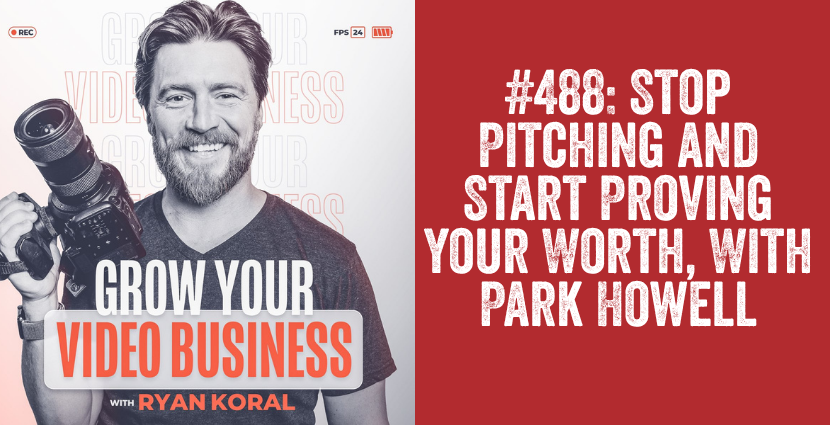
If you want the full unfiltered conversation, go listen to Episode 488 of the Grow Your Video Business podcast with Ryan Koral right now.
Ryan has built one of the most trusted resources available for video entrepreneurs building profitable, sustainable businesses. What we walked through is one of the most direct storytelling tutorials I’ve ever delivered on a podcast. Don’t skip it.
Here’s a taste of what you’ll walk away with.
What’s in It for You
- Why your brand story belongs on what you make happen, not what you make
- The And, But, Therefore framework — the DNA of every story that actually moves people to act
- The pronoun shift that transforms egocentric marketing into magnetic communication
- How to stop pitching and start proving your worth live, in a client meeting
- Why niching down gets easier and more powerful when you lead with story
What a 42% Same-Store Sales Surge Taught Me About the Power of Intentional Storytelling
We are all intuitive storytellers. But intuition alone will not get you where you want to go.
That Goodwill campaign proved it. When I finally studied the mechanics and structures of story and went back to those two ads, the answer was immediate: one was written naturally as a story. The other was a well-crafted piece of creative self-indulgence. We loved it. The audience didn’t care.
That’s when I realized we need to be intentional storytellers, using frameworks we know work, in order to have the impact we want to make in the world.
Your Brand Story Isn’t About What You Make — It’s About What You Make Happen
Most brands show up to a client meeting, or publish a homepage, leading with a features list. Maybe a few benefits get sprinkled in at the end. What clients actually hear? Not much they care about.
Two story truths will reset everything.
First: your story is not about what you make. It’s about what you make happen in people’s lives. Your clients don’t care about your cameras, your editing suite, or your delivery format. They only care about what those things do to make their lives better.
Second: you are not the center of your story. Your audience is.
Put them at the center. Speak from their point of view. Invite them in, show them what’s in it for them — and only then bring out your features and functions to support the emotional connection you’ve already made. That is the pronoun shift, from “me” to “you.” It’s the difference between a brand that sounds self-absorbed and one that sounds magnetic.
The Hero’s Journey for Video Business: Why Making Your Client the Hero Wins Every Time
I first encountered the Hero’s Journey when my son was at Chapman University film school. I paid for those books. I read everyone. And immediately asked: “Why doesn’t anyone teach this in the business world?”
So I built my own 10-step Story Cycle System back in 2006. The core insight then is the same now. Even the great Hollywood writers are writing for an audience, to make viewers feel that the story is about them.
Your clients want a hero’s journey. Give them one. Cast them as the hero. Cast yourself as the guide.
The ABT Framework in Action: How “And, But, Therefore” Builds a Brand Story in Minutes
Here’s the simplest, most powerful story tool I know. I call it the DNA of story. I learned it from Dr. Randy Olson, Harvard PhD evolutionary biologist and USC film school graduate: the And, But, Therefore framework.
And establishes what your audience wants and why it matters to them.
But names the problem blocking them from having it.
Therefore paints the way forward through what you offer.
On Ryan’s show, we built the full ABT for his solo video entrepreneur audience live on the air. The one-word theme: freedom. His audience wants it. Their current systems aren’t delivering it. The show gives them the roadmap.
We got that entire brand story dialed in inside of ten minutes. You can tell it in 15 seconds.
Now go to your homepage and read it. If it’s all about you, rewrite it. Copy and paste the page into ChatGPT with this prompt: “Using Park Howell’s ABT narrative framework, rewrite this page.” You will feel the shift immediately — from chest-pounding to client-connecting.
How the ABT Framework Clarifies Your Niche and Attracts the Exact Clients Your Video Business Needs
Ryan said it plainly on the show, and he’s right: video entrepreneurs are afraid to niche down.
The ABT cures that fear by forcing focus. One audience. One desire. One problem. One solution.
Get that language working — on your homepage, in your pitch, in how you open every conversation — and the right clients will lean in. They’ll say, “You’re speaking directly to me.” The ones who aren’t your ideal client will disqualify themselves before you even have to.
In-N-Out Burger sells burgers. Only burgers. One of the most beloved fast food brands in the country.
Your niche is a tractor beam.
Build and Grade Your Brand Story for Free — Meet StoryCycle Genie® and the Brand Story Grader
What if you could get a complete brand storytelling assessment in under 60 seconds?
The free Brand Story Grader does exactly that. Enter your name, email, and URL, and StoryCycle Genie® delivers a complete brand report — graded from A+ to F minus — with a 14-point storytelling assessment based on the same Story Cycle System I’ve refined across four decades.
It’s the fastest way to find out whether your brand story is working for you or against you.
And when you’re ready to go deeper, StoryCycle Genie® walks you through the complete Story Cycle System so you can build a full brand narrative strategy in an hour or two instead of months. The same system that has helped purpose-driven brands grow by as much as 600%.
Start with the free grade. See where you stand.
storycyclegenie.ai/brand-story-grader
Story on, my friend.
Resources and Links
- Episode 488 — Grow Your Video Business with Ryan Koral
- Ryan’s free Budget Maximizer Assessment — growyourvideobusiness.com/quiz
- Free Brand Story Grader — StoryCycle Genie®
- Business of Story Podcast — businessofstory.com
- Connect with Park on LinkedIn
Park Howell’s Conversation With Ryan Koral on the Grow Your Video Business Podcast
What a 42% Same-Store Sales Surge Taught Park Howell About the Power of Intentional Storytelling
Park: We are all intuitive storytellers, but we really need to be intentional storytellers using frameworks that we know work in order to have the impact we want to make in the world.
Ryan: We are afraid to niche down and to get really specific with the type of client that we serve. But if you listen to what Park just walked us through, it’s very, very clear who we’re trying to help.
Park: You are not the center of your story, your audience is. Place them at the center of the story and communicate your stories from their point of view so you invite them in, show them what’s in it for them, and then you can bring out all your features and functions.
Ryan: On episode 488 of the podcast, we talk about why your story isn’t about what you make, but what you make happen in people’s lives.
Also, how to ditch the pitch and prove you’re worth using the And, But, Therefore framework.
And the pronoun shift that instantly transforms your homepage from egocentric to magnetic.
Let’s go.
What is up, my friend? Welcome to the Grow Your Video Business Show. My name is Ryan Koral. I’m your fabulous host and so glad that you’re here.
I had the unique privilege of being on a workshop today with a bunch of creatives — filmmakers, photographers, composers, creators. It was really, really cool and they asked really good questions and they actually thought I sounded smart. Somebody said something to the effect of — and they didn’t actually say this — but, like, that was mind blowing. Okay. They didn’t say mind blowing, but they said, wow, that was really good.
Anyway, that was really fun. Man, in my heartbeat, I still love this work. I love being able to talk to you, come alongside you and say, man, I’m old and I’ve been around the block. I’ve seen a lot of things that have worked. I’ve seen things that haven’t worked. I’ve done a lot of things that haven’t worked.
I was interviewed separately by this 18 year old kid today. His name is Koi. Talk about being focused and driven and all the things — that’s this guy. We had a really good conversation. He asked me really good questions.
One of the questions he asked was, what was one of the worst interview situations you’ve ever been in? And I said, oh my gosh — this one time we had a guy, interviewing for a project manager position. He came in, he was in our conference room. Lindsay, who worked for me at the time, was sitting across from me, and I think she asked the question. She said, after we shook hands and introduced ourselves, “Alright, so tell us about yourself.”
And he sat there. If you’re not watching this, you’re missing out. He was like this. He was kind of looking around. And he’s like — oh man. That’s a good one. Wow.
I forget what he cobbled together. It was not much. We were all like, okay, let’s not spend a lot of time on this interview.
Anyway, my hope in this work is to help you. If I can help you from my experience, that’s what I want to be able to do. So thank you for being here.
I have this assessment that will help you understand if you’re leaving money on the table with any of your projects. My guess is you are somewhere, somehow — even if you’re doing a really good job in your budgeting and estimating.
Here’s where I want to recommend going. Go to growyourvideobusiness.com/quiz. It’ll take you to the assessment — just a few questions, takes less than two minutes. And I’m not going to guarantee this, but I’m betting you’re going to discover something you should be charging for that you’re not.
So it’s a totally free assessment. It’s my gift to you for being a listener of the show.
Let’s get into today’s episode.
The Hero’s Journey for Video Business: Why Making Your Client the Hero Wins Every Time
Ryan: Today with me is Park Howell, who is known as the world’s most industrious storyteller, having grown purpose-driven brands by as much as 600%. He’s an Emmy award-winning 40-plus-year veteran of the advertising industry and now consults, teaches, coaches, and speaks internationally to help business, sales, and marketing leaders excel through the stories they tell.
Park, super excited to have you on the show today.
Park: Oh, Ryan. Thanks for having me, and I couldn’t have said that better myself.
Ryan: I see what you did there. So you’re in good company, man. My heartbeat in the work of video production has always been storytelling. Documentary storytelling, showing people how the sausage is made, is way more relatable than getting a CEO on camera: hey, read the prompter, just do the thing, be our robot so we can sell the widgets.
The perfect example is the McDonald’s CEO who took that teeny bite out of the burger a few weeks ago. I’ve watched a couple of interviews with him since then and I’m like, I like this guy. He’s talking about how his kids are poking fun at him about the whole situation. That is endearing. I am leaning in.
He could have been like the Delta CEO who hops on before every flight: “Here at Delta, we do the thing.” That’s a neat commercial, but it does not touch my heart or get me caring more about the brand.
Any thoughts on why you care about story in the way that you do?
Park: It goes back to when I was a little kid, Ryan, and my parents kept saying, Park, stop telling stories. I don’t think they were believing me.
And I always laughed at that. I’m like, why? They knew the power of story — the ability to state your case, claim your position in a whole household of seven kids.
It’s not something I had thought about for a long time, other than I knew I wanted to be in the advertising industry from a very early age because of the Rainier beer commercials up in Seattle, which were always hysterical and brilliant and crazy. I studied communication so I could get into the advertising world. I’m also a musician. I studied music composition and theory.
Ryan: Oh, wow.
Park: I figured I would never make it as a composer, but what I’d learn there was going to help me be better at advertising. I was never thinking story at the time because to me, it was always a given. We’re just all intuitive storytellers, and the best commercials we see are somehow sharing a human insight through story.
It was many years into my career running my ad agency before I really started studying story. The reason why: we had a campaign we’d launched for our client, Goodwill of Central Arizona, back in 2003. We had one 30-second ad that pulled extraordinarily well — same store sales went up 42% the next month. Then we had another one, part of the same campaign, that didn’t work at all.
I looked at them both and I loved them like my own children. I didn’t know why one worked and the other did not. So I put that conundrum behind me and went and started studying story.
Once I really learned the mechanics and structures of story, I went back to those ads and said — oh. This one was a natural story. Intuitively written, and it pulled phenomenally. The other one was just a creative project we loved. We knew the world was going to love it. They didn’t.
That’s when I realized: we are all intuitive storytellers, but we really need to be intentional storytellers using frameworks that we know work in order to have the impact we want to make in the world.
Your Brand Story Isn’t About What You Make — It’s About What You Make Happen
Ryan: When you think about the businesses you’ve worked with, what would you say most of them just miss?
I’m picturing this one client where we show up to this big conference room, they hand out an agenda for the project and it’s really just a capabilities piece — here’s who we are, here’s what we do, here’s who we help. And when we said, hey, there’s no story in what you’re sharing here, you just want to share some facts and features — is there anything you see consistently with clients where they think, hey, this is our story, and you’re like, no, you’ve got this all wrong?
Park: It really comes down to getting them out of logic and reason world into the world of emotion. Our brains are story processors, not logic processors. We have logic to support a story, but you have to first connect through the actual story, the human context of what they’re trying to talk about.
Sure, they show up with their features list and functions list, with a little bit of benefit sprinkled on. But it’s not focused on that at all.
And one of the two story truths I try to communicate to them is: number one, your story is not about what you make, but what you make happen in people’s lives. They don’t care about your widgets. They don’t care about your brand. They don’t care about your initiative or your product or your SaaS. They only care about what it does to make their life better.
And then the other story truth is: you are not the center of your story. Your audience is. Place them at the center of the story and communicate your stories from their point of view so you invite them in, show them what’s in it for them, and then you can bring out all your features and functions to support that emotional connection you’ve made by speaking to that problem-solving, pattern-seeking, decision-making limbic brain first.
Ryan: Man, that’s so good. When I look back at 20-plus years of running my own agency, there are a handful of books or soundbites or theories that I clung to. Joseph Campbell’s Hero’s Journey was introduced to me the first time inside of Donald Miller’s StoryBrand book. And that was really the first time I was like — oh wait. I’m not the hero of the story. Everything I’ve been doing, that’s how I’ve been trying to win people over.
Just share a little bit more — not everybody is on the same page of even knowing what it means to be the hero of the story, or to make clients the hero.
Park: I learned that first way back in the early 2000s. Our son was going to film school at Chapman University in Orange, California. I said, send me your books and recorded lectures when you’re done with them since I’m paying for them — because I wanted to know what Hollywood knew about storytelling that we could use in the sales and marketing world.
I saw the Hero’s Journey and said, well, why don’t they teach this in the sales and marketing, branding, video production world? And so I created my 10-step Story Cycle System back in 2006. I always knew that the hero was your audience. It wasn’t about you.
Even the great writers in Hollywood are writing for an audience — to get them to buy that ticket, to sit in the crowd, to feel like the story is about them.
That was my major shift long before StoryBrand came around. In fact, StoryBrand launched around 2014. We were already doing the Story Cycle System back in 2006. It’s always been a rule of thumb for me: you are not the hero of your story. Your audience is.
The ABT Framework in Action: How “And, But, Therefore” Builds a Brand Story in Minutes
Park: We’ve already made one switch, hopefully, in your audience minds. You are not the center of the story. Your audience is. I call that the pronoun shift — from “me” to “you.”
The next shift is: stop pitching and start proving your worth. And the way you do that is to make that same shift. Don’t show up and pitch me on your capabilities. Prove your abilities by showing how they impact me.
We use this little story framework for strategy and for actual narrative creation called the And, But, Therefore — or the ABT narrative framework. Enormously powerful. Something I wish I knew about in the third grade. I learned it from my good friend Dr. Randy Olson, who is a Harvard PhD evolutionary biologist, USC film school grad, and he helps consult climate change scientists, academics, and medical folks.
In his second book, Connection, which came out in 2013, I saw the And, But, Therefore and it had the same impact on me that the Hero’s Journey had for brand building. I started calling it the DNA of story because you see it everywhere.
So if you’re going into a quote-unquote pitch, instead of pitch, I want to prove my abilities. Let me do a quick example for your show, Ryan. I’m going to pitch you my services, but I’m actually going to prove that I’m the right person for you using the ABT.
Tell me — who is the number one audience for your show?
Ryan: Solopreneur, male, probably 40 years old, trying to be more profitable in his video production business, trying to get more clients and doesn’t have time. He’s doing all the things. Everything’s on fire.
Park: So we’re going to identify who they are — that solo video marketing or video entrepreneur. And what they want: they want a more profitable, productive, impactful business. And why is that important to them?
Ryan: They want the freedom that comes with running a business. They love being able to create and for that to be their job. They’ve never had a job like that where they could make something and people will appreciate it and love it, and they get paid to do that. And I think there’s a belief that there’s potential to make pretty good money in this work.
Park: Excellent. So what is the problem they’re having that is attracting them to your show?
Ryan: The title of the show is Grow Your Video Business. There’s this desire to generate more money, but there’s a lot of fulfillment that can come from having a good system set up in your business, like time freedom and personal — what do you wanna do in your personal life? Family. So instead of just thinking that making more money is the thing we’re after here, there’s a lot more to it. People stick around here because of my honesty and vulnerability. I’ve been doing this for a long time, so they see me as somebody they can trust. I really don’t hold back in some of the war stories I’ve experienced and the times I’ve fallen on my face in running a business. And I have great guests — really smart people who have proven how to run a business or do different things to be smarter, more efficient, save more money, make more money.
Park: Okay. So the single one-word theme from this And, But, Therefore statement would be freedom. You want freedom. You don’t currently have freedom. Therefore, listen to the show and I’m going to show you how to get freedom. As basic as that is, that’s where you first start.
So the statement of agreement: you are a committed solo video entrepreneur and you want to grow a vibrant video production company. If you can get all of the mechanics and operation going in the same direction, then you will have not only the freedom but the income you desire. That’s your statement of agreement — man, you understand me. You appreciate what I want and why that’s important to me.
Now throw the problem at him. But you’re super frustrated and maybe even exhausted because you don’t have the systems in place, and because of that, they’re robbing you of that free time, that energy you need, and maybe that money you really want to be able to fund your life.
That was our statement of contradiction. It triggers the limbic buying survival brain — yeah, man. You understand me. You know what I want. You empathize with why I don’t currently have it. Therefore, you’ve built trust.
Here’s the way forward. Therefore, imagine in six months starting to see the gleam of that freedom you’ve desired and want to build on — by listening to Grow Your Video Business, where Ryan shares experts from around the world and his 10x filmmaking process, sharing the highs and lows of his own career so you won’t make the same mistakes and will be able to achieve freedom faster. Sign up today.
So that would be the overall arc for the show. You identified who your audience is, put them at the center of the story, showed them what they want and why that’s important to them, empathized with why they don’t currently have it, and then said: therefore, imagine when you get it by listening to my show.
Your call to action doesn’t come in until the second clause of the therefore statement — to keep it focused on them.
Get that dialed in and you could tell that story in under 15 seconds.
Ryan: Right.
Park: And then start backing it up with the support materials — the logic, the reason, all of that. For any video production company out there, if you are writing scripts, or sitting down with a customer and they give you a big long list of features and functions, use the ABT as a strategy tool. Pump the brakes. Take a deep breath. Number one, just like I did with you: who is our number one audience here? What do they want relative to what we’re going to offer them? What do they want, and why is that important to them? Then but — why don’t they have it? Start with a negative emotion after the but. But you’re frustrated. You’re annoyed. You’re anxious. You’re scared. You’re whatever — because of this problem that you need solving. Oh, by the way, we’re in the right position to solve that for you. Therefore, imagine what it’s going to be like when you get it by doing this with us.
Ryan: That’s killer. I love that.
How the ABT Framework Clarifies Your Niche and Attracts the Exact Clients Your Video Business Needs
Ryan: Here’s the challenge I’ve seen after coaching so many filmmakers: we are afraid to niche down and to get really specific with the type of client that we serve. But if you listen to what Park just walked us through, and I took that copy and put it on the Grow Your Video Business page or the intro of the show, it is very, very clear who we’re trying to help, what problem we solve — so people listening are nodding their heads: yeah, okay, you’re speaking to me.
If you are trying to appeal to everybody on the homepage of your website — we do video marketing or video services, contact us today to tell your story — none of that hits. None of that resonates. That doesn’t stir any excitement or get people leaning in. It’s just more marketing speak.
The more you can niche down — think if you could talk about one specific type of client and put that copy on your main page or a landing page — it is going to resonate and get those people saying, yeah, that’s my problem. You know me. Let’s talk.
Park: Here’s an exercise they can all do right now: go to their landing page or homepage and read it. If you’ve made it all about you and not about your audience, rewrite it. Here’s how. Copy and paste that landing page into ChatGPT. The prompt is this: “Using Park Howell’s ABT narrative framework, rewrite this landing page.” Then boom. It may ask you some questions — who exactly is your audience, or what should you do. But you are going to feel the fundamental shift from sounding like a chest-pounding, egocentric brand blowhard to actually a brand that cares about their audience.
Ryan: There’s the in-between too. Beating your chest versus actually saying, here’s who we serve, how we help, whatever. Most of us in the middle don’t want to go too far on either side, so we end up not really saying much.
Park: You know who the number one fast food restaurant is in the country?
Ryan: I’ll say Chick-fil-A.
Park: They’re right up there. In-N-Out Burger. You know what? All they sell is burgers. They don’t sell anything else. McDonald’s is trying to sell everything. They’re all over the place. That was a real eye-opener for me — when you niche down to be that very specific supplier for a very specific audience, you’re going to get other business outside of that niche, but it becomes like a tractor beam that sucks them in. Not the Death Star in your case — they’re coming into the Life Star.
But the ABT makes you focus on that one number one audience. So for you, Ryan, you could use the ABT with every single guest you have on and do an ABT about that show. For all of you wonderful video entrepreneurs out there trying to find more freedom in your life, and you’re actually considering how AI might have an impact on your future scripting or video production, but you’re a little bit trepidatious about what that really means for your business — well, guess what? Today we have an expert in AI filmmaking here to answer that very question.
You’ve identified your number one audience, and then for that particular show, the number one problem-solution dynamic you will be solving for your audience that day. And our limbic brain loves that because it’s simple. It can focus. It’s like: yeah, solve that for me.
Build and Grade Your Brand Story for Free: Introducing StoryCycle Genie® and the Brand Story Grader
Ryan: Park, we’re running out of time, but I don’t know if you want to talk — artful intelligence, StoryCycle Genie®. Give us a tease, and then I’m going to have to let people know all the places where they can find you.
Park: I’ve been in the brand story development business for over two decades, with a career of four decades. We created an AI-driven product from my IP called the StoryCycle Genie®. Instead of taking months to really dial in a brand story, you can literally do it in about an hour or two following our proprietary process.
In fact, Ryan, I ran your brand through it. It gave me a brand assessment just by looking at your website in about two minutes, and then about four minutes later, it ran your entire brand narrative strategy.
That’s important for anyone listening — you can really dial in your brand story. Who you’re for. What are the emotional triggers you’ll be leveraging to help bring them into your world. And it’ll take you through our 10-step Story Cycle System.
Right now, you can go and test the strength of your brand story for free. Just go to storycyclegenie.ai. There’s a little red button there. Put in your name, email address, and a URL, and within 60 seconds, it’s going to give you a complete brand report, give you a grade from A+ to F minus, and a 14-point storytelling assessment.
Check that out. We’ve taken all of our analog storytelling expertise and used the latest artificial intelligence — but we’re making it artful, because artificial intelligence is the worst brand name ever. If you really know how to use it and collaborate with it from your own marketing sparks, it becomes artful intelligence that actually augments your intelligence.
Ryan: That’s amazing. Park, this has been awesome. StoryCycle Genie® at storycyclegenie.ai. Anywhere else you want to point people?
Park: I’ve got a podcast, the Business of Story, that I roll out every Monday. Been doing it for almost 11 years with story artists from around the world to help teach you about story in every aspect of business, personal, and professional endeavors. And if you want to connect with me, I’m on LinkedIn — Park Howell. Let me know you heard me on Ryan’s show. We’d love to connect with you, or you can go through businessofstory.com. Love to help you.
Ryan: Awesome. Man, I love your journey. This is really, really good. You wet our appetite. I’m so sad we have to be done, but appreciate you. Thank you so much for your time. Also congrats on just the giftedness that you have to articulate story the way you do. I know it’s helping a lot of businesses. I’m sitting here taking notes. I’m inspired. I’m excited to unpack the assessment that you did for us. So thank you for that and I really, really appreciate you.
Park: Oh, thank you, Ryan.
Ryan: Hey, thanks so much for tuning into this episode of the Grow Your Video Business Podcast. If you got something out of today’s conversation, do me a favor — share it with a friend or post it on your socials. Tag me at Ryan Koral or at Grow Your Video Business. I’d love to know what resonated with you.
If you’ve got a question or takeaway, drop a comment wherever you’re listening or watching this. You can also shoot me a message — I read every single one.
And hey, if you haven’t already, make sure to subscribe so you don’t miss the next episode. We’ve got more stories, strategies, and behind-the-scenes insights coming your way to help you build a business that you love.
Keep creating. Keep sharing your story. Keep showing up. I’m cheering you on. Thanks for watching. Thanks for listening. See you next time.
Frequently Asked Questions About Brand Storytelling and the ABT Framework
What Is the ABT Framework and How Does It Improve Brand Storytelling?
The ABT framework — And, But, Therefore — is the three-part narrative structure that mirrors how the human brain naturally processes story. The And establishes what your audience wants and why it matters to them. The But names the specific problem blocking them from having it. The Therefore paints the way forward through what you offer.
Park Howell calls it the DNA of story because it appears in every compelling narrative, from Hollywood screenplays to a 15-second brand pitch. For brand storytelling, the ABT replaces features-and-functions marketing with an emotionally resonant arc that speaks directly to the limbic brain — the part of the brain that actually makes buying decisions.
How Do You Use And, But, Therefore to Clarify Your Business Niche?
Start by identifying your single most important audience. Then build your ABT around them: what do they want, and why does it matter to them (And)? What specific problem is blocking them from having it (But)? What transformation do you deliver (Therefore)?
When you run that exercise, the answer to your niche question becomes obvious. You are no longer trying to speak to everyone. You are speaking to one person with one problem and one solution. That specificity is what makes your homepage magnetic instead of generic — and it’s what makes the right clients lean in and say, “You’re talking directly to me.”
Why Should the Customer Be the Hero of Your Brand Story, Not Your Business?
Because your customers don’t care about your brand. They care about what your brand does to make their lives better.
Park Howell’s Story Cycle System, built in 2006 from the same Hero’s Journey principles Hollywood has used for decades, is built on this truth: even the greatest writers in Hollywood are writing for an audience — to make viewers feel the story is about them. The moment you shift from “here’s what we do” to “here’s what happens to you,” your brand stops sounding self-absorbed and starts sounding like someone worth listening to.
The pronoun shift from “me” to “you” is the single fastest way to transform egocentric marketing into communication that actually connects.
What Is the Difference Between the Hero’s Journey and the ABT Framework?
The Hero’s Journey is a macro-level narrative architecture — a 10-to-12-stage structure that maps the full arc of a character’s transformation, from ordinary world through trials to victory. It’s the foundation of the Story Cycle System and works best for building complete brand narratives, campaign architecture, and long-form content.
The ABT framework is a micro-level story tool — a three-part sentence structure you can deploy in 15 seconds or 1,500 words. It’s the fastest way to build a pitch, rewrite a homepage, or open a podcast episode with immediate emotional resonance.
They work together. The Hero’s Journey gives you the full map. The ABT gives you the compass you use every single day.
How Does StoryCycle Genie® Help Video Business Owners Build a Brand Story?
StoryCycle Genie® takes Park Howell’s 10-step Story Cycle System — the same framework that has helped purpose-driven brands grow by as much as 600% — and delivers it through an AI-guided process that compresses months of brand strategy work into one to two hours.
For video business owners specifically, it solves the problem Ryan Koral named on the show: most video entrepreneurs are afraid to niche down because they can’t articulate who they serve or why it matters. StoryCycle Genie® walks you through identifying your primary audience, building your ABT statement, defining your emotional promise, and developing your complete brand narrative — so you have the language to attract the exact clients your business needs.
Start with the free Brand Story Grader — enter your URL and get a complete brand assessment graded from A+ to F minus in under 60 seconds.