
And Why Knowing Them Will Change How You Sell, Lead, and Communicate Forever
The gap between your value and your audience’s attention isn’t a talent problem — it’s a structure problem
You’ve built something worth talking about. You’ve invested in the content, refined the messaging, and you know in your gut that the right story told at the right moment can change everything for your business.
But here’s what’s actually happening in most boardrooms, LinkedIn feeds, and sales decks right now: brilliant people with genuinely valuable offerings are losing their audiences in the first fifteen seconds.
Not because their ideas are weak. Because the invisible architecture beneath their communication is missing — the one structure human brains are biologically wired to follow.
Your prospects scroll past your posts, tune out your pitches, and forget your presentations, not because they don’t need what you offer. They forget because your story hasn’t triggered the neurological tension that makes listening feel irresistible.
Listen on iTunes
That’s exactly why a conversation between podcast host Paul Ross and Park Howell is worth your next hour.
On a recent episode of the Influencer’s Edge, Paul and Park pulled back the curtain on the three-word framework behind every story that’s ever stopped you in your tracks — and the system Park has used to generate 400% to 600% growth for the brands smart enough to deploy it.
What Park shares on the Influencer’s Edge isn’t storytelling theory. It’s the operating code of every compelling story you’ve ever loved, finally translated into something you can use before your next meeting.
What Is the ABT Storytelling Framework?
The ABT framework — And, But, Therefore — is a three-part narrative structure originally developed by Dr. Randy Olson, a Harvard PhD evolutionary biologist who left academia for USC film school to teach scientists how to make complex ideas land with general audiences.
The “and” establishes agreement: context, setup, what your audience already knows and wants.
The “but” introduces contradiction: the tension, the problem, the gap between what they want and what they have.
The “therefore” delivers consequence: the resolution, the call to action, the reason your brand exists.
When Park Howell discovered Olson’s ABT in 2013, he had the same reaction he’d had years earlier when he first encountered Joseph Campbell’s Hero’s Journey: Why doesn’t everyone in business know this?
So he mapped it to brand communication — and built an entire system around it. The results have been, to put it mildly, hard to argue with.
Three Words. Three Forces. One Story That Closes.
Here’s what makes the ABT more than a clever acronym. When you deploy it correctly, you’re not just structuring a message — you’re activating three forces of trust simultaneously.
The “and” demonstrates you understand your audience. You’ve named them, you know what they want, and you’ve articulated why it matters to them. They nod. You’ve done your homework.
The “but” empathizes with why they don’t have it yet — naming the negative emotion and connecting it to the specific problem blocking their progress. They feel seen. That’s exactly what I’m up against.
The “therefore” — your call to action — lands on an audience that already trusts you. Because you earned it in the previous ten seconds.
Park Howell calls it foreshadowing the gun: “If you show a gun in Act One, you better fire it by Act Three.” The ABT opens a story loop in the “and,” creates tension in the “but,” and closes it in the “therefore.” As Park told Paul Ross on the episode: “You can tell that statement in under 15 seconds, but you’re using the three forces of story — agreement, contradiction, and consequence.”
Want to see exactly how these three ingredients mix into a story that moves people to action? Park Howell breaks it all down in his Storytelling Cocktail Recipe — read it before you write your next pitch, post, or presentation.
What’s in It for You: Key Takeaways from Park Howell on the Influencer’s Edge
- Why “purpose-driven” isn’t a buzzword — it’s a business model. Park Howell’s work with Adelante Healthcare, a 45-year-old Arizona public health organization whose 33-year legacy was in jeopardy, produced 600% growth and five new LEED-certified clinics through narrative reframing with the Story Cycle System.
- The used car dealership that became a financial planning service — and grew 400% because of it. Praet Auto Partez in Quebec doesn’t sell cars. They sell a vehicle to financial freedom. Park Howell helped founder Andre Martin Hobbs uncover that story, which transformed his hiring model, business model, and market position.
- How reformatting existing copy — not rewriting it — produced a 400%+ LinkedIn engagement increase for Trimble. In April 2022, Park Howell restructured approximately 30 existing LinkedIn messages for Trimble, an international SaaS company running paid campaigns in five countries, from standard copy into ABT format. Engagement rose from a 3% baseline to over 400% above that baseline — without new creative, new budget, or new strategy.
- Why Carly Rae Jepsen’s “Call Me Maybe” has 1.4 billion YouTube views — and what it has to do with your next sales presentation. The songwriters didn’t know about the ABT. They were just good intuitive storytellers. Once Park Howell walks you through the chorus, you’ll never hear it the same way again.
- The three forces of trust the ABT framework activates in under 15 seconds: demonstrating you understand your audience, showing you appreciate what they want, and empathizing with why they don’t have it yet.
Why Does the ABT Framework Work in Marketing and Sales?
Park Howell traces the ABT’s power back to the oldest recorded story in human history — the Epic of Gilgamesh, carved into cuneiform tablets thousands of years before PowerPoint. The framework isn’t a trend. It’s a structure the human brain has been wired to follow since before written language existed.
Park Howell has trained the U.S. Air Force with it. He’s found it in the New York Times, in pop music, in the FedEx tagline. His Story Cycle System — a 10-step framework built on Campbell’s Hero’s Journey and remapped for business — uses the ABT as its core narrative engine, guiding brands from awareness through adoption to full appreciation.
The ABT is like the arrow in the FedEx logo. Once you see it, you can’t unsee it. And once you can’t unsee it, you start using it everywhere: LinkedIn posts, sales conversations, keynotes, brand stories.
That’s what Park Howell brings to every engagement. Not inspiration. Structure.
Listen to the Full Episode
Catch Park Howell on the Influencer’s Edge with Paul Ross for the complete conversation — including the Pret Auto Partez tagline reveal, the Trimble AB test breakdown, and the “Call Me Maybe” moment Paul made Park play live on air.
Then test the strength of your own brand story for free at StoryCycleGenie.ai. You’ll get a letter grade, a 14-point storytelling assessment, and a clear picture of exactly where your narrative is winning and where it’s leaving revenue on the table.
Frequently Asked Questions About Park Howell and the ABT Storytelling Framework
What is the ABT framework in business storytelling?
The ABT framework — And, But, Therefore — is a three-part narrative structure used in business communication and brand marketing. The “and” establishes agreement and context, the “but” introduces the problem or tension, and the “therefore” delivers the consequence or call to action. Park Howell adapted the framework from Dr. Randy Olson’s scientific communication work and mapped it to brand storytelling in 2013.
Who is Park Howell?
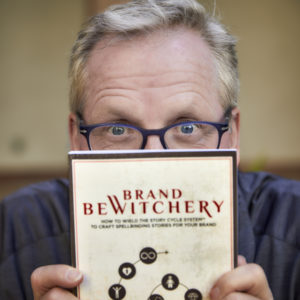
Park Howell is a brand storytelling strategist known as the World’s Most Industrious Storyteller. He is the host of the Business of Story podcast — one of the longest-running business storytelling podcasts — creator of the 10-step Story Cycle System, author of Brand Bewitchery: How to Wield the Story Cycle System™ to Craft Spellbinding Stories for Your Brand, co-author of The Narrative Gym for Business: Introducing the ABT Framework for Business Communication and Messaging, and co-creator of the StoryCycle Genie® brand narrative collaborator. Park Howell has helped brands grow by as much as 600 percent through strategic narrative development.
What is the Story Cycle System™?
The Story Cycle System is a 10-step brand narrative development framework created by Park Howell, based on Joseph Campbell’s Hero’s Journey remapped for business. It guides brands through building audience-first stories that drive measurable growth across the full customer journey — from brand awareness through adoption to brand appreciation. The framework is detailed in Park Howell’s book Brand Bewitchery and powers the AI-driven StoryCycle Genie® at StoryCycleGenie.ai.
How does the ABT framework build trust in marketing and sales?
Park Howell explains that the ABT framework activates three forces of trust in under 15 seconds. The “and” statement demonstrates you understand your audience by naming them and acknowledging what they want. The “but” statement builds empathy by naming the negative emotion and the specific problem blocking their progress. The “therefore” statement — the call to action — lands after trust has already been earned, making the audience receptive rather than resistant.
What results has the ABT framework produced for real businesses?
Park Howell has documented multiple transformational results using the ABT framework: Atalanta Healthcare grew 600% and opened five new LEED-certified clinics after Story Cycle System narrative reframing; Praet Auto Partez, a used car dealership in Quebec, grew 400% after developing an ABT-based brand story; Trimble, an international SaaS company, experienced over 400% increase in LinkedIn campaign engagement in April 2022 after Park Howell restructured existing copy into ABT format across campaigns running in five countries.
What is the StoryCycle Genie®?
The StoryCycle Genie® is an AI-powered brand narrative collaborator co-created by Park Howell. It allows business owners, marketers, and entrepreneurs to apply the Story Cycle System independently — without prior knowledge of story theory or a consultant. Users can test the strength of their brand story for free at StoryCycleGenie.ai, receiving a letter grade and a 14-point storytelling assessment that reveals strengths, gaps, and new narrative opportunities.
What is the Business of Story podcast?
The Business of Story is a weekly podcast hosted by Park Howell that has been produced for over 11 years. Every Monday, Park Howell features a new “story artist” — communicators, marketers, authors, and business leaders — exploring how strategic storytelling drives business growth. New episodes are available at businessofstory.com/podcast.
Deepen Your Communication Mastery: Three Essential Business of Story Episodes
To amplify what you just read, these past episodes from the Business of Story archive go deeper on the frameworks Park Howell introduced in this conversation:
How the ABT Framework Transforms Scientific Communication into Business Gold with Randy Olson — The origin story, straight from the source. Hear Park Howell and Randy Olson discuss how “and, but, therefore” crossed from science into business storytelling.
How to Grow a Purpose-Driven Brand Through Story — Park Howell unpacks the Adelante Healthcare case study in full, walking through every stage of the Story Cycle System that produced 600% growth.
How to Use the Story Cycle System to Build Your Brand — The complete 10-step framework from Brand Bewitchery, applied to real brands across industries.