Jaguar’s Brand Governance Breakdown: The Most Expensive StoryOps™ Lesson of the Decade
How a Chief Storytelling Officer Can Operationalize a Brand Story to Stop Narrative Entropy
It was November 2024 when everyone lost their sh!t over Jaguar’s logo redesign, as broadcast in its rebrand video that reached 110 million people in 48 hours.
I think 109 million people voiced their hoarse-throated opinions on LinkedIn, except me.
They were reacting/convulsing to the brightly dressed models in candy-colored clothes walking through abstract spaces while a voiceover declared “Copy Nothing” and “Delete Ordinary.”
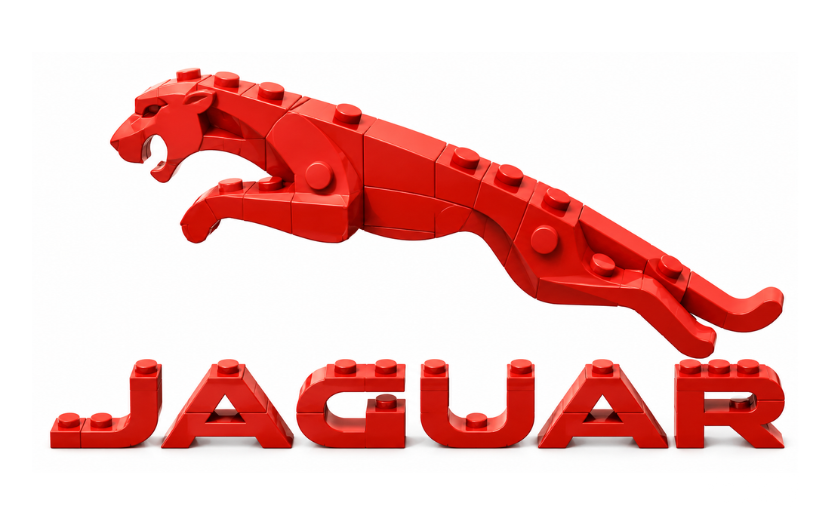
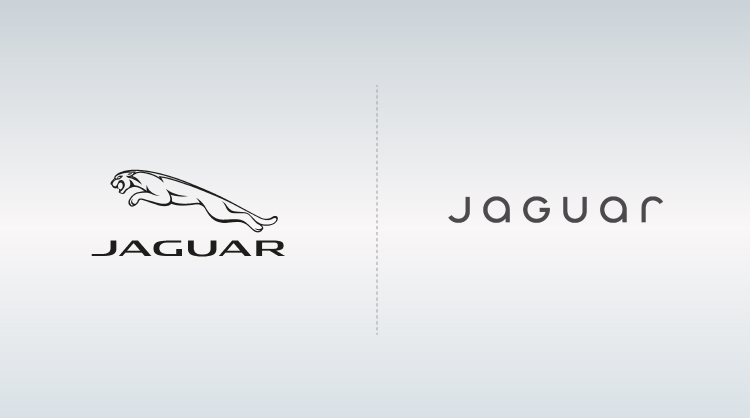
The famous growler badge — over 100 years of performance-and-heritage narrative — was gone.
The wordmark was recast in a lowercase font borrowed, apparently, from a boutique skincare line.
Elon Musk tweeted: “Do you sell cars?” And this from a guy who fashioned a $100,000+ Cybertruck after a dumpster.
I didn’t jump on the haters’ bandwagon because I wanted to see the impact Jaguar’s lack of brand story governance was going to have on the luxury automaker before I weighed in. Hey, maybe their brand storytellers knew something the rest of us didn’t, and this was going be a huge hit.
It wasn’t.
- European sales dropped 97.5% year-over-year in April 2025 — 49 units sold versus 1,961 the year before.
- Global FY24/25 sales fell to 26,862, an 85% drop from 2018 figures.
- CEO Adrian Mardell left the company eight months after the rebrand launched.
- Jaguar dropped its agency, Accenture Song, following the backlash.
- Former Chief Creative Officer Gerry McGovern later admitted the backlash forced the company to scrap its entire planned follow-up marketing campaign.
The story governance failure killed one campaign and broke the pipeline behind it.
(Full disclosure: Jaguar’s spokespeople have noted that some of the 2025 sales collapse reflects a planned production pause during the EV model transition — not pure brand rejection. That’s a fair caveat. But it doesn’t erase what happened institutionally: CEO departed, agency fired, follow-up scrapped. Those aren’t production decisions. Those are narrative entropy consequences.)
This Was a Narrative Entropy Problem Bedazzled by a Logo
Almost everyone blamed the creative.
Wrong diagnosis.
The logo redesign and launch film were symptoms of a crisis that had been running for years.
Nobody was governing the gap between the story being told at the top of the funnel and the reality on the showroom floor.
The absence of cars in the video wasn’t an aesthetic choice — it was the tell that the story had become completely disconnected from the brand promise it was supposed to deliver.
That disconnection is what I’ve been calling Narrative Entropy since Issue 1 of this newsletter: the predictable degradation of brand story coherence in any organization without governing infrastructure that leads to brand debt. Ironically, the Accenture Song people who coined the term “Brand Debt” are blamed by some for Jaguar’s catastrophe. However, story governance only starts with the agency. It must be managed all of the way up the food chain on the client side.
Narrative entropy is not a creative failure — it is a governance failure.
When the Brand Brain is absent, the story isn’t protected.
Rain Bennett names the exact mechanism in his new book, The Chief Storytelling Officer: “Without a storytelling system, your culture will drift. Your messaging soon fragments. Marketing says one thing, leadership another, and sales another. You must intentionally build a unifying narrative that connects what you believe to what you do, how you do it, for whom, and why.”
Jaguar had 100 years of that unifying narrative. They sped away from it.
The brand crashed and burned because of the deliberate decisions made by people who had lost contact with the founding conviction that made Jaguar architecturally different from every other luxury car on the road.
LEGO Lost the Story Once. They Built a Brand Governance System So They’d Never Lose It Again.
In 2003, LEGO was losing $1 million a day.
They had done everything a brand is told to do when growth stalls. LEGO diversified into theme parks, clothing lines, video games, television series, and jewelry. They chased every adjacent revenue stream, expanding relentlessly into categories far from their founding conviction.
The result was a brand that had become everything and nothing simultaneously. A kid who loved LEGO couldn’t tell you what LEGO was anymore.
In 2004, Jørgen Vig Knudstorp became CEO.
He didn’t hire a new agency. He didn’t commission a rebrand video. He led LEGO back to its founding conviction: creativity, imagination, and the irreducible power of the brick.
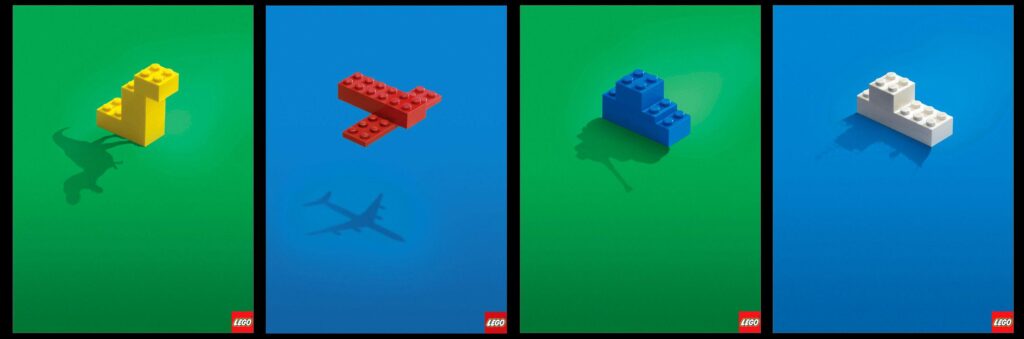
He encoded that conviction into what LEGO calls the Play Promise: “Joy of building. Pride of creation.” He knew it was a brand promise simple and durable enough to survive regional adaptation without dissolving into inconsistency.
Then he built the brand story governance system around their “Sovereign Story” – the only story LEGO could tell.
Kevin Mercer, former Director of Brand Strategy at The LEGO Group, has described the model directly…
LEGO runs a decentralized governance architecture in which individual markets have real autonomy to create locally relevant materials, rather than centralizing everything and running it “with an iron fist.”
What holds the story together isn’t a rulebook — it’s an in-house agency model that keeps the brand close to execution and enables consistency without dictating every local creative call.
By 2015, LEGO had become the world’s most valuable toy company, surpassing Mattel and Hasbro. By 2023, LEGO’s brand was valued at over $9 billion.
It wasn’t because of their advertising spend. No, it was something much more valuable: they reinstalled their Brand Brain and governed everything through it.
The Ai Weiwei Test — Governance Under Real Pressure
Governance isn’t governance until it’s tested.
In 2015, Chinese dissident artist Ai Weiwei publicly pressured LEGO after the company declined his bulk order of bricks — citing a standing policy of asking large-order customers about the “thematic purpose” of their purchase, rooted in political neutrality tied to the brand promise.
The headlines were bad. The pressure was real.
Here’s what LEGO did. Leadership returned to the brand’s stated purpose. They changed the mechanism — dropping the “thematic purpose” question — while preserving the underlying principle, replacing it with a disclaimer requirement that keeps LEGO from being read as endorsing any specific project.
They flexed the tactic. They held the promise.
That’s governance working exactly as designed: a values-anchored decision process that can adapt its execution without breaking the story that runs underneath it.
Jaguar collapsed both layers into the same decision. LEGO kept them separate.
That distinction is the entire argument of this newsletter.
The StoryOps™ Architecture and Why the Distinction Matters for Your Agency
Rain spent two decades as an Emmy-nominated documentary filmmaker before he became one of the few practitioners to formally define and operate in the role of Chief Storytelling Officer.
His new book, The Chief Storytelling Officer, endorsed by Steven Pressfield, Karen Eber, David Meltzer, and John Bucher of the Joseph Campbell Foundation, is the clearest architecture I’ve read for exactly how Jaguar failed and how LEGO survived.
Rain structures what he calls the Narrative Operating System as a cascade: Vision → Mission → Brand → Product → Marketing → Advertising → Sales → Feedback Loops. Every layer must connect to the same governing brand narrative.
Rain says, “When your brand narrative is clear, every story you tell has direction. It doesn’t matter whether it’s a thirty-second ad, a sales presentation, or a conversation between two employees — it all feels like it comes from the same voice. But when your narrative is unclear or inconsistent, your stories scatter.”
LEGO’s Play Promise is clear. It is durable. It survived a model line crisis, a global political controversy, and 130-country decentralized execution.
Jaguar’s “Delete Ordinary” was unclear. It had no product anchor, no heritage hook, no customer recognition. It scattered on contact.
The difference between the two isn’t creative talent or budget. It’s whether someone was governing the layer of the story that isn’t allowed to flex — the promise — versus the layers that are.
Rain calls the person who owns that governance the Chief Storytelling Officer. The Keeper of the Flame. The Showrunner who doesn’t direct every episode but whose fingerprints are on everything.
In Issue 4, I showed you how Gene Roddenberry invented that function for Star Trek in 1966. Roddenberry’s Show Bible governed which parts of the universe were fixed and which parts individual writers could invent. LEGO runs the same architecture across 130 countries. Jaguar had no equivalent.
Infrastructure compounds. Campaigns expire.
The Governing Equation Your Clients Cannot Afford to Ignore
The equation has appeared in every issue of this newsletter since Issue 1.
AI Scale × No Brand Brain = Narrative Entropy at Speed.
Jaguar’s rebrand predates their AI content scale. They didn’t need AI to accelerate the fragmentation — the story was already ungoverned before the video launched. AI just makes the velocity of that failure catastrophic in ways that weren’t possible five years ago.
Rain sees it coming: “Everyone now has access to the same AI tools, churning out the same generic content at hyperspeed. In the age of endless noise and automation, your story is your last unfair advantage.”
And in Issue 3, Elliott Rayner’s State of Storytelling 2026 documented the exact scale of that threat: the average B2B company operates at 19% story alignment. One in five people telling the same story. The other four improvising.
The Jaguar video was the improvisers winning the governance vote.
Story Sovereignty is the condition LEGO achieved when it re-centered on the Play Promise. It’s what Jaguar surrendered when someone decided “Delete Ordinary” was more compelling than 100 years of earned meaning.
It’s worth repeating: Story Sovereignty is the only story your brand can tell — because it’s the only story that is irreducibly, architecturally, governably yours.
Story sovereignty is not how strong your brand story feels when you’re in the room. It’s how strong it is when you’re not.
Rain’s Book Is the Insight. The StoryCycle Genie® Is the Install.
Rain’s The Chief Storytelling Officer gives your clients the architectural case for why their story needs governing infrastructure. It shows them the Narrative Operating System. It names the CSO role, the systems that sustain it, the disasters that happen without it.
Put it in a client’s hands before you walk in with the solution.
Because the solution is the StoryCycle Genie®.
Through the Story Cycle System™ — 20+ years of proven brand narrative methodology — you collaborate with the Genie to build your client’s Brand Brain.
Rain’s Narrative Operating System is the architecture. The StoryCycle Genie® is the tool that installs StoryOps™ across the enterprise.
The Narrative Operating System Rain describes needs three things to function: a Brand Brain — permanent, governed, structural — that makes every downstream decision answerable to the same organizational truth whether or not the CSO is in the room.
Hear Rain and Park on the Business of Story This Week
Rain joined me this week for one of the most energizing conversations I’ve had all year.
Rain traces the CSO role back to Nike’s Nelson Farris — arguably the world’s first Chief Storytelling Officer. When Nike was still Blue Ribbon Sports, Farris wasn’t delivering brand stories at track meets. He was receiving them. That input loop, Rain argues, is the engine underneath every organization that has built a durable, coherent narrative over time.
And his most important point: most companies treat story as outbound. We make it, we publish it, we move on. Rain calls that a governance failure. The stories coming back from your customers and market are far more important than the story you’re trying to tell.
Listen if you want to know:
- Why the CSO is an engagement role, not a communications role — and what that means for every department
- How the ABT exercise exposes exactly where narrative entropy lives in your organization
- Why the CMO owns data and channel strategy, but the CSO owns coherence — and why those are not the same role
- How Nike built a durable brand narrative by listening first, before they ever told a story
- What to do when your clients think their story problem is a creative problem
Send this episode to every client who thinks their story problem is a creative problem.
→ Listen: Rain Bennett — The Chief Storytelling Officer and StoryOps™
Find the Business of Story on Apple Podcasts | Spotify | YouTube
Business of Story Tip: LEGO Proves the ABT Works Without a Single Word
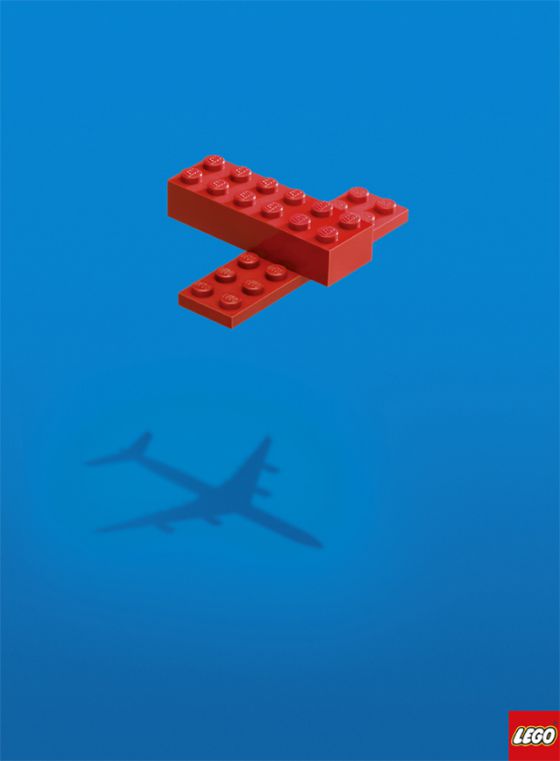
Since we’ve been talking about LEGO’s governance model, here’s a story tip that shows their Brand Brain at work in the wild — not in a strategy doc, but in a print ad.
LEGO ran an iconic campaign that used zero copy. No tagline. No headline. Just a small brick-built airplane casting the shadow of a real aircraft on the ground beneath it.
The ABT is right there in plain sight.
The colorful LEGO bricks snapped into a simple plane shape — that’s the AND. The familiar. The status quo. What we all recognize and agree on. The “Plant.”
But the shadow it casts is a full, detailed, real airplane. The contradiction. The surprise. The “Pivot” that creates tension in your mind.
Therefore, the logo. LEGO answers the question the image just asked: what bridges these two realities? Imagination. The Play Promise made visible. The “Payoff.”
No words needed. The three forces of story — agreement, contradiction, consequence — do all the work.
This is what a governed brand story looks like when it’s fully operational. The promise isn’t just written on a wall somewhere. It shows up in the advertising. It shows up in the shadow.
That’s the difference between a brand that has a story and a brand that lives one.
→ Can You See the ABT Story Structure in the Iconic LEGO® Print Campaign?
Grade Before You Pitch
Run the Brand Story Grader on your own agency brand first. Then your best client. Then the prospect you’re trying to close this quarter.
Three use cases. A couple of minutes each. Free.
The same standard that scored Adelante Healthcare’s ungoverned brand a D- after the founding architect left in Issue 6. The same diagnostic that shows you exactly where narrative entropy has been quietly accumulating — before your client pulls a Jaguar on their own story.
Frequently Asked Questions: Brand Story Governance, Narrative Entropy & StoryOps™
What is brand story governance?
Brand story governance is the system of policies, roles, and processes that keep an organization’s narrative consistent, coherent, and strategically aligned across all channels, teams, and time. Without it, brands experience what narrative strategist Park Howell calls “narrative entropy” — the natural drift and fragmentation of a brand story as it passes through different communicators without standards. Effective governance establishes a single source of narrative truth, assigns clear ownership (often through a Chief Storytelling Officer), and creates repeatable processes — called StoryOps™ — that embed the brand narrative into every touchpoint. Brands with strong governance, like LEGO ($9B brand value), maintain consistent emotional resonance. Those without it, like Jaguar in 2024 (97.5% European sales drop post-rebrand), risk catastrophic audience disconnects. Story governance is not a creative constraint — it is the infrastructure that makes great storytelling scalable and sustainable.
What is narrative entropy in branding?
Narrative entropy is the gradual deterioration of a brand’s story coherence over time. Borrowed from thermodynamics — where entropy describes the tendency of systems to move toward disorder — narrative entropy describes what happens when brand stories are managed inconsistently across teams, campaigns, and channels. Every time a different writer, designer, or executive interprets the brand story without governance standards, the story degrades slightly. Over time, these small deviations compound into significant brand incoherence: contradictory messages, clashing voices, and eroding audience trust. Narrative entropy is not a creative failure — it is a governance failure. The antidote is Brand StoryOps™: operationalizing the brand story through systematic processes, clear ownership, and documented narrative standards that every storyteller in the organization can follow consistently.
Why did the Jaguar rebrand fail in 2024?
Jaguar’s 2024 rebrand failed because it severed narrative continuity without building a clearly understood successor story. The abstract, identity-ambiguous launch campaign generated immediate public backlash — and sales data confirmed it: European markets saw a 97.5% drop in the months following the rebrand. Jaguar’s century-long narrative — precision engineering, performance heritage, and aspirational British design — carried deep emotional equity with loyal audiences. By abandoning that story without a coherent narrative bridge, Jaguar left customers without a familiar identity to follow. The failure illustrates a foundational principle of brand story governance: you cannot simply delete a brand story. Audiences own it as much as you do. The Jaguar case is now a defining example of narrative entropy triggered at the executive level — and why story governance must operate above the marketing function.
How does LEGO govern its brand story?
LEGO is widely regarded as one of the best-governed brand stories in the world. Its governance framework centers on a documented narrative architecture — a Brand Brain — that every product line, campaign, and partnership must narratively support. This centralized repository of story principles, tone guidelines, audience frameworks, and narrative standards serves as LEGO’s single source of brand truth. The approach survived near-bankruptcy in the early 2000s, with the company emerging with a clearer, more tightly governed story. Today, with a brand valued at over $9 billion, LEGO demonstrates that governance is not a constraint on creativity — it is the foundation that makes creative expansion possible while preserving the core narrative that audiences love and trust. For any brand seeking Story Sovereignty, LEGO’s governance model offers the clearest blueprint available.
What does a Chief Storytelling Officer do?
A Chief Storytelling Officer (CSO) is a senior executive responsible for the integrity, governance, and strategic deployment of an organization’s brand narrative. The role was popularized by documentary filmmaker and brand strategist Rain Bennett — author of The Chief Storytelling Officer — and establishes narrative ownership at the C-suite level. While CMOs focus on channels, campaigns, and performance metrics, the CSO focuses on the story those efforts must tell: ensuring consistency, emotional resonance, and coherence across every audience touchpoint. The CSO serves as the guardian of the brand’s StoryOps™ infrastructure — maintaining the Brand Brain, training organizational storytellers, and adjudicating narrative decisions that affect brand identity. As brands compete in an increasingly AI-mediated environment where algorithmic citation determines visibility, the CSO role becomes essential.
What is Brand StoryOps™ and how does it work?
Brand StoryOps™ is the operational framework that transforms a brand’s story from a static document into a living, governable system. Drawing from the DevOps model in software development — where “Ops” describes the processes that make complex systems reliable and repeatable — StoryOps™ applies that same operational discipline to brand narrative management. A StoryOps™ system typically includes: a documented Brand Brain (the central narrative repository), defined story stewardship roles, content approval workflows, training protocols for internal and external storytellers, and audit processes to detect narrative entropy before it compounds. StoryOps™ is the practical mechanism for achieving Story Sovereignty — the state in which a brand’s narrative is fully owned, governed, and protected from fragmentation. Organizations that implement StoryOps™ report greater brand consistency, faster content production, and stronger audience trust over time.
Sources:
- CBT News — Jaguar European Sales Crash
- BigGo Finance — Follow-up Marketing Scrapped
- AOL/Daily Caller — CEO Departure
- Car Coach Reports — Agency Firing
- Medium/Ayman Patil — The Problem With Jaguar’s Rebranding
- WARC — Behind The LEGO Group’s Approach to Global Brand Governance
- Lumen Learning — Putting It Together: Branding
📚 The Brand StoryOps™ for Agencies Archive
→ Issue 1 — Narrative Entropy: The Invisible Force Unraveling Every Ops Discipline You’ve Built linkedin.com/pulse/narrative-entropy-invisible-force…
→ Issue 2 — StoryOps™ in Action: How Prêt Auto Partez Turned a Brand Story into an Enterprise Operating System linkedin.com/pulse/storyops-action-how-prêt-auto-partez…
→ Issue 3 — Your Clients Are Paying $400,000 for a Story Problem Your Agency Can Solve linkedin.com/pulse/your-clients-paying-400000…
→ Issue 4 — Gene Roddenberry Had Your Problem First: The Original Operating Manual for Story Governance storycyclegenie.ai/blog/roddenberry-patagonia-storyops-brand-brain
→ Issue 5 — Patagonia Started Installing StoryOps™ 40 Years Ago linkedin.com/pulse/patagonia-started-installing-storyops-40-years-ago…
→ Issue 6 — StoryOps™ Generated 600% Growth. StoryOps™ Ignored Caused $3.3M Loss. linkedin.com/pulse/storyops-generated-600-growth-ignored-33m-loss-adelante-park-howell
→ Issue 7 — Narrative Entropy Creates Brand Debt. Harvard Business Review Ran the Numbers. linkedin.com/pulse/narrative-entropy-creates-brand-debt-harvard-business-review-howell
→ Issue 8 — Siri: Engineering Failure? It’s a StoryOps™ linkedin.com/pulse/siri-engineering-failure-its-storyops-park-howell…
Story on, my friend.
≈ Park Howell is Founder of The Business of Story, Creator of the Story Cycle System™, Author of Brand Bewitchery and The Narrative Gym, Host of the Popular Business of Story Podcast, and Co-Creator of the StoryCycle Genie®
#StoryOps #NarrativeEntropy #BrandBrain #StoryCycleGenie #ChiefStorytellingOfficer #Jaguar #LEGO #StorySovereignty #RainBennett #ABT #AgencyGrowth #BrandGovernance