The World’s Most Operationalized Brand Story Isn’t a Marketing Strategy. It’s Brand Storytelling Governance Infrastructure.
Here’s what StoryOps™ looks like at full deployment.
When I got the program for the Raise the River event at the Arizona Science Center in Phoenix, I noticed something strange.
I was going on after Robert Redford.
I texted our son Parker, who was a film director in Hollywood at the time. He wryly responded…
“That’s great, Dad. Robert Redford must be excited to open for you.”
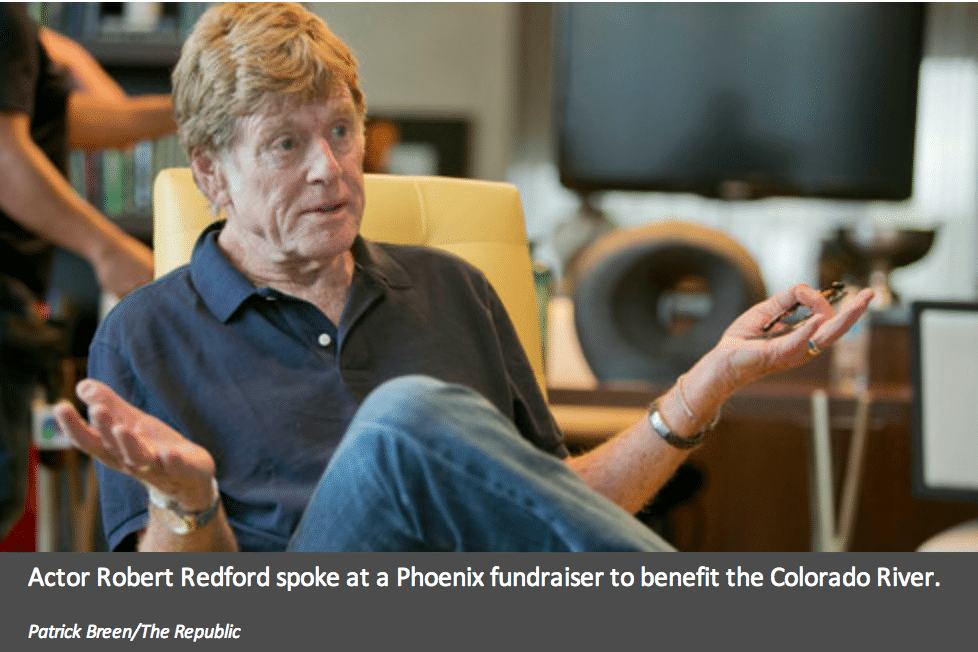
The Raise the River event on September 7, 2013, was a collaboration to reconnect the Colorado River with its delta in Mexico by purchasing water rights to increase river flow. More than 200 donors were in the room. The Sundance Kid headlining. Patagonia would later exec-produce a film with Redford, Public Trust, making the same environmental argument.
But I opened my remarks with a confession.
“I am the son of a dam builder.”
My father ran Constructors Pamco out of Seattle. He built dams. Powerhouses. Pipelines. He practically plumbed the Pacific Northwest.
My brothers and I put ourselves through college as summer laborers on his projects. My last two summers were spent raising the Spada Lake Reservoir Dam in the Cascades northeast of Seattle to quench a thirsty, growing population.
I think it seemed an odd opening to the room.
Then I told them about the Water — Use It Wisely campaign my agency, Park&Co, had created in 1998. We turned it into the largest water conservation outreach effort of its kind in the world.
More than 400 private and public organizations licensed the campaign from us. It was a single, universal message, started in Phoenix and spreading in concentric circles across North America. Started by inviting people into the story of conservation rather than lecturing them from one.
I transitioned from stopping rivers to stopping water waste.
A few years later, it hit me again. I sat down to watch DamNation, a documentary produced by Patagonia about the century of ecological damage caused by those same dams.
In psychology, what I was feeling was cognitive dissonance.
In brand storytelling, it has a different name: impact.
That’s what Patagonia does. They don’t just tell a story about saving the planet. They tell a story that puts you in direct, productive conflict with yourself.
They provoke. They disrupt. They make you feel the tension between who you’ve been and who you might become.
But here is the question you may or may not have asked yourself.
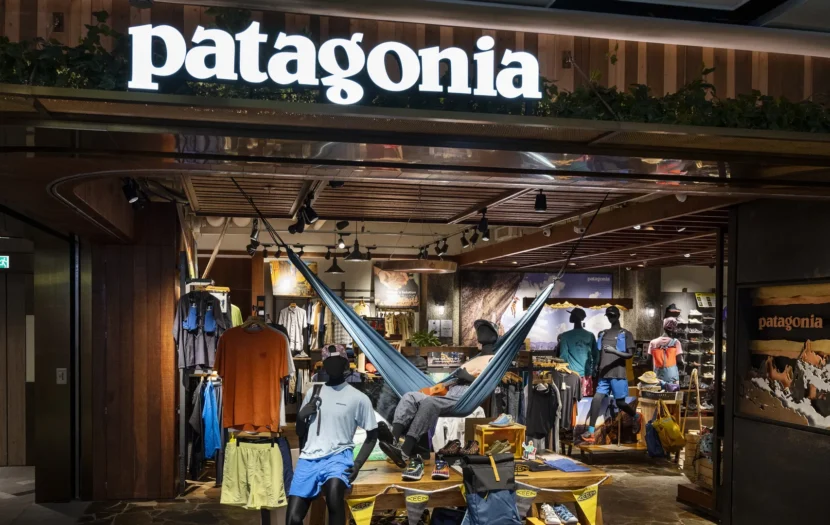
How does a company maintain that level of narrative precision across 50 years, 4,000 employees, 160 stores, and $1.5 billion in revenue without drifting through the whirlpools and cataracts of the raging river of market dynamics and competition we all have to navigate?
The answer isn’t better creative direction.
The answer is StoryOps™: governing and guiding your sovereign story, the only story your brand can tell and live.
Brand Story Consistency is an Operations Problem, Not a Marketing One
Most companies treat brand story as a marketing asset.
Patagonia treats it as operating infrastructure.
StoryOps™ is the operational discipline of creating, scaling, and maintaining a coherent brand story across every function of an enterprise.
It starts by building a Brand Brain that informs every aspect of your brand story, so your people, teams, departments, and leadership automatically receive the same story through the tools they are already using, stopping narrative entropy with coherent, consistent, and compelling storytelling in every internal and external channel.
From the boardroom to marketing to the sales floor to HR to shareholder relations. Not a brand guide. Not a messaging workshop. Not a strategy engagement that expires when the invoice is paid.
An all-hands-on-deck governing system.
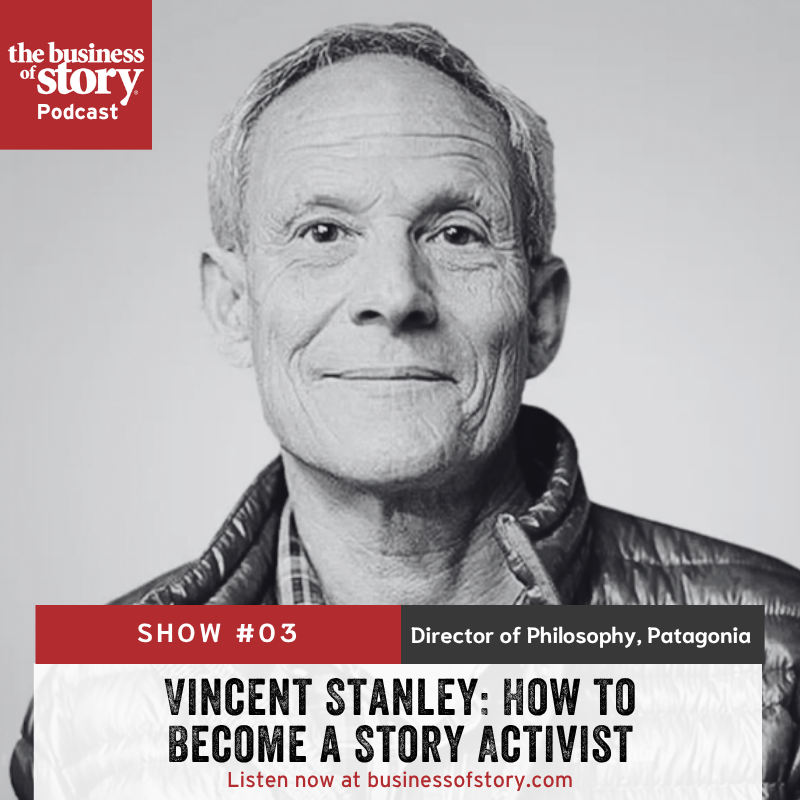
When I sat down with Vincent Stanley, Patagonia’s Director of Philosophy and a 42-year company veteran, on the Business of Story podcast 12 years ago, he said something I’ve carried ever since.
“Every business has its own DNA, just like every person has their own DNA and their own story.”
But having a DNA isn’t the same as governing it.
Patagonia doesn’t just know their story. They’ve built expensive and inconvenient structural mechanisms in every function of the organization that make it difficult to drift from that story.
That’s StoryOps™ at work. But most brands have never done it.
The Brand Storytelling Villain We’re All Out to Thwart
Brand story doesn’t fail because companies stop caring about it.
It fails because of what I call “Narrative entropy.”
Narrative entropy is the natural, predictable fragmentation of brand story coherence as organizations scale.
Narrative entropy compounds quietly. Sales interprets the story one way. Marketing another. HR writes job descriptions that pull in a third direction.
A new CMO arrives and refreshes the messaging. AI generates content that sounds like every other brand in the category. And the founding conviction that made the brand architecturally different disappears beneath layers of approximation now scaled at a breathtaking pace by AI.
The research from The State of Storytelling 2026 puts a number on it.
In the average B2B company, story alignment sits at 19 percent. That means only one out of five people in your organization knows your story.
Four out of five people are telling a different version of what you do and why it matters.
Damn!
Patagonia has been fighting that fight for 50 years.
They’ve won it repeatedly. Not through brilliant creatives or force of personality. Through StoryOps™ governance mechanisms that most companies would find uncomfortably expensive to build.
The StoryOps™ Map: How Patagonia Governs Narrative at Every Function
Here’s what StoryOps™ looks like at full operational deployment. Think of it as the bright red narrative thread that weaves consistently and coherently through your entire enterise, snuffing out narrative entropy at every position in the company.
HROps: The story as hiring filter, not a poster on the break room wall
Patagonia’s employee handbook, Let My People Go Surfing, wasn’t a culture document.
It was a governance document.
Recruiters read resumes bottom-up. Hobbies. Outdoor activity. Volunteer work. Before job history. They’re not screening for skills first. They’re screening for mission alignment first.
Every hire either reinforces the brand story or dilutes it.
As a further physical expression of their operationalized brand story, Patagonia has provided on-site childcare since 1984. The childcare center stayed running through the 2008 financial crisis when other organizations were cutting their HR budgets.
They also offer 60 days of paid environmental internships. And believe it or not, bail coverage for peaceful protest arrests, for employees and their spouses.
HR Chief Dean Carter explained it with one sentence worth framing: c
“Consistency under pressure is what makes a value real rather than aspirational.”
That’s StoryOps™ invested in human capital.
Turnover runs under four percent. And Patagonia gets thousands of applications per open role.
ProductOps: Durability as narrative, not just specification
Worn Wear, Patagonia’s repair program, fixes roughly 50,000 items a year. Repair tours have visited more than a thousand locations across multiple countries. They will repair any brand’s gear, not just their own.
That last part matters.
Repairing competitor products doesn’t seem reasonable for a company who could easily replace it with their own goods at a profit. But Patagonia’s mission says, “Cause no unnecessary harm.” That story outranks the sale.
Patagonia’s marketing is remarkably powerful because of the operational commitment that drives its storytelling.
The Don’t Buy This Jacket campaign only worked because Worn Wear already existed.
The campaign drew credibility from operational reality. Remove the repair infrastructure and the ad is a stunt. With it, the ad is proof.
The best external brand storytelling in the world cannot compensate for a brand story that isn’t coherent, consistent, and genuinely believed inside the organization first.
The repair team flags recurring product failure points back to designers. The repair function doesn’t just serve customers. It closes the loop into ProductOps.
That’s StoryOps™ thinking through operations.
MarketingOps: Campaigns That Only Work Because the System Behind Them is True
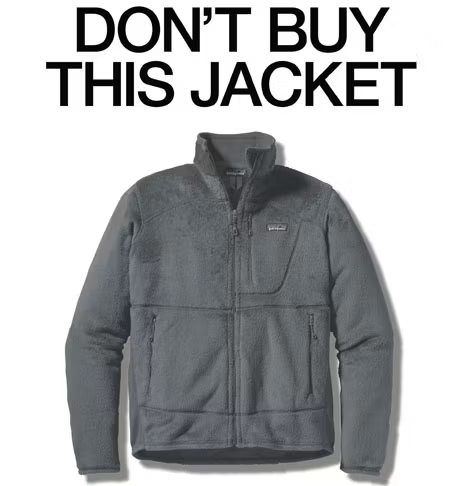
In 2011, Patagonia ran the as mentioned full-page New York Times ad on Black Friday. “Don’t Buy This Jacket.” The ad listed the actual environmental cost of their R2 fleece. 135 liters of water. 20 pounds of CO2. A direct instruction: think before you buy.
Sales grew roughly 30 percent the following year.
In 2016, they pledged 100 percent of Black Friday global sales to environmental grassroots groups. They projected $2-3 million. They did $10 million in 24 hours and brought in tens of thousands of new customers.
In 2018, the Tax Cuts and Jobs Act reduced their corporate tax bill. They donated the full $10 million in savings to environmental nonprofits rather than keeping it.
These are not marketing campaigns.
They are costly transactions the company could not afford to make if the mission were decoration rather than structural backbone.
Vincent Stanley told me that Patagonia is “in the film business” because people make decisions on emotion, not spec sheets. Artifishal. Public Trust. DamNation. Documentary-grade advocacy films, released free on YouTube with built-in calls to action. Not ad content. It’s the outward expression of a well-governed brand story operationalized coherently and consistently across all departments, all people, and all channels stopping narrative entropy in its tracks.
Community and Field Ops: The operationalized brand story authority pushed to the front line
This is the piece most purpose-brand case studies skip.
Patagonia’s retail stores each have their own annual grant budget. Store employees review proposals and decide which local grassroots environmental groups get funded.
Not headquarters. Store employees.
For instance, the Fells Point store in Baltimore runs a monthly book club built around Patagonia’s publishing imprint. They host watershed cleanups with Blue Water Baltimore. Staff get 18 paid volunteer hours a year.
The pattern: StoryOps™ authority is pushed to the people closest to the customer.
One story. Governing what every department says, what every AI generates, and what every new hire learns on day one.
One source of story truth. Applied locally. Without fragmenting.
RevenueOps and Governance: The cap table as StoryOps™ enforcement layer
If you had the money, would you make this move?
In September 2022, Chouinard and his family transferred their roughly $3 billion ownership stake into two entities.
- The Patagonia Purpose Trust holds all voting stock and exists solely to protect the mission.
- The Holdfast Collective, a nonprofit, holds the remaining shares and receives Patagonia’s annual excess profit, roughly $100 million a year, to fund climate and biodiversity work.
As the story says: “Earth is now our only shareholder.”
No future CEO, no activist investor, and no acquirer can vote to abandon the mission.
Because the mission as communicated through the story owns the voting stock.
Most companies protect their brand story with a style guide.
Patagonia protected their brand story by rewriting who legally owns the company.
That is StoryOps™ governance at the ownership level. The most structurally irreversible Brand Brain enforcement mechanism in the history of American business.
The Tell That Distinguishes Real StoryOps™ From a Brand Guidelines PDF
Every mechanism above shares one characteristic.
It’s expensive.
Repair centers cost money instead of driving replacement sales.
Paid activism leave and bail coverage create legal exposure.
Donating tax savings requires a board decision with no required disclosure.
Restructuring ownership cost the Chouinard family roughly $17.5 million in transfer taxes and permanent control over a $3 billion company.
This is the tell.
A brand story that never costs the organization anything isn’t governing anything.
It’s decoration. Hype. Nonsense.
Real StoryOps™ governance makes hard calls repeatedly across every function over decades.
You’ll know that you’ve arrived when seven executives, all from different departments, give you the same answer to the same question about what the company stands for.
That’s not a marketing philosophy. That’s a governance criterion.
Is Your Brand Story the Last Governed Function In Your Enterprise Stack?
Your organization has operational discipline across every major function.
MarketingOps. SalesOps. RevenueOps. DevOps. PeopleOps. FinOps.
Each discipline exists for the same reason. The function is too important, too distributed, and too consequential to be governed through individual effort and institutional memory.
Brand story is the single asset every one of those functions depends on to do its work with meaning and coherence. It shapes what Sales says. It informs what Marketing creates. It governs what HR promises candidates. It determines what AI generates at scale.
Brand story is the last ungoverned function in the enterprise stack.
Patagonia solved this without naming it. They built StoryOps™ before the discipline had a name, through hiring criteria, product warranties, repair programs, grant councils, and ownership transfers that made the mission load-bearing rather than decorative.
Here’s the story that I still find funny.
In my younger days, I had a hand in building the infrastructure that stopped rivers. Then one night in Phoenix, I followed Robert Redford to a podium to help free one. The universe piled on when I watched Patagonia — who later exec-produced a film with Redford making the same argument — do what I’d stumbled into accidentally: govern a single true story across every function until it had the structural force of, well, a dam.
That’s StoryOps™.
Now ask yourself honestly.
If you gave your top seven executives the same brand story exercise tomorrow morning, how many different answers would you get?
That number is your narrative entropy score.
You either install StoryOps™ or you scale narrative entropy.
There is no third option.
I explore the full StoryOps™ operational framework in my Brand StoryOps™ for Agencies weekly LinkedIn newsletter.
And if you want to hear Vincent Stanley talk about Patagonia’s storytelling DNA directly, the Business of Story podcast conversation we recorded together, click here.
Find out exactly where your own brand story is drifting. Take the free Brand Story Grader assessment at StoryCycle Genie® and get your score before narrative entropy does.
Infrastructure compounds. Campaigns expire.
Rivers, when you let them, find their own way home.
Sources
Company / Ownership
- Patagonia, “Our Mission”
- Patagonia Works, Press page
- Patagonia, How We Fund (grants overview)
- Patagonia, Public Trust film page
- Patagonia Stories, “Don’t Buy This Jacket, Black Friday and the New York Times”
Journalism / Institutional Research
- McKinsey, “Patagonia shows how turning a profit doesn’t have to cost the Earth”
- Yale Insights, “How Patagonia Learned to Act on Its Values”
- Forbes, “Why Patagonia Filed A Trademark Infringement Lawsuit Against ‘Pattie Gonia'”
- Fast Company, “Patagonia’s new movie, ‘Public Trust'”
- Outside Online, “The New Documentary ‘Public Trust’ Is a Call to Action”
- Baltimore Magazine, “Patagonia Baltimore Does a Lot More Than Sell Jackets”
- Retail Dive, “How Patagonia’s repairs program drives loyalty and customer advocacy”
- B Lab, “Forces For Good” podcast, Ep. 7 (Holdfast Collective)
- LinkedIn Talent Blog, “5 ‘Ridiculous’ Ways Patagonia Has Built a Culture” (Dean Carter)
- Elliott Rayner, The State of Storytelling 2026
Supporting Sources
- Coastal Care, “Patagonia’s New Owner…is the Earth”
- Business Model Analyst, “Patagonia Mission and Vision Statement (2026)”
- HR Executive, “Let My People Go Surfing”
- David Gelles, “The Secret History of ‘Don’t Buy This Jacket'”
- Circle Economy Foundation, “Patagonia Boosts Its Incentive to Repair”
- Shorty Awards, “Patagonia Action Works”
- Save the Boundary Waters, “Thank you Patagonia”
- Conservation Frontlines, Public Trust film review
Note: figures such as revenue, grant totals, and Holdfast Collective disbursements are drawn from third-party and company reporting current as of mid-2026 and should be verified against Patagonia’s own annual “Work in Progress” impact report before use in published materials.
One closing note worth naming. Patagonia isn’t frictionless. In June 2026, the company sued drag performer and environmental activist Wyn Wiley, known as “Pattie Gonia,” for trademark infringement, seeking $1 in damages but requesting full legal fees. Both parties claim the same environmental cause. The suit was genuinely controversial among Patagonia’s own community.
That’s a useful reality check for any leader building StoryOps™ infrastructure. Governance reduces narrative entropy. It doesn’t eliminate every hard call. Two operational imperatives can collide in public even for the most disciplined brand in existence.
That’s probably what genuine integrity looks like at scale.
Story on, my friend.