Stop Scaling Too Early — or Too Late: The Framework That Changes Everything
The Moment I Knew This Episode Was Different
I’ve interviewed hundreds of growth experts on this show. Most of them tell you to go faster.
Mark Roberge told me to slow down.
Not because growth doesn’t matter. Because wrong-stage growth is the single most common way great companies die.
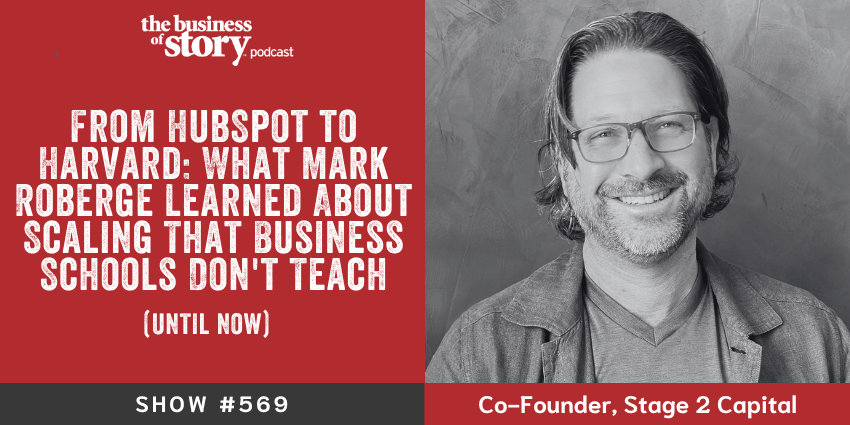
And he’s watched it happen from the inside — as the CRO who scaled HubSpot from $0 to $100M in revenue, and now as a Harvard Business School professor who studies why some companies repeat that feat and most don’t.
Marks says that half of the founders he works with are scaling too early, and the other half are scaling too late. Almost none of them know which half they’re in.
Meet Mark Roberge: The Scientist Who Scaled HubSpot
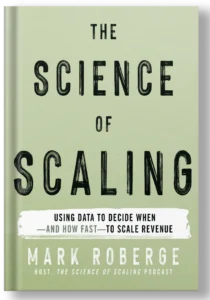 Mark Roberge is the former Chief Revenue Officer of HubSpot, a senior lecturer at Harvard Business School, managing director of Stage 2 Capital, and author of The Sales Acceleration Formula and The Science of Scaling.
He started as an engineer. He built HubSpot’s sales team using data, experimentation, and repeatable systems — the same discipline a scientist brings to a lab. The result was one of the most studied revenue growth stories in SaaS history.
Now he teaches founders and operators how to replicate it — not by copying HubSpot’s playbook, but by building their own.
What You’ll Master in This Episode
Why product-market fit is not binary — it exists on a spectrum, and where you are on that spectrum determines everything about how you should grow.
The PMF Threshold: the specific leading indicator Mark uses to tell founders whether they’ve earned the right to scale their go-to-market motion.
Why the best salespeople talk less than 50% of the time — and what that reveals about the difference between selling and discovering.
How to design a sales hiring profile based on what your best customers have in common, not on what a great salesperson looks like on paper.
Why most VC-backed companies scale their sales team before they’ve nailed their customer success motion — and why that sequencing destroys retention.
The one question Mark asks every founder in the first five minutes that tells him whether their growth is real or fragile.
Links:
- Stage 2 Capital
- Mark Roberge on LinkedIn
- Mark on X
- Mark on Instagram
- The Science of Scaling Podcast
- The Science of Scaline Book
- StoryCycle Genie®
Deepen Your Communication Mastery: Three Essential Episodes
To amplify your transformation from today’s conversation, these carefully selected past episodes provide complementary wisdom:
The Agencies That Thrive With AI Will Project the Most Flexible Identity, with Marcus Sheridan — Marcus’s framework for identity fluidity is the go-to-market complement to Mark’s scaling science: both demand you know exactly what stage you’re in before you commit to a motion.
The Companies Winning the War for Talent Aren’t Telling Better Stories — They’re Telling Truer Ones, with Bryan Adams — Scaling a revenue team only works when your employer brand attracts the right people. Bryan’s TRUTH framework is the hiring story layer beneath Mark’s sales science.
The Machines Can Code. They Can Calculate. But They Cannot Connect., with Joe Lazauskas — As AI reshapes the sales and marketing stack, Joe’s research on why human storytelling becomes more valuable — not less — is the philosophical foundation every scaling founder needs.
Mark Roberge’s Conversation With Park Howell on the Business of Story Podcast
How an MIT Engineer With No Sales Experience Became HubSpot’s First Chief Revenue Officer
Park: And you know, we were talking about this just before we hit record — you being one of the founders over there, the fourth employee of HubSpot. You are good pals with my pal, Dan Tyre.
Mark: A wonderful human being to know. If you are ever down on your life, call up Dan Tyre. It’s better than therapy.
Park: It is. I was introduced to him through a mutual friend, Greg Head, who is in the tech world. You may well know Greg too. Excellent guy. One day he says, “You’ve got to meet this Dan Tyre dude.” We went over to the Henry, a little restaurant down off of Camelback Road in Phoenix. That had to have been 15 years ago. And he couldn’t have been nicer — like he had known me for 15 years.
Mark: Of course. He’s just a born salesman. He was my first sales hire at HubSpot, which was interesting because I had no experience in sales going into that role, and Dan had decades. So he was very patient with me in our coaching.
I had something to teach him about the internet, which was — believe it or not — fairly new back then, and he had a lot to teach me about sales.
Just one of those guys that no matter if the person was cleaning out the office space or the parking attendant, he was absolute best friends with them.
At the time, we were less than ten people sitting in a room. The engineers are coding right here, you’re on sales calls over there. Everyone’s in the same room. And I remember every call Dan had — he’s like, “Park, where are you? I’m out in Golden, Colorado.” “Really? Where?” “Well, you know, Central Street.” “Really? Where? Well, you know Nick’s Pizza?” “Yeah, I lived above Nick’s Pizza.”
It was always these crazy connections he would make. It was a blast to take that journey with him.
Park: Yeah. And you were their very first Chief Revenue Officer at HubSpot.
Mark: Well, it doesn’t mean anything when there are four employees. But yes — CRO through the IPO. It took about nine years.
Park: You guys started what is now very much a legacy brand. Everybody knows HubSpot, lots of folks use it. What did you learn in those early years as CRO that has led you to what you’re doing today with Stage 2 Capital?
Mark: There’s too much to cover. Philosophically, I don’t have a plan anymore. Because as I look back on the last two decades and think about the things on my résumé that people respect — HubSpot, going into sales, writing two books, being a professor at Harvard, starting a venture capital firm — I never intended any of those. I never pursued a single one of them.
So if you want to get philosophical, Park, I think one thing I learned is: you can have a plan, but be open-minded to the opportunities that are presented to you, because those could be the most important journeys.
And on a more tactical level, I was very lucky to be chosen by our co-founder Brian Halligan, who had a multi-decade career in sales, largely at PTC. He had the foresight to know that in 2006, sales as a function was about to be completely revolutionized — from a discipline that was largely fancy-looking people in suits who were good at golf and steak dinners, to a very data-driven science.
He essentially ignored his Rolodex of phenomenal sales leaders and picked me — a kid from MIT — to be his sales leader.
Park: A kid from MIT. You usually come out of there as an engineer, not a sales leader.
Mark: I studied engineering undergrad. My whole existence was quantitative, and that’s what he wanted. That set a foundation for what I learned — which was to help evolve sales from something we perceived as magic and art to something on par with the science we see in finance and economics. That’s been a big part of my life’s work for the last 25 years.
What Is the ‘Wayward Walk’ Philosophy? Mark Roberge on Trusting Opportunities Over Rigid Career Plans
Park: So you come out of MIT, driven by a logic- and reason-driven brain. And yet you go into a sales role, accumulate all these other accomplishments, and say you just followed the path.
What’s interesting to me is I was just on another podcast two hours ago and the host was talking about this very same thing. He calls it “Wayward Walking” — you have an idea of where you’re going, but then you go off on this wayward walk, let the universe give you hints, and it leads you to some pretty amazing places.
Mark: I love that. I resonate so much with it. And this can get a little wonky and spiritual, which I don’t want to scare people off.
I am a spiritual person — I’m a deacon at my church — but I study all of the religions, from Jewish to Muslim to Buddhism to Hindu. I love to see the commonalities. Through those journeys, I’ve grown a conviction that the meaning of life is to reflect continuously on the unique gifts you’ve been given as a human and find a way to deploy those gifts to make the world a better place.
You can’t really go wrong when you do that. It may or may not lead to wealth or power or whatever we pursue at a surface level, but it will lead to happiness.
When I’m talking to my students at Harvard Business School, if you talk like that, they get a little weirded out. But basically the message is: have your plan — we’re all type-A people — but just be open-minded to the things that land on your lap when you aren’t asking the question, because that could be the most important answer.
I was lucky to experience that in many different versions throughout my career.
From HubSpot IPO to Harvard Professor to VC: Mark Roberge’s Career Journey After the Exit
Park: Yeah. And this led you to Stage 2 Capital and your new book, The Science of Scaling. How do those two worlds come together?
Mark: A couple of steps in between. If I may tell a story—
Park: Well, it is the Business of Story.
Mark: Nine years into HubSpot, we just did the IPO. It’s a blessed, amazing experience. And I’m like, I’m tired. I’m done. I’m just going to take a year off and reflect on life and figure out what’s next.
I gave a lot of months’ notice because you have to prepare for that stuff. During that time, I had written a book called The Sales Acceleration Formula. That book did surprisingly well. I donated all the proceeds to this awesome organization called Build.org that helps kids in tough cities in high school.
The reason it came about was that Jill Conrath — probably one of the most famous sales authors of that generation — had breakfast with me and wrote down on a piece of paper: “The Art and Science of Sales by Jill Conrath and Mark Roberge.” She said, “I want to write this book with you.”
And I said, “Jill, I didn’t even clear 500 on my verbal SATs. I scored perfect on the math, which is why I got into MIT, but I can’t write.”
She said, “Come on. Write a chapter, we’ll bring it to my publisher.” So I did. And she said, “This is awesome. This is your own book. You have to write your own book, and then we’ll write the next one together.” I said, “Now you’ve got me writing two books.”
So I write this book, and I ask one of the professors at Harvard to write a blurb on the back. He read it, agreed, and I took him to lunch to thank him. He said, “Hey, I’ve seen you in the classroom and now I’ve seen your writing. We’re going through a pretty big shift at the school. Everybody wants to be an entrepreneur. Would you ever consider joining the faculty full time and building and teaching the sales courses?”
And I said, “You didn’t let me in as a student.”
So I ended up doing that full time for five years, which was a much better thing than sitting around on the beach. I learned to be a good professor at a great place to learn to be one.
Through that, I got to continue to express my passion for entrepreneurship. A lot of the VCs I worked with during HubSpot — like Sequoia and General Catalyst — would do early-stage investments and say, “Mark, can you help these folks build the sales team?” I said, “Yeah, but I’m not going to do 50 of these. If I’m going to do it, I’m going to go to the office a day a week, listen to calls, interview reps, talk to customers.”
So I did that for about five years. I worked deeply with around 15 companies. One ended up doing an IPO, one sold for a billion, a couple were priced at a billion, and a bunch went bankrupt. That’s the game we play. If you’re great, you still strike out most of the time.
That gave me pattern recognition: why did some of these go to IPO and why did some go bankrupt? That led to starting Stage 2 Capital with Jay Po from Bessemer, who approached me with the idea.
Then I did a speech in 2019 at SaaStr about how to use a rigorous framework to know when to scale revenue and how fast. That framework didn’t exist. It’s crazy, and it leads to a lot of unnecessary failure. Half the entrepreneurs go too fast, too early. Half wait too long and go too slow. The speech went viral, Stanford asked me to write it up, and I’m giving all the proceeds to mental health. So yeah, that’s the story part.
Are Entrepreneurs Born or Made? MIT Research, the ‘Paranoid Optimist’ Profile, and What Actually Predicts Founder Success
Park: Wow. I’ve got to ask you a question I was asked on that show earlier today. Are entrepreneurs born or built?
Mark: Wow. That’s a good one.
I think they’re built, but I’m hesitant. I know for a fact that salespeople are built, not born — that can be taught, because I teach them. I teach all of them, whether they’re from Africa, Asia, Europe, South America, wherever. So how to sell, I’m confident about.
Park: You teach them how to sell — influence and persuasion. But entrepreneurship — isn’t there a different chemistry to that?
Mark: Totally different. And it’s one I’ve never really unpacked with anyone. When I was at MIT, they were studying it in 2005 and came to a conclusion about two attributes that correlate with successful entrepreneurs.
The first was that your family were entrepreneurs. At the time that made sense because it was a very unusual career. I remember graduating with a good buddy at MIT who was a 27-year-old ophthalmologist. His dad was a doctor, his grandfather was a doctor, his great-grandfather was a doctor. He was from Turkey. When his dad met me at graduation, he was furious. “You’re polluting my son with these ideas of entrepreneurship. He has this noble career.” His son went off and made about $20 million the next year with a startup.
So I can understand why that correlated at the time. I’m not sure it does anymore.
The second was more qualitative: you have to be a paranoid optimist. You have to get up every morning, face potential bankruptcy, have the optimism to get through it, but also the paranoia to see what’s around the corner.
I think everybody can contribute, but it depends. If you’re talking about a first-person, open-the-bank-account founder — yeah, there are probably some attributes you’re born with, and a lot of rewiring that would take psychology to get there. But if you join as the fourth employee, are you an entrepreneur? I don’t know.
There are different roles I’d still consider entrepreneurial, and many people can add significant value to that journey.
Park: Yeah. In my experience running my own ad agency — we were around 20 people — I always encouraged everyone, from the account executive to the copywriter to the art director, to be entrepreneurial. And I can tell you, over 20 years, I’d be lucky if a quarter of them thought entrepreneurially.
I talked to other agency principals about it and they said the same thing: “Don’t worry about that. Hire for writing, hire for art direction. Don’t hire for entrepreneurship unless they’re going to be your CRO or someone who’s really going to drive the business.”
Mark: You’re probably right. I’m partially living in a bubble — I teach founder selling at HBS, so it naturally attracts students interested in that. And the people who get in are of a very high level. It’s just not representative of the entire population.
As I think about people I meet around the neighborhood — amazing, unbelievably successful people — many would be terrible founders. There’s probably some form of wiring and motivation that’s necessary. At the same time, I think there are probably more ways to teach it than you’d think.
The #1 Mistake Founders Make in Sales — And What 150,000 First Meetings Prove
Park: OK, let’s do a thought experiment around your work. Let’s say I am a founder. I have a great product, I’m attracting really good talent, I’ve gotten my brand story dialed in. But I’m not growing. I’m not scaling. What is one of the first things you see with someone who appears to have everything they need but isn’t enjoying that success yet?
Mark: Most of the time — and I’ll answer this within the context of a company scaling through human sales — the problem is in the sales process itself.
This is right at the heart of one of the most popular classes I teach: founder selling. Most of these folks are technical or product-oriented, and they’re trying to bring something to market. I ask them, “What is your sales process?” And they show me a slide deck of 25 slides — a beautiful story about why they started the company, how awesome the product is, the features and benefits, the case studies. They say, “This is my sales process. I book meetings and take people through these presentations.”
I say, “All right. You had one yesterday?” “Yeah.” “How’d it go?” “It was great. I got through all 27 slides.”
Then I show them a study — an AI analysis of 150,000 first sales meetings from around 800 companies. It shows that the top-performing salespeople in the industry speak less than half the time in the first call. The worst-performing salespeople speak over 75% of the time on the first call.
I’ll say, “All right. Reflect on your meeting yesterday. Where are you?” And they say, “I’m like the worst. I’m selling like the worst salesperson.”
I say, “What do you think the top performers are doing if they’re not talking?” “Asking questions.” “About what?”
Whether you read Gap Selling from five years ago or How to Win Friends and Influence People from 150 years ago, the underlying message is the same. The people who are successful at sales are not provocative manipulators. They’re more like therapists.
They know how to show up to a first meeting and ask open-ended questions — often personal ones — to understand how you’re wired, to understand the problem you’re facing and prioritizing, to understand how you think you should solve it, to understand how important it is to solve. And then they decide if they can help you, and if they can, they tailor the pitch so you understand how they can help you.
That is how you sell. And it is so different from how 99% of technical founders think.
I’m going through this right now with a very successful company. Even one of my buddies — John McNeil, a super successful and extremely humble guy, which is hard to find together. One of his notable roles was being the number two at Tesla under Elon Musk.
He actually met Elon at Sheryl Sandberg’s husband’s wake. Sheryl said, “I need to introduce you to someone who needs your help,” and brought him over to Elon. Elon said, “I’m not hitting the sales targets for Tesla. Can you help me?” John said, “Give me two weeks.”
So John went around to different dealerships and watched how they were selling. He watched a salesperson at Tesla. A mom walked in to test drive a car with her five-year-old son. They got in, the sales guy showed them how it goes from zero to 60 in three seconds, they were freaking out — and they did not get that sale.
And it was because Elon said, “Just put the passenger in the car and let the car sell itself.”
It’s such a beautiful metaphor for the typical product mentality — the product sells itself. And yet the backdrop of every great sales discipline is about understanding the perspective of the buyer and tailoring the pitch to their needs. That’s my story, Park.
Park: Wow. And it’s the story everybody hears but so few people actually do. Why is that? Why do salespeople show up and just talk your head off?
Mark: Because it’s hard. Do you know how stressful it is to show up in a complete stranger’s office? You begged them for a meeting. They want to get out of there.
Do you know how stressful it is to say, “Why did you take this meeting? Tell me more about that. Have you tried to solve that before? How did you try? What would the ideal solution look like?”
Every question you ask, you think they’re going to turn around and say, “Shut up and show me it.” It’s so much easier to just show up and say, “Here’s our company, here’s what the product does, do you want to buy?”
Park: Did you learn this back at HubSpot in those early days? Dan is there, coaching you up on sales. Were you making these same mistakes early on?
Mark: Definitely. Absolutely. I was terrible. I had the good fortune that my dad is an awesome salesperson and coach, so I just got lucky — partly from growing up hearing him and talking over dinner.
He grew up selling Cutco knives, which a lot of people thought was a great sales training program. They were very aligned with Sandler Training, which we teach at Harvard. Really great methodology — Dave Mattson, their CEO, is an LP in my fund.
And yeah, I was very fortunate to have time with my dad and a ton of other great advisors I surrounded myself with to learn this craft.
Product-Market Fit vs. Go-to-Market Fit: The Core Framework Behind The Science of Scaling
Park: So you said my first question was a small portion of your book. Let’s talk about the greater thesis — when to scale and how fast. What are some of the things we need to look at?
Mark: Right. And that was the conclusion I drew from the difference between the IPOs and the bankruptcies. I can picture the board meeting with each company when they made the decision — and it’s embarrassing how the decision is made. Literally: here’s an $8 million check, go hire as many salespeople as you can.
Half the people do it too slow, too late. Half do it too fast, too early. There’s just no rigor around it. And some of these VCs — who are the best investors in the history of the world — advise people on this having no experience in it. That’s a little broken in the ecosystem.
Park: You’re talking with VCs. You’re saying these are some of the best investors in the world, which means they know how to make money. And yet they just throw money at the problem. That seems like a complete disconnect from someone who’s brilliant with money. Why is that?
Mark: Great question. When I say they’re great investors, I mean they’ll do 500 hours of diligence on a potential investment, say no, and brag about it. They can see where the future’s going, they can judge people — they’re just unbelievable investors.
But then for some reason, they go into the boardroom and someone says, “Who should I hire as my sales leader?” And they talk about it just as confidently. The founder listens — because their perception of that advice is based on a great investment the VC made eight years ago in a completely different industry in a completely different time.
This is what I call the inappropriate cut and paste.
There’s something broken with the VC community: there’s the investor and then there’s the board member. For some reason we’ve made those the same role, and they’re not. That needs to be fixed.
Getting back to your question — there are two things that need to be accomplished sequentially to be ready to scale: product-market fit and then go-to-market fit.
Product-market fit is fairly well known. When I ask founders or my students when they’re ready to scale, the most common answer is “when I have product-market fit.” What’s crazy is that when I ask 50 people in the room to write down what product-market fit is, I get 50 different answers.
Most of the answers I get are things like “50 customers,” “a million in revenue,” or “a thousand inbound leads.”
So I’ll say, “Okay — you have a thousand inbound leads, you have 50 customers. What if people buy it and then don’t use the product? Do you have product-market fit?” “No.” “So when do you have it?” “When they keep using it.” “Exactly.”
This isn’t about whether they buy it. This isn’t about whether they reach out to you. This is about whether they see value and retain.
The best measurement of product-market fit is customer retention — they bought it, they used it, and they reused it. Your first North Star metric is not a revenue goal, it’s a value creation goal as measured by retention.
Unfortunately, retention is a lagging indicator we won’t know for a year. So the book talks about how to extract that back to a leading indicator you can measure in the first week or month — what I call the lead indicator of retention. That’s step one.
All you’ve proven at product-market fit is that if you go out next month and acquire 20 new customers, they’re going to see value. What you haven’t proven is that you can acquire and serve those customers profitably. That’s what go-to-market fit is.
Park: And how long does that normally take?
Mark: All over the place. It depends on the competitive pressure and what I call the blitz-scale pressure of your category.
I have one company in the AI customer support category. It’s super competitive — 17 companies have raised $100 million. They have to take risks and go earlier. They probably move on product-market fit when around 40% of customers are hitting the target. We have to build the plane while we’re flying it.
I have another company that sells software to airports — called AeroCloud. That is a not-competitive category. Two $20 billion incumbents from the 1970s, five-year contracts, six-month RFP processes, zero tolerance for bugs. You have a bug in your customer support software, no one dies. You have a bug in your airport software — that is bad.
So they have a very high bar on product-market fit before graduating to go-to-market fit.
Zooming out: product-market fit is measured by retention in the long term and the lead indicator of retention in the short term. Go-to-market fit is about your ability to acquire and serve customers profitably, as measured by unit economics. The book walks through the algebra to extract those unit economics to early signals.
Park: Does one happen before the other — go-to-market fit before product-market fit?
Mark: You have to do product-market fit first. That’s one of the core principles.
One of the companies I was working with during that tenure was Drift, founded by David Cancel and Elias Torres. David did such a good job during the product-market fit phase. When they acquired a customer, David flew to the office as founder to personally set them up and onboard them — and that customer was paying him $50 a month.
The great Paul Graham, founder of Y Combinator, says: do unscalable things early. David exhibited that beautifully.
It is hard to build and invent a product and get the customer to see the value. You have to throw everything at it. But once you’ve proven it, then you move on to go-to-market fit to codify it.
If you do go-to-market fit first, you will likely optimize the go-to-market on the wrong product-market combination. They need to be done sequentially.
How HubSpot’s Paid Onboarding Model Reduced Churn — and What Alberto Savoia’s Pretotyping Teaches Founders About Skin in the Game
Park: Yeah. With our StoryCycle Genie — which I sent you your brand narrative strategy on — what I’ve been doing is totally unscalable. Whenever we get a new customer, I’ll jump on a two-hour Zoom with them. Let’s onboard you, let’s get you going, here’s how to do this, let’s build out that initial brand story. It takes a lot of effort to get them on board, but we learn a ton in the process.
Mark: Exactly. That’s a sales process. The sale does not end when the customer signs and gives you money.
The CRM should be set up so that Stage 4 is “set up,” Stage 5 is “engaged,” and Stage 6 is “they renew and refer.” That’s the end of the sales process. You’re doing an awesome job with that.
Park: Do I have this right about HubSpot? I’ve heard that if you sign up for HubSpot, you have to go through an onboarding process — and that you actually have to pay for that onboarding, because they want to make sure you’re serious about the product. Is that correct?
Mark: Yes. During my ten years, that was absolutely correct. There may be exceptions now — not because of a pullback from the philosophy, but because certain products were intentionally designed as PLG products where you could adopt on your own.
But for the marketing software, yes — that was a huge move. A lot of the VCs thought we were crazy.
It wasn’t a product with a low time-and-effort-to-value. One of our friends at MIT was Drew Houston, who went off and started Dropbox. Darmesh was very envious of his go-to-market motion — literally click here, back up your device, start paying us.
We tried that. Unfortunately, our value prop was: if you blog for six months, your leads will go up. It wasn’t a low time-and-effort-to-value. So we had to design things to let the customer prove they had skin in the game — because we didn’t want to sign people up and waste their money.
Park: And then even charge them for the onboarding. That’s wild.
Mark: For sure. That’s the skin in the game — you’re going to show up, you’re going to pay for it, upfront.
Park: Have you followed Alberto Savoia’s work in his book The Right It? He was one of the first innovation engineers at Google, then moved on to Stanford. My co-creator Sean Schroeder said, “Park, you ought to read this.”
He talks about pretotyping — not building a prototype and getting it out there, but doing a whole bunch of really inexpensive activities early on to see if what you’ve got is the right product-market fit. And he said the same thing you just said: they have to have skin in the game in three ways.
Number one, they have to be willing to invest their time. Number two, they may or may not be willing to invest money — but get at least time. And number three, to invest reputation. Are you willing to talk about this product publicly?
When we launched the Genie, we did all three. We got people to invest their time, they paid us $500 as beta testers, and I would work with them in the development of their brand story — so they got me as well as the Genie. And then they gave us these amazing testimonials.
Mark: Pure perfection.
Park: And I think that even came from the HubSpot conversation — Sean saying, “I believe HubSpot charges people to onboard them. They have skin in the game.”
Mark: That’s so funny. Right. I think that’s brilliant. I mean, I’m a professor, so I always try to pick apart whether it applies in all cases.
I guess like a home security system — if it’s set up and I’m paying, and it never goes off, I’m still happy. I don’t necessarily have skin in the game. But it’s a hard one to poke at. I love the philosophy.
Stage 2 Capital’s Brand Story Under the Microscope: Positioning Vulnerabilities and Three Strategic Directions
Park: So what did you think of what we sent over to you — the Genie’s findings on Stage 2 Capital?
Mark: It was awesome. I’d be lying if I said I wasn’t a little overwhelmed — I had a very busy morning and saw your note saying “can you please read this before?” And it was 12 pages. But it was awesome.
I sent it to our marketing team and my co-founder, and it inspired a lot of cool thinking.
One of the things it surfaced was around Stage 2 Capital and the Science of Scaling. The unique thing about our VC is that we’re backed by over 1,000 sales and marketing leaders across tech — what we think are the best: the head of sales at OpenAI, Anthropic, Databricks, Snowflake, Zoom, GitHub, Salesforce.
The analysis pointed out that while we’re very involved, how active could 1,000 people actually be? That made me think we need to write a lot more about the different programs we use to take that massive network of investors and create real value every day with our portfolio. That was cool.
Park: Yeah, I was right there in the positioning vulnerabilities section. It said: the “active involvement” credibility gap — what does 1,000 executives involved actually mean in practice?
Mark: Exactly. We set up very intimate advisory boards, very intimate workshops on pricing or account-based marketing or whatever. We’ve been at it for eight years and create that value, but it’s not popping in the analysis.
And the other one was the opportunity on the storytelling — the messaging around why venture needs to change and adapt. A lot of what we stand for isn’t getting through.
The great VCs who invest in companies like HubSpot — my friends — they’re brilliant people, absolutely brilliant. But there’s something systematically wrong with the ecosystem: the same person who does that wonderful investment is also the same person who gives massive operational and strategic advice, yet they’ve never run a company.
Park: They know how to make money. They just don’t know how to run a company to make money.
Mark: Yeah. And the founder listens because they’re 28 and someone just handed them a $30 million check. What are you going to do?
Park: Yeah, exactly right. The positioning statement the Genie came up with — it said: “Stage 2 Capital is the only venture firm structurally built around 1,000-plus senior go-to-market executives, transforming product-market fit into repeatable, scalable revenue through systematic operational expertise embedded at every stage of growth.”
A lot of words there. How did that land with you?
Mark: Too confusing. Too confusing.
Park: So I went into the Genie while you were thinking about that and said: the position statement is too complicated and confusing — provide me with three simpler, more compelling options. And it gave me three. Shall I read all three?
Mark: Yeah, because we’re literally going through a redesign right now, so this will be good.
Park: All right. Option A — the Community Angle: “The only VC firm run and backed by 1,000 go-to-market leaders, purpose-built to scale B2B software companies.”
Mark: Much better. Clean.
Park: Option B — the Founder Outcome Angle: “Stage 2 Capital gives B2B founders capital, a proven framework, and 1,000-plus go-to-market operators who are invested in their success.”
Mark: Yeah, I like it. I’m trying to think which one I like more.
Park: And Option C — the Transformation Angle: “The venture firm where B2B founders go from product-market fit to scalable revenue with 1,000-plus go-to-market leaders invested in the outcome.”
Mark: Wow. Those are tough choices. I feel like I have to stare at them. I don’t hate any of them. I need to go talk to people and figure it out.
Park: I’ll send them over to you after this. But that’s the beauty of the Genie — you go in and iterate. It just says, here’s how you’re showing up, here’s what I believe your position statement is, your UVP, and so forth. And then you say, okay, I think you’re close, but it’s too complex. And it gives you options.
I don’t think “artificial intelligence” is the right brand name for this technology. I believe it’s “artful intelligence” if you use it right. And that’s what we’ve tried to build with the Genie.
Mark: I like that. Very cool. Super valuable.
Why Mark Roberge Donated 100% of The Science of Scaling Royalties to Mental Health — and What the Tech Community Owes Its Founders
Park: So one last question that’s been burning in me — you’re obviously extraordinarily successful. You do a lot of really fun, cool things. You teach at Harvard. Why did you write the book? Why do you take time to go on shows like mine when it seems like you could be doing lots of other things?
Mark: Part of it gets back to my wiring — constantly reflecting on the unique gifts I’ve been blessed with at this moment, because they do change, and how I can deploy those to create value for society in the unique way I’m supposed to. That’s just how I’ve been called to operate right now.
And I’d love a chance to talk about the cause behind the book. For this one, 100% of the proceeds are being donated to mental health. There are two reasons for that — a personal one and an observational one.
The personal one is that mental health has played a huge part in my life. I’ve been a caretaker directly multiple times, and a patient. And I can say that — most people can’t, because there’s still a stigma.
When we interview someone and find out they survived cancer, we elevate our perception of them. But if we find out they struggled with and recovered from a mental health disease, we have concerns. Both are the same — they’re often genetic, just a disease.
I’ve been blessed with certain aspects of my résumé that society values, which means I can probably be a little braver and more transparent than most. They have to suffer in silence. I feel that’s a unique gift I need to act on.
The second reason is for the tech community. I think there is a hundred times more effort, talent, and capital going into building AI than there is into understanding how society should adapt to a post-AI world.
In every major technical shift, we came out the other side advanced as a society, but there were scars along the way. I think we’re stacking up to have some really massive scars. As a tech community, we can’t delegate this responsibility to Washington — they’re just not close enough to it. We have to balance building this stuff with helping society adequately adapt.
We all just need to do our little thing. Right now, this is my little thing. I’ll do more later.
Park: Sounds like a big thing. Where can people find your book?
Mark: On Amazon — The Science of Scaling by Mark Roberge. 100% of the proceeds go to mental health. It’s been number one in its category for most of the last couple of months, so good checks are floating over to mental health. And if you want to chat with me, I’m usually pretty active on LinkedIn.
Park: And Stage 2 Capital — who are you looking to connect with there?
Mark: All of the above. We’re not currently raising — we just finished our fourth fundraise in February. We have a smaller entity that is open if people want to get involved, but we are deploying capital.
We have a lot of fresh capital and we invest in anything all over the world that sells through sales teams — a lot of AI, a lot of software — from pre-seed all the way up to Series A. We’d love to hear from you. Go to our website or contact me on LinkedIn.
Park: Well, I would love to contribute to your success too. As you’re funding these founders — if they’ve already got websites up, send them over to the Genie and have them do the free Brand Story Grader. It’s going to give them a grade from A-plus to F-minus and a 14-point storytelling assessment.
For any of your students who want to be entrepreneurs and want to see how to actually tell a story — send them over to StoryCycleGenie.ai and we’ll give them a complete free brand story grade.
Mark: I love that, Park. And I’ve already benefited from it, so thank you.
Park: All right. Well, thank you, Mark. I really appreciate you being here.
Mark: Thanks.
Q: What Is the Difference Between Product-Market Fit and Go-to-Market Fit?
A: Product-market fit means your product solves a genuine, recurring problem for a clearly defined customer segment — validated through retention, organic referrals, and engagement signals. Go-to-market fit, a concept central to Mark Roberge’s Science of Scaling framework, means your sales process, pricing model, acquisition channels, and messaging are repeatable, efficient, and primed for scale. Many founders conflate the two: they achieve product-market fit and immediately hire a large sales team — only to watch conversion rates collapse because their go-to-market motion isn’t yet proven. Roberge argues these milestones must be achieved sequentially, not simultaneously, and each has distinct metrics that signal readiness before scaling investment.
Q: What Is the Biggest Sales Mistake Founders Make, According to Mark Roberge?
A: According to Mark Roberge, the single biggest sales mistake founders make is talking too much during sales meetings instead of listening. Roberge references a study of over 150,000 first sales meetings showing that top performers consistently speak less than their prospects — asking precise questions and listening for pain points rather than pitching features. He uses Elon Musk’s approach to Tesla test drives as a vivid example: Musk instructs sales staff to stay silent and let the car sell itself through the experience. For founders, the lesson is that your most powerful sales tool is the prospect’s own voice — the more deeply you understand their specific problem, the more precisely you can position your solution.
Q: What Is The Science of Scaling by Mark Roberge?
A: The Science of Scaling is a business framework and book by Mark Roberge — former Chief Revenue Officer of HubSpot and Harvard Business School professor — that helps founders and revenue leaders systematically scale their go-to-market strategies. The central thesis distinguishes between product-market fit (whether your product solves a real, recurring problem) and go-to-market fit (whether your sales, marketing, and customer success motions are repeatable and scalable). Roberge argues that most startups fail not because their product is wrong, but because they attempt to scale before achieving go-to-market fit. The framework provides measurable signals for each stage so founders know precisely when they’re ready to invest in growth.
Q: How Did Mark Roberge Build HubSpot’s Sales Team From Zero to IPO?
A: Mark Roberge joined HubSpot as its fourth employee and first sales leader with an MIT engineering background but no formal sales experience — a profile Brian Halligan deliberately sought because it could apply data science and systems thinking to revenue. Rather than hiring traditional salespeople by instinct, Roberge built a predictive scoring model to identify the traits that drove sales success at HubSpot specifically, then engineered a repeatable hiring, training, and coaching process around those indicators. This approach — treating sales as a measurable, reproducible science rather than a personality-driven art — became the foundation for his book The Sales Acceleration Formula and helped HubSpot scale from zero to over $100 million in revenue before its IPO.
Q: What Is Stage 2 Capital and What Types of Companies Does Mark Roberge Invest In?
A: Stage 2 Capital is a venture capital firm co-founded by Mark Roberge that focuses specifically on helping B2B software companies scale their go-to-market strategies after achieving initial product-market fit. Unlike traditional VC firms that primarily offer capital, Stage 2 Capital differentiates itself through deep operational expertise in revenue growth, sales methodology, and customer success — drawing directly on Roberge’s HubSpot experience and Harvard Business School research. The firm targets what Roberge calls the “Stage 2” inflection point: companies that have validated their model and now need to build scalable, repeatable revenue engines. The firm’s thesis is that the go-to-market gap — not product — is where most promising startups stall and die.
Q: What Is Pretotyping and How Did HubSpot Use It to Validate Paid Onboarding?
A: Pretotyping is a framework developed by Alberto Savoia, former engineering director at Google, built on the principle that the greatest product risk isn’t building the wrong thing — it’s building the right thing for the wrong market without real commitment signals from customers. The core mechanism is getting genuine “skin in the game” from prospects before investing in full development, most powerfully by charging for early access or a lightweight version of the service. HubSpot applied this idea when it tested charging customers for onboarding rather than providing it free: customers who paid for onboarding showed dramatically higher engagement, activation, and retention because financial and psychological investment aligned their incentives with success. For founders, pretotyping is a rigorous antidote to false validation from prospects who express enthusiasm but won’t yet open their wallets.
Q: Are Entrepreneurs Born or Made? What Does the Research Actually Say?
A: Research — including studies from MIT referenced in Mark Roberge’s work — indicates that entrepreneurial success is primarily developed rather than innate, though certain psychological tendencies correlate strongly with founder performance. Roberge describes the highest-performing founder profile as the “paranoid optimist”: someone who holds genuine conviction that their vision will succeed while simultaneously maintaining fierce urgency about the gaps, threats, and failure modes that could derail it. Family background, early exposure to risk and failure, and formative experiences with ambiguity all shape entrepreneurial capacity. The practical implication is that the core skills of entrepreneurship — customer empathy, resilience, pattern recognition, and the ability to sell — can and should be deliberately built, and that passion alone is never a substitute for structured learning and deliberate practice.
Q: Why Did Mark Roberge Donate 100% of The Science of Scaling Proceeds to Mental Health?
A: Mark Roberge donated 100% of The Science of Scaling royalties to mental health initiatives because of the devastating personal toll he watched entrepreneurship take on founders throughout his years as a VC and Harvard professor. The startup journey — with its relentless pressure, public failure, identity-level stakes, and social isolation — creates conditions that are genuinely dangerous for mental wellbeing, yet the culture of tech has long celebrated suffering as a mark of commitment. Roberge believes the tech community carries a collective responsibility to normalize mental health support and fund accessible resources for founders navigating the psychological weight of building companies. The decision was both a personal statement about his values and a direct challenge to other successful operators and investors to use their platforms for structural change.
Q: What Is the ‘Wayward Walk’ Philosophy and How Does Mark Roberge Apply It to Career Decisions?
A: The “wayward walk” is Mark Roberge’s personal philosophy for navigating a career: rather than mapping a rigid endpoint and optimizing every decision toward it, he advocates following unexpected opportunities that align with your unique gifts and genuine curiosity — trusting that the path will reveal itself through action rather than planning. Roberge grounds this approach in a spiritual framework that defines the meaning of life as identifying your singular abilities and deploying them in service of something larger than yourself. In practice, this means saying yes to invitations that appear orthogonal to your current plan — an MIT engineer becoming a CRO, a CRO becoming a Harvard professor, a professor becoming a VC — when they resonate with who you are at your core rather than who you thought you were supposed to become. The philosophy stands in direct contrast to the optimization-obsessed career planning endemic to high-achieving professional cultures.
Q: How Did Mark Roberge Transition From HubSpot CRO to Harvard Professor to Venture Capitalist?
A: After helping lead HubSpot to its IPO, Mark Roberge systematized his scaling experience into The Sales Acceleration Formula — a data-driven approach to building revenue teams that became required reading at top business schools and opened the door to a Harvard Business School faculty appointment. His teaching role gave him deep pattern recognition across hundreds of high-growth startups, revealing a consistent failure mode: companies with strong products that couldn’t scale revenue predictably because their go-to-market motion was never scientifically validated. That insight became the intellectual foundation for Stage 2 Capital, where Roberge could apply both academic rigor and operator experience at the precise inflection point where startups most commonly stall. Each transition was less a planned pivot and more an organic extension of intellectual curiosity meeting an unmet need in the ecosystem.
 Listen To More Episodes