What Happens When a Brand Decides to Make Its Own Business Model Obsolete?
You want your brand to stand for something that outlasts the trend cycle — and if you’re willing to engineer your product around the customer’s entire life, not just their next purchase, then you just might build the most loved brand in America.
But most companies can’t resist the replacement cycle. They build products designed to wear out, go out of style, or become incompatible with the next version — because that’s how you sell another one. And so the furniture industry, like most consumer goods industries, keeps running the same play: manufacture cheaply, price aggressively, and count on the customer coming back in five years.
Shawn David Nelson decided to break that play entirely.
He started Lovesac at 18 years old with a hand-sewn bean bag made from his parents’ chopped-up camping mattresses. He paid $25 to register the company at the Utah State Tax Commission in 1998. Today, Lovesac (NASDAQ: LOVE) operates 300+ showrooms, employs 2,000 people, and is one of the fastest-growing furniture brands in America — anchored by a product philosophy so counterintuitive it sounds almost reckless.
They want you to buy their couch once. And keep it for the rest of your life.
Meet Shawn David Nelson: The Entrepreneur Who Won Richard Branson’s Rebel Billionaire — and Then Survived Bankruptcy
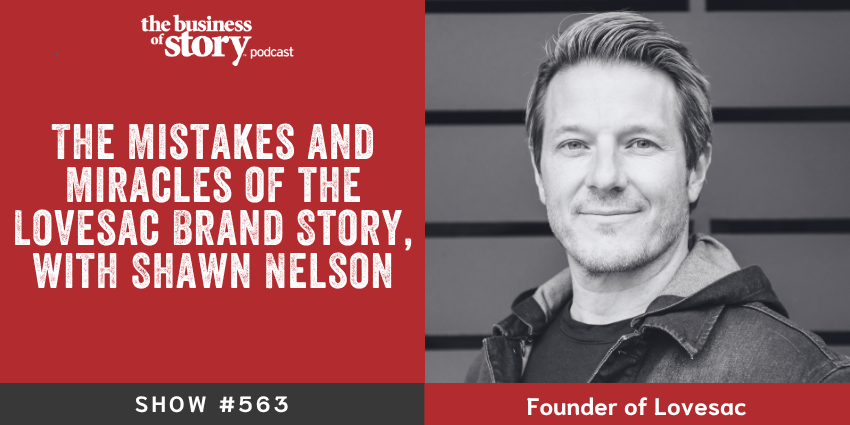
Shawn is the founder and CEO of Lovesac and the author of Let Me Save You 25 Years: Mistakes, Miracles and Lessons from the Lovesac Story.
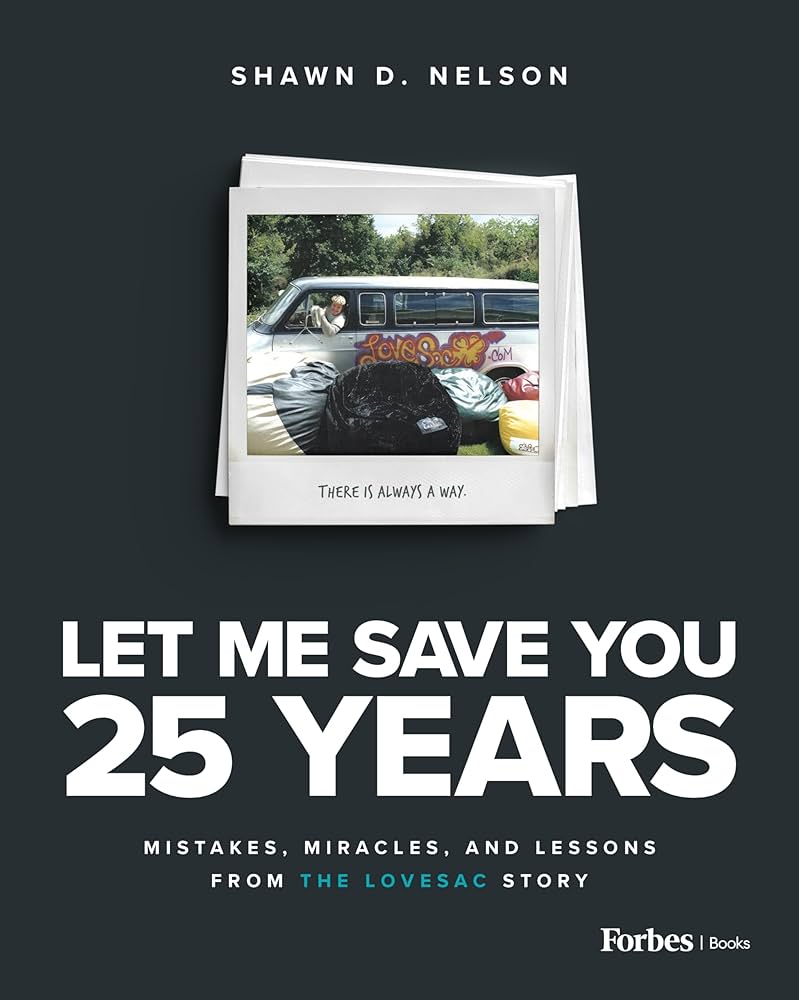 He won $1 million on Richard Branson’s Fox reality series The Rebel Billionaire in 2004, served as honorary president of Virgin Worldwide, and then watched his company get forced into Chapter 11 bankruptcy two years later.
He didn’t quit.
His mother’s advice — “You can quit or you can keep going” — became the defining Shawnism of his career. And keeping going meant 10x-ing the company, listing on NASDAQ, and pioneering a product category that’s now being imitated by a generation of online furniture startups who can only ride in Lovesac’s draft.
What’s in it for You
- Why demonstration marketing — not advertising — is the real engine behind Lovesac’s growth, and how it converts a showroom into a live brand story experience
- How the forever philosophy redefines sustainability as an engineering principle, not a marketing claim
- The Shawnism that saved Lovesac from bankruptcy and applies to every business, marriage, and creative pursuit you’ve ever undertaken
- Why Lovesac is onshoring manufacturing to the United States — and why Shawn believes robots in America will be cheaper than factories in Vietnam
- How brand storytelling is 50% of building a remarkable product company — and why Shawn admits it’s actually closer to 90%
Watch or Listen:
The Product That Hides in Plain Sight
Sactionals look like a sectional sofa. They’re not.
They’re infinitely recombinable. Machine washable. Reverse compatible with pieces sold 20 years ago. Future compatible with pieces not yet invented. You can buy a Sactional today, add to it in 2030, and have it mate up perfectly with the piece you bought in 2006.
Shawn calls this the forever philosophy — and it’s the harder part of the design process at Lovesac.
The unlock wasn’t just engineering. It was demonstration marketing. Lovesac’s showroom teams run a choreographed, scripted demo designed to feel completely natural — one where they’ll have you sit on the arm of a Sactional, then remove it 30 seconds later so you’re genuinely shocked by how solid it felt. That moment of surprise is the brand story. And Lovesac has spent years learning how to translate that wow into advertising, social content, and digital campaigns that replicate the showroom experience at scale.
True Sustainability Means Products That Actually Last
After Amazon and Walmart, Lovesac recycles more plastic bottles than any company in America. All Sactional covers are made from recycled plastic. And within months, Lovesac will begin onshoring the lion’s share of its manufacturing to the United States.
Not for patriotism. Not for PR. Because the volumes Lovesac now commands make domestic production cost-competitive with Vietnam — and because cutting the boats, the containers, the coal-powered factories, and the trans-Pacific diesel burn is the actual definition of reducing risk.
As Shawn puts it: shouldn’t sustainability sustain? Like, actually last for decades?
When Park ran Lovesac through the StoryCycle Genie brand analysis, the purpose statement that emerged was: Lovesac exists to inspire people to buy less stuff by enabling them to invest in products that evolve with every chapter of their lives.
Shawn’s version, carved on the wall at Lovesac headquarters: We will inspire humankind to buy better stuff.
Well done, Genie.
Links
- Lovesac.com
- Let Me Save You 25 Years podcast
- Shawn David Nelson on LinkedIn
- @ShawnOfLovesac on social media
- Craft your vibrant brand story with the StoryCycle Genie™
- What users are saying about the StoryCycle Genie™
Deepen Your Storytelling Mastery: Three Essential Episodes
To amplify your transformation from today’s conversation, these carefully selected past episodes provide complementary wisdom:
The Machines Can Code. They Can Calculate. But They Cannot Connect., with Joe Lazauskas — Explores why brand storytelling is the one skill AI can never replace, directly complementing Shawn’s insight that great product without great story is a fart in the wind.
How to Effectively Position Your B2B Brand, with April Dunford — Dives deep into brand positioning strategy, amplifying Lovesac’s forever philosophy and the StoryCycle Genie position statement revealed in this episode.
Artful Intelligence: The Human Advantage in the Age of AI, with Jen Perry — Examines how emotional intelligence and creative leadership drive brand resonance, echoing Shawn’s demonstration marketing philosophy that experience — not information — creates brand advocates.
Shawn Nelson’s Conversation With Park Howell on the Business of Story Podcast
How Did Shawn David Nelson Build Lovesac From a Teenage Bean Bag to a Nasdaq-Listed Furniture Brand?
Park: Hello, Shawn. Welcome to the show.
Shawn: Great to be here.
Park: So you have a very intriguing brand name that could mean lots and lots of things. Lovesac. What is Lovesac?
Shawn: Look, I made a giant bean bag when I was 18 years old because I thought it was a funny thing to do. Big enough to fill the back of a truck. The idea was me to the TV, the whole floor. How big can I make this?
I wasn’t able to find enough bean bag beads to put in it. Chopped up my parents’ camping mattresses — a piece of yellow foam with a bungee cord around it, chopped up on a paper cutter, put it inside.
Everywhere I took this thing, everybody wanted one. So it was like, okay, I got to start a company to sell these things. Hippie bean bag, 70s love, peace, hate war, love bag, love sack. That sounds cool. Paid 25 bucks at the Utah State Tax Commission in 1998 to register the company. And we were off and running.
Park: And so you literally from your parents’ basement just started creating Lovesacs.
Shawn: That’s right. It was my side hustle in college. Made no money for three, four years as I just sort of actually waited tables to pay my way through school. Made these things in the afternoon for people, just friends of friends who found us here and there.
We did the occasional 10 by 10 booth at the boat show, home show, car show, beer fest, wherever we could find an event and sold these things. Broke even for a little while and eventually got a big order, built a factory, opened our own store. And here we are today with 300 stores, 2,000 employees. We’re publicly traded on NASDAQ. We mostly sell couches now.
These really cool couches that you can have the rest of your life if you want to. You can add to them, grow them, change them, rearrange them endlessly, wash them in the washing machine. And they have really become the mainstay of our business.
Why Did Shawn Nelson Keep Building Lovesac Through Years of Zero Profit—and What Kept Him Going?
Park: So what was it that kept you going? You made the first gigantic bean bag. It sounded like it’s kind of a stunt, having some fun with it, see what you could do. And people are like, hey, Shawn, man, that’s pretty cool. Make me one. They kind of gained some momentum. And then you go for a few years. You’re in college, side hustle, not making any money at it. Why did you keep going?
Shawn: Well, good question. I guess I’m a glutton for punishment. I always just felt like I should. There were years and years where we didn’t make money, where it was tough, where I had other opportunities. I even had to turn down some jobs, some real jobs along the way, and really took it seriously. Even one day kind of shut it down and the next day resurrected it.
Had many of those moments in the earliest days. And by the way, even years after we had 20, 40, 60 stores, all kinds of opportunities to go do something else, to sell the company, move on, to find an exit hatch. But always had that instinct to, in the end, keep going.
And so here we are. Today, you’ve got to have a lot of staying power. The world is a crazy place. Competition is always trying to kill you. You have to have that little bit of instinct where, I feel like I should keep going. Or even if you’re tied, the tie always goes to the runner and you keep going. And that’s been my story.
When Should Entrepreneurs Launch Fast vs. Take Time to Perfect the Product?
Park: And I know one of your big pushes is this idea that speed beats perfection. How many companies just get bogged down for lack of speed because they’re just trying to perfect exactly what they’re trying to make. But it sounds like you’ve taken the opposite approach. Get it to market and then fix it as you go.
Shawn: To some degree, I think you need both. I think you have to be relentlessly uncompromising when it comes to the core of your business.
It also depends on the conditions. When we launched sectionals, they weren’t ready, but we launched and we refined along the way. That was a different day. Today with our core products, we’re fastidious and we put in years of work before we launch, working out every kink and bug and test.
On the edges though, where we’re trying new things, we embrace speed. And I think a good balance of both is the right place to be. But sometimes I think people can get bogged down in the pursuit of perfection. It’s noble to be a perfectionist. It’s noble to demand high standards. But in this world, speed plays.
What Makes Sactionals Different From Every Other Sectional Sofa on the Market?
Park: So you mentioned the sectional earlier, and I think maybe a lot of us might have missed that. You have reframed what a sectional is to a Sactional, right? So what is a Sactional exactly?
Shawn: Yeah, look, if you took a photograph of Sactionals in a living room, they look a lot like a sectional you could buy anywhere else. But once you get under the hood and you understand the product, maybe you watch one of our videos and you see what it can do, they’re actually fundamentally different.
Most sectionals that have been around since like the 50s and 60s are kind of a corner piece, a middle piece, and an ottoman that you can arrange in a few different ways. Ours are infinitely recombinable. All we have is a seat — the rectangle you sit on — and a side. The side can work as a back or an arm. And the way that they overlap through that geometry, they can even work on that rectangle seat.
If you’re tall, you want to sit deep. If you want more seating, you can arrange it wide. That may sound like a little thing, but over time in your life — the way people live today, relocate and move — having endlessly recombinable, rearrangeable furniture that’s actually solid and beautiful and comfortable is everything.
And by the way, machine washable. Because the way it comes apart allows these covers to fit like a glove. We pioneered all that and that’s what’s made Sactionals so wildly popular. You could come back five years down the road. We still sell your same fabric. Where can you even do that?
Here’s another example. You’ve got a big fat dog that’s always squishing down this one back pillow in the corner. If I challenge you to get one back pillow for that one place where it’s gotten all squishy, could you? Where did you get it? What model is it? Do they even make it anymore?
It’s all component driven. You could have bought your Sactionals in 2006 and add to them, grow them, change them, maintain them, upgrade them. We have new inventions that have come out since then — reclining seats, a stealth tech surround sound system you can add to it. It’s all reverse compatible and future compatible.
And that boils down to a whole philosophy that really underpins our entire brand that we call our forever philosophy. It’s making things that are built to last a lifetime, but can also evolve with you as your life changes. That’s the harder part of the design process at Lovesac. And that’s something that evolved out of Sactionals’ popularity and everything we learned from that.
How Shawn Nelson Won $1 Million on Richard Branson’s The Rebel Billionaire—and Became Honorary President of Virgin Worldwide
Park: Want to get back to the evolution of your concepts going from enormous oversized bean bag chairs to what you’re doing now with Lovesac. But before we do that, tell us a story about Richard Branson and how that all comes into play here.
Shawn: Sure. So 2004, we were just past the college side hustle. We had opened our first Lovesac store selling nothing but the Sacs, the giant bean bags, in 2001, and maybe 20 stores in. We were ripping, we were growing, we were hustling business. I get a phone call from one of my stores that says, these people from Fox Network are here. And they’re asking if you want to audition to be on this reality TV show with Richard Branson.
What had happened is they were doing open casting call, but their advertisements didn’t take, so no one showed up. So they happened to be in Salt Lake. They reached out to local businesses — young entrepreneurs who might want to compete for the biggest reality TV show prize in history. A la The Rebel Billionaire, Richard Branson, Fox, Primetime. We’re going to fly around the world, do these business challenges. Think of The Apprentice meets The Amazing Race, hosted by Richard Branson.
And 11 episodes later, 16 contestants down, I won. I won a million dollars on national TV with Richard Branson that helped me raise venture capital and grow the business from there. And I got to spend time as president of Virgin Worldwide also — this kind of honorary title working with Branson and his CEOs of all the companies.
I got to meet the CEO of Virgin Megastores, Virgin Airlines, Virgin Money, all the Virgin companies — trains, planes, all of it. And give them my 27-year-old take on business. Bold, brash, cocky observations, and mostly learn a lot from them. And it was just an amazing opportunity. I consider Richard a friend and a mentor, and it’s been a lot of fun to stand on his shoulders.
Park: So what were some of the things that you had to do to win?
Shawn: Well, we would land in Zimbabwe and be split into teams and said, okay, you’ve got 48 hours. You’re going to meet the head of this village and you’ve got to come up with an economic viability plan for this village to somehow jumpstart economic growth there and present it to the elders of that village. And then by the way, when you’re done, we’re going to go think about riding in a barrel over Victoria Falls.
We stopped in Japan and Hong Kong, London, Morocco, all over the world, Miami, Necker Island. And everywhere it was a business challenge and some crazy stunt with Richard Branson.
Park: I had the opportunity of going to Necker Island and meeting him too right after COVID, and he was a great guy. What I loved about your story too is that you won a million bucks for winning the whole thing, Lovesac your company was two million in debt. So it helped you kind of reclaim some ground on that. Did Branson help you at all?
Shawn: Yeah, I think so. Lovesac at the time when I went on that show was just in that heavy growth phase. And that’s the thing about reality TV — you never really know what’s reality. Like any struggling business, we had raised money, we had raised debt, we had to open stores. And I just remember thinking with him — that was back when a million dollars was a lot of money.
Just kidding, still is of course. But I remember standing there with a check in my hand. All I could think about was, I wish I didn’t have this business on my back. I’d have a great start with this money. But it was a blessing. And yeah, Branson, I’m sure, took all things into consideration. I really thank him a lot for his support.
How Lovesac Went From Giant Bean Bags to Sactionals: The Pivot That Powered 10x Growth
Park: So going back to then, just before that story, how did you make that transition from just building out these big bean bags for fun and then making some money at it into this hard-charging Lovesac business?
Shawn: It was like a lot of things — a 10 or 20 year overnight success.
In the mid-2000s, we had a dozen or two dozen stores, people coming in every day, loving the vibe, sitting on the Sacs, music cranking, movies playing on the big screen TV. And they would buy a giant bean bag for their basement or two, sometimes three for their cabin. And every day people were asking about that couch in the corner.
Obviously that got us thinking — God, we should be in the couch business as well. But the couches were difficult to ship, to stock. In the case of the Sacs, we had devised a way to shrink them down to one-eighth their original volume into a duffel bag that could be shipped UPS. This is long before the mattresses were doing that. So that was pretty novel. If only we could do that with a couch.
That led us to invent Sactionals as I described — which was really just a play to get them to break into pieces and pack up efficiently so we could ship them. As it turns out, a lot of other side effects of that really made Sactionals a better product. Machine washable covers that could fit like a glove, rearrangeable infinitely.
We sort of just tiptoed our way into that business. The first Sactionals were pretty clumsy. But by round two, they had gotten a lot better and more consumer friendly. And then it took us a decade to try to learn how to out-Pottery Barn, Pottery Barn from across the hallway in some of these malls where we had tiny little stores. We made every mistake in the book — rugs and lamps and bowls and baskets and decorative accessories, all the things that expanded our SKU count.
And then it would be the direct-to-consumer revolution where we saw, wow, with that business model — heavy marketing, advertising, influencers, TV, YouTube — this one simple product, Sactionals. We purged 90% of our SKUs to adopt that business model. And then we 10x’d the company in that decade using that heavy advertising model.
And then along the way, that propelled Lovesac to becoming the fastest growing furniture business in the United States many different times. And it’s those articles that get written that ignore the 10-year burn figuring things out that often mislead us into thinking it’s going to be easy.
Why Demonstration Marketing — Not Advertising — Drives 90% of Lovesac’s Business Success
Park: How dedicated and focused were you on telling the story versus just functionally building cool stuff that people wanted? How much did brand storytelling play in your success?
Shawn: 50%. And what I mean by that is, especially in this day and age, it’s not enough to have a great product. There’s too much noise. There are too many channels. It is too fragmented. And if you are unable to tell your story, it might as well be a fart in the wind. Nobody is going to hear about it. If they do, it’s not going to stick around.
Having great product — remarkable product, remark-hyphenable, something that actually elicits a remark — even the name Lovesac. People walk by our store every day. If you spend 10 minutes in a Lovesac store, you’re going to see 10 people that don’t even come in, but elbow their friend and go, I got a Lovesac, or start singing the B-52 song, whatever.
They’re talking about it. They’re not talking about the sandwich shop. They’re not talking about the boring apparel shoe shop. They’re talking about Lovesac.
So from branding to product to then the story itself, making it remarkable. Sactionals we had for a few years before they really started to gain traction. The unlock was what we at the time called demonstration marketing — which means we’re not just going to put these on display. We learned that Sactionals had so many weird attributes that when you look at them, they look normal, but they’re not. They have to be dismantled, taken apart and put back together, and shown to the consumer how they work and what they can do to be remarkable.
Because they are remarkable, but they hide in plain sight like an unremarkable sectional sofa.
So we actually spent a lot of time devising what we call the demo. If you go into any Lovesac store today, our wonderful team members will not just tell you about our products and show you our wares on display. They will lead you through a pretty heavily scripted — meant to feel natural and encouraged to feel natural — demo. The order of revealing to someone what this thing can do, where we take it apart. The best of them will have you sit on the arm only so that in 30 seconds, when I remove that arm, you’re kind of shocked because it felt so solid 30 seconds ago. It’s all choreographed.
It’s demonstration marketing to the point where people can really be wowed by a couch as opposed to just interested in that color or that fabric. And that’s all our competitors have — color, fabric, comfort. We have those things too, but we also have a really compelling demonstration.
Converting that to online TV advertising, social media advertising, demonstrations and clips that can wow you — it’s everything. And without it, we wouldn’t exist. So when I say 50%, it’s honestly probably more like 90, only because without it, you can’t make it today. In my opinion.
What Are Lovesac’s Biggest Business Challenges Today—and Why Paranoia Is a Strategic Advantage?
Park: What are the biggest challenges you are facing right now?
Shawn: Change. Consumers changing, aging, tastes changing, fragmentation of the marketing funnel across so many different constituents. What got us here will not get us there and we know that. And it’s not like we’re failing — it’s just a constant vigilance and paranoia. I believe that only the paranoid survive.
If we are not constantly evolving, constantly looking for the next tactic, the next strategy that works today and will work tomorrow, we will be eaten by the competition that we created. There are a bunch of now online couch companies doing things that are a little bit like Sactionals. They can’t do it exactly — we’ve got great patents and all these things — but things that look and smell similar to the customer who doesn’t know.
All those companies have to do is buy the AdWord Lovesac. We’re already the whale pushing the water ahead in the ocean. They can kind of ride in our draft. Well, that’s a lot of work to be a whale. We don’t get to ride in anybody’s draft. And so it’s got to be a creative whale — one that’s got to have plenty of muscle and be willing to continue to develop that muscle in order to continue to push water, lest it be eaten by all of the little competitors that we’ve sort of willed into existence by our success.
And so we remain paranoid, we remain vigilant, we remain in pursuit, both on the product side and on the marketing and storytelling side.
What Is “Let Me Save You 25 Years”—and What Are Shawn Nelson’s Most Powerful Shawnisms?
Park: So you’ve got a podcast and a new book out both named Let Me Save You 25 Years. How are you saving us 25 years?
Shawn: By trying to be really candid about all the mistakes I made and a few of the lessons that I learned from those mistakes. We don’t learn from our successes. We learn from our mistakes. And so the subtitle of that book — Mistakes, Miracles and Lessons from the Lovesac Story — I made all the mistakes. But thankfully, because of it, I think I’m a little smarter, a little wiser.
If you’re willing to, you can read the book in an hour. I tried to make it really short. It’s a fun story. It’s a wild story. But it’s not just the story. It’s purposely imbued with where did I go wrong and what did I learn from that? 25 little Shawnisms that’s now translated over to a podcast also called Let Me Save You 25 Years where I have some of the smartest people in the world unpack these Shawnisms with me.
Because what’s crazy — I call them Shawnisms, these little lessons I learn — we’ve all learned the same lessons. And that’s the resounding realization from talking to people like Sarah Blakely of Spanx, Mark Cuban, Gary Vaynerchuk, Gronk, athletes, musicians. We all learn the same lessons, whatever lane we’ve chosen. Life will teach us these lessons and how we apply them is the key to getting some more.
Park: Give us a Shawnism — one of the biggest mistakes you made. Maybe not even the biggest, but maybe a mistake that you learned the most from.
Shawn: Lovesac was forced into a Chapter 11 bankruptcy in the middle of all that. 2006, after all that fame, after all that hype, we brought on Venture Capital and their first move was like, hey, you guys signed too many leases as 20-year-olds. Some of them are good, some are bad. The way out of that is to go through a humiliating, demoralizing, drawn-out year-long restructuring. Had to fire my friends, had to lose a bunch of money on my own, all those things that come with that.
I learned more about contract law, about leadership, about interpersonal relationships, about vendor relationships, about debt, equity, interests. Every contract you’ve ever signed, every clause you’ve ever read comes to play, gets stacked up, weighed and metered out through an experience like that. And along the way, I’m broken and exhausted.
I’ve damaged relationships. I’m a laughingstock. I’m humiliated and I’m asking my parents for advice. I really should just walk away. I should just wash my hands of this, move to another state, start over. And what do you think, mom and dad? And they’re not business people per se — they were from fairly humble means. And my mom, I’m sure was a little bit upset by my own upsetness. And she gave it some thought and she said to me — and this is the Shawnism from the book — well, you can quit or you can keep going.
And you know what’s funny about that simple piece of wisdom is we face it every day when we wake up — with our children, with our personal lives, with our marriage, with our hobby, all of it. It’s actually not as complicated as you make it. You quit or you keep going. And if you’re going to keep going, there’s a thousand complications, a thousand questions to be answered. But unless you’re going to quit, you keep going.
What Is the Lovesac Forever Philosophy—and How Does It Redefine What Sustainable Furniture Really Means?
Park: You know, I ran your Lovesac brand through our StoryCycle Genie and I sent the findings over to you about a month ago. The position statement I thought was interesting. It says Lovesac is the only furniture company that engineers products to evolve with every stage of your life, combining radical modularity, machine washable adaptability, and embedded technology into the last couch you’ll ever need to buy — which is another way of also saying you are doing right by the planet and the people.
Shawn: That’s right. True sustainability. Everyone’s talking about recycled bottles or whatever it is, solar, this or that. And that’s great. And by the way, we recycle — after Amazon and Walmart, we’re told by Reprieve, we recycle more bottles than anyone because all of our fabric is made from recycled plastic bottles on the couches. We barely talk about it. Why? Because there’s so many other reasons that you’re going to buy our couch.
And by the way, the true sustainability isn’t that. That’s cool. It’s not just a pair of shoes or a t-shirt that are lined up in the landfill anyway. It could go the distance. But more importantly, shouldn’t sustainability sustain? Like actually last for decades. Who’s talking about that? And that’s really what we hope to be known for. And it’s surprising coming from a giant bean bag company originally called Lovesac.
But therein lies kind of the magic, right? Like we don’t take ourselves too seriously, even though we really are about serious work.
Park: And you fall right into the definition Bruno uses for what sustainability really means for a company — sustainability when done right will help you grow revenue, reduce risk and enhance the brand.
Shawn: Perfect. Well, let me build on that. You mentioned reduce risk. Right now, we are months away from onshoring the lion’s share of our product. We currently manufacture in Vietnam and Indonesia, like a lot of furniture makers do. And we’ve been doing that for decades. We believe that we could do this not in the name of patriotism and not even in the name of saving money — but we believe we could do it and save money because of the vast volumes that we’re able to achieve through the business model that I described.
The Sactionals I’m selling today are way better than the ones I sold 20 years ago, but they mate up together. In my own couch, I have 18-year-old pieces and brand new pieces. In fact, I have pieces that arrived on my porch this morning that will mate right up. And when they’re all wearing the same covers, you won’t even know the difference.
Why does that matter? Because of sameness. We are fundamentally driving demand for a platform that gives you sameness and the benefits to you that come from that. Now, what are the benefits to me? I can now make those with robots in America cheaper than I can make them in Vietnam. I’m about to prove that this summer.
Think of all the boats that won’t be floating, all the containers that won’t be moving, all the wood that’s not being chopped down in Canada to diesel fuel it to Vietnam, to use coal-powered electricity to turn into furniture, to diesel fuel it back across the biggest ocean on the planet, to rail it to Chicago, to FedEx it to you. We’re cutting all of that out — making it closer to you, over new materials harvested from America, made in America and shipped to you over shorter distances, more sustainably. And it’ll still mate up with the Sactionals you bought 20 years ago.
That is the definition in my mind of reducing risk, particularly in this world landscape that we now find ourselves. And driving better outcomes for the business and the consumer. I believe it. I’m dyed in the wool.
What Does a StoryCycle Brand Analysis Reveal About Lovesac’s Purpose, Position, and Mission?
Park: And the Genie then came up with a brand purpose statement. The purpose statement is: Lovesac exists to inspire people to buy less stuff by enabling them to invest in products that evolve with every chapter of their lives, proving that true sustainability begins with the courage to choose forever over disposable.
Shawn: I love it. Let me give you our version that we live by and carve on the wall. We will inspire humankind to buy better stuff — saying buy less stuff. So well done, Genie.
Park: I love that. Yours is simpler, more direct, but I love it. I mean, I think you’re doing a good job, obviously, of communicating your story if it’s picking up on it and getting you that close to it. So that’s very cool.
Shawn: Yeah, that’s really comforting. I feel like we don’t do a good enough job, frankly, of telling that story. And it’s difficult. We started this podcast. It’s a noisy world. It’s a fragmented world. It’s a competitive world. If you’re not going to sell more couches, you’re going to die. And so you would love to just beat the drum on sustainability and on principles and all the great things that you really stand for. But if you’re not convincing someone to buy a couch tomorrow, you don’t get that luxury.
So look, we play the long game. I’m grateful for that analysis. It’s actually really motivating to me and we’ll continue to try to do a better job conveying that message.
Park: Well, Shawn, thank you so much for being here. I know you’ve got a freebie in that you’ve got a newsletter out there that people can go and sign up for off your website. And where else should we send them to learn more about you and what Lovesac is up to?
Shawn: Lovesac.com for products. If you want more of me, the Let Me Save You 25 Years podcast is amazing. We’re approaching our 100th episode with the biggest names you can think of. And my newsletter can be found through those realms. Shawn of Lovesac on every social media platform. I’m happy to DM with you, get in touch, connect, and I would appreciate any support.
Park: Awesome, Shawn. Well, thank you so much for being here today.
Shawn: Thanks for having me.
STEP 3: FAQs
What Is Lovesac and What Makes It Different From Other Furniture Companies?
A: Lovesac (NASDAQ: LOVE) is an American furniture brand founded by Shawn David Nelson, best known for its Sactionals modular sectional sofas and the original Sac oversized bean bag chair. What sets Lovesac apart is its “forever philosophy” — a commitment to designing products that never need to be replaced, with components that are reverse compatible, machine washable, and infinitely reconfigurable. Rather than competing on price or trend cycles, Lovesac competes on longevity, sustainability, and a deeply personal brand story that converts customers into lifelong advocates.
What Are Sactionals and How Do They Work?
A: Sactionals are Lovesac’s flagship modular sectional sofa system, designed to be infinitely reconfigurable, expandable, and adaptable to any living space or life stage. Each Sactional consists of just two pieces — seats and sides — that connect and reconnect in virtually unlimited configurations without tools. The covers are machine washable and can be swapped out, and the system is both reverse compatible and future compatible, meaning customers never have to buy a new couch again.
What Is the Lovesac Forever Philosophy?
A: The Lovesac forever philosophy is the brand’s foundational belief that well-designed products should be built to last decades — not years — and should evolve with the owner’s life rather than end up in a landfill. Applied most powerfully in Sactionals, the philosophy means every component is backward and forward compatible, so a piece purchased today will work with pieces released ten years from now. For Lovesac, sustainability isn’t a marketing claim — it’s an engineering and business model commitment that challenges the furniture industry’s disposable culture.
How Did Shawn Nelson Win The Rebel Billionaire With Richard Branson?
A: Shawn David Nelson competed on Fox’s 2004 reality series The Rebel Billionaire: Branson’s Quest for the Best, in which Richard Branson tested entrepreneurs through a series of high-stakes global challenges. Nelson won the competition, earning a $1 million prize and being named honorary president of Virgin Worldwide. The experience gave Lovesac a massive platform and validated Nelson’s unconventional approach to business at a critical moment in the brand’s history.
What Is the Book “Let Me Save You 25 Years” About?
A: Let Me Save You 25 Years is Shawn David Nelson’s memoir and entrepreneurial guidebook that distills the hard-won lessons from building Lovesac over more than two decades — including surviving Chapter 11 bankruptcy, near-collapse moments, and the pivots that ultimately created a publicly traded brand. Nelson wrote the book as a direct transmission of wisdom to founders and entrepreneurs who are in the messy middle of building something, offering the insights he wished he’d had at the start. The title reflects Nelson’s desire to spare other entrepreneurs from the costly mistakes and painful detours he navigated firsthand.
What Are Shawnisms?
A: Shawnisms are Shawn David Nelson’s collection of original maxims, hard-learned principles, and memorable phrases distilled from 25+ years of building Lovesac from a teenager’s basement project into a Nasdaq-listed company. They function as shorthand wisdom for navigating the challenges of entrepreneurship — covering everything from resilience and risk-taking to product development and brand strategy. Examples include the idea that “tie goes to the runner” and his mother’s defining advice: “You can quit or you can keep going.”
How Does Lovesac Approach Sustainability?
A: Lovesac approaches sustainability not as a brand add-on but as a core engineering principle embedded in every product decision. Sactional covers are made from recycled plastic bottles, and the modular, forever-compatible system means products stay out of landfills for decades rather than years. Lovesac is also actively pursuing onshoring of its manufacturing back to the United States, a move that reduces supply chain fragility while aligning with the brand’s values of quality, longevity, and accountability.
What Is Demonstration Marketing and How Does Lovesac Use It?
A: Demonstration marketing is a sales and brand strategy centered on physically showing a product in action — letting the experience sell itself rather than relying on traditional advertising alone. For Lovesac, trained showroom associates walk customers through a scripted, highly refined demo of Sactionals’ reconfigurability, washable covers, and forever-compatible design, creating “wow” moments that convert into purchases and generate organic word-of-mouth. These in-person demonstrations are so effective that Lovesac has built its retail expansion strategy around them, treating each showroom as a live brand story experience.
How Should Entrepreneurs Balance Speed vs. Perfection in Product Development?
A: According to Shawn Nelson, the right approach depends entirely on the stakes and the nature of the product. For early-stage concepts and market-testing situations, speed wins — getting something real in front of customers beats perfecting something in a vacuum. But for products where safety, engineering integrity, or brand promise are on the line, Nelson argues for being “fastidious” — taking the time to get it right, even at the cost of a faster launch. The key is developing the judgment to know which situation you’re in.
What Are Lovesac’s Plans for Onshoring Manufacturing to the United States?
A: Lovesac is actively working to bring manufacturing operations back to the United States as part of its long-term sustainability and supply chain resilience strategy. The move is driven by both values alignment and pragmatic risk management — Nelson believes American-made products are consistent with Lovesac’s premium, built-to-last brand promise, and that the volumes Lovesac now achieves make domestic manufacturing cost-competitive with Vietnam and Indonesia. For Nelson, this is not just a logistics decision but a statement about what kind of company Lovesac intends to be.
STEP 4: FIVE EPISODE TITLE OPTIONS
 Listen To More Episodes