How One Simple Brand Theme Can Move Millions to Act
What the World’s Hardest Storytelling Challenge Teaches You About Your Own Brand
You have something important to say. You have the passion, the proof, and the purpose to back it up. And every time you step into a room that should care — a customer meeting, an investor pitch, a keynote — you lay everything on the table and wait for the room to move. It doesn’t.
That is not a message problem. It is a complexity problem. And no category in business demonstrates the damage of that problem more vividly than sustainability, where years of worthy but exhausting communication has produced the opposite of action. So when a serial entrepreneur from London found a way to compress the entire challenge of climate change into four words — almost nothing changes everything — and built a global movement around it without once leading with the cause, the lesson for every brand builder is impossible to ignore.
Ryan Kohn is the co-founder of PROPER Snacks, the UK’s leading premium snack brand and one of the first B Corps in the sector. From a kitchen-table idea to a global company selling over eight million snacks a month, he scaled PROPER into a household name and led its 85-person team before exiting to private equity in 2021.
Alongside PROPER, Ryan launched ventures spanning carbon-neutral property development and the UK’s largest student events business, earning recognition as EY Entrepreneur of the Year. Beyond business, he co-founded campaigns alongside Riz Ahmed and HRH Prince William, served as a board member of environmental charity Hubbub, co-authored a B Corp guide to achieving net zero, and mentored the next generation of entrepreneurs through Virgin Start-Up and Tesco Back It.
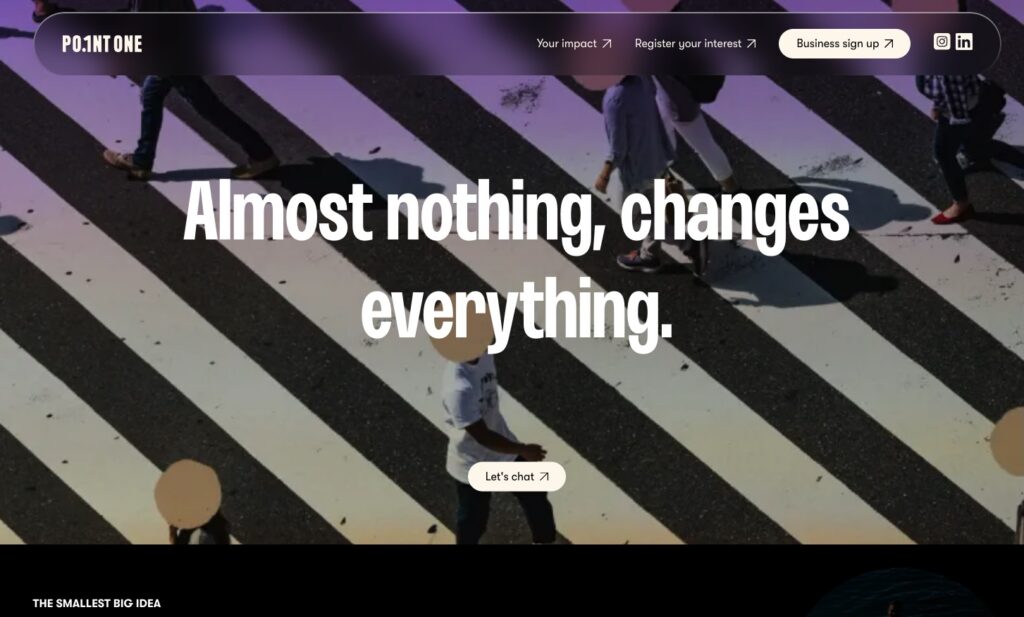
Most recently, Ryan founded Point One, a global initiative making it radically easy for businesses to support the clean energy transition. Point One asks companies to contribute just 0.1% of their revenue — one dollar per thousand — into a shared fund that unlocks and accelerates clean energy projects, particularly in developing markets.
Pooled across everyday economic activity, that rounding-error commitment has the potential to fully fund the global clean energy transition within 15 years.
What’s in it for You
Tune in to this episode and you will discover:
- How to find the single brand theme that compresses your biggest, most complex idea into the one line your audience cannot forget
- Why leading with your cause — or your industry’s equivalent jargon — is the surest way to lose the audience you most need to reach
- How Point One built a global brand movement by meeting audiences inside the cultural moments they already love, not the cause they need to care about
- Why simplicity is not a shortcut in brand storytelling — it is the destination, and what it actually takes to get there
- What the Story Cycle System revealed about Point One’s brand positioning when Park ran it live through the StoryCycle Genie during the conversation
- How scenes from your life — not a polished origin story — are the raw material for the brand narrative that will move the people you most want to serve
The Brand Story Framework Hidden Inside a Climate Initiative
When Ryan and his team sat down with brand strategists to articulate what Point One actually stood for, they were not trying to distill a sustainability pitch. They were trying to solve a universal brand problem: how do you get a busy, skeptical, fatigued audience to say yes to something that matters — without asking too much, without lecturing, and without sounding like everyone else in the space?
The answer they arrived at was almost nothing changes everything — and it works not because it is clever, but because it is structurally true at every level of human experience. You can apply it to a World Cup moment where a single goal changes the outcome of a match. You can apply it to the cultural pivot of the Me Too movement. You can apply it to the moment a pedalo ride through sewage off the coast of Spain changed the life direction of an eleven-year-old boy who would grow up to build one of Europe’s most celebrated brands.
“I can ask anyone — what is the small thing that happened in your life that had the biggest impact? And those are really interesting stories to tell,” Ryan explains. “So for us as a world, let’s not lead with climate, let’s not lead with sustainability and any jargon — because people have got huge amounts of fatigue and they’re tired of being told what to do. Our whole thing is: let’s show people how almost nothing can change everything.”
Why the Movement Leads with Culture, Not Cause
Point One’s strategy for building a movement is a direct application of what every great brand already knows and most brands fail to do: meet your audience where they already are, inside the stories they already love, and earn your way into their thinking rather than demanding their attention.
The organization is building campaigns around the 2026 FIFA World Cup by identifying the moments in every match where almost nothing changed everything — a single call, a penalty, a goalkeeper’s touch — and using those moments to make the brand’s central idea viscerally felt before the message is ever delivered. The same framework extends to golf, tennis, music, art, and film.
“We’re not ramming any messaging down their throat,” Ryan says. “We’re just showing people wonderful examples that they can relate to about almost nothing changing everything. And it’s got to do with their favorite nation or one of their favorite football games.”
Park draws a direct parallel to a water conservation campaign he built beginning in 1998 — one that grew to become the largest in the country precisely because it rooted behavioral change in the environmental prompts of everyday life. A toothbrush. A shovel. A car. Not water policy. Not alarming statistics. Familiar objects that created a moment of recognition and a decision within reach.
The architecture of both campaigns is identical: remove every possible barrier between the audience and the action, and trust that a simple, honest idea will do the work that complexity never can.
0.1% Is Not a Rounding Error. It Is the Point.
The genius of Point One’s ask is that it is designed to feel almost nothing while functioning as something enormous in aggregate. For a business earning one million dollars a year, the commitment is one thousand dollars. For a company turning over ten million, it is ten thousand. Point one percent of corporate revenue, contributed to a shared fund managed by the Global Energy Alliance — founded by the Rockefeller and IKEA Foundations and the Bezos Earth Fund — and deployed into clean energy projects across Latin America, Africa, and Asia through fifty local NGO alliance partners already delivering measurable results.
“It’s a rounding error for most businesses,” Ryan says. “But if everyone does it, it becomes planet-changing.”
When Park ran Point One through the StoryCycle Genie live during the conversation, the brand’s core positioning emerged with striking precision: Point One is the only global business network that makes the energy transition inevitable by making participation in it almost effortless. And the unique value proposition that surfaced — 0.1% of revenue. 100% of the planet. — was already live on Point One’s website.
“I love the word effortless there,” Ryan said. “That’s exactly it.”
Simplicity Is Not What You Strip Away. It Is What You Build Toward.
The deepest brand lesson in this conversation is not about sustainability. It is about the discipline required to resist the pull toward complexity when you know more than your audience does. Ryan did not arrive at almost nothing changes everything through a single insight. He arrived at it through decades of building brands — from washing neighbors’ cars at eleven years old to running four hundred college student employees across eleven UK cities to scaling a snack brand from a kitchen table to a private equity exit to founding a global movement — and discovering every time that the brands and moments and ideas that move people are always, without exception, the simple ones.
“I’m a big fan of simplicity,” Ryan says. “For me, if something’s not simple, it doesn’t land.”
That is the take-home for every brand builder in this audience. Not the climate numbers. Not the clean energy economics. Not the case for corporate sustainability. The principle that the most powerful brand story theme is always the one that makes even the hardest yes feel like the easiest decision your audience has ever made.
More About Ryan Kohn and Point One
- pointone.world — Learn about Point One, explore the campaign, and sign up your business
- Ryan Kohn on LinkedIn
- Ryan on Instagram
- Global Energy Alliance for People and Planet — Point One’s implementation partner deploying clean energy finance in developing markets
- B Corp Community — The certification framework Ryan helped shape with the Net Zero how-to guide
- Virgin Start-Up — One of the entrepreneur mentorship programmes Ryan has contributed to
- Tesco Back It — Another programme where Ryan has mentored emerging entrepreneurs
- StoryCycle Genie®
Related Episodes
- Using Artful Intelligence to Tell Your Sustainability Story with Bruno Sarda — The episode that sparked this conversation: Park’s friend and mutual connector between him and Ryan Kohn shares how sustainability storytelling is shifting from compliance to culture inside the world’s largest organizations.
- What Happens When a Brand Decides to Make Its Own Business Model Obsolete? with Shawn David Nelson — The founder of Lovesac shows how a single counterintuitive brand idea — buy our couch once and keep it forever — became the engine of one of America’s fastest-growing furniture brands.
- The Companies Winning the War for Talent Aren’t Telling Better Stories — They’re Telling Truer Ones with Bryan Adams — The founder of Ph.Creative and author of Give & Get Employer Branding unpacks why authentic brand stories build movements, and sanitized ones kill them.
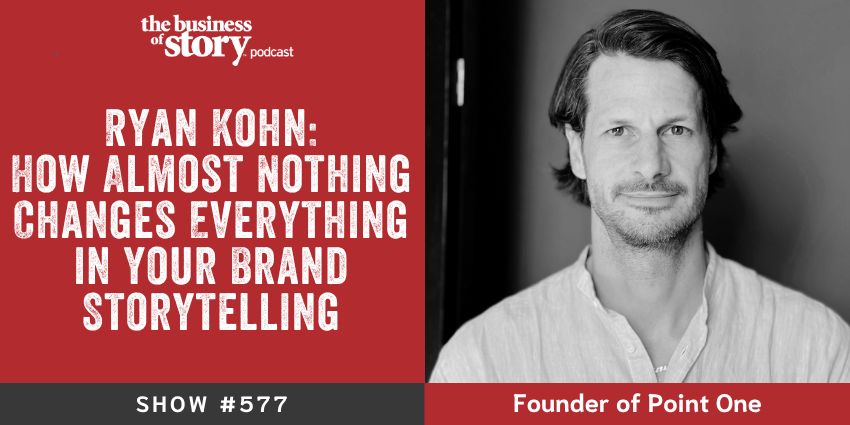
Ryan Kohn, Founder of Point One, Conversation With Park Howell on The Business of Story Pocast
How One Simple Brand Theme Moves Millions to Act with Ryan Kohn, Founder of Point One
From Bruno Sarda to Business of Story: How Purpose-Driven Leaders Find Each Other
Park Howell: Hello, Ryan, welcome to the show.
Ryan Kohn: Great to be here. Thank you for having me.
Park: And where are you coming to us from?
Ryan: I am coming to you live from London.
Park: I hear it’s hotter than hell over there. There’s no man-made climate warming going on whatsoever there.
Ryan: It exactly — yeah. A few weeks ago it was down at eleven degrees Celsius and now it’s been up at over thirty-five degrees. There’s been huge swings here. Very, very present global warming going on in London.
Park: Well, I was very excited to get you on the show. A couple of months ago our mutual good friend Bruno Sarda — he and his wife Jody were up at our place in northern Arizona — and we were chatting and catching up, because I’d done a lot of work with Bruno over the years, including teaching at Arizona State University in my role with sustainable storytelling.
He was talking about a number of the really interesting folks he’s been working with, and your name popped up. He said, “Park, you’ve got to talk to Ryan.” And I said, “Well, why is that?”
Then he gave me a little bit of insight into what you’re doing with this platform called Point One. And your tagline — which I think is bigger than a tagline, it’s your overall narrative focus — I thought was one of the most brilliant I have ever heard in all of branding, let alone in the very complex, controversial world of sustainability.
And that is: almost nothing changes everything.
We’re going to unpack that here in a minute. But let me stop yapping right now and let’s get your backstory. How did you find yourself getting to where you are today with Point One?
From Washing Cars at 11 to 400 Employees: Ryan Kohn’s Entrepreneurial Origin Story
Ryan: I always think it’s your parents, your childhood — for me anyway, that’s a good place to start, because I came from a family where both my parents were entrepreneurs. From a very young age I was given that entrepreneurial kick up the bum.
I remember maybe I was about eleven or twelve years old, and I asked my dad for five pounds so I could go buy a football magazine with some stickers. He said yeah, that’s fine. The week afterwards I went back to him and asked for another five pounds, and he was like, “Well, no — if you want to carry on, you need to earn it. Go and wash my car and I’ll give you five pounds.”
So I went and washed his car, got the five pounds, and I was like, this is great. Maybe I can wash more people’s cars and get more five pounds. I ended up washing a number of people’s cars around my local neighborhood and earning whatever it was, twenty, thirty quid a week.
But that felt like more than enough money for an eleven-year-old. More importantly, it taught me a really good lesson about being front-footed and taking initiative with regards to life and with regards to money. And that really stayed with me.
Then I remember setting up my first business when I was at university, which was a student events business. Very quickly that business grew to become one of the biggest student events businesses in the UK. I think we had about 400 student employees and we were running sixteen events a week in eleven different cities.
It was an amazing crash course in building a culture, building a brand, learning how to build relationships with different people from various walks of life, dealing with clubs and leisure space owners. I sold that business, got into property development, started my own environmentally friendly property development business, building houses that were premium but predominantly run off renewable energy.
How Ryan Kohn Built PROPER Snacks Into Europe’s Largest Healthy Snacking Brand
Ryan: Then a friend of mine called Cassandra had an idea to start a snacks business, a healthy snacking business, starting with popcorn. For some reason, it always sounded like a great idea to me. She was looking for someone to do it with her, and I jumped at it.
I think I was a bit unsure about the property world anymore. It’s quite a capitalist world where property often goes to the highest bidder. And I think building a brand there is quite difficult, even though I’d had some really good success with it.
So yeah, we started this snacks business. It was called ProperCorn — that was the first product. Our first customer was Google’s head offices. Very quickly we built one of the fastest growing brands in the whole of Europe. We were sold throughout Europe and moving something like eight million snacks a month through the business.
We sold that business five years ago, back from when we started it in 2011. It’s something I’m very proud of. We built a wonderful culture.
Park: Are you still a part of that PROPER? Okay.
Ryan: We had a chef who made breakfast and lunch every day for everyone. We gave everyone in the business unlimited holiday. Everyone in the business had shares, so everyone was a shareholder on the same journey together.
Park: Now you sound crazy right now, right? I mean most American business people would be like, “This guy’s not for me — there’s no way we could pull that off here.” How did you do it?
Ryan: I really believe in the power of building a strong culture. If you build a team that are willing to run through brick walls for you — and we were selling snacks, we weren’t saving lives, it’s a very trivial thing, let’s be honest — but we built a culture where people really cared.
We probably spent more money than most businesses do per person on that culture. And I think that paid back in spades when it came to productivity and ambition. When someone goes into a big retailer across the UK being passionate about what they’re selling, they’re up against people from big conglomerates who are suited and booted with a PowerPoint presentation. Whereas we were all about bringing theatre and energy.
And it worked. We’re now the biggest popcorn brand across Europe and also the largest healthy snacking brand. We do lentil chips, a whole host of things.
Park: When you attract professionals who are really driven to make a difference in their career and in the company and the communities you serve, you can give them unlimited holiday. And my guess is they probably take fewer holidays than if they were at a big corporation with two weeks mandated off.
Ryan: It’s funny — so many people say that. And I mean, if I’m honest, it was a real mix across the board. Our financial director ended up taking over forty days, but his work ethic was brilliant. He only took those days because his partner’s family was quite affluent, so they were often away. But he was always on call, always working when he was in the UK, always staying late. He never once let the business down.
I think it was a really good example of someone who — what you’re saying when you give someone unlimited holiday is: we trust you. At the beginning of the year we agree the objectives and the KPIs of what you set out to do. How you get there is up to you.
If you’ve got that clarity and that agreement, then I don’t mind if someone ends up taking some extra time. That’s how they manage their life. And as a founder, you felt that responsibility yourself. All you’re doing is giving that same structure to the rest of your organization. And it worked really well.
Park: So when you were a young man, your dad said “wash the car,” and you turned that into some significant quid. And then in college — I did something similar to you, not nearly to the magnitude, I started a small band booking business and would bring bands in from Seattle for the fraternities. Just two of us doing it.
But you built a very large enterprise — four hundred college students working for you. You must have been flying by the seat of your pants, common sense, just figuring out what’s going to work and what doesn’t, because you weren’t around long enough on this planet to really know how to run an event business.
Ryan: Literally that. The one thing that has always stuck with me — the initial name of our business was Revamp, and that stood for “revitalize a marketplace.”
A lot of the time when you go to a club night at your university, it’s kind of a DJ in a box. The DJ is there, they’re playing some music, and everyone’s dancing. Our whole thing was: hold on, how can we do things differently? What extra can we bring to turn this into something that really stands out?
We started with a hip hop night with breakdancers and beatboxers, and people loved it. Then we had another night where we brought in a live funk band, with house music and hip hop in another room. And another night we actually recreated the full moon party that happens in Thailand, with glow-in-the-dark bucket drinks and UV lights and paints.
The premise of how do you as a business get cut-through — how do you stand out from the rest of the industry — has stayed with me forever. I always say to any business I’m advising: what’s the thing you’re doing to make the magic happen? That doesn’t mean you have to spend more money. It does mean you have to have creative thought. And that’s been in my head about taking opportunities and thinking about how you can do it better.
Park: And you said something earlier that I love — you’ve got to bring theatre and energy. I couldn’t agree with that more. When speaking or doing training, people will ask me what I focus on to really connect with an audience. And I say: even in a business situation, even in a sustainability situation, it is performance art. You have to perform to be entertaining, to get their attention, and then you teach them through that entertainment channel.
The Sewage Pedalo Moment: When Ryan Kohn Decided Business Had to Stand for More
Park: From your event world, then you went into sustainable housing, then natural healthy popcorn. When did you feel like business can stand for more? Not do damage to the planet, but actually have a good impact for people? When did that hit you?
Ryan: I think from a young age I always had this thing. I remember going on holiday to southern Europe — Spain — and I was on a pedalo in the sea. There was all of this sewage in the water that was just really disgusting.
I remember being so revolted by it, and it just made me think about how that happened and how we can protect this world. Nature for me was everything. I play a lot of sport and it’s always outside.
Then I had an amazing experience when I was sixteen, through the school I went to, where I got an opportunity to work with physically handicapped teenagers. That had an amazingly profound effect on me.
I’ve come from a loving family. I’ve been given every opportunity in life to succeed. I grew up just outside London, probably in my own little bubble, being totally honest. And then working with physically handicapped teenagers was a real slap in the face of: Ryan, there are a lot of people in this world who don’t operate in this bubble world you’ve been in.
I remember coming home and speaking to my dad and saying, “Dad, I think I know what I want to do. I think I want to work in a school with these teenagers and do what I can to help.” And my dad said to me, “If you want to make a real impact, build your own school.”
That landed with me. Maybe I can go bigger, maybe I can have more impact. And I just remember thinking: everything you do now, you need to be thinking about how you’re going to have some kind of impact.
That was why when I got into property development, I thought: if you’re going to build something that’s going to last for decades, why can’t we build it in a way that isn’t harming the people and planet around it?
And even with PROPER Snacks — we were one of the first B Corps in Europe. I co-wrote the how-to guide for businesses to get to net zero by 2030 for the B Corp community. We did our absolute best to be conscious of the way we were going about our business. And honestly, that’s probably just the least we ought to do.
Park: And what’s interesting about your answer is it also plays to this idea of almost nothing changes everything. When I asked you to take me to that moment, you first said, “Well, I don’t really know if there is one.” And then boom — yes, there was that time on the pedalo outside of Spain with the sewage. And it triggered a second moment, working with the high school kids.
I want our listeners to think about that. When you are building something, what is really driving you? It always leads back to a few moments in time that just changed your whole world. I call it: don’t look for your stories. Find your scenes and your story is going to find you.
You just described two scenes in your life that led you to where you are today. So let’s talk about today. Almost nothing changes everything. How did you come up with that?
What Is “Almost Nothing Changes Everything”? The Brand Theme Behind Point One
Ryan: First of all, I love that framing of finding your scene. That literally says it perfectly. I may have to steal that.
Park: I did a TEDx talk about that about seven years ago — stop looking for your story, find your scenes, and your story will find you. Please use it as much as you like.
Ryan: Amazing. Okay, so how did we come up with almost nothing changes everything?
To answer that I’d probably have to give the background about what we’re doing.
In parallel with running these various businesses, I’ve always had a real passion for the not-for-profit sector. I’ve done various campaigns along the way. I’ve volunteered in refugee camps in Greece. It’s always been a big part of my life.
When we sold the business, I knew I wanted to do something to better people and planet. The environment was always something I was very passionate about.
After selling the business, getting married, having two beautiful kids — a couple of years ago I just noticed a real disconnect. If you ask anyone, do you care about the well-being of the planet, the answer is always yes. But that doesn’t always translate into action.
I looked at the climate space over the last ten to fifteen years, and it feels like there’s been a huge emphasis on behavior change. Buy an electric car. Stop flying. Stop eating meat. Shout at businesses and governments to change their ways. And while there’s definitely been some progress, I don’t think we’ve seen the rate of change we all recognize we need.
When you look at the data, 75% of greenhouse gases comes from fossil fuel. And now we’re at a moment in time where clean energy is up to 70% cheaper than all forms of fossil fuel. So I was like, there must be a way of leaning into that. The economics have never been in our favor as much as they are now.
It really worked out that if you took just 0.1% of corporate revenue, put it in a pot, and focused on the clean energy transition — within 15 years the whole world could have access to clean energy and very little need for fossil fuel. And all it requires is almost nothing. Just point one percent.
I really believe in the power of brands. Our previous business launched with popcorn, which is probably the lowest barrier to entry product you can ever launch with — you can make it in your kitchen. But we built a brand that resonated with people.
I think the same applies here. 85% of the world’s population wants to see stronger measures on climate. But that 85% don’t have a brand in this space that really resonates with them. Not a brand selling them products or services — a not-for-profit, a movement. So I was like, we need to build a brand around this. We need to capture the hearts and minds of people.
I can’t take credit for coming up with the line almost nothing changes everything. I worked with two guys who are brilliant brand strategists — they sit down with you, take everything that’s in your head, and distill it into a really clear brand house. What’s your purpose? What’s your vision? What are your values?
And through that process, they came up with this phrase, which was: almost nothing changes everything.
It captured everything we wanted to do. It captured the idea, but it also captures the stories we want to tell. You can think of big cultural moments — the Me Too movement, moments that had a small instance but a huge impact on the world. But you can also talk about those stories at an individual level. I can ask anyone: what’s the small thing that happened in your life that had the biggest impact on it?
Why Point One Leads With Culture and Story — Not Sustainability or Climate Jargon
Ryan: For us as a world, let’s not lead with climate. Let’s not lead with sustainability and any jargon, because I think people have got huge amounts of fatigue and they’re tired of being told what to do. I hate being told what to do. I’ve got no interest in doing that to other people.
Our whole thing is: let’s show people how almost nothing can change everything. Let’s tell those stories. And then they learn about Point One through that.
Park: When I was talking to Bruno, I asked him point blank — because we have an administration in America now that’s pretty much trying to poo-poo all sustainability, all climate initiatives, solar, wind, you name it. I asked him: has that made his job more daunting?
He thought for a second and said something really fascinating. He said what it’s done is made major American and North American companies stop looking at sustainability and climate change as being compliant to regulations they have to follow. And he was seeing a greater culture around it now — because they’re not told they have to do it, they realize the importance of doing it themselves, transitioning from compliance to culture.
I think that’s what you’re doing as well.
Ryan: The thing with culture is it’s an incredibly powerful tool because it scales so much faster than regulation. Culture shifts can happen overnight.
I don’t want to compare Point One to Black Lives Matter, but that was something that happened where on Monday mornings, businesses — from small to S&P 500 — were meeting up going: what are we doing to increase representation within our business?
If you get it right, it’s an incredibly powerful way to connect with people. Our whole strategy with Point One is about connecting with people through their cultural hangout. Through music, through sport, through art, through film. Telling those stories or showing those examples within those categories where almost nothing changes everything.
The 5.4 Seconds Campaign: What 0.1% of a World Cup Match Reveals About Small Commitments
Park: Well, let’s think about your campaign. What I liked about it — leading up to this, you talked about the Me Too movement and Black Lives Matter, very important movements, but also movements that can push off a lot of people sitting in the bell curve who are like, “I want to do my part, but I’m not going to be a complete activist.” But you also showed in your campaign where single moments changed everything in culture, entertainment, and sports. Can you take us through your campaign?
Ryan: I should say that as an organization, we are not politically affiliated. The thing I push more than anything is cheap energy. All we’re trying to say is: do you want cheap energy that’s clean, or do you want expensive energy that’s dirty? That’s a really simple argument.
With the World Cup coming up in America, Canada, and Mexico, we were looking at what 0.1% of 90 minutes is. It’s 5.4 seconds — just enough time for someone to score a goal or get sent off in a football match that changes everything in that game.
So we looked back at all the previous World Cup moments. What are those moments where almost nothing changes everything? Can we highlight those moments, and then as the World Cup unfolds, pinpoint the moments where almost nothing changes everything in those games and use that as the vehicle to connect with people? They learn about Point One through that mechanism.
That really aligns for us because we’re meeting people in their cultural hangouts. We’re not ramming any messaging down their throat. We’re just showing wonderful examples that they can relate to — examples involving their favorite nation or one of their favorite football games. And it translates really well across sport. Tiger Woods’ iconic Masters putt. Certain tennis matches. There are loads of opportunities.
Park: It reminded me of a campaign we started for water conservation back in 1998 in Mesa, Arizona, that grew to become the largest water conservation campaign in the country. We relicensed it to over 400 municipalities and private entities that wanted to promote it.
What we did is kind of what you just reminded me of — we called them environmental prompts. The headline was simply: there are a number of ways to save water, and they all start with you. So if you don’t do it, all the other ways to save water don’t matter. You have to be the impetus.
We ended up creating a list of one hundred surprising water-saving devices, such as a toothbrush. How does a toothbrush save water? It’s a reminder to turn the water off while you’re brushing your teeth. The average person will save four gallons every single day. We did it with shovels, cars, all these weird things you’d never think of as a water-saving device — but it was just meant to prompt you.
That’s kind of what you’re doing with the World Cup. Meeting people where they already are so your brand becomes part of their life.
The Psychology of Small: How Specific Numbers Drive Environmental Behavior Change
Ryan: That’s exactly it. Climate change is complex, and our whole purpose is about making it ridiculously easy to be part of the solution.
We’ve all sat there going: what can I do? What’s the use of me recycling? This is our whole thing — trying to show that those small things add up. If we all do it and it starts with you, it becomes a really big thing.
I think what the climate space has also been lacking is a singular idea that we can all hang our hats on. Point one percent, for context — after every thousand dollars of revenue it’s one dollar. For every hundred dollars it’s ten cents. It’s really a rounding error in most scenarios. If you’re a business that turns over a million dollars a year, it’s a thousand dollars.
It’s not supposed to be an amount that becomes a real burden. It’s supposed to be an amount that you almost wouldn’t notice. But if everyone does it, it becomes planet-changing.
And I think making it simple enough that people feel they can make a difference is really important.
What was interesting about COVID is that there was an absolute global response to something because we all felt that real and present danger at the same time. Governments were able to coordinate a response and eventually we got there. Climate change is going to have far worse outcomes — it’s already happening. We’re seeing horrific natural disasters, water shortages, rising heat. It’s going to get so much worse.
And it’s crazy to think that we don’t even feel comfortable talking about it. Companies are scared to talk about it, especially in the US.
So it’s really encouraging hearing that feedback from Bruno that big organizations are grabbing the mantle themselves and saying, “We don’t need the legislation, we’re just going to do it anyway.”
Inside Point One’s Business Model: 0.1% of Revenue, 50+ Companies, and a Global Energy Alliance
Park: Now you’ve had Point One going for about two years, you said?
Ryan: We had the idea a couple of years ago, but we actually only launched it about two and a half months ago. So it took some time.
At the beginning of last year, we partnered with this amazing organization called the Global Energy Alliance, founded by the Rockefeller and IKEA Foundations and the Bezos Earth Fund. They’ve now mobilized over seven billion dollars of clean energy finance in developing countries and they’re achieving remarkable results — over 300 million tons of carbon emissions reduced, over eight million jobs created, and access for over ninety million people.
When we raise the money, it goes to them. They deploy it through the developing world — Latin America, Africa, and Asia — through fifty alliance partners, which are essentially local NGOs on the ground that can do this in an impactful but culturally sensitive way. It’s a very smart structure.
Park: So you’re a couple of months in. How are you getting people to invest?
Ryan: We’ve now got just over fifty businesses who have signed up, ranging from fashion brands to finance businesses to media companies — a whole real mix.
There’s Jam Jar, which is a VC in the UK — the VC company of the innocent smoothie founders who sold their business to Coca-Cola for hundreds of millions. There’s Piper, a private equity firm. There’s a super cool fashion brand called Alex Eagle, which has a few stores in London and she’s also a contributing editor for Vogue. A big interior design firm in the US called Claudia Afshar. A real mix of organizations. It’s been really nice.
Park: I’m surprised Patagonia isn’t on that list. It seems like something they’d jump all over.
Ryan: We haven’t had a conversation with them yet, but they’re an amazing organization. They already obviously do a huge amount. And one thing I’d also say with Point One is we’re not about replacing other brilliant initiatives. We just have the singular message: if we all do this, we can achieve something incredible. So we encourage even the businesses who have signed up to Point One to be doing more. Point One is almost like the least an organization should do.
Because we make it super simple for businesses to sign up — they plug into us, we give them case studies about where their money goes, we give them the Point One emblem they can use on their product or service, we give them loads of ways to tell the story of where the impact is going.
Patagonia would be an amazing organization. If you’re listening, we’d love to speak to you. You’re on our list for sure.
Park: Someone else you should talk to — and I’d be happy to make an introduction — is Gensler, the worldwide architectural firm. I’ve got a friend in Austin, Texas who is their chief storyteller. I think they would be all over something like this.
Ryan: I would love that. Any introductions — honestly, any organization. A part of this is about creating a movement. You want it to feel grassroots, like a groundswell coming up. It doesn’t need to be the biggest companies in the world. This is about getting SMEs on board, speaking to businesses of all shapes and sizes.
Our website is pointone.world — all written out, no numbers. You can go there and sign up as a business or register for more information.
Brand Positioning Live: How Park Howell Ran Point One Through the StoryCycle System™
Park: As I always do to get prepared for these shows, I ran your Point One brand through our StoryCycle Genie — just to give me a basic brand assessment and then an overall brand narrative strategy. I sent it to you a while ago. Did you have a chance to look at it?
Ryan: I flicked through it and I was like — this is quite incredible. But go on, I’d love to hear some of the results.
Park: It first looks at how you’re showing up by going to your website, and then from that brand assessment — which it creates in just a couple of minutes — it creates an entire brand narrative strategy based on our Story Cycle System. The same system I taught at ASU when I was working with Bruno.
It’s all narrative-based, completely focused, inspired by the hero’s journey, with the And-But-Therefore framework at its heart. It’s the only platform I know of that’s completely narrative-based. It looks at your story, says how well are you telling it, what are you doing well, where are the gaps you could easily fix, and then maybe even inspires you with ways to think about your brand’s story.
For instance, let me jump into the positioning statement it came up with. It reads: Point One is the only global business network that makes the energy transition inevitable by making participation in it almost effortless.
Ryan: I love that. That’s literally the heart of what we do. Our purpose is about making it ridiculously easy to be part of the solution. I’m a big fan of simplicity — if something’s not simple, it doesn’t land. And I love the word effortless there. That’s it.
Park: And then it gives you the reasoning why it came up with that, so you’d iterate inside the Genie and it collaborates with you. It also gave a unique value proposition based off that positioning statement: 0.1% of revenue. 100% of the planet.
Ryan: Yeah, we’ve put that on our site already.
Park: The UVP achieves maximum compression of the brand’s core paradox: the smallest possible corporate commitment produces the largest possible collective outcome. But it’s so simple. UVPs can get really complicated if you don’t really think about it. But it drives to the core. That’s what I love about it.
Ryan Kohn’s Why: Protecting the Future for His Two Children — and the Planet
Ryan: What I love about that is I always say to people: I don’t actually care that much about clean energy in particular. People might be like — my god, this guy’s obsessed with clean energy. But I’m not.
The thing I care about is that I have two young children and I care about protecting the world we love. It’s as simple as that.
I want them to go on holiday in twenty years’ time and be able to see a coral reef — not have it be gone. I want them to be able to go skiing in France. These are obviously first-world examples, but climate change affects everything. It affects the water we drink, the food we eat, the places we travel to, the refugee crisis. It affects absolutely everything.
If we think we’ve got a lot of refugees or immigration now — it’s going to be so many more when people are literally living in worlds that are uninhabitable.
So this isn’t about clean energy. This is about protecting the world we love. That’s why I love that statement — 0.1% of revenue, 100% of the planet. That’s what we’re talking about.
And if someone said to me tomorrow, “Hey, there’s a better way to reduce carbon,” I’d love to hear it. But really, clean energy is just the best lever we have to pull to protect everything that we love. Super simple.
Why the Clean Energy Transition Is Inevitable — and Why Business Will Lead It, Not Politics
Park: Do you get pushback — politicians and petroleum special interests saying they can’t possibly have any impact at that small a scale?
Ryan: I think it’s difficult for them now. It would have been easier maybe five or six years ago when the economics were different. But when there’s so much blatant information and data on how much cheaper clean energy is, it quite literally doesn’t make sense to be doing more fossil fuels in any way, shape or form.
You’ve also got nuclear, which is a much cleaner source of energy. Yes, there’s waste from it, but it’s a hell of a lot cheaper and cleaner than fossil fuels. We have all the technology. It just needs to happen. And it is happening.
Regardless of what any politician says, it’s happening. You’re trying to swim through a tsunami. It’s coming. It’s just a question of how quickly we get there.
If I said to anyone, “What’s the world going to look like in fifty years?” — I have no doubt the world will be run on a mix of clean energy, maybe nuclear, maybe nuclear fusion depending on where the technology gets to. The sooner we get there, the more of the world that we love will be protected. That’s what Point One is about.
Park: When we moved up to northern Arizona, we’re at 6,600 feet. We bought a Subaru Ascent but also a Subaru Soltera — their EV built with Toyota. It’s a fantastic little car. When we go into Flagstaff, about 20 miles from us, we get in that EV and we’re saying: isn’t it so great, we’re not burning any gas? When I take the Ascent in, it’s a twenty-dollar round trip in fuel. It just underscores to us the power of it.
Ryan: And here’s an amazing stat: the world’s deserts receive more energy from the sun in six hours than we consume as a planet in a year. America, Australia — there’s just vast sunlight in so many parts, and it’s free. It’s literally just there. All we’re doing is harnessing it.
I remember listening to Elon Musk on the All-In Podcast not so long ago, talking about nuclear. And he was just like: guys, why are we spending billions trying to create loads of tiny little suns? We’ve got the biggest sun right there — we just need to harness it. And solar panels are made from what I think is the second most abundant source on the planet, which is basically sand.
I always think about Donald Trump right now — he’s actually doing the movement an amazing favor, because everyone is thinking: if we want energy resilience, we can build these grids ourselves now. You don’t need to be plugged into the main grid. You don’t need to drill anything, find where the oil is, extract anything. The supply is just there.
Last year, three trillion dollars was invested into energy across the world and two trillion of that went into clean energy. So it’s happening. It’s just a question of how quickly we get there.
How to Join Point One and Commit 0.1% of Your Revenue to Clean Energy at Pointone.world
Park: Well, this has been absolutely fascinating. Congratulations on what I believe is one of the best brand stories I’ve heard in a long, long time.
And if I take away anything from this conversation, folks, it is simplicity. Make a complex message simple so that your audience, your colleagues, your customers, the communities you serve can easily bring it into their life without having to do a lot of thinking.
Ryan: Well thank you so much for having me. It’s a real pleasure. Thank you also for the enthusiasm and kind words for what we’re doing.
Park: Absolutely. And everyone — pointone.world. If you want to learn more, see their amazing campaign in action, or start participating: pointone.world. I’ll put the link in the show notes.
Thank you, Ryan. I’ll talk to you soon.
Ryan: Thank you. The best.
Q: What Is Point One?
A: Point One is a global business movement founded by entrepreneur Ryan Kohn that asks companies to commit 0.1% of their annual revenue to fund the clean energy transition. Businesses sign the pledge at pointone.world, and contributions are directed through the Global Energy Alliance to verified, high-impact clean energy projects worldwide. More than 50 businesses have already committed. Point One is designed around one principle: the smallest meaningful action, taken by enough businesses, changes everything.
Q: What Does “Almost Nothing Changes Everything” Mean?
A: “Almost nothing changes everything” is Point One’s core brand theme and the key to understanding its entire strategy. It captures the central paradox of the 0.1% commitment: the contribution is so small that no business can reasonably refuse it — yet collectively, it generates a transformative funding stream for clean energy. The phrase works because it resolves tension rather than creating it. It doesn’t ask people to sacrifice. It tells them that the smallest thing they can do is, in fact, the most powerful thing.
Q: How Does Point One Work?
A: Point One works in three steps:
- Sign the pledge. A business commits to contributing 0.1% of its annual revenue at pointone.world.
- The funds are deployed. Contributions are pooled and channeled through the Global Energy Alliance to proven, high-impact clean energy initiatives globally.
- The network compounds. Each pledging company joins a global community of purpose-driven businesses, amplifying both the financial impact and the cultural momentum of the movement.
There is no minimum revenue requirement. Point One is designed to be accessible to businesses of every size — because the whole point is that “almost nothing” is the entry price.
Q: What Is the 0.1% Commitment, and Why Does It Matter?
A: The 0.1% commitment is the foundational ask of Point One: donate one-tenth of one percent of your annual revenue to clean energy funding. For a company with $1 million in revenue, that’s $1,000. For a billion-dollar company, it’s $1 million. For most businesses, it’s less than a rounding error on a quarterly budget review.
It matters because the math scales. When thousands of businesses commit 0.1%, the aggregated total becomes a significant, consistent, and growing source of clean energy funding — one that operates independently of government policy cycles and political volatility. The 0.1% commitment is designed to make “yes” the only reasonable answer.
Q: How Do You Build a Brand Story Around a Complex Topic Like Climate Change?
A: The most effective brand stories about complex topics do one thing above all else: they make the audience feel capable, not overwhelmed. Here is the framework Point One used:
- Lead with identity, not issue. Invite people into a shared culture before explaining the problem.
- Find the one number. Abstract challenges need a single, tangible action. Point One uses 0.1%. Not “fight climate change.” One number.
- Eliminate jargon. Replace “sustainability,” “net zero,” and “transition” with plain human language that anyone can repeat.
- Use the ABT structure. Every compelling story follows: the world your audience wants (And) → the obstacle blocking them (But) → the resolution that makes them the hero (Therefore).
- Protect the brand theme. “Almost nothing changes everything” is not a tagline. It is the organizing idea that makes every other message coherent.
Q: Why Does Leading With Your Cause Kill Your Brand Message?
A: Leading with cause — especially on topics like climate change — triggers defensiveness, overwhelm, and disengagement in the people you most need to reach. It puts the problem before the person, which is both a storytelling error and a behavioral one. Audiences don’t share messages that make them feel guilty or powerless. They share messages that make them feel capable and included.
Point One’s success comes from deliberately inverting this sequence. It leads with culture, community, and an absurdly achievable action. The cause becomes the outcome of engagement, not the barrier to it. The lesson for any brand communicating on complex social or environmental issues: your audience needs to feel like the hero before they can care about the mission.
Q: How Does Brand Storytelling Drive Social Movements?
A: Social movements scale when they give people three things: a simple shared identity, a low-barrier action, and a story they can tell in a sentence. Brand storytelling provides all three.
Point One’s “almost nothing changes everything” works as a movement-building tool because it:
- Creates identity. You are someone who believes small actions have massive collective power.
- Provides a clear action. Sign the pledge. Commit 0.1%. Done.
- Delivers a shareable story. 0.1% of a 90-minute World Cup match is 5.4 seconds. That’s a story people tell at dinner.
The And-But-Therefore (ABT) narrative structure is the engine beneath every effective movement story: establish the world people want, name the obstacle that blocks them, and give them the resolution that places them at the center of change.
Q: What Is the ABT Framework and How Does It Apply to Purpose-Driven Brands?
A: The ABT (And-But-Therefore) framework is a narrative structure derived from screenwriting and the biological wiring of the human brain. It creates the three forces every compelling story requires: agreement (And), conflict (But), and resolution (Therefore).
Applied to Point One, it works like this:
Businesses want to succeed AND make a meaningful difference in the world — BUT the scale of the climate challenge makes individual action feel impossible — THEREFORE Point One makes the world-changing commitment achievable at exactly 0.1% of revenue: almost nothing that changes everything.
For purpose-driven brands, the ABT framework keeps the audience — not the cause — at the center of the story. The “Therefore” is not “therefore the planet is saved.” It is “therefore YOU have the power to act right now.”
Q: Why Is the Clean Energy Transition Inevitable Regardless of Political Conditions?
A: The clean energy transition is fundamentally an economics story, not a policy story. Three forces make it irreversible:
- Cost parity. Renewable energy is now the cheapest form of new electricity generation in most global markets, and costs continue to fall.
- Corporate demand. Major energy buyers — from tech companies to manufacturers — are signing long-term renewable contracts independent of government incentives.
- Capital flows. Global investment in clean energy now exceeds investment in fossil fuels. Financial markets have priced the transition.
Political headwinds can slow the pace of transition, but they cannot stop what is a market-driven restructuring of the global energy economy. For businesses, the strategic question is not if they will operate in a clean energy world — it is when, and whether they helped build it or simply inherited it.
Q: How Can a Business Join Point One and Sign the 0.1% Pledge?
A: Businesses can join Point One in three steps:
- Visit pointone.world
- Sign the 0.1% pledge — committing one-tenth of one percent of annual revenue to clean energy funding
- Join the global network of purpose-driven businesses already in the movement
There is no minimum company size or revenue threshold. Point One is explicitly designed so that the ask is small enough that no business can reasonably say no — and impactful enough that, together, it funds the future.
 Listen To More Episodes