Why Clients Call Me the World’s Most Industrious Storyteller
We all want to make our mark, to build something lasting and meaningful in business and in life, and I’ve spent decades helping brands do just that—and grow by as much as 600 percent.
Along the way, my clients started calling me the World’s Most Industrious Storyteller, not because I worked the longest hours or churned out the most content, but because I relentlessly applied the power of story to drive real, measurable results for their organizations.
But what most people don’t see are the failures, the late nights, and the lessons learned the hard way—moments when the story didn’t go as planned, and I had to dig deep, adapt, and rewrite my own narrative.
It’s not just the wins or the growth numbers that define my journey, but the willingness to keep showing up, keep following up, and keep crafting stories that move people and brands forward—no matter how messy the path.
You ever notice how the stories we tell ourselves shape the lives we lead? I didn’t—at least, not fully—until Jim Douloumbakas sat me down for his Founders Journey Podcast and asked me to unravel my own.
Suddenly, I was staring at the messy, meandering, sometimes maddening path that’s carried me from a wild kid on a muddy ranchette outside Seattle to a guy who helps leaders and brands find clarity through story.
If you want the whole unvarnished conversation (and trust me, it’s got more twists than a mountain road), you can catch it here:
But let me give you a taste of what we covered—and why your story, with all its bumps and bruises, might just be your most valuable asset.
The Happy H: Where Chaos Was the Curriculum
As a kid, I grew up in a house my dad built with his own two hands—a place we called the Happy H. Seven kids, two parents, and a whole lot of noise.
My sister Melody was the lone girl in a sea of brothers, and she could hold her own with the best of us.
My dad, a Depression-era kid from North Dakota, landed in the Pacific Northwest with $15 in his pocket and a stubborn belief that things tend to work out. He started Constructors PAMCO, built a business from scratch, and taught me two things: “A guy might think about…” (his gentle way of nudging us toward wisdom), and “Things tend to work out.”
That last one? It’s become my mantra, especially when things absolutely, positively do not seem to be working out.
But growing up in the Happy H wasn’t all sunshine and storybook endings. There were fights, failures, and more than a few scraped knees—literal and metaphorical.
I learned early that chaos is a great teacher, and that sometimes, the best stories are forged in the fires of family mayhem.
Finding My Voice—By Losing My Way
School? It bored me to tears. I was the kid who’d rather be outside than stuck in a classroom.
I barely scraped by until music found me. My grandmother, Mabel, could make an upright piano bounce, and I wanted to do the same. Music led me to choir, songwriting, and eventually a degree in music composition.
But even then, I was stumbling forward, not striding. Teachers like Dennis Barrens and Mr. Erlich showed me that storytelling—whether through a song or a social studies lesson—was the secret sauce that made learning stick.
I didn’t set out to be a storyteller. I just wanted to make a living.
Journalism and communications at Washington State University seemed like a practical path.
Turns out, the rhythm and tone I learned in music shaped everything I did in advertising, branding, and leadership later on.
But let’s be honest: I failed plenty. I bombed tests, missed cues, and doubted myself more times than I can count. Each misstep, though, was a note in the melody that became my story.
The Entrepreneurial Itch (and the Bruises That Came With It)
After college, I packed up my dreams, a thousand bucks, and a single wool suit, and headed for Phoenix.
I bounced between agencies, learned every side of the business, and eventually started my own shop, Park & Co, in 1995.
My first client, Forever Living Products, stuck with me for 20 years.
Sky Harbor International Airport came next. The business grew, I hired my first employee, bought a building, and learned that success is 50% showing up, 50% following up.
But let’s not sugarcoat it. I made risky bets—like dropping $100,000 on an Avid editing system that nearly sunk us. I got sued, lost money, and learned more about humility and letting go than any win ever could teach.
The failures stung, but they forced me to rethink, retool, and—most importantly—rewrite my story.
From Agency Owner to StoryCycle Guide
By 2006, the world of branding was changing at warp speed.
The internet, social media, and e-commerce were rewriting the rules.
Our son, Parker, was studying film at Chapman University, and I started borrowing his books and lectures. That’s when I discovered Joseph Campbell’s Hero’s Journey and realized: this isn’t just a story structure—it’s a roadmap for life and business.
I mapped the Hero’s Journey to business, developed the Story Cycle System, and wrote Brand Bewitchery. My first client to use the system, Adelante Healthcare, grew by 600%. That’s when it hit me: story isn’t just how we communicate—it’s how we lead, build trust, and create real transformation.
But even then, the journey was anything but linear.
There were false starts, tough clients, and moments when I wondered if I was just making it up as I went along. Spoiler alert: I was. And that’s okay. Because every founder, every leader, every brand is making it up—one story at a time.
Lessons for Founders and Anyone Chasing a Dream
Jim and I talked about the loneliness of entrepreneurship, the power of personal development, and why your story matters more than your business plan. Here’s what I hope you’ll take away:
- Your story is your strategy. It’s not just what you do, but why you do it, who you do it for, and how you got here.
- Things tend to work out—if you show up and follow up. My dad was right. Persistence, not perfection, is what moves you forward.
- Balance matters. I built my business a mile from home so I could be there for my family. Success isn’t worth much if you’re not around to enjoy it.
- Failures teach more than wins. Don’t be afraid to take risks, but learn to let go when things don’t go your way.
- Take time to think. Step back, reflect, and give yourself space to see the bigger picture.
If you’re ready to dig deeper into the power of story—and maybe see your own journey in a new light—check out my full conversation with Jim on the Founders Journey Podcast, YouTube, Spotify, or Apple Podcasts.
And if you want to test the strength of your own brand story, try the StoryCycle Genie for FREE. Who knows? Your next chapter might be closer than you think.
Keep showing up. Keep following up. And remember: your story—failures, flaws, and all—just might be the thing that sets you apart.
Want to learn more about me my journey? Visit businessofstory.com/about.
My Short Story Path
Clients call me the World’s Most Industrious Storyteller for helping brands grow by as much as 600 percent. Here’s how I got here:
- My grandmother, Mabel Howell, inspired me to play the piano when I was seven.
- Started taking piano lessons and writing songs in the third grade.
- Earned degrees in Music Composition & Theory and Communications from Washington State University (1983 & 1984).
- Started my advertising career in Phoenix, AZ.
- Launched Park&Co ad agency in 1995.
- Gave myself a master’s course in storytelling beginning in 2003.
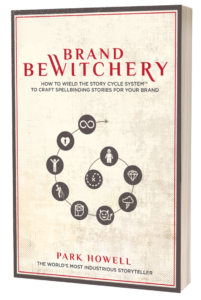 Developed the Story Cycle System™ for brand building in 2008, which has grown brands by as much as 600 percent.
- Learned and applied the And, But, Therefore (ABT) narrative framework starting in 2013.
- Taught a master’s course in sustainable storytelling at Arizona State University from 2013-2018.
- Launched the Business of Story podcast in 2015.
- Launched the Business of Story in 2016 and now consult, teach, coach, and speak internationally, helping leaders excel through the stories they tell.
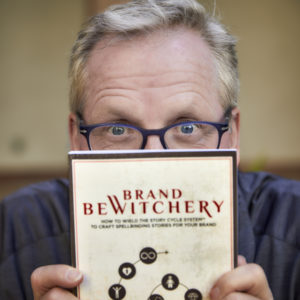
- Published Brand Bewitchery: How to Wield the Story Cycle System™ to Craft Spellbinding Stories for Your Brand, in 2020.
- Realized that my music composition & theory education had come full circle as I now teach brand leadership storytelling composition & theory.
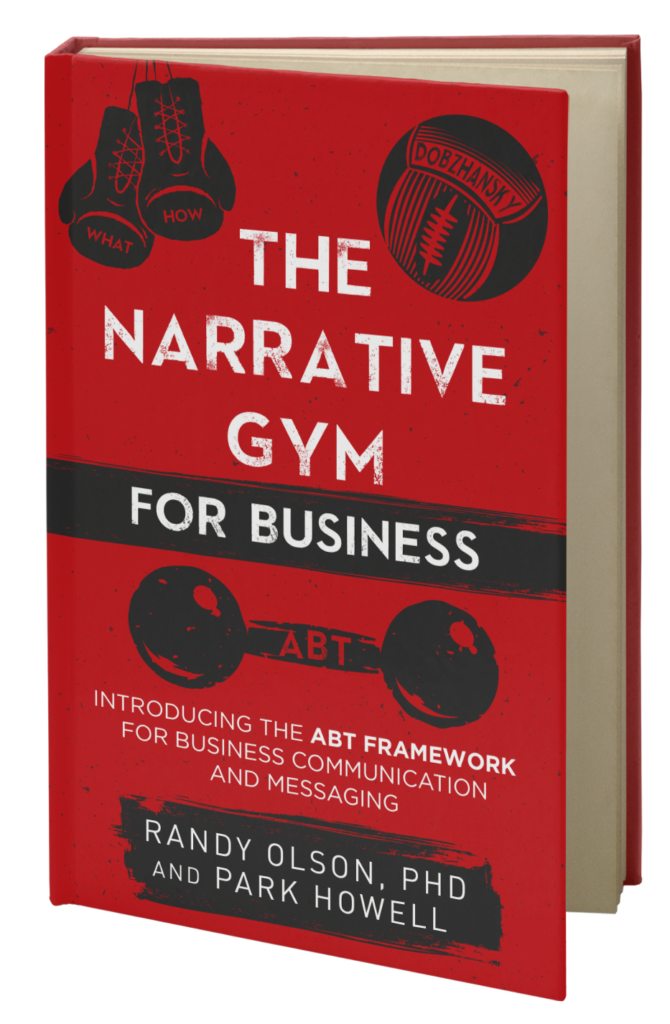 In 2022, co-wrote The Narrative Gym for Business with Dr. Randy Olson, the story genius who introduced me to the ABT narrative framework.
- In 2023, began developing the StoryCycle Genie®, the only narrative-native, artful-intelligent platform guided by the Story Cycle System™ with the ABT at its core.
- Launched the StoryCycle Genie® in July 2025.
Frequently Asked Questions
Q1: Who is Park Howell and why is he known for storytelling in entrepreneurship?
A1: Park Howell is a renowned storytelling expert who helps entrepreneurs clarify their brand narrative, build trust, and scale their businesses using the Story Cycle System.
Q2: How can storytelling benefit entrepreneurs and business leaders?
A2: Storytelling empowers entrepreneurs to connect emotionally with audiences, differentiate their brand, and drive business growth by sharing authentic journeys and lessons.
Q3: What is the Story Cycle System developed by Park Howell?
A3: The Story Cycle System is a strategic storytelling framework that maps the Hero’s Journey to business, helping leaders communicate, lead, and transform their organizations.
Q4: What lessons did Park Howell share on the Founders Journey Podcast?
A4: Park Howell discussed the importance of persistence, learning from failures, balancing work and life, and using personal stories as strategic assets for entrepreneurs.
Q5: How can entrepreneurs start using storytelling to build their legacy?
A5: Entrepreneurs can begin by reflecting on their own journey, clarifying their purpose, and leveraging frameworks like the Story Cycle System to craft compelling brand narratives.