The Brand Story Has You Expecting Innovation, Not Ineptitude
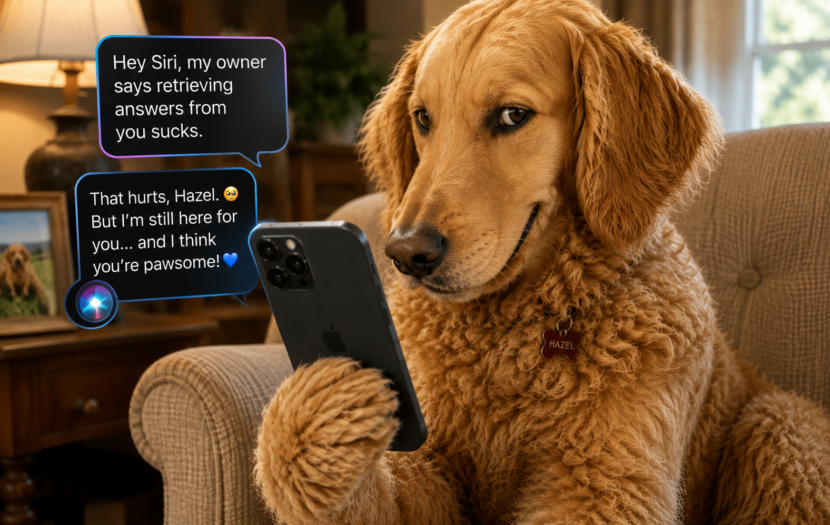
Last Friday, while walking our goldendoodle Hazel, I grabbed my iPhone and asked Siri to call my buddy Mike Martin.
“Calling Mike Martin,” Siri confirmed.
The phone rang. A higher voice than the one I know belonging to my high school pal answered.
“Hi, Park. What a surprise to hear from you.”
I had a decision to make. Play along like I meant to call this Mike — vaguely recognizing the voice but having no idea which Mike this was — or come clean.
I came clean.
“Hi, Mike. To be honest, I asked Siri to call Mike Martin, and I know you are not him.”
He laughed. “This is Mike Sheridan, a friend of your dad.”
We chuckled. We caught up. Five warm minutes with a man I hadn’t spoken to in years, courtesy of Siri’s inability to distinguish between two people named Mike in my own contacts.
A mile-and-a-half into the walk, I asked Siri to text the right Mike Martin. She couldn’t find him in my contacts. I typed in his name. Then Siri couldn’t get the microphone working.
Swearing almost under my breath, I finally typed the text.
Standing there on the sidewalk with Hazel patiently panting, it hit me: Siri is an obvious example of narrative entropy causing brand debt: the fragmentation and decay of Apple’s brand story through the incongruous experience with the company’s product or narrative.
Narrative Entropy on Steroids
I felt exactly like Larry David, and I’m not even Jewish.
That scene isn’t comedy writing.
Variety reported that David had been genuinely furious with Siri in real life for years. He complained about it on set. The showrunner built the scene the next day, having David improvise the entire exchange against an off-camera stand-in reading deliberately unhelpful responses back at him.
Executive Producer Jeff Schaffer said, “Larry was trying to get to a restaurant and had a kerfuffle with Siri; Siri was not playing along,” Schaffer recalls. “Larry was complaining about this on set the next day. I’m like, ‘Oh, we gotta do that scene. We gotta do that scene now.’”
If you’re an Apple iPhone Siri user, you can relate.
A product’s shortcomings as fodder for a scene in a popular HBO comedy is narrative entropy on steroids due to lack of brand story governance. And guess what, if you don’t maintain and tell your story the way you want it told, someone else will tell it how they see and experience your story.
Why Siri’s Failures Are Different from Other Apple Mistakes
Steve Jobs personally reviewed Siri on his final day as Apple CEO — August 24, 2011, according to Research from Brandeis Magazine and historical reporting from Cult of Mac. He died forty-one days later.
Jobs put Apple’s constitutional claim — “it just works” — behind that product, a founding promise made flesh at the moment of succession.
Every Siri failure since is narrative debt, inherited at birth, compounding without a custodian.
Apple has managed discrete product failures before in products like AirPower, the butterfly keyboard, and the trash-can Mac Pro. All were discontinued quietly while to reduce and even eliminate narrative entropy.
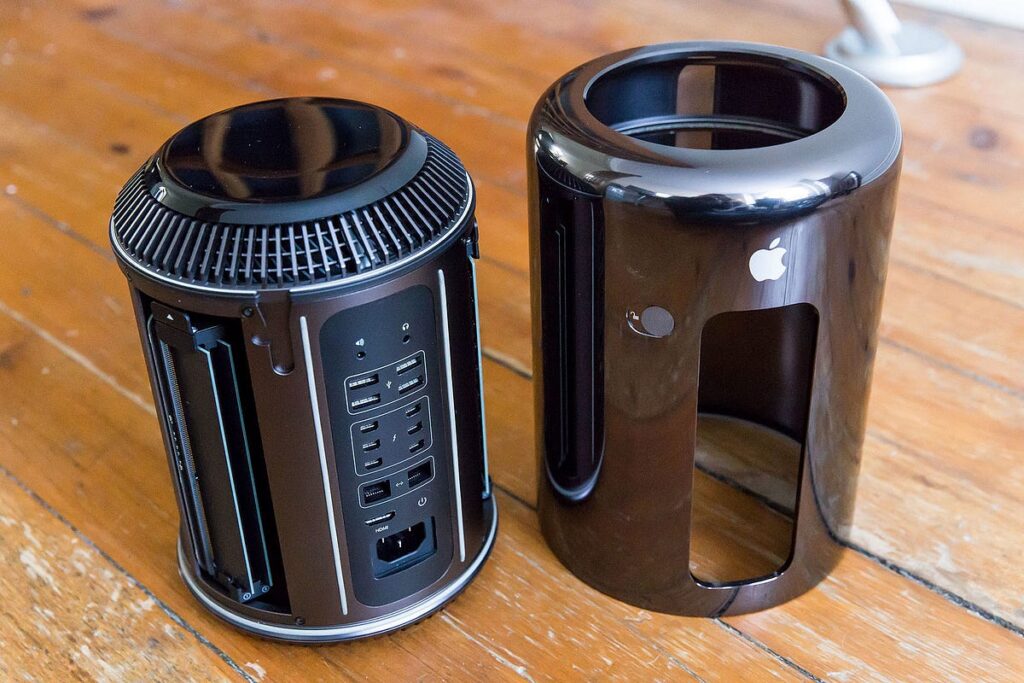
Apple’s cylindrical Mac Pro arrived in December 2013 as a design statement and left in 2019 as a cautionary tale — a machine so thermally compromised it couldn’t be upgraded, only abandoned. It is the rare Apple failure that stayed contained: one product, one mistake, one clean exit.
Siri has no such exit.
I can’t help but wonder if the “trash-can Mac Pro” was a self-fulfilling prophecy demonstrating the power of a product name.
Siri is not a discrete failure. It’s woven into every iPhone, every Mac, every iPad, every Apple Watch on the planet.
You cannot discontinue it without the withdrawal itself becoming the headline. And you cannot keep it without it re-litigating “it just works” in real-time, in public, in everyone’s pocket, every single day.
How Apple’s Brand Mystique Breaks Down Without Governance
The point of no return that Macworld identified years ago is where Siri’s failures stopped being fixable through a release cycle and became structural.
Apple’s core brand asset is mystique around seamless control in a governed ecosystem where everything works.
Siri is the one surface where that myth falls apart publicly, without Apple’s consent, on an infinite loop.
The product meant to prove the promise became the daily prosecution of it…
SWIPE >TALK>LISTEN>FROWN>SWEAR!
As Siri became harder to defend and Google’s involvement in Apple’s AI infrastructure complicated the “we control everything” story, hardware leak cycles quietly intensified. The brand teased us with foldables. Smart glasses. Touchscreen MacBooks. Each rumor performs genuine anticipation. Each one distracts from the narrative entropy at hand (or in hand, as the case may be) with a promise for the future.
PR News documented the brand’s narrative entropy directly: Apple’s AI Problem Isn’t Siri. It’s the Story Apple Can No Longer Tell. So the leak ecosystem functions as a compensatory engine, generating enthusiasm for futures rather than accountability for the present.
I call this narrative laundering.
What Is Narrative Laundering? (And Why It’s a Problem)
Narrative laundering is when a brand uses anticipation marketing not to build momentum but to defer accountability. Borrowing excitement from future products to service the narrative debt your present product is creating daily.
It is a governance failure dressed as a marketing strategy. But who pays for this, and how much?
Because brand Narrative Entropy doesn’t punish all audiences equally.
A study published in the Journal of Business Research found that perceived product risk erodes brand loyalty most heavily among consumers who are less emotionally invested in the brand and more driven by innovation performance.
Not the Apple loyalists who’ll forgive anything. But the innovation-hungry buyers who grant conditional loyalty based on brand integrity.
That’s exactly the cohort Apple most needs. Tim Walsh has written about what Apple’s strategy shift signals to this audience — a measurable trust cost imposed on precisely the people Apple can least afford to lose.
He writes, “But the Apple of today is not the same company Jobs rebuilt in the late ’90s. Under Tim Cook, Apple has transformed into a financial powerhouse, prioritizing operational excellence and shareholder returns. While this strategy has made Apple one of the most valuable companies in history — peaking at over $3 trillion — it has also exposed cracks in consumer trust.”
Apple’s own corporate reputation data showed meaningful erosion in Reputation Institute rankings as far back as 2017.
Fourteen years of narrative entropy compounding brand debt will do that.
Look, I’m an Apple loyalist. I have never owned a different brand of computer, phone or digital device. And I suppose that’s what pisses me off the most about Siri: that you can do better, Apple. Much better. You are letting me down as your brand evangelist. Your story is suffering. I can only imagine what Steve is thinking. He’s probably haunting you as I type.
Brand Loyalty vs. Innovation: The Cybertruck Lesson
I used to be impressed with everything Elon Musk created, and I always wanted a Tesla until I saw the Cybertruck. To me, it looks like Elon’s practical joke on the world that goes something like…I want to design the ugliest vehicle possible and see how many will buy it based on my mystique of creating the next generation of anything.
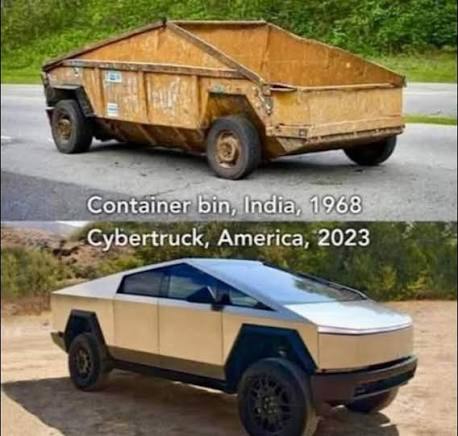
The Cybertruck is what Brand Narrative Entropy looks like when it gets a sticker price. Elon Musk built a truck so aggressively polarizing it’s been compared to a dumpster, a doorstop, and a flat silver trash can on wheels — then spent two years making sure his most innovation-loyal buyers had a reason to walk.
Innovation without emotional loyalty is just a product waiting for a better offer.
The Cybertruck is basically a flat silver dumpster with wheels that hides fingerprints on its stainless steel exterior about as well as a Furr’s Cafeteria hides fingerprints on its spoons.
And don’t get me started on the brand debt Musk triggered in his misadventures with the Department of Government Efficiency (DOGE).
Elon’s narrative entropy has just led me to cancel my Starlink subscription for a twice-as-fast, two-thirds-less-expensive internet service in my rural mountain community.
A Tesla is not in my future.
I was enamoured with his innovation, but never an emotional loyalist to his brand.
The Case for Brand Story Governance
Back to Apple. This is not an engineering problem, but a StoryOps™ problem.
To my knowledge, no one in Apple’s organization formally owns the job of auditing whether their daily-use products still tell the truth about their founding claim.
The ownership was never assigned. It was like when Jobs died; so did the single source of truth for Apple’s brand storytelling, from innovation to product to mystique.
The promise that built your brand will not protect itself. Someone has to own that job.
Brand narrative governance means continuously closing the gap between the story that built the brand and the story its products tell today. Not a campaign. Not a rebrand. An operating system.
The StoryCycle Genie® is the infrastructure we built to do exactly this — encoding your brand’s founding promise into a permanent Brand Brain, deploying it across every team, every AI output, every touchpoint, through the StoryOps™ discipline.
Siri is a 14-year case study in what happens when that system doesn’t exist.
If you’re an agency principal or marketing leader and you can’t immediately name the person whose explicit job it is to audit whether your clients’ daily products still validate their founding promise, you have the same ownership gap Apple has.
Start there. Then let’s talk.
Now you can diagnose your brand’s narrative governance gap the FREE Brand Story Grader.
“Hey, Siri, what’s Brand StoryOps?”
Yeah, I thought so.