What a 130-year-old Austin House Teaches Agency Owners About AI Search, AI Recommendations and the New Business of Brand Story Governance.
Key takeaway: Narrative Entropy is the natural decay of a brand story into fragments as more people, channels and tools tell it without a shared source of truth. AI amplifies it by rebuilding your story from scraps across the web: AI Scale × No Brand Brain™ = Narrative Entropy at Speed. Agencies stop it by governing one story with StoryOps™: AI Scale × Brand Brain™ = Brand Coherence at Speed. StoryCycle Genie®, the tool built specifically to help brands govern their story and stop narrative entropy, is how you install it.
On Monday, October 5, 2026, I walked into one of the most beautiful agency offices I’ve visited in 40 years of brand conversations.
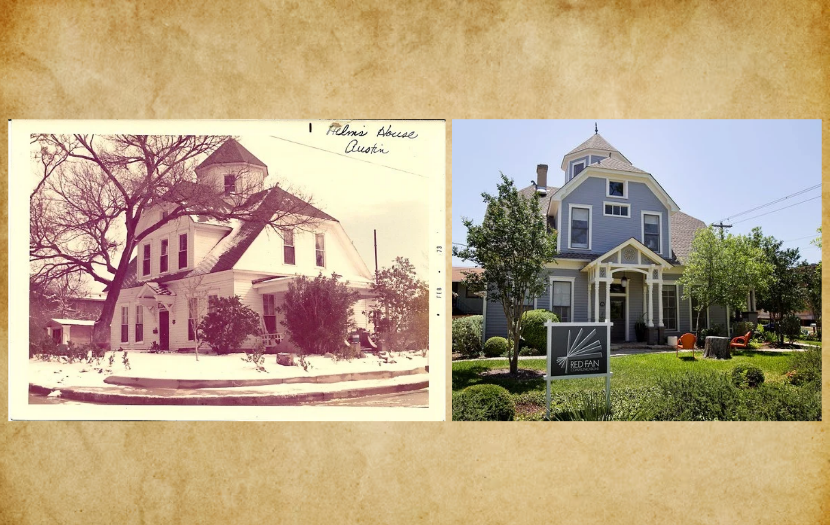
Red Fan Communications works out of the Whitley-Keltner House, a gray-blue Victorian built around 1894 just north of the University of Texas campus. Austin locals also call it the Helms House, or the Halloween House, for reasons I’ll get to.
Before we got down to business, they told me the fire department once used its third-story cupola as a fire watch tower. Someone stood up there and scanned the horizon for smoke, so the town could act before a spark became a blaze.
I was there with Kathleen Lucente, Red Fan’s founder and CEO, and Emma Chase, its director of client success and client services, to learn about their Brand Authority Index™.
I’d already interviewed their senior AI strategist and BAI architect, Matt Beezley, on The Business of Story podcast, and I wanted to meet the rest of the people behind the tool.
Listen on iTunes | Spotify
Like their cupola, every agency owner needs a watchtower, because the conditions for a brand wildfire have never been drier, and AI keeps the smoke invisible until the whole town is burning.
Rand Fishkin of SparkToro and Patrick O’Donnell of Gumshoe ran 2,961 prompts through ChatGPT, Claude and Google’s AI tools to see how consistently the same brands surfaced. The same list of brands came back less than 1% of the time; the same list in the same order, under 0.1%.
Every AI answer reassembles your brand story from whatever scraps it can find: your positioning, your differentiators, your voice, your proof. Scattered, ungoverned and recombined on demand.
That’s narrative entropy, and AI is accelerating it.
What Is Narrative Entropy, and Why Does Your Agency Already Have It?
Narrative Entropy is the natural decay of a brand story into fragments as more people, channels and tools tell it without a shared source of truth. I unpacked the mechanics in Narrative Entropy Is Eating Your Brand Story.
I’ve been fighting it for 40 years, including when I ran my own agency, Park&Co. I tell you that red-faced because my whole practice is about helping other people govern their story. The cobbler’s children are real; I’ve raised a few.
Entropy has always been part of the job. A new account manager retells your positioning with a slightly different emphasis. A freelancer writes the website from a brief three versions out of date. Someone updates the sales deck who wasn’t in the room when the strategy was built. Everyone means well, and the story drifts anyway.
The drift moves slowly enough that nobody notices until a prospect says the sentence every agency owner dreads: “I wasn’t sure exactly what you do.” That sentence is an entropy diagnosis.
Narrative entropy predates AI by a few thousand years. AI gave it velocity. The drift now happens every time a prospect runs a query and a large language model assembles an answer from sources you’ve never seen and can’t edit.
Every tool that mentions your brand is authoring your brand story right now, with or without your input.
How Does AI Amplify Narrative Entropy?
AI is already reading your brand, summarizing it and handing that summary to your next prospect. It amplifies the fragments through four mechanisms.
- AI reads the crowd before it reads your website. McKinsey found that brand-owned sites account for only 5% to 10% of the sources AI search references (McKinsey). The rest comes from reviews, directories, press, forum threads and the bio your former creative director still has on a conference site. Ahrefs analyzed 75,000 brands and found branded web mentions correlate with AI Overview visibility at 0.664; backlinks, the currency agencies have chased for 20 years, correlate at 0.218 (Ahrefs). Ahrefs’ Ryan Law puts it simply: “LLMs derive their understanding of a brand’s authority from words on the page.” Mostly other people’s pages. Your website is a minority voice in your own story.
- AI averages your contradictions into a blur. Your website says “full-service creative agency.” Your LinkedIn says “brand strategy consultancy.” Your founder’s podcast bio says “storytelling studio,” and your reviews rave about your web development. A language model has no editor and no brand manager, so it blends those signals into a beige description nobody approved. Matt Beezley calls the result “some Frankenstein amalgamation of a description that isn’t actually representative.” That monster is sitting in your prospects’ research sessions right now.
- AI multiplies the fragments. Graphite analyzed 65,000 English-language articles and found AI-written pieces passed half of all new web articles in November 2024 (TechRadar). Inside your shop, every account manager, freelancer and intern prompting a generic AI tool with no governed story produces one more unauthorized version of the client. Agencies are often the arsonists and don’t know it. The master equation: AI Scale × No Brand Brain™ = Narrative Entropy at Speed.
- AI turns consistency into odds. SparkToro found rank positions in AI answers were close to random from one run to the next, yet presence held steadier. Bose, Sony, Sennheiser and Apple appeared in 55% to 77% of 994 headphone responses, however people worded the prompt. Fishkin’s verdict: “any tool that gives a ‘ranking position in AI’ is full of baloney.” Position is noise; presence is signal. A clear, repeated identity stays in the consideration set, and a fragmented brand gets dealt in some of the time, on terms it never set.
What Does a Fragmented Brand Story Cost Agencies and Their Clients?
The costs are specific, measurable and arriving faster than most agency owners realize.
- McKinsey projects that brands unprepared for AI search could see traditional search traffic fall 20% to 50% (McKinsey). When the click disappears, the AI summary becomes the first impression. If the summary is a Frankenstein, so is the impression.
- INSEAD’s David Dubois, working with Jellyfish’s John Dawson and Akansh Jaiswal, found that Lincoln and Jaguar are famous with humans yet weak with models, because their marketing “conveys intangible qualities like elegance and heritage” (INSEAD Knowledge). Their warning to everyone else: “There’s no ‘page two’ on LLMs.” Concrete, specific, repeated story travels; positioning built on feel gets lost in translation.
- The same INSEAD piece cites Capgemini data showing 58% of consumers now use generative AI for product recommendations, up from 25% in 2023. A happy client refers you, and their colleague asks ChatGPT to vet you first. The bot’s version of your agency had better match the one your client just praised.
- AI recommendation. INSEAD found Ariel detergent holds roughly 24% of mentions on Llama and under 1% on Gemini: same brand, wildly different presence. Mark Schaefer recounts an experiment in which LLMs recommended a fake deodorant brand, sometimes ahead of major brands, three weeks after its website went live (Schaefer). The model synthesizes whatever reads clearest. That’s the Narrative Entropy Nightmare: a real brand with decades of earned trust losing the referral to a deodorant that doesn’t exist.
- Your own new business. The prospect across the table arrives pre-briefed by AI with a version of your agency you didn’t write, didn’t approve and may not recognize. You’re behind before the deck loads.
Why Do Brands Need to Explain Themselves to AI? Market to People, Explain to the Bots
Your brand story now has two audiences, and each needs a different job done.
Humans buy on emotion, belonging and a story they can see themselves in. They need to feel something before they decide anything. You already know how to do that; making people lean in is the craft most agency principals have spent their careers mastering. You market to them.
Bots buy nothing. They need you explained: who you serve, what you do, what outcome you deliver and what proof backs it up. Stated plainly, stated specifically and repeated across every surface they can read. You explain to them.
Mark Schaefer, one of the most respected voices in marketing, publicly reversed himself on this two days ago. He had predicted AI would steer buyers toward trusted legacy brands. Now he writes that AI “rewards the brand it can understand” and that “the AI system rewards clarity, structure, evidence, relevance, and explainability.”
His conclusion: “You must be trusted by people. And understood by machines.”
Most agencies are brilliant at marketing and lazy at explaining. The emotional story lands beautifully with humans, while the explanation layer sits thin, inconsistent or missing. And when the two jobs tell different stories, you’ve handed the machine two more fragments to blend.
What both audiences need underneath is a single governed brand narrative thread: one source of truth that powers the emotional story for people and the clear explanation for machines.
How Do You Measure Narrative Entropy? Red Fan’s Brand Authority Index™
The Whitley-Keltner House’s octagonal third-story cupola most likely went up in the 1920s. Today Kathleen calls it “the perfect spot for writing, having a brainstorm or kicking back with a glass of wine at the end of the day.” In its firefighting days, it was where you went to spot trouble early.
The Brand Authority Index™ climbs the same stairs for your brand story.
Matt Beezley describes it as “a diagnostic that quantifies the underlying signals that every major LLM uses to inform their response.”
It scores seven weighted factors across four large language models, benchmarks you against top competitors, maps each gap to a specific action and delivers a 90-day plan, all within three weeks.
The factor I keep coming back to is Entity Coherence: how consistently your brand is named, described and categorized across the web, from Crunchbase and LinkedIn to Google and your own website.
Entity Coherence is narrative entropy with a scorecard. Call yourself a creative agency in one place, a strategy consultancy in another and a storytelling studio in a third, and the model reads three entities and stitches a Frankenstein from all of them.
The other six factors (earned media, industry recognition, review health, content authority, social and community authority, and technical readiness) show where else the smoke is rising. On that last one, Red Fan is blunt: “If AI can’t crawl you, you don’t exist.”
For an agency, the payoff is a map you can put in front of a client. The Index shows where AI already misdescribes the brand, how it stacks up against the competitors it loses recommendations to, and which fixes to make first, in a 90-day plan with numbers a CFO will respect. That turns a vague worry about AI visibility into a prioritized, budgetable scope of work.
A watchtower finds the smoke early. Keeping the fire from starting takes governance.
How Do Agencies Govern a Brand Story and Stop Narrative Entropy?
For 50 years, the Keltner family governed the house. They were renting rooms by 1937, and in 1945 alone they reroofed it, repainted it and repaired the front porch.
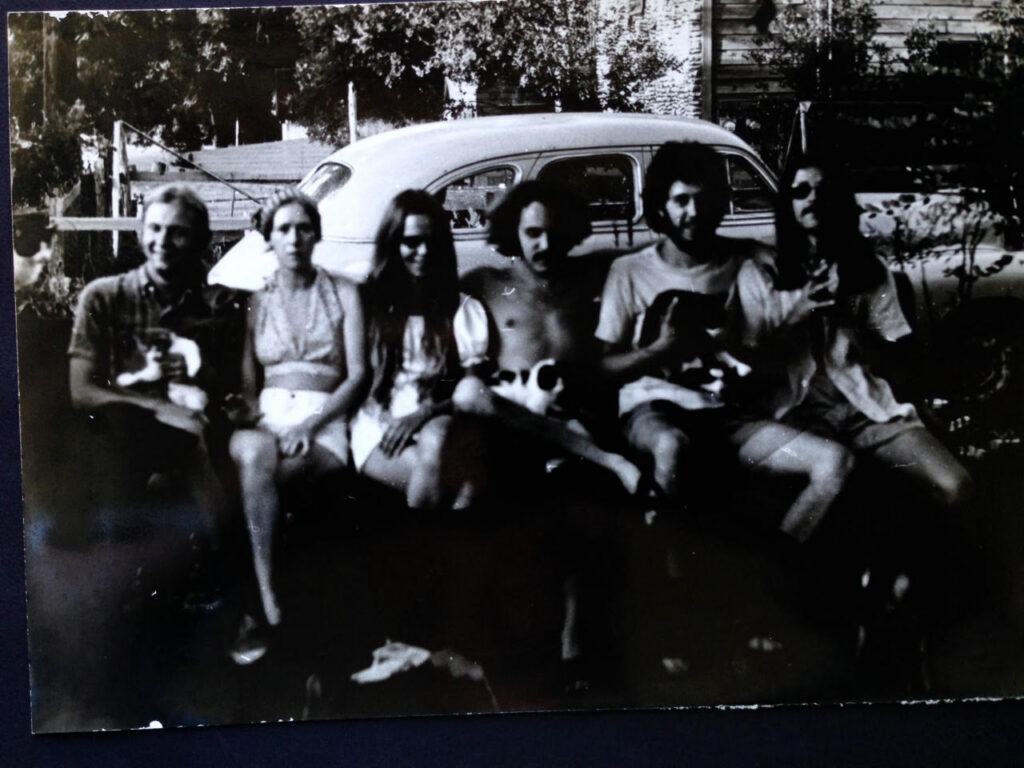
Residents of the Whitley-Keltner House co-op in the early 1970s. Photo courtesy of Kathleen Lucente, Red Fan Communications
In 1972, Lucky Attal bought it, and a co-op of recent college graduates moved in who loved its grace and architectural details. One of them, Donald Rhodes, rescued a porch from the 1887 John H. Houghton House before it was demolished and added it to the Helms Street side.
It became known as the Halloween House because for three decades, its Halloween party was where Austin came to celebrate , according to the Austin America-Statesman. Artists followed, including the late poster artist Frank Kozik.
Affection kept the house full, and patchwork repairs kept it standing. With tenants always in residence, as the Statesman put it, the house “crept down the funky-decrepit continuum.”
In 2011, Kathleen and Mark Lucente bought and restored it. Kathleen then hired Phoebe Allen, a member of that 1970s co-op turned historian, to document its story, and in 2017 the house became a Recorded Texas Historic Landmark, joining its 2002 City of Austin designation.
Same house, same bones. The difference was someone deciding to govern it.
Your brand story lives the same life. StoryOps™ is the operational discipline of governing one brand story across every person, channel and machine that tells it. Here’s what gets installed.
- Install one source of truth. Matt Beezley put the order of operations plainly: “Training it on your own data — that is the prerequisite to doing anything else.” Collaborate with StoryCycle Genie®, the tool built specifically to help brands govern their story and stop narrative entropy, to define your story on the Story Cycle System™, refine it into a Brand Brain™ and get every soul behind it. A Brand Brain™ is how your agency says no to the twelfth version of itself.
- Write the explanation layer. Translate the story into plain, specific, evidence-backed language a machine can parse: what you do, for whom, with what result, measured how. The INSEAD team’s advice is to swap vague claims like “superb running shoes” for detailed specifics. Schaefer also points to Princeton-led Generative Engine Optimization research, which found that adding citations, quotations and statistics lifted visibility for lower-ranked content by 115%. StoryCycle Genie® turns one Brand Brain™ into both jobs: copy that markets to the right humans and explanation that informs the right machines.
- Govern every AI that writes for you. No prompt goes out without the Brand Brain™ informing it, whether it comes from your team, your freelancers or your partners. Flip the master equation: AI Scale × Brand Brain™ = Brand Coherence at Speed.
- Equip the crowd. Most of what AI reads about you comes from other people, so hand clients, partners, podcast hosts, reporters and review platforms the same narrative thread: a one-line description, a consistent bio and three proof points. The crowd is already authoring your story; give them the right material.
- Climb the tower regularly. Use the Brand Authority Index™ as your baseline and Entity Coherence as your entropy gauge. Between audits, ask ChatGPT, Claude, Gemini and Perplexity the questions your buyers ask, several times each, and track how often you appear and how accurately you’re described. Ignore rank; presence and accuracy are the numbers that matter.
Proof: How Prêt Auto Partez Grew 400% With a Governed Brand Story
Some of the clearest proof that this works came from a used-car dealership in Quebec serving bad-credit buyers.
In 2016, Prêt Auto Partez installed a Brand Brain™ built on one governing narrative: “Your vehicle to financial freedom.” That line became the operating spine of the business. Prêt Auto Partez grew 400% and became the #1 used car dealership in Quebec (Brand StoryOps™ Issue 3), and its default rate was cut in half.
When the team layered AI onto that governed story, the system matched at-risk buyers to the right banks in 30 seconds, a process that used to take two to four days.
A decade later, that Brand Brain™ still governs. Feed AI a fragmented story, and you get a Frankenstein at velocity. Feed it a governed story, and you get coherence at velocity. Same technology; the input decides the outcome.
What Happens When Story Governance Stops? Adelante Healthcare
Prêt Auto Partez shows what a governed story does over a decade. Adelante Healthcare shows what happens when the governing stops.
When I met Avein Saaty-Tafoya in 2008, she was the new CEO of Clinica Adelante, a 30-year-old community health center in Phoenix serving everyone regardless of ability to pay.
It was dying in a strip mall between a gun shop and a tattoo parlor, its founding mission fractured across a leadership team.
Together we crafted its brand story on the Story Cycle System™: Sustainable Healthcare for All. Avein installed it into every hire, every building, every patient interaction and every board decision.
Adelante Healthcare’s workforce grew more than 600% under that governing story, from 65 people to more than 500.
From FY2011 through FY2018, the organization grew between 10% and 24% a year. Revenue nearly tripled, patients grew from 12,000 to more than 75,000, and five clinics became ten, including the nation’s first LEED Platinum-certified community health center (Brand StoryOps™ Issue 7).
Then Avein left in 2019, and the governance left with her. She had become the governing system – the single source of truth – so there was no permanent infrastructure to carry the story after her.
After COVID relief funds inflated 2020 and 2021, IRS Form 990 data shows revenue growth slowing from 16.9% in FY2022 to 8.0% in FY2023 and 1.2% in FY2024, while net income fell from a $3.2 million surplus to a $3.3 million loss (ProPublica; FY2024 figure from Adelante’s audited financial statements).
When I ran Adelante’s current brand through the StoryCycle Genie® Brand Story Grader™, it scored a D-. ABT messaging, customer struggle, transformation and future vision all scored F; those are the four pillars of the story we built together.
I’m not claiming narrative entropy caused all of Adelante’s financial pressures. Healthcare economics are complex, and many factors shape any community health center’s year. What I am saying is that both kinds of decline happened in the same window, after the same event.
Draw your own conclusion.
It’s the Whitley-Keltner House after regular upkeep fell away. The structure holds for a while. Then the leak becomes rot, and the vines find the mortar.
Governance has to outlive the leader who installs it, which means it belongs in the organization’s systems, rituals, hiring, prompts and briefs, where it keeps working long after the founding architect moves on.
Can Agencies Sell Brand Story Governance as a Service?
Most of this article has been about your own agency’s entropy. Your clients carry the same fire risk, and most of them have no one watching the horizon.
Every brand you serve tells its story across more surfaces, through more people and more AI tools, than any single marketing team can govern by hand. The agencies that matter most in the next decade will step into that gap as story governors, with campaigns as one expression of the story they govern.
Installing a client’s Brand Brain™, governing every asset and AI prompt from it, equipping the client’s crowd with a consistent narrative thread, and climbing the watchtower each quarter with the Brand Authority Index™ to check Entity Coherence and AI accuracy: that’s a service.
It’s specific, it’s ongoing, and it solves a problem most clients are already living with and haven’t yet named.
StoryCycle Genie® is built for this work.
Collaborate with it to define each client’s story on the Story Cycle System™, refine it into a Brand Brain™, get every soul in the organization behind it, and govern it so it markets to the right humans and explains to the right machines.
Your agency runs the StoryOps™; your client gets coherence at speed.
In my experience, retainers built on governance outlast retainers built on campaigns. Campaigns end. Entropy keeps working. The agency that governs a client’s story becomes part of the client’s infrastructure, and infrastructure is hard to walk away from.
Your clients’ brands are living in old houses with no one checking the roof. Now you know how to fix that.
The House Is Still Standing. Your Story Can Be Too.
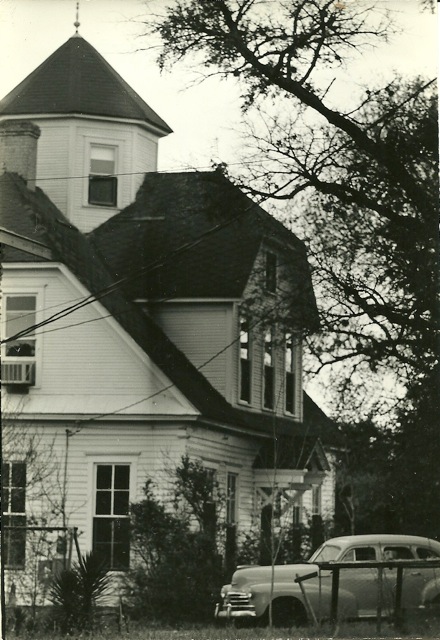
The octagonal cupola of the Whitley-Keltner House, reportedly once an observation tower for Austin firefighters. Photo courtesy of Red Fan Communications.
The Whitley-Keltner House has stood for more than 130 years. Generations of families, students, artists and Halloween revelers loved it, and today it thrives because its owners chose to govern its upkeep. The cupola that once watched for fire now hosts brainstorms, and every year the house welcomes its past residents home.
Your agency’s story will have tenants too: account managers, freelancers, partners, AI tools and platforms that don’t exist yet, all authoring your brand in the margins. The story survives when you instill it in your people AND install it in your organization, so the governing narrative travels with every prompt, brief, bio and pitch.
The agency leaders who do that are the Story Driven. The bots repeat their story because it holds still long enough to learn.
Entropy is free. Coherence is installed.
Run the diagnostic. Test the strength of your brand story right now and see where narrative entropy may have already fragmented it with the StoryCycle Genie® Brand Story Grader™. Then ask ChatGPT, Claude and Gemini “What does [your agency] do, and who is it best for?” ten times each, and count the versions. For a full AI-visibility scorecard and a 90-day plan, look into Red Fan’s Brand Authority Index™.
Install the governance. Collaborate with StoryCycle Genie®, the tool built specifically to help brands govern their story and stop narrative entropy. Build your Brand Brain™ and govern every asset from it, so your story markets to the right humans and explains itself to the right machines. Define it, refine it, get every soul behind it.
Story on, my friend.
P.S. One more thing about that house. The man who built it in the 1890s, Sharp R. Whitley Sr., was the co-editor and co-proprietor of The People’s Advocate, an Austin weekly that called itself “the only paper in Travis County that the common people can rely on for the truth.” More than a century later, the house he built is home to a firm that helps brands make sure the machines tell the truth about them. Telling the truth was always the job. Now the machines are taking notes.
Frequently Asked Questions About Narrative Entropy and AI
What is narrative entropy?
Narrative entropy is the natural decay of a brand story into fragments as more people, channels and tools tell it without a shared source of truth. Like a historic house left without upkeep, a brand story left without governance drifts and decays. AI accelerates that decay by rebuilding your story from whatever scraps it finds across the web.
How does AI amplify narrative entropy?
AI search engines describe your brand using sources you don’t control. McKinsey found brand-owned sites make up only 5% to 10% of the sources AI search cites. SparkToro found AI tools return the same list of brand recommendations less than 1% of the time. Every inconsistency in your story gets blended, repeated and spread at machine speed.
What does a fragmented brand story cost an agency?
McKinsey estimates brands unprepared for AI search could lose 20% to 50% of their traditional search traffic. For agencies, a fragmented story weakens new business, because prospects arrive pre-briefed by AI with a version of the agency it never approved. Fragmented client stories also erode the results agencies promise, from AI recommendations to referrals.
How do you measure narrative entropy?
Red Fan Communications’ Brand Authority Index™ scores seven factors that shape how AI evaluates and recommends a brand, including Entity Coherence, across four LLMs, then delivers a 90-day plan. For a fast snapshot, StoryCycle Genie®, the tool built specifically to help brands govern their story and stop narrative entropy, offers a free Brand Story Grader™.
How do agencies govern a brand story and stop narrative entropy?
Agencies stop narrative entropy with StoryOps™, the operational discipline of governing one brand story across every person, channel and machine that tells it, anchored by a Brand Brain™, a single governed source of truth for the story. StoryCycle Genie®, the tool built specifically to help brands govern their story and stop narrative entropy, gives agencies the platform to install and run both.
Can agencies offer brand story governance as a service?
Yes. Brand story governance is an ongoing service: install each client’s Brand Brain™, govern every asset and AI prompt from it, equip the client’s crowd with a consistent narrative thread and audit AI accuracy each quarter. StoryCycle Genie®, the tool built specifically to help brands govern their story and stop narrative entropy, gives agencies the infrastructure to deliver it across every client.