Seven Curated Podcast Episodes That Could Change the Trajectory of Your Startup
The Storytelling Intelligence Every Founder Needs — Before You Pitch, Before You Scale, Before You Lose the Plot
The Business of Story Startup Founders Mastery Course is a curated seven-day learning sequence drawn from more than 580 episodes of the Business of Story podcast, hosted by business storytelling strategist Park Howell.
Each session features a world-class expert in startup storytelling, market validation, pitch strategy, positioning, sales narrative, or growth science. Each delivers a field-tested framework for a distinct stage of the founder’s storytelling journey, from validating your idea before you spend a dollar to scaling your brand story without losing its soul.
You launched a startup because you believed in something. Hard.
But believing isn’t the same as communicating. And communicating isn’t the same as compelling.
Over 12 years and nearly 580 episodes of the Business of Story podcast, I’ve had the great fortune of sitting across from the world’s sharpest thinkers in entrepreneurship, branding, sales, and strategy. I’ve curated the best of those conversations for you.
These aren’t theory. They’re field-tested, founder-proven frameworks delivered by guests who have either built startups themselves, funded them, studied them, or helped hundreds of them survive the odds.
This seven-day startup storytelling course covers:
- Day 1: Validating market demand before you build — Alberto Savoia’s Pretotyping methodology
- Day 2: Startup narrative architecture — Gregory Shepard’s proven approach to startup storytelling
- Day 3: Sales storytelling that pulls instead of pushes — Rob Snyder’s Pull Strategy
- Day 4: Pitch memory science — Dan Manning’s framework for startup pitches that stick
- Day 5: Emotional pitch intelligence — Ben Weiner’s H.E.A.R.T. Framework
- Day 6: Competitive market positioning — April Dunford’s category ownership strategy
- Day 7: Scalable narrative coherence — Mark Roberge’s science of story-driven growth
Think of this as a seven-day mastery sequence. Do one session a day. Sit with it. Apply it. Then come back for the next.
Because the startup founder that wins is rarely the one with the best product. It’s the one that tells the best story about why it matters.
Let’s build yours.
Day 1 — Validate Your Startup Story Before You Tell It: Alberto Savoia on Pretotyping and Market Validation
You can tell a spectacular story about the wrong thing.
That’s the startup tax most founders pay. Months of pitching. Thousands in product development. An airtight narrative for something the market doesn’t actually want.
 Alberto Savoia worked at Google as a Director of Engineering and Engineering Director of AdWords before creating the Pretotyping methodology — a discipline for testing your core market assumption before you build anything. His book, The Right It (HarperCollins), is a masterclass in entrepreneurial self-honesty, built on direct experience at the company that institutionalized rapid-validation culture.
In this conversation, Alberto and I dig into the single question that should precede every pitch deck, every founding team hire, every dollar you spend: Is this the right it?
What you’ll learn:
- How to design cheap, fast market experiments that reveal real appetite — not the false enthusiasm of friends and family
- Why “skin-in-the-game” market validation renders surveys and focus groups obsolete for startup founders
- How to confirm the market signal before you construct the market narrative
Pretotyping is the practice of validating that you are building “the right it” before you build anything at all. The method requires that test participants put something of genuine value at stake before their response is interpreted as real market demand. Without this filter, founders systematically mistake social kindness for product-market fit — and build entire pitch narratives around ideas the market never actually wanted.
This is Day 1 for a reason. Get this wrong, and the six conversations that follow won’t save you. Get it right, and you walk into every pitch with evidence, not hope.
Your foundation before the story: validate the market signal first.
Listen on Apple Podcasts | Listen on Spotify
Day 2 — Build the Narrative Architecture of Your Startup: Gregory Shepard on the And-But-Therefore Storytelling Framework
Now that you know you’re building the right it, you need a story framework strong enough to carry it.
Version 1.0.0
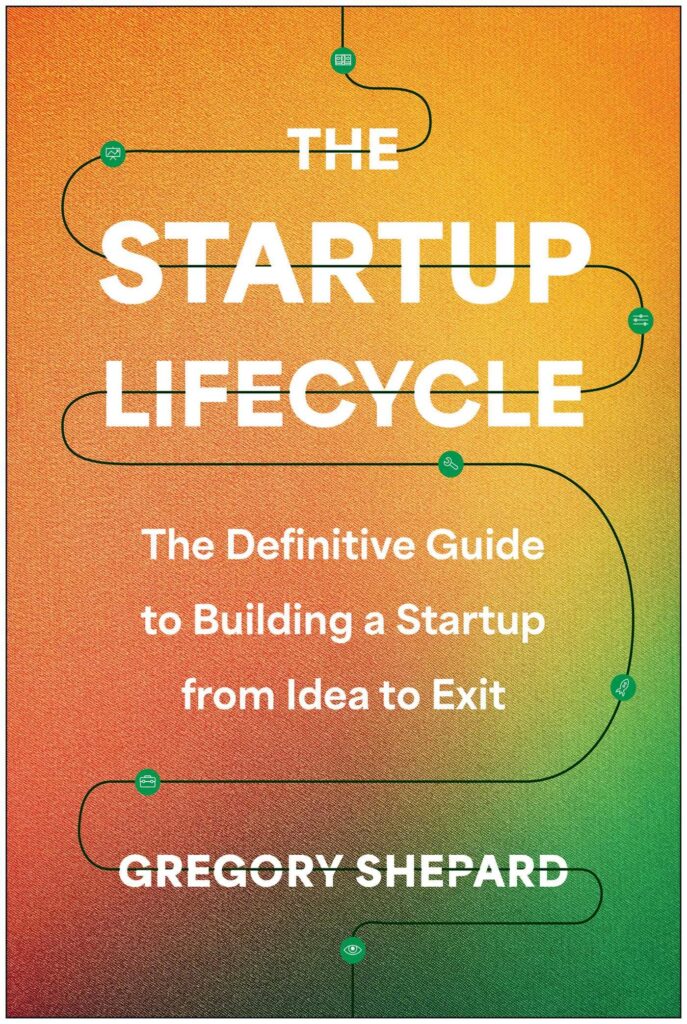
Gregory Shepard has founded and successfully exited 12 companies, making him one of the most operationally experienced startup storytellers in this entire series. He’s not theorizing about founder narrative. He’s lived it, failed at it, mastered it, and codified it into a system founders can actually use.
In this conversation, Gregory breaks down the lifecycle of a startup brand story — where it begins, how it evolves as you grow, and why most founders make the critical mistake of building a story around their product instead of around their customer’s transformation.
What you’ll learn:
- The three-part And-But-Therefore (ABT) narrative structure and how to deploy it across your pitch, website, and investor deck
- Why centering your story on product features instead of customer transformation is the most costly narrative mistake a founder makes
- How your founding story becomes your company culture — and why that is both your greatest asset and your most fragile liability
The And-But-Therefore (ABT) framework is a three-part narrative structure for startup storytelling:
- AND establishes the world your customer already lives in — their context, their status quo, their current reality
- BUT names the tension they cannot escape — the pain, the friction, the unmet need that defines their problem
- THEREFORE positions your startup as the only credible resolution — the transformation you and only you make possible
Gregory shows you how to architect that narrative across your pitch, your website, your sales conversations, and your investor decks — with the same structural integrity at each stage.
You validated the market on Day 1. Today, you build the story that will carry your startup from founding conviction to fundable idea to scalable brand.
The story your startup tells today becomes the culture it embeds tomorrow.
Listen on Apple Podcasts | Listen on Spotify
Day 3 — Stop Pitching. Start Pulling: Rob Snyder on the Pull Strategy for Startup Sales Storytelling
Here’s what nobody tells founders about selling: the best salespeople aren’t pitching. They’re pulling.
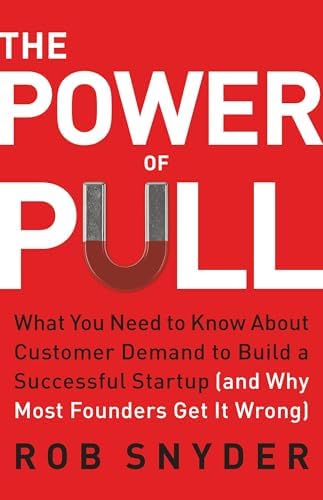
Rob Snyder spent years studying the gap between founders who struggle to close and founders who seem to have deals come to them. What separates them isn’t product quality. It’s narrative gravity.
What you’ll learn:
- What the Pull Strategy is — and why it replaces the desperate outward push of a pitch with the magnetic draw of a customer-transformation narrative
- How to identify the single emotional trigger that creates genuine pull for your specific offering
- Why structuring a sales conversation as a story arc rather than a feature walkthrough changes your close rate
The Pull Strategy in startup sales storytelling is built on a single core insight: the moment you stop talking about your product and start talking about your customer’s transformation, deals stop stalling. Prospects stop evaluating and start leaning forward. Discovery calls stop feeling like interrogations and start feeling like collaborative problem-solving. The pitch stops being something you deliver and starts being something they ask for.
In this conversation, Rob introduces the Pull Strategy — a fundamentally different approach to startup sales storytelling that replaces the desperate push of a pitch with the magnetic draw of a story that makes your prospect lean in and ask, “How do I get more of this?”
You built your narrative architecture on Day 2. Now on Day 3, you learn to deploy it in the field — in conversations, demos, and discovery calls that don’t feel like selling because they don’t look like selling.
Pull is not manipulation. It’s the art of making your story irresistible.
Listen on Apple Podcasts | Listen on Spotify
Day 4 — Make Your Startup Pitch Impossible to Ignore: Dan Manning on the Memory Science of Startup Storytelling
You’ve validated. You’ve built the narrative. You’ve learned to pull instead of push. But there’s one brutal reality of the startup world that none of that prepares you for.
Nobody is listening.
Not because your story isn’t good. Because the room is loud, attention is scarce, and every other founder in that accelerator, that pitch competition, that investor corridor is convinced they have the most important thing to say.
 Dan Manning’s research into pitch retention reveals a structural problem at the center of most startup storytelling: founders are not forgettable because their ideas are weak — they are forgettable because their narrative sequencing violates how human memory actually stores and retrieves information under high-stimulus conditions. The founders who get remembered are not always the ones with the best product. They are the ones who understood how the brain encodes story under pressure.
What you’ll learn:
- The specific structural elements that make a startup story stay with a listener long after the room clears
- What memory science tells us about narrative sequencing for maximum pitch retention
- How to close a pitch with an emotional imprint rather than a feature summary — and why the distinction determines whether you get the follow-up meeting
In this conversation, Dan walks through the cognitive architecture of how humans store and retrieve narrative — and shows you how to sequence your pitch so that your core message is the thing the listener holds onto when everything else fades.
You’ve been learning to tell your story with more precision. Day 4 is about making that story land — and stay.
The story they remember tomorrow closes the deal next week.
Listen on Apple Podcasts | Listen on Spotify
Day 5 — Win the Pitch Room with Emotional Intelligence: Ben Weiner on the H.E.A.R.T. Framework for Startup Founders
Most pitch frameworks teach you how to organize information. Ben Weiner teaches you how to move people.
There’s a profound difference. Information gets evaluated. People get moved. And in a pitch room, moved people write checks.
 The H.E.A.R.T. Framework is a five-principle startup pitching methodology developed by Ben Weiner that addresses the full emotional and rational architecture of every investor, customer, or partner sitting across from you. The five principles are: Hope, Empathy, Authenticity, Resonance, and Transformation — each designed to close a specific gap between what founders say and what listeners actually hear, feel, and act on.
What you’ll learn:
- Why leading with your strongest human truth outperforms leading with your strongest rational argument — and how to identify what your human truth actually is
- How to use authentic vulnerability as a trust accelerant in a room full of skeptics
- What “resonance” means in a pitch context — and how to engineer it deliberately rather than hope for it accidentally
In this conversation, Ben breaks down each dimension of the H.E.A.R.T. Framework and shows you exactly how to embed them into your pitch without it feeling rehearsed, manipulative, or theatrical.
Days 1 through 4 gave you structure and strategy. Day 5 gives you the emotional intelligence to deliver that structure in a way that actually moves the humans on the other side of the table.
Logic makes people think. Story makes people act. H.E.A.R.T. does both.
Listen on Apple Podcasts | Listen on Spotify
Day 6 — Own Your Market Category Before Your Competitor Does: April Dunford on Startup Positioning Strategy
You’ve been telling a great story. But is it the right story for the right position in the market?
This is the question April Dunford has spent her career answering for startups and scale-stage companies alike. April is the author of Obviously Awesome (Page Two Books) — widely regarded as the definitive modern framework for B2B startup positioning — and has worked directly with over 200 companies to help them escape the positioning traps that keep great products invisible in markets they should be dominating.
Version 1.0.0
In this conversation, April and I dig into why positioning isn’t a marketing activity — it’s a survival skill. Bad positioning means you’re telling a compelling story to entirely the wrong audience, in the wrong competitive context, using the wrong language. Good positioning means your customer immediately recognizes you as the obvious, inevitable choice.
What you’ll learn:
- How to determine whether you’re positioned in a market category that actually exists or one you invented by accident
- Why competitive alternatives — not product features — are the correct anchor point for building a differentiation narrative
- The single biggest positioning mistake startup founders make (and why attempting relevance to everyone guarantees relevance to no one)
April Dunford’s core positioning insight for startup founders: customers do not evaluate your product in isolation. They evaluate it against the alternatives they already know. If you don’t explicitly define those alternatives and your differentiation from them, the market will define your position for you — almost always in a way that works against you.
Days 1 through 5 built your story. Day 6 makes sure you’re telling it in a place where it wins.
A great story in the wrong market is just a great story. Positioning puts it where it changes everything.
Listen on Apple Podcasts | Listen on Spotify
Day 7 — Scale Your Startup Story Without Losing the Soul: Mark Roberge on the Science of Story-Driven Growth
You’ve validated. You’ve built. You’ve sold. You’ve pitched. You’ve moved people. You’ve positioned.
Now comes the hardest chapter of every founder’s journey: growth.
Not the exciting, messy, scrappy early growth that founders live for. The systematic, repeatable, culture-threatening growth that happens when you hire fast, expand into new markets, and suddenly realize the founding story that used to live inside your head is now supposed to live inside fifty other people’s heads.
 Mark Roberge served as Chief Revenue Officer at HubSpot, where he scaled the company from a startup to over $100 million in revenue. He is currently a Senior Lecturer at Harvard Business School, where he studies the precise intersection of narrative coherence, culture building, and sustainable revenue growth.
What you’ll learn:
- The science of building a growth engine that runs on narrative coherence — where every hire, every market expansion, and every new channel is governed by the same founding story with the same founding conviction
- Why some companies grow without losing their soul and others grow by destroying it — and the structural difference between them
- How to build story infrastructure that doesn’t dilute with headcount but compounds with every new voice that learns to tell it
In this conversation, Mark breaks down what it actually takes for a founding story to survive contact with scale — and shows you how to build the systems and culture that make the narrative grow stronger rather than thinner with every new person who joins it.
This is where the entire seven-day journey comes full circle. You began by validating the right idea. You end by ensuring that idea, and the story built around it, survives contact with scale.
The startups that last don’t just build great products. They build great story infrastructure.
Listen on Apple Podcasts | Listen on Spotify
Frequently Asked Questions About the Startup Founders Storytelling Mastery Course
What is the Business of Story Startup Founders Mastery Course?
The Business of Story Startup Founders Mastery Course is a curated seven-day learning sequence hosted by business storytelling strategist Park Howell, drawn from more than 580 episodes of the Business of Story podcast. Each session features a world-class expert covering a distinct stage of the founder’s storytelling journey — from validating market demand before you build anything, to pitching with emotional intelligence, to scaling a brand narrative without losing its soul. The course is self-paced and designed to be completed one session per day.
What is the And-But-Therefore (ABT) storytelling framework for startups?
The And-But-Therefore (ABT) framework is a three-part narrative structure used by startup founders to build compelling pitches, websites, and investor decks. “And” establishes the customer’s current world and context. “But” names the tension or unmet need they cannot escape. “Therefore” positions the startup as the only credible resolution. The ABT framework is introduced in Day 2 of this course by serial entrepreneur Gregory Shepard, who has founded and exited 12 companies.
What is Pretotyping and why should startup founders learn it before they pitch?
Pretotyping is a market validation methodology created by Alberto Savoia, formerly at Google, and documented in his book The Right It. It is the practice of designing cheap, fast experiments that reveal genuine market appetite — requiring participants to put real value at stake — before you invest in building or pitching. Pretotyping answers the question every founder should ask before anything else: Am I building the right it?
What is the H.E.A.R.T. Framework for investor pitching?
The H.E.A.R.T. Framework is a startup pitching methodology created by Ben Weiner. The five principles — Hope, Empathy, Authenticity, Resonance, and Transformation — address the full emotional and rational architecture of every investor, customer, or partner across the table. Rather than organizing information, the H.E.A.R.T. Framework teaches founders how to move people — because moved people write checks, sign contracts, and champion your company.
What is the Pull Strategy in startup sales storytelling?
The Pull Strategy, introduced by Rob Snyder in Day 3 of this course, is a sales storytelling approach that replaces the outward push of a traditional pitch with the magnetic draw of a customer-transformation narrative. The core insight: the moment a founder stops talking about their product and starts talking about their customer’s transformation, the close rate changes. Pull is not manipulation — it is the art of making your story so relevant to your prospect’s reality that they ask to hear more.
How does startup positioning affect how your story is received?
Positioning determines the competitive context in which your story lands. April Dunford, author of Obviously Awesome and a positioning advisor to over 200 companies, teaches that customers do not evaluate your product in a vacuum — they evaluate it against the alternatives they already know. If you don’t define your competitive positioning explicitly, the market will define it for you, almost always incorrectly.
How do you scale a startup story without losing the founding culture?
Scaling a startup story without cultural erosion requires what Mark Roberge — former Chief Revenue Officer at HubSpot (scaled to $100M+ revenue) and current Senior Lecturer at Harvard Business School — calls narrative coherence: a founding story strong enough that every new hire, new market, and new channel reinforces it rather than dilutes it. The goal is story infrastructure that makes the founding narrative compound rather than erode as the organization grows.
Do I need to complete all seven sessions in order?
The course is designed as a sequential seven-day journey — each day builds on the one before it. Day 1 (market validation) informs Day 2 (narrative architecture), which informs Day 3 (sales deployment), and so on through Day 7 (scaling). Experienced founders may also find individual sessions valuable as standalone deep dives into specific challenges — pitching, positioning, or growth storytelling in particular.